


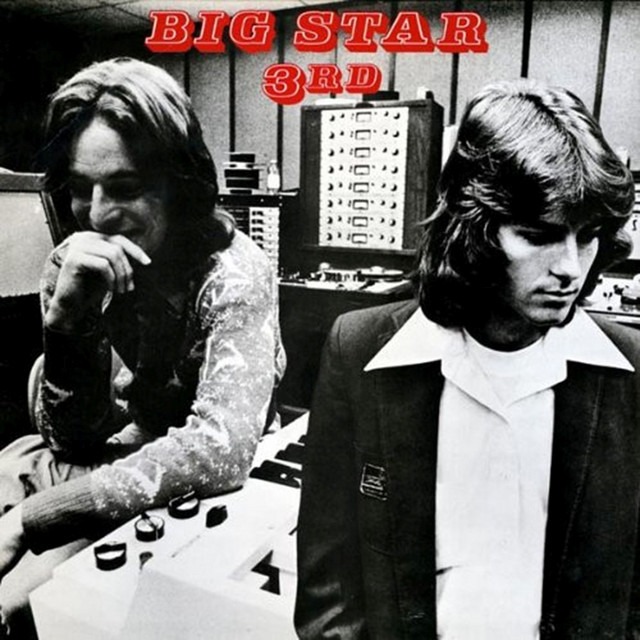
There are albums that arrive too late, sound too strange, and carry too much personal wreckage to find their audience right away. Big Star’s ‘Third’ is the definitive example. Recorded in the fall of 1974 at Ardent Studios in Memphis, the album sat unreleased for nearly four years before PVC Records put it out in March 1978. By then, the band had already collapsed under the weight of commercial failure, personal deterioration, and the declining mental state of singer Alex Chilton. Rolling Stone placed it at number 285 on their 2020 list of the 500 greatest albums of all time, up from 449 in 2012. NME ranked it the number one heartbreak album of all time in 2000 and called it one of the darkest albums ever made. AllMusic described it as “among the most harrowing experiences in pop music.” Pitchfork gave it a perfect score. And yet for years, almost nobody heard it. Here are five facts that explain how this record came to exist, and why it sounds the way it does.
Alex Chilton Didn’t Consider It a Big Star Album, and the Session Sheets Prove It
According to Chilton, “We never saw it as a Big Star record. That was a marketing decision when the record was sold in whatever year that was sold. And they didn’t ask me anything about it and they never have asked me anything about it.” The session sheets from Ardent Studios back him up. They have the band name “Sister Lovers” clearly written on them, a reference to the fact that Chilton and drummer Jody Stephens were dating sisters Lesa and Holliday Aldridge at the time. Whether it was a joke or a genuine working title, the record was called something else entirely while it was being made.
Lesa Aldridge Was a Major Part of the Record, Then Alex Erased Her
Lesa Aldridge, a cousin of photographer William Eggleston who created the ‘Radio City’ album cover, contributed vocals throughout the sessions and was, in producer Jim Dickinson’s words, “a big, big part of the record.” Her relationship with Chilton was stormy, and at some point during or after the sessions, Chilton went back into the tapes and began removing her contributions. Dickinson described it plainly: “he started to go back and erase her — there was a lot more of Lesa on the album than there is now.” What survived of her presence is what you hear on the finished record.
The Sessions Were So Chaotic That the Studio’s Own Producer Called a Halt to “Escalating Madness”
Ardent’s John Fry, who had produced Big Star’s first two albums, was also involved with the third. According to biographer Bruce Eaton, Fry “finally called a halt to the escalating madness” and the album was mastered by Larry Nix on February 13, 1975. Severe personal issues burdened the sessions throughout. Chilton was in a turbulent relationship, disconnected from the direction of his own music, and surrounded by what Eaton described as “a large and revolving cast of Memphis musicians.” The album was mastered and then sat in a drawer for three years.
Steve Cropper and William Eggleston Both Played on the Record
The session musicians brought in during the recording extended well beyond the band’s core lineup. Steve Cropper, the guitarist whose work at Stax Records helped define an entire era of American soul music, contributed guitar to the album’s cover of the Velvet Underground’s “Femme Fatale.” William Eggleston, one of the most celebrated photographers in American art history, played piano on the cover of eden ahbez’s “Nature Boy.” Both were there because of personal connections to Chilton and the Memphis scene, not because of any conventional studio logic.
The Album’s Tribute Concert After Chilton’s Death Featured Members of R.E.M., Big Star, and the Posies
Alex Chilton died of a heart attack in New Orleans on March 17, 2010, at the age of 59, without health insurance and just days before a scheduled Big Star performance at South by Southwest in Austin. That show went ahead as a tribute, with Curt Kirkwood, Chris Stamey, M. Ward, Mike Mills of R.E.M., John Doe, Sondre Lerche, Chuck Prophet, Evan Dando, the Watson Twins, and original Big Star member Andy Hummel joining Jody Stephens on stage. Hummel himself died four months later. Stephens is now the sole surviving original member of the band.