


Jack Douglas built some of the most important rock records ever made. He did it from the bottom up, starting as a janitor at the Record Plant in Manhattan and rising to become one of the most trusted producers in the business. Douglas died on May 11, 2026, from complications from lymphoma. He was 80.
His family said it plainly: “He lived an incredible life and was an amazing storyteller. He was very, very funny and goofy and loved to tell jokes. He loved what he did, and he worked til the very end. We will miss him a lot.”
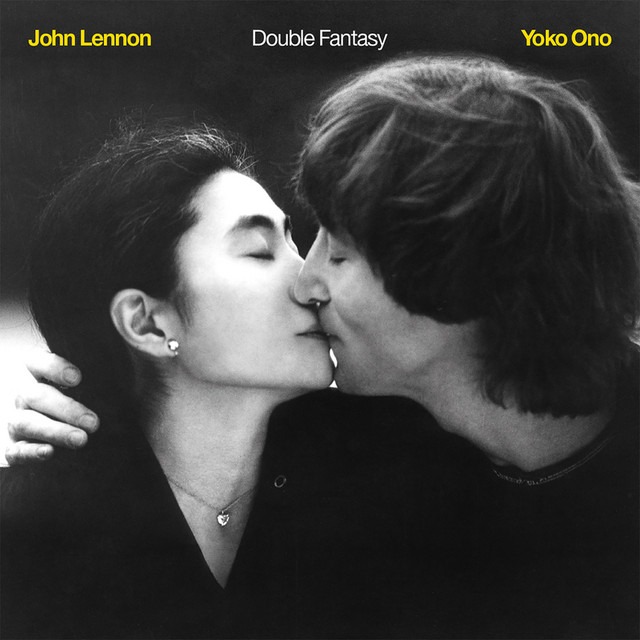
The resume is staggering. Douglas engineered John Lennon’s ‘Imagine’ in 1971, the beginning of a deep personal and professional bond with the former Beatle. That relationship culminated in 1980 with ‘Double Fantasy’, the Lennon and Yoko Ono album that won the Grammy Award for Album of the Year. Lennon was killed in December of that year, just weeks after the album’s release. Douglas later worked on the posthumous ‘Milk and Honey’, assembled from the same sessions.
He was also present for the Who’s Lifehouse sessions at the Record Plant in 1971, recordings that were eventually reshaped into ‘Who’s Next’, one of the defining rock albums of the decade. His engineering credit on that record alone would be enough for most careers. Douglas was just getting started.
His work with Aerosmith across the 1970s remains his most commercially thunderous contribution to rock. He co-produced ‘Get Your Wings’ in 1974, then took full control for ‘Toys in the Attic’ in 1975. That album went nine times platinum and delivered “Sweet Emotion” and “Walk This Way” to the world. The story behind the latter is pure Douglas: he’d just seen Mel Brooks’ Young Frankenstein with the band and was goofing around recreating a bit from the film. Steven Tyler caught the energy and built the lyric from there.
‘Rocks’ followed in 1976 and ‘Draw the Line’ in 1977. Both have since been certified multi-platinum. Both appear on Rolling Stone’s 500 Greatest Albums of All Time list. The band considered Douglas so integral to their sound that they called him the sixth member of Aerosmith. He even co-wrote their 1978 track “Kings and Queens.” After a brief separation, he returned for ‘Rock in a Hard Place’ in 1982, then again for the blues covers collection ‘Honkin’ on Bobo’ in 2004 and the band’s final album of originals, ‘Music from Another Dimension!’ in 2012, on which he provided the narration on the opening track “LUV XXX.”
The Cheap Trick relationship was equally deep and equally productive. Douglas helmed their self-titled 1977 debut, then the live record that became a genuine phenomenon, ‘Live at Budokan’ in 1978, and its companion ‘Budokan II’. He later produced ‘Found All the Parts’ in 1980, ‘Standing on the Edge’ in 1985, ‘Special One’ in 2003, and ‘Rockford’ in 2006. When Cheap Trick were inducted into the Rock and Roll Hall of Fame in 2016, they said directly from the stage that they were “forever indebted” to Douglas.
The Patti Smith Group’s ‘Radio Ethiopia’ in 1976 is another standout, a raw and confrontational record that Douglas captured without blunting its edges. He also contributed to the New York Dolls’ self-titled debut, the album that inspired producer Bob Ezrin to encourage Douglas to step up and start producing himself. That nudge changed rock history.
Beyond those landmarks, Douglas worked with Lou Reed on ‘Berlin’, co-produced sessions with Bob Dylan and Allen Ginsberg, and brought his engineering skills to records by Miles Davis, Alice Cooper, Montrose, Mountain, Blue Öyster Cult, Starz, and Graham Parker. Later credits include albums by Supertramp, Zebra, Slash’s Snake Pit, Local H, and Clutch.
Douglas was born in the Bronx on November 6, 1945. He started out as a folk musician, wrote songs for Robert F. Kennedy’s 1964 senatorial campaign, then chased music to England before returning to New York and enrolling at the Institute of Audio Research. He was part of its first graduating class. The Record Plant hired him to sweep floors. Within months, he was behind the boards.
His introduction to Lennon became the stuff of legend. While editing tapes at the Record Plant ahead of a session, Lennon walked in. Douglas told him about his time in Liverpool, and Lennon realized he was one of the “Crazy Yanks” he’d read about in the papers. “He got really excited to meet me,” Douglas recalled in a 2012 interview. “He invited me into the tracking rooms, he gave me a ride home in his limo. Pretty soon, I was working on the record as an assistant. We became friends.”
That friendship produced some of the most emotionally significant recordings in rock. Douglas remembered the mood of the ‘Double Fantasy’ sessions with clarity and warmth. “Having been with John in L.A. during that time when he was just unbelievably depressed,” he told Rolling Stone in 1981, “the one thing that makes me feel not so bad now is that when he died he was real happy, maybe happier than he’s ever been.”
Jack Douglas worked until the end. Fifty-five years in the business, dozens of landmark records, and a reputation built entirely on sound and trust. Rock and roll lost one of its great architects on Monday night.