


Sonny Rollins, the tenor saxophonist widely regarded as the greatest living improviser in jazz, died on May 25, 2026, at his home in Woodstock, New York. He was 95.
Born Walter Theodore Rollins on September 7, 1930, in New York City to parents from the Virgin Islands, Rollins grew up in Harlem and came of age in the same neighborhoods and high school hallways as Jackie McLean, Kenny Drew, and Art Taylor. He received his first alto saxophone at seven or eight years old, switched to tenor in 1946 after falling under the spell of Coleman Hawkins, and never looked back. In a career spanning seven decades, he recorded more than sixty albums as a leader, composed jazz standards that every serious player still learns, and performed with a searching, combustible originality that made every concert feel like it could go anywhere.
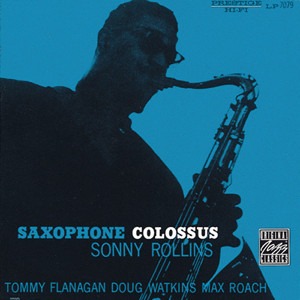
His 1956 album ‘Saxophone Colossus’ became one of the defining records in jazz history, selected for preservation by the National Recording Registry of the Library of Congress in 2016. Its opening track “St. Thomas,” a calypso built on a tune his mother sang to him as a child, remains one of the most joyful and technically extraordinary performances the music has ever produced. Other compositions from that era, including “Oleo,” “Doxy,” and “Airegin,” became jazz standards played by musicians the world over.
What set Rollins apart was not just his technique but his restlessness. In 1959, frustrated with his own perceived limitations despite being widely considered the best saxophonist alive, he retreated from public performance and spent nearly two and a half years practicing alone on the pedestrian walkway of the Williamsburg Bridge, sometimes for fifteen or sixteen hours a day. The story became legend, the kind of devotion to craft that younger musicians whispered about like a parable. He took a second sabbatical in 1969, this time traveling to an ashram in India to study yoga, meditation, and Eastern philosophy. He would practice yoga for the rest of his life, crediting it alongside music as central to who he was.
He returned each time playing better than before. His 1962 comeback album ‘The Bridge,’ recorded with guitarist Jim Hall, became one of his best-selling records and was inducted into the Grammy Hall of Fame in 2015. Throughout the 1960s and 1970s he pushed into new territory with each record, exploring Latin rhythms, avant-garde playing alongside Don Cherry, R&B and funk textures, and extended unaccompanied saxophone solos that could hold a concert audience in silence for twenty minutes at a stretch.
On September 11, 2001, Rollins, then 71, was at home several blocks from the World Trade Center when the towers fell. He evacuated with only his saxophone. Five days later he traveled to Boston and played a concert at Berklee. The recording of that night, released as ‘Without a Song: The 9/11 Concert,’ won the 2006 Grammy Award for Jazz Instrumental Solo. He had already won the Grammy for Best Jazz Instrumental Album in 2001 for ‘This Is What I Do’ and received the Grammy Lifetime Achievement Award in 2004. He was awarded the National Medal of Arts in 2010 and received the Kennedy Center Honors in 2011.
He stopped performing publicly after 2012 and announced his retirement in 2014, citing pulmonary fibrosis. In 2017 he donated his personal archive to the Schomburg Center for Research in Black Culture. In 2024, New York Review Books published ‘The Notebooks of Sonny Rollins,’ drawn from journals he had kept since 1959, revealing a mind as restless and searching on the page as it had been on the bandstand.
He was the last surviving musician from Art Kane’s 1958 photograph ‘A Great Day in Harlem,’ which captured 57 of the era’s greatest jazz players on a Harlem stoop. Now that gathering exists only in the image.
Rollins is survived by his legacy, his music, and the countless musicians who learned the language of jazz in large part by learning him.