


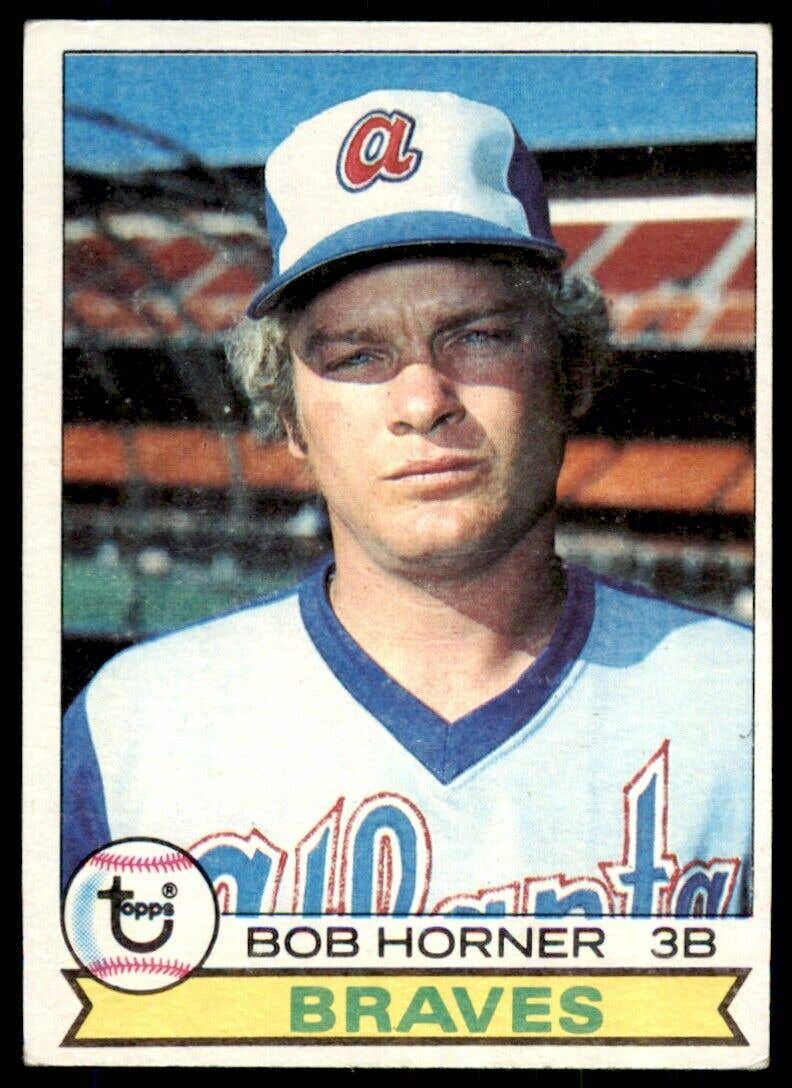
Bob Horner, the hard-hitting third baseman who went straight from college to the Major Leagues, won the National League Rookie of the Year in his debut season, and became one of the most feared power hitters of the early 1980s, died on May 26, 2026 in Irving, Texas. He was 68. His death was announced by the Atlanta Braves.
Born August 6, 1957 in Junction City, Kansas, Horner grew up in Glendale, Arizona and built one of the most decorated careers in college baseball history at Arizona State University. Over three seasons with the Sun Devils, he batted .383 with a then-NCAA record 56 home runs and 229 RBI, won the College World Series Most Outstanding Player award in 1977, and became the first-ever winner of the Golden Spikes Award — college baseball’s equivalent of the Heisman Trophy. He was the kind of college player who made scouts run out of superlatives.
The Atlanta Braves took him first overall in the 1978 draft, and Horner did something almost no player in the history of the sport had managed: he skipped the minor leagues entirely and walked straight into a starting lineup. In his very first Major League game, he hit a home run off future Hall of Famer Bert Blyleven. He never really stopped from there. In 89 games that debut season, he hit .266 with 23 home runs and 63 RBI, led all National League third basemen in home runs, and won the NL Rookie of the Year award over a certain rookie shortstop named Ozzie Smith.
The early 1980s Braves teams were built around Horner and Dale Murphy, a power-hitting tandem that gave opposing pitchers legitimate nightmares. Horner averaged 35 home runs and 109 RBI per 162-game average over his career, numbers that would have been even more imposing had injuries not repeatedly derailed his seasons. He broke his right wrist in 1983, broke his left wrist in 1984, and lost significant stretches of what should have been his prime years to a body that kept betraying him at the worst moments.
On July 6, 1986, he achieved something only ten players in Major League history had done before him: he hit four home runs in a single game, doing so against the Montreal Expos and becoming only the second player ever to accomplish the feat in a losing effort. That same season, after hitting a record 210 career home runs without a grand slam, he finally hit one with the bases loaded to beat the Pirates. The record for most home runs without a grand slam stood until Sammy Sosa broke it in 1998.
What followed was one of baseball’s more dispiriting stories. Horner became a free agent after 1986, still near his peak at 29 years old, and received no offers. The courts would later confirm what many had suspected: Major League Baseball owners had been illegally colluding to suppress player salaries, and Horner was among the most direct victims. With no MLB takers, he signed a one-year, $2 million deal with the Yakult Swallows of Japan’s Central League — the organisation gave him number 50 because that was the number of home runs they expected him to hit. He hit 31 with 73 RBI. Yakult offered him a reported $10 million for three more years. He came home anyway, returned to MLB with the St. Louis Cardinals in 1988, injured his shoulder after 60 games, and never played again. In 2004, he received over $7 million as part of the successful collusion lawsuit settlement — fair compensation, perhaps, but a poor substitute for the career years that were taken from him.
He was inducted into the College Baseball Hall of Fame as a member of its inaugural class in 2006, the Sun Devil Athletics Hall of Fame in 1979, and the Georgia Sports Hall of Fame in 2022. He is survived by his wife Chris and their two sons.
Bob Horner was the kind of player who made everything look inevitable, right up until the moment that it wasn’t. He deserved more seasons than he got. The ones he did have were worth watching.