


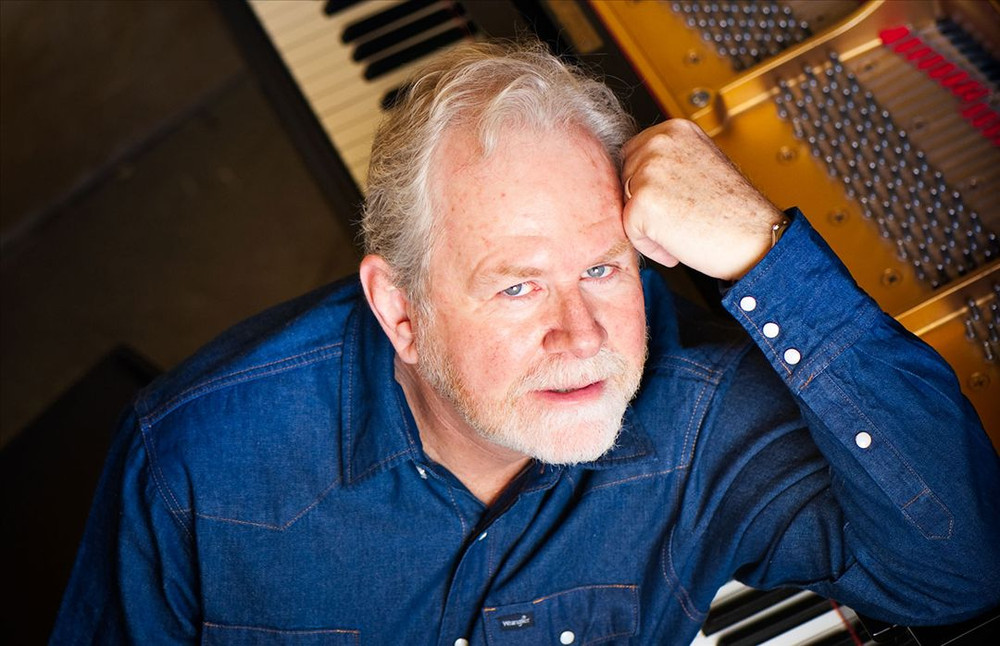
Philip Aaberg, the pianist and composer whose classically trained hands moved with equal ease through jazz, bluegrass, rock, and new music, and whose life’s work was devoted to translating the sweeping landscape of Montana into sound, died on May 23, 2026. He was 77. The cause was pneumonia.
Born April 8, 1949 in Havre, Montana and raised in Chester, he was performing with local bands at dances by the age of 14 — a detail that says something important about the kind of musician he would become. Not a conservatory creature, not someone who arrived at music through theory alone, but someone who learned it in rooms full of people who wanted to move. He won a Leonard Bernstein Scholarship to study music at Harvard, earned his Bachelor of Arts in music, and then moved to Oakland and played blues clubs for several years, because that was the logical next step for someone who understood music the way he did.
He toured and recorded with Elvin Bishop’s group at the height of its popularity, co-writing the title song of the band’s 1976 album ‘Struttin’ My Stuff’ and playing piano on the same record that contained Bishop’s biggest hit, “Fooled Around and Fell in Love.” It was a long way from Chester, Montana, and also, in the way that matters most, not very far at all.
In 1985 he signed with Windham Hill Records and released ‘High Plains’, the first of four solo albums for the label that established him as one of the most distinctive voices in what the industry was then calling new age music, a label that never quite captured what he was actually doing. His compositions were described as combining rigorous keyboard technique, diverse influences, and a colorful compositional style — which is accurate as far as it goes, but misses the essential quality that made his playing memorable: it sounded like a specific place. It sounded like Montana. He performed with the Boston Pops Orchestra, appeared at the Marlboro Chamber Music Festival, appeared on PBS’s All-American Jazz program earning an Emmy Award nomination, performed as a guest on over 200 albums, and shared stages with Peter Gabriel and Tom Johnston of the Doobie Brothers.
In 2000, he and his wife Patty founded Sweetgrass Music, their own record label, through which he pursued his deepest artistic ambition — producing music that connected a global audience to the landscape of the American West. ‘Live from Montana’, released that same year, received a Grammy nomination. He produced a public radio program called ‘Of the West: Creativity and Sense of Place’, received a Montana Governor’s Award for the Arts and a Montana Arts Council Innovator Award in 2011, and with Patty ran a bed and breakfast, a recording studio, and a suite of creative enterprises that turned their corner of Montana into a small but genuine cultural centre.
He was 77 years old, and he spent every one of those years making music that knew exactly where it came from. That is rarer than it sounds.