


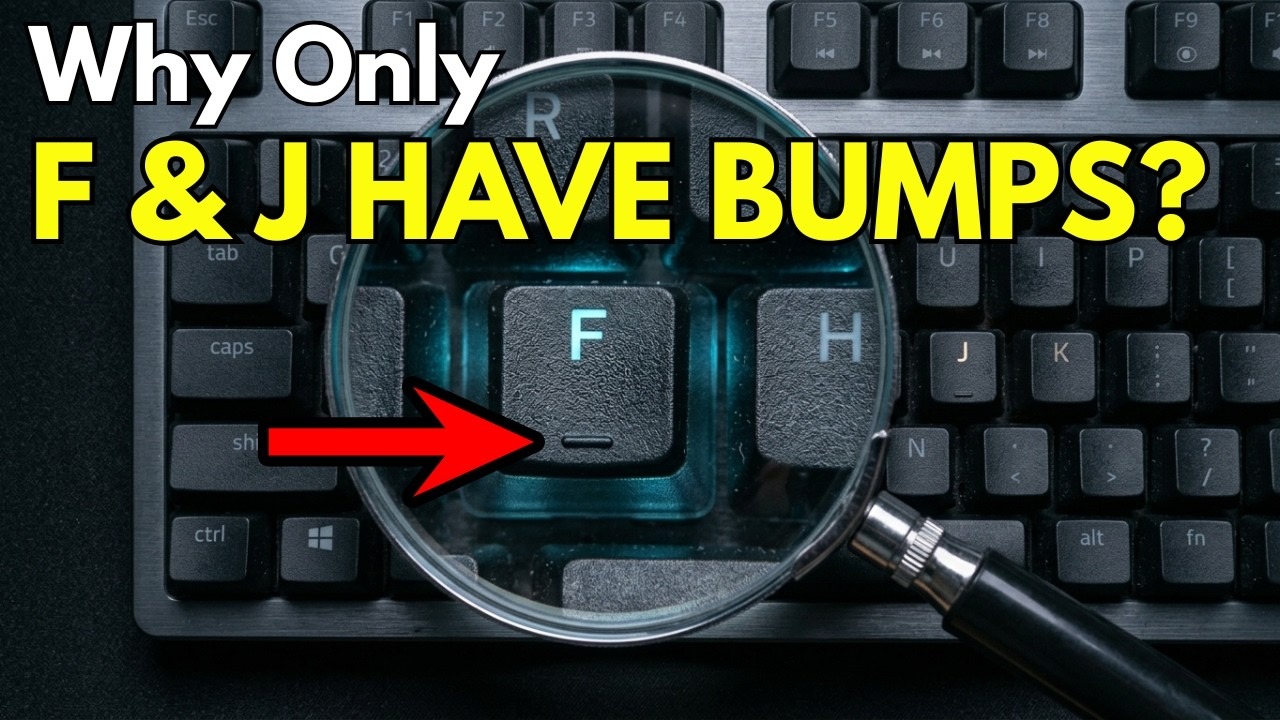
Ever run your fingers across a keyboard and felt those two tiny ridges on the F and J keys? A new explainer from Simple Things – Surprising Histories digs into why they’re there, and the answer goes back more than a century. Those bumps are homing bars, physical anchors that let your index fingers find the home row without looking down. The video traces the story from the birth of touch typing in 1888, credited to Frank Edward McGurrin, through the shift away from slow hunt-and-peck typing, to June E. Botich’s 2002 standardization of the tactile ridges we use today. There’s a fun detour into vintage 1980s Apple keyboards, which oddly placed the bumps on D and K instead, plus a look at the science of tactile priming and the nerve endings in your fingertips that make the whole system work. It’s a clean, four-minute history of a design detail most people never think about, and the comments add a great wrinkle: blind computer users point out those same bumps are essential for navigating a keyboard by touch.