


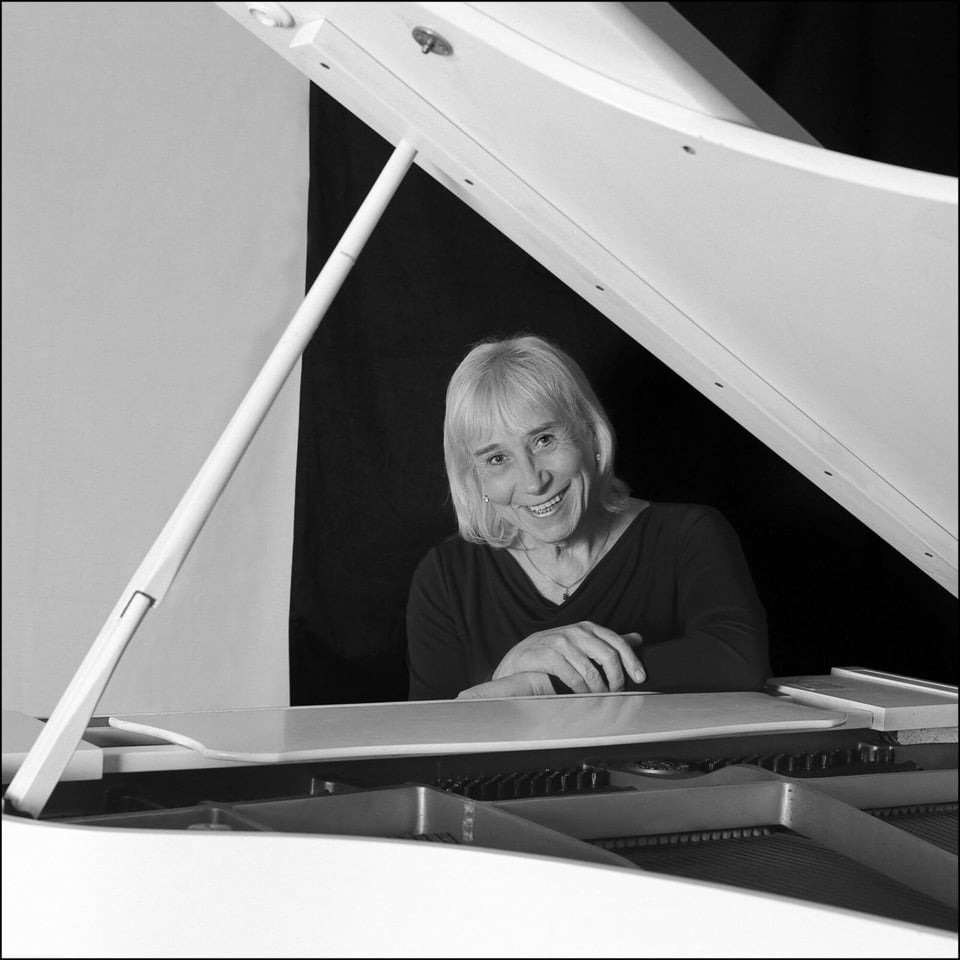
Dee Palmer, the classically trained composer and arranger whose lush orchestrations helped define the sound of Jethro Tull across more than a decade of the band’s most celebrated work, has died at the age of 88. Her death at her home in Shropshire, after a period of illness, was announced on June 13, 2026.
Born in Hendon, London on July 2, 1937, Palmer trained at the highest level of British classical music, studying composition at the Royal Academy of Music under Richard Rodney Bennett. A gifted student, she won both the Eric Coates Prize and the Boosey and Hawkes Prize, and taught clarinet to other students during her studies. Decades later, in 1994, the Academy honored her as a Fellow.
Her path into rock came through session work. After arranging and conducting recording sessions and cutting her first album project, ‘Nicola,’ with folk guitarist Bert Jansch in 1967, she was introduced to the management of a young band recording their debut in Chelsea. On short notice, she crafted the horn and string arrangements for “Move on Alone” on Jethro Tull’s first album, ‘This Was.’ The work impressed the band, and so began one of progressive rock’s most enduring and fruitful collaborations.
For nearly a decade, Palmer served as Tull’s arranger, lending her orchestral touch to string, brass, and woodwind parts across a remarkable run of albums including ‘Stand Up,’ ‘Benefit,’ ‘Aqualung,’ ‘Thick as a Brick,’ and ‘Minstrel in the Gallery.’ In 1976 she formally joined the group as a full member, playing keyboards on ‘Songs from the Wood,’ ‘Heavy Horses,’ and ‘Stormwatch.’ Her tenure ended in 1980 when, after the album ‘A’ was released under the Tull name, nearly the entire lineup departed apart from Ian Anderson and guitarist Martin Barre. Palmer went on to form the group Tallis with former bandmate John Evan before returning to film scoring and session work.
From the 1980s onward, she carved out a distinctive niche producing symphonic arrangements of rock music, bringing orchestral grandeur to the catalogs of Jethro Tull, Pink Floyd, Genesis, Yes, Queen, and the Beatles, including an orchestral reimagining of ‘Sgt. Pepper’s Lonely Hearts Club Band.’ In 2018 she released her first solo album, ‘Through Darkened Glass,’ which featured a guest appearance by Martin Barre, and the following year the two performed together at Fairport’s Cropredy Convention.
In 1998, Palmer came out as transgender and intersex, taking the name Dee. She spoke openly in later years about her life and identity, including the loss of her wife, Maggie, in 1995. In doing so, she became a quietly trailblazing figure, a celebrated classical and rock musician living openly as her true self.
Dee Palmer was 88.