Home Blog

20 Songs to Play at Your Funeral to Absolutely Ruin Everyone’s Day

Death comes for us all, but that doesn’t mean you can’t get the last laugh.Here are 20 of the best options together for your consideration. Some are darkly poetic. Some are logistically inspired. Some are just weapons. All of them will ensure that nobody leaves your funeral feeling the way they expected to.

“Never Gonna Give You Up” by Rick Astley, a lot of times

The undisputed champion of this entire list and one of the greatest long-form funeral pranks ever conceived. You play it 20 consecutive times, but you insert a single play of “Never Gonna Give You Up” after the seventh repetition, just to give people a brief, beautiful flicker of hope before the thoughts of memes come rushing back. It requires a level of advance planning that honestly shows more commitment than most people demonstrate while alive.

“Man in the Box” by Alice in Chains

Technically accurate. Uncommonly on the nose. The mourners’ll either burst out laughing or stare at each other in horrified silence, and either outcome is a victory.

“Knock on Wood” Played from Inside the Coffin

Not strictly a song choice but an execution strategy so inspired it deserves its own entry. The logistics of arranging this in advance are genuinely complex, which makes it the Mount Everest of posthumous pranking. Commit to the bit.

“Highway to Hell” by AC/DC

Imagine being a funeral director who’s heard every possible song choice and thinks they’ve seen it all, and then this comes on over the speakers. The beauty of this one is that it works equally well whether you were a devoted churchgoer or a committed heathen. Both readings are hilarious for entirely different reasons.

“Baby Shark”

There’s something uniquely diabolical about subjecting grieving adults to the most relentlessly cheerful earworm ever inflicted on the human race. They’ll be humming it in the car on the way home. They’ll wake up with it three days later. You’ll be gone. You win completely.

“Astronomia” by Tony Igy

Also known as the Coffin Dance song. Every single person at your funeral’s seen the meme at least forty times. Playing this at your own actual funeral while you’re actually in a coffin is the kind of meta-joke that belongs in a comedy hall of fame. The pallbearers won’t know whether to laugh or walk faster.

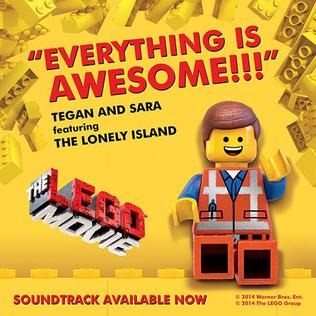
“Everything Is Awesome” from The Lego Movie

Aggressively optimistic. Tonally catastrophic. The key is that it’s not ironic enough to give anyone an escape hatch. There’s no reading of this song that makes it appropriate for a funeral, which means everyone just has to sit there and absorb it for three full minutes while nodding politely.

“Wake Me Up Before You Go-Go” by Wham!

The request embedded in the title takes on an entirely new dimension in this context and the song is so relentlessly cheerful that the dissonance becomes almost philosophical. You also get to go out to George Michael, which is never a bad decision.

“Celebration” by Kool and the Gang

Celebrate good times, come on. Is this not exactly what funerals are supposed to be, at least in theory? The genius of this choice is that you could play it completely straight and the argument that you meant it sincerely would make everyone even more uncomfortable than if you’d meant it as a joke.

“Don’t Care Anymore” by Phil Collins

Three words that summarise the entire vibe of being dead. Phil Collins didn’t write this as a farewell message but it functions as one with devastating efficiency. Short, blunt, and impossible to misread.

“They’re Coming to Take Me Away” by Napoleon XIV

A 1966 novelty song about being carted off to a psychiatric facility, delivered in an increasingly manic voice over a marching beat. Playing this at your funeral raises questions about your final mental state that your loved ones’ll spend years unpacking in therapy.

“War Pigs” by Black Sabbath

I’ve been mentally planning this one since roughly third grade and I’m not embarrassed about it. At eight minutes of slow-building doom metal it’s also a significant time commitment for the mourners, which feels right. They’ll sit through it. They’ll think about what they’ve done.

“The Roof Is on Fire” by Bloodhound Gang

If you’re going for cremation, the thematic consistency here is simply too good to pass up. It’s not just a funeral song. It’s a program note.

“It’s Getting Hot in Here” by Nelly

Again, cremation-specific programming deserves its own sub-genre and this is the founding text. You could run an entire cremation-themed playlist and it’d be genuinely impressive. Something to consider.

“Living in a Box” by Living in a Box

A band called Living in a Box playing a song called “Living in a Box” at your funeral while you’re literally in a box. This is the kind of layered absurdist poetry that most artists spend their entire careers trying to achieve and most of them never get there.

“Hokey Cokey”

The staging possibilities alone make this essential. The pallbearers put the casket in, take the casket out, put it in again, shake it all about. If you can choreograph this with willing participants it’s the single greatest physical comedy achievement in the history of funerals.

“The Final Countdown” by Europe

The drama. The synthesisers. The mounting sense of impending something. It works almost too well as a funeral song, which is exactly why it belongs here. Nobody’ll be able to keep a straight face and everyone’ll pretend they’re managing.

“Free Bird” by Lynyrd Skynyrd

At nine minutes long and culturally understood as the universal symbol of someone who refuses to leave, playing this as your curtain call has a beautiful circular logic to it. You’re the one not leaving this time. The shoe is on the other foot. The bird is free.

“Bohemian Rhapsody” by Queen

Print the lyrics in the order of service. Make it participatory. Is this the real life? Is this just fantasy? At a funeral, genuinely unclear, and the fact that nobody’ll know whether to sing along’ll create an atmosphere of exquisite social tension that money simply can’t buy.

“Hamster Dance”

No explanation required. No justification possible. An act of pure sonic warfare against everyone who ever loved you, delivered from beyond the grave with a smile. Go out swinging.
How to License Your Music for TV and Film

So your song comes on during a pivotal scene in a drama and suddenly three million people are Shazaming it at 11pm on a Tuesday. That is the sync licensing dream, and it is more achievable than you think. Sync licensing is the most lucrative and transformative revenue stream available to independent musicians right now, and a single well-placed song can catapult an unknown artist into the mainstream overnight. While streaming pays fractions of a cent per play, sync licensing pays independent artists anywhere from $250 for a corporate video placement to $150,000 or more for a featured spot in a national TV commercial. Here is how to get in the room.

Before anything else, you need to understand the two separate rights involved in every sync deal. Master rights cover ownership of the actual sound recording, while publishing rights cover ownership of the underlying composition including the melody, lyrics, and arrangement. Major-label artists typically split these rights across multiple parties, requiring lengthy clearance processes. This is why being an independent artist is genuinely an advantage in sync. One-stop clearance, where you own and control both master and publishing, is strongly preferred by music supervisors. It removes a major friction point in production timelines, and supervisors regularly pass on music they love because the rights are too complex to clear in time.

If you co-wrote a song or had other contributors, get your ownership splits in writing before you pitch anything to anyone. Sync licensing deals can fall apart instantly if there is confusion about who owns what. A split sheet is not bureaucratic busywork. It is what keeps your opportunity alive.

This is non-negotiable and it costs you almost nothing. To collect royalties from sync placements, you must register your music with a Performing Rights Organization such as ASCAP, BMI, or SESAC in the US. These organizations ensure you are compensated when your music is used in various media. In Canada that is SOCAN; in the UK it is PRS for Music. In the US, most independent artists should register with either ASCAP, which charges a $50 one-time fee, or BMI, which is free for songwriters. Register as both songwriter and publisher to collect both halves of your performance royalties, because if you only register as a writer you are leaving half your money on the table.

You should also ensure your recordings have ISRC codes, the unique fingerprint for each recording. Most digital distributors assign these automatically when you upload. Without an ISRC, royalties from broadcast usage cannot be correctly attributed to your recording.

Music supervisors are not talent scouts. They are problem solvers. A supervisor needs a specific sound for a specific scene with specific licensing terms, and they need it fast. They do not care if your song is amazing. They care if it fits the brief, clears quickly, and stays within budget. Your job is to make their job as easy as possible.

For every track you pitch, you should have the full stereo mix, a clean version without profanity, a full instrumental version, and ideally separated stems covering drums, bass, melody, and vocals. Music supervisors frequently request these variations and tracks without instrumental versions are at a significant disadvantage.

Metadata matters more than most artists realise. Tag your files with accurate information including song title, artist name, genre, mood keywords, and contact info in the file data. A supervisor might search a library for “upbeat indie rock with female vocals,” and good metadata is what makes your song show up in that search. Think of your catalog as a library someone else has to navigate. Make it easy for them.

Around 70% of sync deals in 2024 went through libraries, while 30% were direct-to-brand or supervisor. Libraries are the most practical entry point for most independent artists because they already have the relationships with the people doing the hiring. Platforms like Musicbed, Artlist, Marmoset, Epidemic Sound, and Artlist handle the pitching on your behalf, taking a cut of the fee in exchange. An artist with a catalog of 50 tracks on a popular platform can generate consistent monthly income from sync placements alone, not life-changing money from any single placement, but meaningful passive income that compounds as the catalog grows.

You can also build a professional, searchable catalog on a platform like DISCO, which is considered industry standard for pitching directly to supervisors, as well as your own website for full control over presentation and terms.

Once you have some credits and confidence, going direct is worth pursuing. You can find contacts through LinkedIn, IMDbPro, and industry resources like Tunefind, Film Music Reporter, and Music Supervisor Network. Personalize every pitch and reference specific projects they have worked on. Never mass-email. A supervisor who has spent three years placing music in crime dramas does not want a pitch for your bubbly summer pop track, and sending it anyway marks you as someone who has not done their homework.

In 2026, an estimated 65% of music supervisors use AI-powered search tools to discover music, which makes clean, detailed metadata even more important. If the algorithm cannot find you, the supervisor never sees you.

Not all placements are created equal. A Netflix series placement can pay between $3,000 and $50,000 upfront, while a national television commercial can reach $500,000 or more. Background cues in cable shows pay less but still represent real income, and the backend performance royalties that come every time that show airs or streams can generate money for years after the initial deal. Micro-syncs for YouTube, TikTok, podcasts, and the creator economy might only pay $50 to $2,000 per placement, but a sync-ready track on a popular platform can be licensed dozens or even hundreds of times per month.

The key to making sync a real income stream is volume of catalog and quality of preparation, not waiting for one perfect song to change everything.

Diversifying your catalog by creating a variety of tracks with different moods, tempos, and instrumentation increases your chances of finding a match for any sync opportunity. Genre and geographic diversity is actively sought right now, with supervisors specifically requesting non-US sounds including French indie pop, Latin American singer-songwriter styles, and Asian instrumental music. The world is a wider market than it used to be, and that is good news for anyone making music outside the obvious commercial lanes.

The sync world rewards the prepared and the prolific. Get your rights straight, get your files ready, get your metadata tight, and then get your music out there.

Where to Stay During Fleadh Cheoil Belfast 2026

0

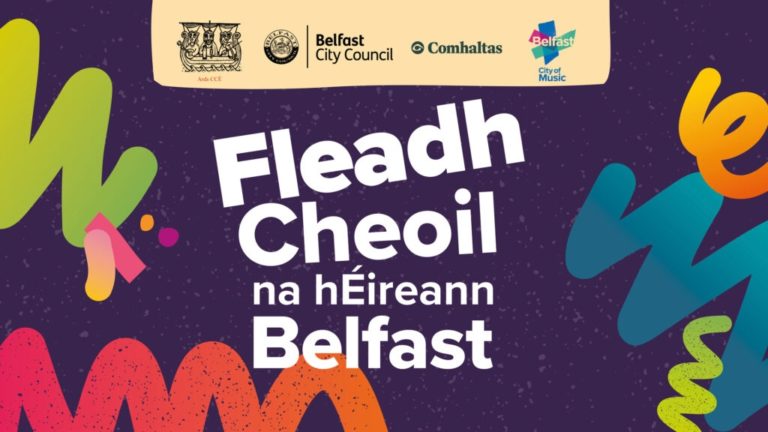
Belfast is hosting Fleadh Cheoil na hÉireann for the very first time, and the world’s biggest celebration of Irish music and culture runs from Sunday 2 August to Sunday 9 August 2026. Eight days of pub sessions, céilí bands, street performances, All-Ireland competitions, and enough craic to last you well into the following year. Over 700,000 international visitors are expected in the city for the week, which means one thing above all others: sort your accommodation now, not later.

Central Belfast is already at 95% capacity for the first week of August. If you needed a reason to stop reading and start booking, that is it. For everyone still here, here is your guide to where to lay your head when the fiddles start flying.

Belfast is a compact, walkable city and the Cathedral Quarter and the areas around Victoria Square and City Hall will be at the heart of the Fleadh action, so staying centrally means you are never far from wherever the music breaks out next. The city has over 30 hotels to choose from, including big international names like the Crowne Plaza, Aloft, Residence Inn by Marriott, and Holiday Inn. For luxury, the Fitzwilliam Hotel on Great Victoria Street, adjacent to the Grand Opera House, is one of the most central five-star options in the city, with 146 elegantly designed rooms and suites and award-winning dining on site. If you want to splash out and wake up already in the thick of it, that is your spot.

For mid-range, the Grand Central Hotel in the Linen Quarter puts you within easy walking distance of the Titanic Quarter, the Cathedral Quarter, and just about every cultural attraction the city has to offer.

The Cathedral Quarter is arguably the soul of Belfast’s pub and music scene at the best of times, and during Fleadh week it will be absolutely electric. The lively pubs in the Cathedral Quarter are considered among the best for meeting fellow travellers, with the Duke of York a popular spot for live music and the Crown Liquor Saloon a beautiful Victorian pub with a friendly atmosphere. The Merchant Hotel, a grand Victorian property right in the heart of the quarter, is one of the most distinctive places to stay in the city. If your budget is tighter, the Premier Inn Belfast City Cathedral Quarter offers reliable, comfortable rooms without the luxury price tag.

The Queen’s Quarter is a lively student area known for its vintage shops and quirky pubs, and it is a top pick for backpackers as it is home to a lot of Belfast’s budget accommodation. The Belfast International Youth Hostel sits just off Shaftesbury Square, between City Hall and Queen’s University, and is the closest hostel to the Europa Bus Station. It offers direct rail connections to the Titanic Quarter and is a short walk from both City Hall and the university. The Botanic Avenue Hostel is another solid budget option in this area, offering comfortable dorm rooms with individual lockers and reading lights, a communal lounge, a full kitchen, and free Wi-Fi.

If you have left it late and the city itself is fully booked, do not panic. Major surrounding towns and cities like Lisburn, Bangor, Carrickfergus, and Newry are around a half-hour train journey away and make perfectly viable bases for the week. Specific options in surrounding areas include the Clandeboye Lodge Hotel, the Haslem Hotel, and the Maldron Hotel, all within easy reach of Belfast by rail. Translink services are frequent and the journey in is straightforward.

For those who want to sleep inside the festival rather than just visit it, there are three official campsites being set up for the week. Confirmed locations include Ormeau Park for tents, Titanic Quarter for motorhomes and caravans, and Falls Park as an additional tents-only site. The fully serviced campsite will include 24-hour security, shower blocks, toilets, fresh water, a dedicated family zone, and a bus service running to the city centre in under ten minutes. Register your interest at fleadhcheoil.ie.

Belfast TradFest is offering a combined accommodation rate for people attending both the Belfast TradFest Summer School, which runs 26 July to 1 August, and the Fleadh itself, with city-centre student accommodation available at a reduced combined rate for the full fortnight. If you play traditional music and have been thinking about a summer school, this is a genuinely clever way to stretch your budget and arrive already warmed up.

If you are flexible on dates, mid-week accommodation is often easier to secure than the main weekend slots at either end of the festival. But whatever you do, do not leave it. Belfast in August 2026 is going to be one for the ages.

Fleadh Cheoil na hÉireann takes place in Belfast, August 2–9, 2026. For more information visit fleadhcheoil.ie, visitbelfast.com, and discovernorthernireland.com.

Sonny Rollins, the Saxophone Colossus, Passes Away at 95

0

Sonny Rollins, the tenor saxophonist widely regarded as the greatest living improviser in jazz, died on May 25, 2026, at his home in Woodstock, New York. He was 95.

Born Walter Theodore Rollins on September 7, 1930, in New York City to parents from the Virgin Islands, Rollins grew up in Harlem and came of age in the same neighborhoods and high school hallways as Jackie McLean, Kenny Drew, and Art Taylor. He received his first alto saxophone at seven or eight years old, switched to tenor in 1946 after falling under the spell of Coleman Hawkins, and never looked back. In a career spanning seven decades, he recorded more than sixty albums as a leader, composed jazz standards that every serious player still learns, and performed with a searching, combustible originality that made every concert feel like it could go anywhere.

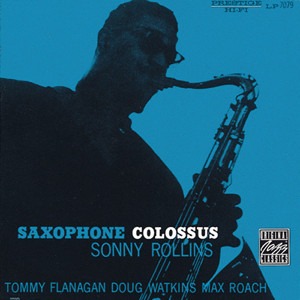
His 1956 album ‘Saxophone Colossus’ became one of the defining records in jazz history, selected for preservation by the National Recording Registry of the Library of Congress in 2016. Its opening track “St. Thomas,” a calypso built on a tune his mother sang to him as a child, remains one of the most joyful and technically extraordinary performances the music has ever produced. Other compositions from that era, including “Oleo,” “Doxy,” and “Airegin,” became jazz standards played by musicians the world over.

What set Rollins apart was not just his technique but his restlessness. In 1959, frustrated with his own perceived limitations despite being widely considered the best saxophonist alive, he retreated from public performance and spent nearly two and a half years practicing alone on the pedestrian walkway of the Williamsburg Bridge, sometimes for fifteen or sixteen hours a day. The story became legend, the kind of devotion to craft that younger musicians whispered about like a parable. He took a second sabbatical in 1969, this time traveling to an ashram in India to study yoga, meditation, and Eastern philosophy. He would practice yoga for the rest of his life, crediting it alongside music as central to who he was.

He returned each time playing better than before. His 1962 comeback album ‘The Bridge,’ recorded with guitarist Jim Hall, became one of his best-selling records and was inducted into the Grammy Hall of Fame in 2015. Throughout the 1960s and 1970s he pushed into new territory with each record, exploring Latin rhythms, avant-garde playing alongside Don Cherry, R&B and funk textures, and extended unaccompanied saxophone solos that could hold a concert audience in silence for twenty minutes at a stretch.

On September 11, 2001, Rollins, then 71, was at home several blocks from the World Trade Center when the towers fell. He evacuated with only his saxophone. Five days later he traveled to Boston and played a concert at Berklee. The recording of that night, released as ‘Without a Song: The 9/11 Concert,’ won the 2006 Grammy Award for Jazz Instrumental Solo. He had already won the Grammy for Best Jazz Instrumental Album in 2001 for ‘This Is What I Do’ and received the Grammy Lifetime Achievement Award in 2004. He was awarded the National Medal of Arts in 2010 and received the Kennedy Center Honors in 2011.

He stopped performing publicly after 2012 and announced his retirement in 2014, citing pulmonary fibrosis. In 2017 he donated his personal archive to the Schomburg Center for Research in Black Culture. In 2024, New York Review Books published ‘The Notebooks of Sonny Rollins,’ drawn from journals he had kept since 1959, revealing a mind as restless and searching on the page as it had been on the bandstand.

He was the last surviving musician from Art Kane’s 1958 photograph ‘A Great Day in Harlem,’ which captured 57 of the era’s greatest jazz players on a Harlem stoop. Now that gathering exists only in the image.

Rollins is survived by his legacy, his music, and the countless musicians who learned the language of jazz in large part by learning him.

78 Facts for Stevie Nicks on Her 78th Birthday

Happy birthday to the Reigning Queen of Rock and Roll, born May 26, 1948, in Phoenix, Arizona. Stevie Nicks turns 78 today, and after more than five decades of spinning shawls, spinning dreams, and spinning records into gold, her influence on music and culture is still impossible to overstate. She is the woman who gave a generation its soundtrack, who made platform boots a religion and black chiffon a philosophy, who proved that a woman could be ethereal and ferocious at the same time. From Fleetwood Mac’s ‘Rumours’ to TikTok teens discovering “Dreams” for the first time, her reach has never stopped growing. To celebrate, here are 78 facts about the one and only Stevie Nicks.

  1. Stevie was born Stephanie Lynn Nicks on May 26, 1948, at Good Samaritan Hospital in Phoenix, Arizona.
  2. She is of German, English, Welsh, and Irish ancestry.
  3. Her nickname “Stevie” came from her toddler self mispronouncing her name as “tee-dee.”
  4. Her grandfather A.J. Nicks Sr. taught her to sing duets with him by the time she was four years old.
  5. Her mother fostered in her a deep love of fairy tales, a thread that runs through her entire creative life.
  6. She received a Goya guitar for her 16th birthday and immediately began writing songs.
  7. Her very first song was titled “I’ve Loved and I’ve Lost, and I’m Sad but Not Blue.”
  8. Her father worked as a vice president of Greyhound, moving the family through Phoenix, Albuquerque, El Paso, Salt Lake City, Los Angeles, and San Francisco.
  9. She grew up listening to Top 40 R&B radio and loved the Shirelles and Martha Reeves and the Vandellas.
  10. Her grandfather once gave her a truckload of about 150 singles, country, rockabilly, Everly Brothers, all of it.
  11. She attended Arcadia High School in Arcadia, California, where she joined her first band, the Changing Times, a folk rock group focused on vocal harmonies.
  12. She met Lindsey Buckingham during her senior year at Menlo-Atherton High School in Atherton, California.
  13. The moment she heard Buckingham playing “California Dreamin'” at a Young Life club, she joined him in harmony. She later said, “I thought he was darling.”
  14. She attended San José State University, where she majored in speech communication.
  15. She originally planned to become an English teacher.
  16. With her father’s blessing, she dropped out of college to pursue music with Buckingham.
  17. After Fritz disbanded in 1972, Nicks and Buckingham recorded demo tapes at night in Daly City, California, on a one-inch, four-track Ampex tape machine kept at Buckingham’s father’s coffee-roasting plant.
  18. Their debut album ‘Buckingham Nicks’ was released in 1973 on Polydor Records and was not a commercial success.
  19. After Polydor dropped them, Nicks worked multiple jobs, waiting tables and cleaning producer Keith Olsen’s house to make ends meet.
  20. She wrote “Rhiannon” after spotting the name in a novel called ‘Triad’ by Mary Leader, before she even knew about the Welsh mythological figure.
  21. She wrote “Landslide” inspired by the scenery of Aspen and her slowly deteriorating relationship with Buckingham.
  22. Mick Fleetwood first heard Nicks and Buckingham’s work when Keith Olsen played him the Buckingham Nicks track “Frozen Love” at Sound City in late 1974.
  23. Buckingham refused to join Fleetwood Mac without Nicks, insisting they were a package deal.
  24. Nicks joined Fleetwood Mac on December 31, 1974.
  25. The 1975 self-titled album ‘Fleetwood Mac’ was a worldwide smash, and “Rhiannon” became one of Rolling Stone’s 500 Greatest Songs of All Time.
  26. Mick Fleetwood once said her live performances of “Rhiannon” were like an exorcism.
  27. “Landslide” from that same album went on to receive three million radio airplays.
  28. She worked with clothing designer Margi Kent to develop her iconic bohemian stage look of flowing skirts, shawls, and platform boots.
  29. She stands 5 feet 1 inch tall and adopted 6-inch platform boots partly so she wouldn’t feel dwarfed by the 6-foot-6 Mick Fleetwood.
  30. Even when platforms went out of style, she kept wearing them, telling Allure in 1995 that she didn’t want to go back to being 5 feet 3 in regular heels.
  31. Recording for ‘Rumours’ began in early 1976 while Nicks and Buckingham’s personal relationship was crumbling, as was nearly every other relationship in the band.
  32. “Dreams” was her contribution to ‘Rumours’ and became Fleetwood Mac’s only number one hit on the Billboard Hot 100.
  33. She also wrote “Silver Springs” for ‘Rumours,’ but it was left off the album because early versions ran too long. It became a collector’s item B-side.
  34. ‘Rumours’ was the best-selling album of 1977 and has sold over 45 million copies worldwide as of 2017.
  35. The album stayed at number one on the American chart for 31 weeks and won the Grammy Award for Album of the Year in 1978.
  36. In November 1977, after a New Zealand concert on the Rumours tour, Nicks and Mick Fleetwood briefly began a secret affair. She ended it quickly, later saying it would have been the end of Fleetwood Mac.
  37. Nicks and Buckingham also sang backup vocals on Warren Zevon’s second album during this period.
  38. She recorded the hit duet “Whenever I Call You Friend” with Kenny Loggins in 1978 and “Gold” with John Stewart in 1979.
  39. Nicks, Danny Goldberg, and Paul Fishkin founded Modern Records specifically to release her solo material.
  40. Her debut solo album ‘Bella Donna’ was released on July 27, 1981, reached number one on the Billboard 200, and earned her the Rolling Stone title “Reigning Queen of Rock and Roll.”
  41. The day ‘Bella Donna’ hit number one, she learned her close friend Robin Anderson had been diagnosed with leukemia. She later said, “I never got to enjoy Bella Donna at all.”
  42. Following Robin’s death in 1982, Nicks briefly married Robin’s widower Kim Anderson, believing it was what Robin would have wanted. They divorced three months later.
  43. Her permanent backup singers Sharon Celani and Lori Perry were introduced on ‘Bella Donna’ and have contributed vocals to every solo album since.
  44. Her second solo album ‘The Wild Heart’ was released in 1983, went double platinum, and reached number five on the Billboard 200.
  45. She appeared on Saturday Night Live in December 1983, performing “Stand Back” and “Nightbird.”
  46. Her third solo album, originally titled Mirror Mirror, was reworked entirely and released as ‘Rock a Little’ in November 1985.
  47. A plastic surgeon warned her in early 1986 that the next time she used cocaine she could drop dead. She checked into the Betty Ford Center at the end of her Australian tour that year.
  48. On the advice of friends worried about relapse, she visited a psychiatrist who prescribed the sedative Klonopin, which turned out to be a far longer and more damaging dependency than cocaine ever was.
  49. She has said, “Klonopin was worse than the cocaine. I lost those 8 years of my life. I didn’t write, and I had gained so much weight.”
  50. She endured a painful 47-day detoxification in a hospital in late 1993 after a fall at home made her realize how badly she needed help.
  51. ‘Tango in the Night,’ released in 1987, became Fleetwood Mac’s second-highest selling album after ‘Rumours.’
  52. Her fourth solo album ‘The Other Side of the Mirror’ was released in 1989 to commercial success. She later said she had no memory of the tour that followed because of her increasing Klonopin dependency.
  53. She left Fleetwood Mac after the ‘Behind the Mask’ tour over a dispute with Mick Fleetwood about releasing “Silver Springs” on her best-of compilation.
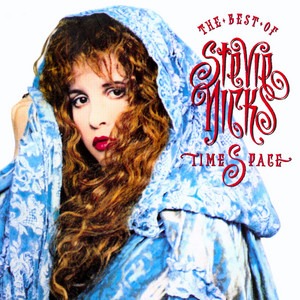
  54. On the 10th anniversary of her solo debut, she released ‘Timespace: The Best of Stevie Nicks’ on September 3, 1991.
  55. Bill Clinton used Fleetwood Mac’s “Don’t Stop” as his 1992 presidential campaign theme, and Nicks rejoined the classic lineup to perform it at his inaugural gala in 1993.
  56. Her fifth solo album ‘Street Angel,’ released in 1994, was poorly received, reaching only number 45 on the Billboard 200. She has since called it a major disappointment.
  57. In 1996 she reunited with Buckingham to contribute the duet “Twisted” to the ‘Twister’ movie soundtrack.
  58. She also remade Tom Petty’s “Free Fallin'” for the TV show ‘Party of Five’ that same year.
  59. A newly invigorated Nicks rejoined Fleetwood Mac for ‘The Dance,’ a hugely successful 1997 live reunion tour and album marking the 20th anniversary of ‘Rumours.’
  60. Before that tour she started working with a voice coach and began jogging to prepare herself for the demands of extended touring.
  61. In 1998, Nicks joined Fleetwood Mac for its induction into the Rock and Roll Hall of Fame.
  62. That same year Fleetwood Mac received the Outstanding Contribution award at the BRIT Awards.
  63. Her box set ‘Enchanted’ was released on April 28, 1998, complete with liner notes, rare photographs, and pages from her personal journals.
  64. Her sixth solo album ‘Trouble in Shangri-La,’ released May 1, 2001, featured contributions from Sheryl Crow, Natalie Maines, Sarah McLachlan, and Macy Gray.
  65. “Planets of the Universe” from that album was nominated for a Grammy Award for Best Female Rock Vocal Performance.
  66. VH1 named her Artist of the Month for May 2001 and People magazine named her one of its 50 Most Beautiful People that same year.
  67. Fleetwood Mac’s ‘Say You Will,’ released in April 2003, was recorded without Christine McVie, making Nicks the sole woman in the band for the first time.
  68. “Edge of Seventeen” was sampled by Destiny’s Child for their 2001 number one single “Bootylicious,” and Nicks appeared in the music video.
  69. She played a fictional version of herself described as a white witch on ‘American Horror Story: Coven’ in 2014, performing “Rhiannon,” “Has Anyone Ever Written Anything for You?,” “Seven Wonders,” and “Gypsy” on screen.
  70. She reprised that role in ‘American Horror Story: Apocalypse’ in 2018.
  71. In April 2018, Lindsey Buckingham was fired from Fleetwood Mac following disagreements with Nicks and Mick Fleetwood. Nicks helped recruit his replacements: Mike Campbell of Tom Petty and the Heartbreakers and Neil Finn of Crowded House.
  72. In April 2019, she became the first woman ever to be inducted twice into the Rock and Roll Hall of Fame, once as a member of Fleetwood Mac in 1998 and once as a solo artist.
  73. Rolling Stone has named her one of the 100 Greatest Songwriters of All Time and one of the 100 Greatest Singers of All Time.
  74. Four of her songs appear on Rolling Stone’s 500 Greatest Songs of All Time: “Landslide,” “Rhiannon,” “Dreams,” and “Edge of Seventeen.”
  75. In December 2020, music publishing company Primary Wave acquired an 80 percent stake in her song catalog in a deal valued at around $100 million.
  76. Taylor Swift referenced her in the song “Clara Bow” from ‘The Tortured Poets Department’ in 2024, writing “You look like Stevie Nicks / In ’75, the hair and lips.” Nicks also wrote a poem for the album’s liner notes.
  77. She released “The Lighthouse” on September 27, 2024, a song she wrote to promote women’s rights.
  78. She possesses a contralto vocal range, has decorated her microphone stand with roses, ribbons, chiffon, crystal beads, scarves, and small stuffed toys for decades, and has kept a journal nearly every single day since her time in Fleetwood Mac began. Some things never change.

“Rent” Marks 30 Years With a One-Night-Only Broadway Benefit Concert at the Richard Rodgers Theatre

0

“Rent” turns 30 this year, and Broadway is marking the occasion properly. A one-night-only benefit concert is scheduled for October 26 at the Richard Rodgers Theatre, reuniting original creative team members and cast for a performance in support of Broadway Cares/Equity Fights AIDS. Tickets go on sale June 1 at BroadwayCares.org.

Original director Michael Greif returns to helm the concert, with original music director Tim Weil leading the band, including musicians Kenny Brescia, Stephanie Mack, Jeff Potter, and Daniel A. Weiss. Casting will include members of the original Broadway company alongside additional guest performers, with the full lineup still to be announced.

The benefit is produced by Broadway Cares/Equity Fights AIDS in partnership with Baseline Theatrical founder Andy Jones. Proceeds support Broadway Cares’ ongoing programs providing meals, health care, and financial assistance to people living with HIV/AIDS and other critical illnesses, the same cause the show championed from its very first performance.

“Rent” premiered at New York Theatre Workshop in 1996 before transferring to Broadway’s Nederlander Theatre, where it won the Tony Award for Best Musical and the Pulitzer Prize for Drama. The original Broadway cast included Anthony Rapp, Adam Pascal, Daphne Rubin-Vega, Jesse L. Martin, Wilson Jermaine Heredia, Idina Menzel, Fredi Walker, and Taye Diggs. The show ran for 12 years and 5,123 performances before closing in 2008, generating a multi-platinum cast album and a feature film along the way.

Spotify and Universal Music Group Strike Landmark Deal Allowing AI-Powered Fan Covers and Remixes

0

Spotify and Universal Music Group have announced landmark licensing agreements that will allow Spotify to launch a new AI-powered tool enabling fans to create licensed covers and remixes of songs from participating artists and songwriters. The tool launches as a paid add-on for Spotify Premium users and is built around what both companies describe as a consent, credit, and compensation model, creating a direct revenue stream for artists and songwriters on top of existing Spotify earnings.

Spotify Co-CEO Alex Norström framed the announcement plainly: “What we’re building is grounded in consent, credit, and compensation for the artists and songwriters that take part.” UMG Chairman and CEO Sir Lucian Grainge called it “a pioneering AI-enabled superfan initiative” designed to deepen fan relationships and support human artistry rather than displace it.

The agreement covers both recorded music and music publishing licensing, making it one of the more structurally comprehensive AI deals the industry has seen. With 761 million Spotify users across 184 markets and UMG’s catalog representing the broadest in the industry across every genre, the scale of what this tool could unlock for fan creativity and artist revenue is significant. No launch date has been announced.

Wizkid, Davido, and Alkaline Headline Afro Plus Fest 2026 as Festival Expands to Three Days in Prince George’s County

0

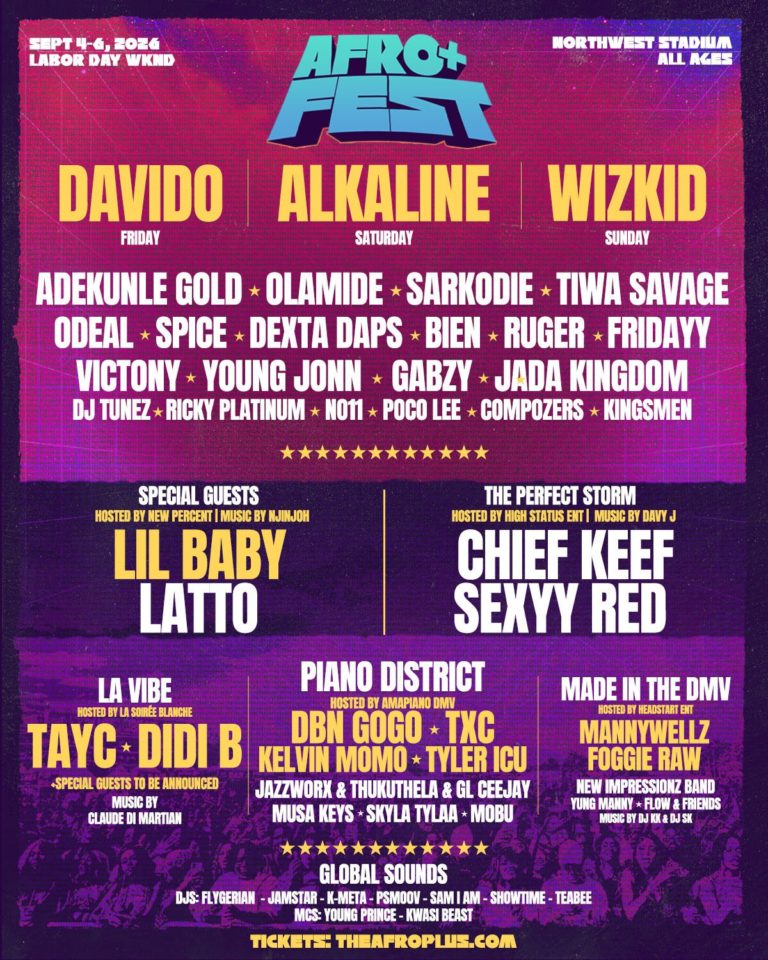
Afro Plus Fest is back and three times the size. The World’s Largest Afro-Caribbean Hip-Hop Festival returns Labor Day Weekend, September 4 through 6, 2026, at the Northwest Stadium Complex in Landover, Maryland, expanding from its sold-out one-day debut into a full three-day event projected to draw 120,000 fans across the weekend. Three-day passes are on sale now at theafroplus.com, with General Admission starting at $199.

The headliner lineup is a statement. Davido opens the weekend Friday. Alkaline takes Saturday. Wizkid closes it out Sunday. Across 2 massive stages for up to 40,000 fans per day, the cross-continental roster also includes Lil Baby, Latto, Chief Keef, Sexyy Red, Adekunle Gold, Olamide, Sarkodie, Tiwa Savage, Spice, Dexta Daps, Ruger, Victony, and dozens more spanning Afrobeats, Hip-Hop, Dancehall, Amapiano, Soca, and R&B.

The festival’s Piano District stage features DBN Gogo, TXC, Kelvin Momo, Tyler ICU, and Musa Keys. La Vibe brings Tayc and Didi B. The Made in the DMV stage champions local talent including Mannywellz, Foggie Raw, and Yung Manny.

Beyond music, Afro Plus Fest delivers a full cultural campus with a marketplace featuring Black-owned brands and DMV creators, high-fashion activations, curated food and beverage, and immersive cultural experiences. The festival is an all-ages event with full ADA accessibility, Metro access via Morgan Boulevard Station, and on-site parking available via a 3-day pass for $100.

Afro Plus Fest founder Michael Awosanya framed the expansion in direct terms: “We were raised in this county. This year is bigger because the community demanded it be bigger. This one’s for the people who raised us.” The 2025 debut drew 20,000 attendees and generated an estimated $10 million in local economic impact. The 2026 edition is built to multiply that by every measure.

Festival Details:

Dates: September 4-6, 2026 (Labor Day Weekend)

Location: Northwest Stadium Complex, 1600 Ring Rd, Landover, MD

Tickets: theafroplus.com — GA from $199, GA+ from $299, VIP from $399, Platinum from $499

Friday, September 4: Gates 1pm, Show 2pm-10pm

Saturday, September 5: Gates 12pm, Show 1pm-11pm

Sunday, September 6: Gates 12pm, Show 1pm-10pm

Punch Brothers Launch Their Most Extensive Tour Since 2019 Behind New Album ‘The Unsung Adventures of Punch Brothers’

0

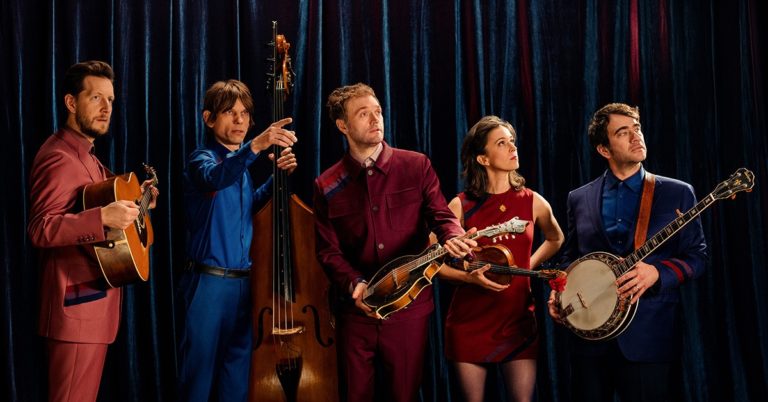
Punch Brothers have launched their most extensive North American tour since 2019, a 64-city run celebrating their new album ‘The Unsung Adventures of Punch Brothers,’ due July 24 on Nonesuch Records. The quintet, consisting of mandolinist Chris Thile, guitarist Chris Eldridge, bassist Paul Kowert, banjoist Noam Pikelny, and violinist Brittany Haas, began the tour May 14 and runs through November, with a Cayamo Cruise closing things out in February 2027.

‘The Unsung Adventures of Punch Brothers’ is the band’s seventh album and marks 2 significant firsts: it’s the group’s first album consisting entirely of instrumental tunes, and the first to feature Haas, who joined the quintet in 2023. The record includes 8 new original compositions alongside 3 traditional songs the band arranged themselves. A limited edition blue translucent LP is available through the Punch Brothers Store and the Nonesuch Store.

The tour hits venues and festivals across the full breadth of North America, with headlining shows at Carnegie Hall in New York on November 4 and the Ryman Auditorium in Nashville on November 21, and festival appearances at Newport Folk Festival, Telluride Bluegrass Festival, RockyGrass, and Spoleto Festival among others. Punch Brothers has partnered with PLUS1 so that $1 from every ticket sold supports organizations working for equity, access, and dignity for all. VIP packages are available throughout the run. Tickets are on sale now at punchbrothers.com.

Punch Brothers on Tour:

May 14 /// Mayo Performing Arts Center /// Morristown, NJ

May 15 /// Archer Music Hall /// Allentown, PA

May 16 /// The Harvester Performance Center /// Rocky Mount, VA

May 17 /// The Carolina Theatre /// Durham, NC

May 19 /// Knight Theater /// Charlotte, NC

May 21 /// Maymont /// Richmond, VA

May 22 /// DelFest /// Cumberland, MD

May 23 /// Greenfield Lake Amphitheater /// Wilmington, NC

May 24 /// Spoleto Festival /// Charleston, SC

May 26 /// Ponte Vedra Concert Hall /// Ponte Vedra Beach, FL

May 27 /// Avondale Brewing Company /// Birmingham, AL

May 28 /// Tennessee Theatre /// Knoxville, TN

May 29 /// The Caverns /// Pelham, TN

May 30 /// The Eastern /// Atlanta, GA

June 20+21 /// Telluride Bluegrass Festival /// Telluride, CO

June 23 /// Kauffman Center for the Performing Arts /// Kansas City, MO

June 24 /// Powell Hall /// St. Louis, MO

June 25 /// ROMP Fest /// Owensboro, KY

June 26 /// Taft Theatre /// Cincinnati, OH

June 27 /// Schaefer Center for the Performing Arts /// Boone, NC

July 18 /// Caramoor Center for Music and the Arts – Venetian Theater /// Katonah, NY

July 19 /// Concerts at Point of the Bluff /// Hammondsport, NY

July 21 /// Tree House Brewing Company – Deerfield /// South Deerfield, MA

July 22 /// Criterion Theatre /// Bar Harbor, ME

July 24 /// Ossipee Valley Music Festival /// Hiram, ME

July 25 /// Newport Folk Festival /// Newport, RI

July 26 /// RockyGrass Festival /// Lyons, CO

July 27 /// Grand Teton Music Festival /// Teton Village, WY

September 9 /// Frederik Meijer Gardens & Sculpture Park /// Grand Rapids, MI

September 10 /// Royal Oak Music Theatre /// Royal Oak, MI

September 11 /// Cahn Auditorium /// Evanston, IL

September 13 /// The Pabst Theater /// Milwaukee, WI

September 15 /// Mayo Civic Center, Presentation Hall /// Rochester, MN

September 16 /// Hancher Auditorium at University of Iowa /// Iowa City, IA

September 17 /// Sauder Concert Hall /// Goshen, IN

September 18 /// Southern Theatre /// Columbus, OH

September 19 /// Cain Park Evans Amphitheater /// Cleveland Heights, OH

October 1 /// The Moore Theatre /// Seattle, WA

October 2 /// Revolution Hall /// Portland, OR

October 3 /// Tower Theatre /// Bend, OR

October 7 /// Santa Barbara, CA /// venue TBA

October 8 /// Los Angeles, CA /// venue TBA

October 9 /// Epstein Family Amphitheater /// San Diego, CA

October 10 /// Virginia G. Piper Theater – Scottsdale Center for the Performing Arts /// Scottsdale, AZ

October 11 /// KiMo Theatre /// Albuquerque, NM

October 13 /// Vilar Performing Arts Center /// Beaver Creek, CO

October 14 /// Paramount Theatre /// Denver, CO

October 15 /// Boulder Theater /// Boulder, CO

October 17 /// Outer Banks Bluegrass Island Festival /// Manteo, NC

November 4 /// Stern Auditorium at Carnegie Hall /// New York, NY

November 5 /// Keswick Theatre /// Glenside, PA

November 6 /// Warner Theatre /// Washington, DC

November 7 /// Jorgensen Center For The Performing Arts /// Storrs, CT

November 8 /// The Paramount Theatre /// Rutland, VT

November 11 /// State Theatre /// Portland, ME

November 12 /// Capitol Center for the Arts, Chubb Theatre /// Concord, NH

November 13 /// Boch Center, Shubert Theatre /// Boston, MA

November 14 /// State Theatre /// Ithaca, NY

November 15 /// Center for the Arts /// Buffalo, NY

November 17 /// Koerner Hall /// Toronto, ON

November 19 /// The Kentucky Center for the Performing Arts – Brown Theatre /// Louisville, KY

November 21 /// Ryman Auditorium /// Nashville, TN

February 26 – March 4, 2027 /// Cayamo Cruise /// Miami, FL

Paul McCartney Takes Over TikTok LIVE on May 27 to Celebrate New Album ‘The Boys of Dungeon Lane’

0

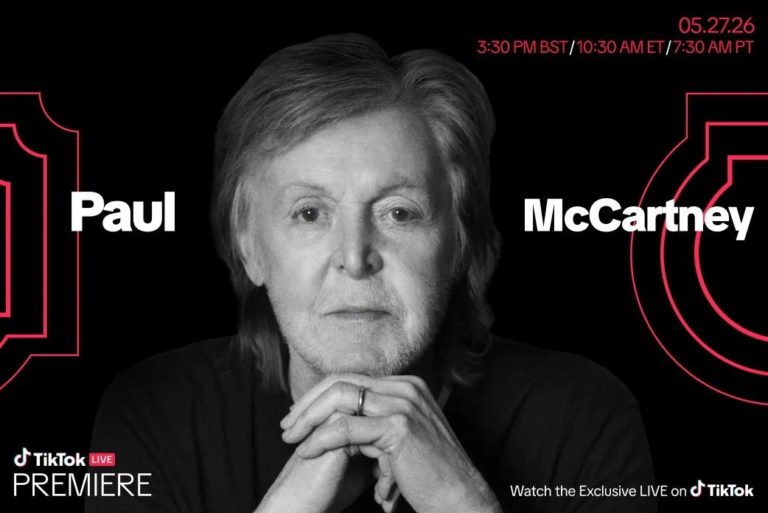
Paul McCartney is heading to TikTok LIVE on May 27 at 10:30am EST / 7:30am PST for an exclusive Q&A ahead of the release of ‘The Boys of Dungeon Lane,’ his first new solo album in over five years. Fans around the world can tune in via McCartney’s official TikTok account, as well as @tiktok and @tiktok_uk, and submit questions directly to him through the global TikTok community.

‘The Boys of Dungeon Lane’ is described as McCartney’s most introspective project to date, revisiting childhood memories in post-war Liverpool, family, friendship, and the formative years before Beatlemania changed everything. The May 27 LIVE event also marks the launch of TikTok LIVE Premiere, a new flagship series designed to bring the world’s biggest names in music, film, sports, and entertainment directly to TikTok’s global community through exclusive livestream experiences.

McCartney has more than 1.2 million TikTok followers, with fans across generations connecting with his catalog and storytelling on the platform daily. The LIVE Q&A is one of the most anticipated fan moments of the year.