Home Blog

Kelly Clarkson, Adam Levine, and Riley Green Are Headed to ‘The Voice’ Season 30

0

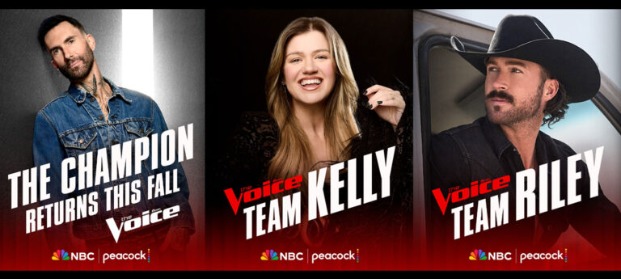
NBC’s The Voice is stacking its season 30 coaching panel with two returning heavyweights and one country newcomer making his red chair debut. Kelly Clarkson, Adam Levine, and Riley Green are confirmed for the fall season, with a fourth coach still to be announced.

Levine returns for his 18th overall season and second consecutive, coming off a season 29 victory that was his fourth total. He previously won in seasons 1, 5, and 9, making him one of the most decorated coaches in the show’s history.

Clarkson slides back into her chair for her 11th season as coach, returning after a spring 2026 hiatus. She holds the record as the female coach with the most wins, taking the title in seasons 14, 15, 17, and 21. Her track record on that panel speaks for itself.

Green joins as the country coach for the first time, and his timing couldn’t be sharper. His recent collaborations with Luke Combs and Ella Langley have earned major honours at both the CMA and ACM Awards since 2024. He carries 4 nominations into next week’s 61st ACM Awards, including Male Artist of the Year, Album of the Year for ‘Don’t Mind If I Do (Deluxe)’, Artist-Songwriter of the Year, and his third consecutive Music Event of the Year nod. Green also recently joined CBS’s Marshals for a four-episode arc.

Carson Daly returns as host. Season 30 premieres this fall.

Video: Stone Temple Pilots’ Explosive 1999 Las Vegas Show Is Back and Remastered

0

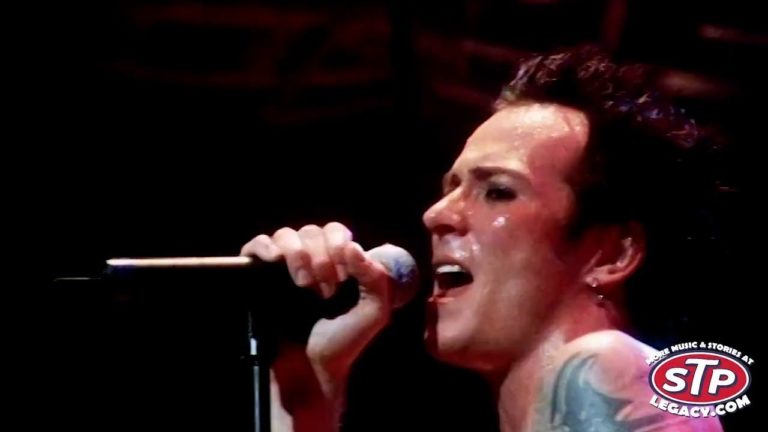
Las Vegas, 1999. Stone Temple Pilots at the House of Blues, filmed for MTV’s “Spankin’ Live” special, remastered with immersive audio and streaming now. Scott Weiland commands the stage with serpentine intensity, the DeLeo brothers build a wall of sound, and Eric Kretz drives the whole thing forward with relentless precision. “Crackerman,” “Vasoline,” and “Interstate Love Song” hit with the full ferocity of a band at a pivotal moment, just ahead of their fourth album ‘No. 4.’ Professionally captured and now remastered, this is STP exactly as they were.

Jamiroquai’s O2 Arena Triumph Is Now Yours to Stream

0

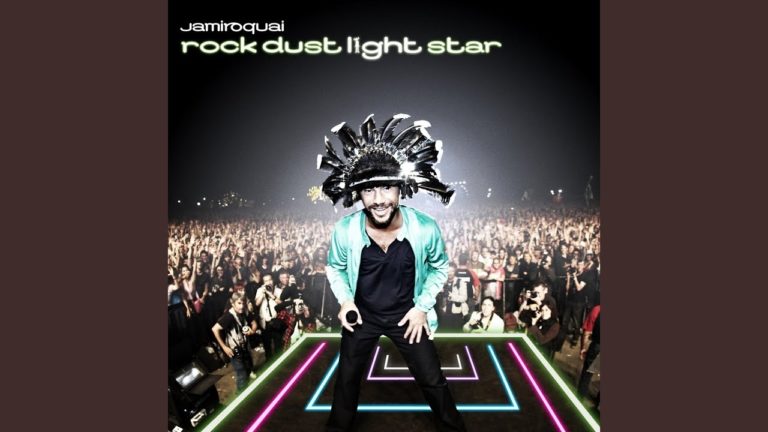
Jamiroquai brought the full spectacle to London’s O2 Arena on December 14, 2025, and Jay Kay led the band through a sold-out 20,000-strong crowd, blending acid jazz-funk classics “Virtual Insanity,” “Cosmic Girl,” and “Space Cowboy” with newer material, while Rob Harris’s bass lines, Matt Johnson’s keys, and Kay’s signature hat-and-dance energy made it one of the most electrifying British shows of the year.

SiriusXM Brings Full Live Coverage of the 2026 PGA Championship to Golf Fans Everywhere

0

The 2026 PGA Championship has a home on radio, and SiriusXM is delivering it in full. Live coverage of all 4 rounds runs May 14–17 from Aronimink Golf Club in Newtown Square, outside Philadelphia, co-produced with Westwood One.

Veteran broadcaster Brian Katrek handles lead play-by-play duties, with former PGA Tour pro Brendon de Jonge as lead analyst. On-course reporters Emilia Doran, Dennis Paulson, and Raymond Burns track the key playing groups throughout each round. First and second round coverage starts at 1 pm ET Thursday and Friday. Weekend rounds begin at 2 pm ET Saturday and Sunday.

Morning and early afternoon coverage brings its own team. Michael Breed, George Savaricas, and Will MacKenzie provide commentary during the earlier hours, while Jason Sobel contributes from the booth and handles post-round player interviews. Immediately following each round, Gary Williams hosts a 2-hour wrap-up of the day’s play.

Beyond the live championship broadcasts, talk programming runs daily throughout PGA Championship Week, starting at 7 am ET on weekdays and 9 am ET on weekends. 2016 Senior PGA Champion Rocco Mediate hosts 3 episodes of his exclusive SiriusXM show, “The Rocco Hour,” Monday, Tuesday, and Wednesday at 7 pm ET. On Saturday and Sunday, David Marr III hosts “PGA of America Radio” live from 9–10 am ET, featuring interviews with PGA of America Golf Professionals who earned spots in this year’s field.

All programming is available to SiriusXM subscribers on channel 92 and through the SiriusXM app. Full schedule details are at SiriusXM.com/golfonsxm.

Tenille Townes, Gabriel Fredette, and Cat Clyde Lead Spotify Canada’s Newest Ambassador Cycle

0

Spotify Canada has named its latest round of playlist ambassadors, and the lineup covers serious ground. Tenille Townes, Gabriel Fredette, and Cat Clyde are the newest faces of the EQUAL, RADAR, and Indigenous programmes respectively, each bringing a distinct voice to a platform that reaches listeners worldwide.

To mark the occasion, all 3 artists will appear on Toronto’s iconic Sankofa Square billboard. Each ambassador also curates a playlist spotlighting other genre-defying artists shaping what’s next in music.

Tenille Townes steps into the EQUAL Canada ambassador role with everything you’d expect from one of country music’s most compelling storytellers. The Grande Prairie, Alberta native, now based in Nashville, built her reputation on heartfelt, observational songwriting and vocals that don’t miss. Her advocacy for women and queer creatives aligns directly with EQUAL’s mission of amplifying underrepresented voices in music.

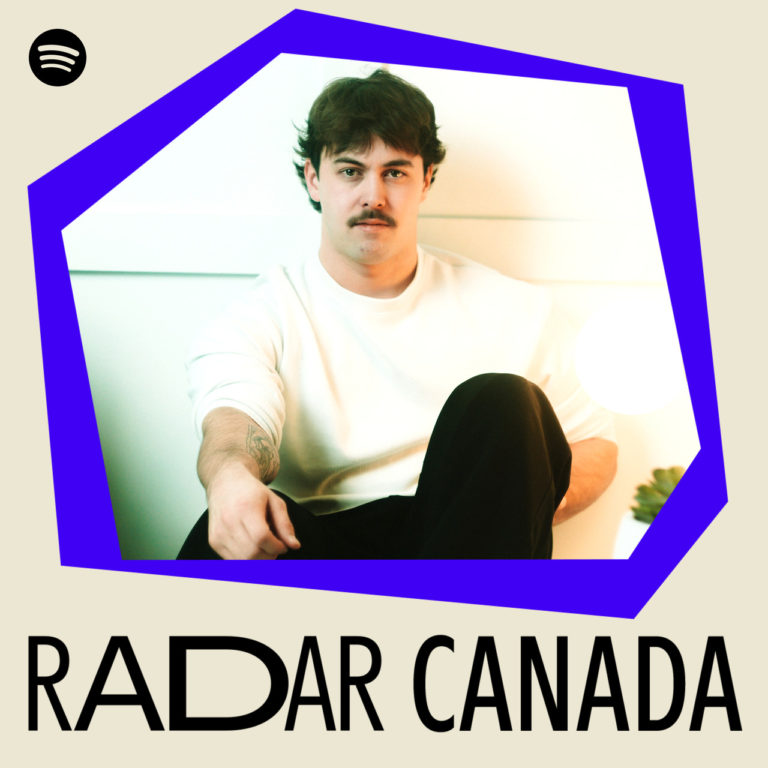
Gabriel Fredette carries the RADAR Canada flag, and the numbers behind him are hard to ignore. The Montreal-area artist first turned heads on La Voix in 2024, then launched “Tant qu’on est toi et moi” into the stratosphere, holding the number one position on the Mediabase Top 100 for over 13 weeks. Fredette is a genuine force in Quebec and Francophone pop, and this ambassadorship puts him exactly where the momentum says he belongs.

Cat Clyde brings the Indigenous programme a voice rooted in both place and craft. The Métis singer-songwriter, based in rural Ontario, moves between soulful blues and folk-tinged warmth with a naturalness that sounds completely uncontrived. Her album ‘Down Rounder’ established her range, and she’s currently finishing her next record for Concord Records.

The Toronto Jewish Film Foundation Announces its 34th Annual Festival, June 4–14, 2026

0

The Toronto Jewish Film Foundation is proud to announce the 34th annual Toronto Jewish Film Festival (TJFF), taking place in-person June 4–14, 2026, with screenings across Toronto and a selection of films available online across Ontario through to June 23.

This year’s Festival features 85 films from 22 countries, alongside two panels and two short film programmes, reflecting a wide-ranging international slate spanning documentary, narrative, and archival work. With 58 in-person screenings and 27 online presentations, TJFF continues its hybrid model, expanding access for audiences both in Toronto and across Ontario .

Opening the Festival on Thursday, June 4, at the Hot Docs Ted Rogers Cinema is the world premiere of Dust Bowls and Jewish Souls: Another Side of Woody Guthrie, directed by Steven Pressman. The film offers a revealing look at the lesser-known influence of Jewish culture on the iconic American musician, drawing on archival materials and personal histories. 

Closing out the in-person programme on June 14 is You Had To Be There: How the Toronto Godspell Ignited the Comedy Revolution, an intimate documentary revisiting the 1972 Toronto production that launched the careers of Eugene Levy, Martin Short, Gilda Radner and others, capturing a defining moment in Toronto’s cultural history.

This year’s programme includes 48 Canadian premieres, among them six International Premieres, six North American Premieres, and three World Premieres, highlighting TJFF’s continued role in bringing new and significant work to Canadian audiences.

Among this year’s highlights are films recognized at major international festivals, including Tell Me Everything (Sundance), Where To? and Safe House (Berlinale), Holofiction (Venice), and Brother Verses Brother (SXSW), Dead Language (Tribeca), alongside a strong slate of premieres and emerging voices. This year’s awards further reflect the strength of the programme: Duki Dror’s UNraveling UNRWAreceives the David A. Stein Memorial Award—the “Tzimmie”—a $5,000 prize for the Best Documentary making its Canadian Premiere at TJFF; and Netalie Braun’s Oxygen receives the Micki Moore Award, a $5,000 prize for the Best Narrative Feature directed by a woman. The NextGen Award for Best Short Film, selected by a jury of York University film students and sponsored by the Leonard Wolinsky Foundation, goes to It Might Even Be Real, directed by Yael Bonne.

Across the programme, films engage with questions of history, identity, and representation, from archival explorations of collective memory to contemporary stories shaped by political and social realities. Titles such as 1948: Remember, Remember Not, One Street in Silwan, and The Sea reflect a sustained engagement with how narratives are constructed, contested, and lived.

“This year’s programme reflects a range of perspectives that don’t always sit easily together, but that’s part of what makes a festival meaningful,” said Stuart Hands, Director of Programming. “Cinema creates space to encounter different histories, experiences, and points of view—sometimes in tension with one another—and to sit with that complexity rather than resolve it too quickly.”

These themes extend into the Festival’s public programming, including free panels such as Challenging Narratives: Voices of Protest in Israeli Cinema and Shared Memory: The Holocaust in Popular Art, which bring filmmakers and artists into conversation around the ethical and cultural dimensions of storytelling.

The Festival will welcome 33 guests (and counting) for in-person appearances, offering audiences opportunities for post-screening discussions and direct engagement with filmmakers and participants.

From formally inventive documentaries and archival works to intimate character-driven stories and lighter fare, TJFF2026 invites audiences to engage with a diverse range of perspectives across cultures and generations.

The Festival also includes a series of free screenings and public events, spotlighting archival gems, cult favourites, and artist-led conversations. These include The Boys and Other Snapshots of Jew-ish Toronto featuring live filmmaker commentary, Rob Reiner’s rarely screened short-lived TV series Free Country, Sidney Lumet’s Bye Bye Braverman, the 40th-anniversary presentation of Alex is Lovesick, and the panel Shared Memory: The Holocaust in Popular Art.

TJFF2026 also welcomes Belgian-Israeli cartoonist Michel Kichka as this year’s Artist-in-Residence. Best known for his graphic novel Second Generation: The Things I Didn’t Tell My Father, Kichka draws on his experience as a child of Holocaust survivors with humour, clarity, and deep personal insight. His residency spans a documentary portrait, a Carte Blanche screening, and the free public panel Shared Memory: The Holocaust in Popular Art, offering audiences multiple opportunities to engage with his work and perspective across the Festival.

TJFF’s online programme runs June 11–23, extending the Festival beyond the theatre with a curated selection of features and shorts available to stream across Ontario in 72-hour windows. The online lineup includes titles such as Bookends, Surviving Malka Leifer, Sapiro v. Ford: The Jew Who Sued Henry Ford, The Sea, The First Lady, Daytrip, and If These Walls Could Rock.

For the first time, the Festival will also host the Jewish Film Presenters Conference (June 3–4), a biennial gathering of international programmers and industry professionals. The conference includes a pitch event highlighting projects by Jewish filmmakers, with a focus on supporting new work and strengthening Jewish storytelling in Canada.

The People’s Choice Award, sponsored by Delaney Capital Management, will be announced following the Festival.

The full 2026 Festival lineup & event list can be found at https://tjff.com/tjff2026/

The Beatles Are Opening the Doors to 3 Savile Row

0

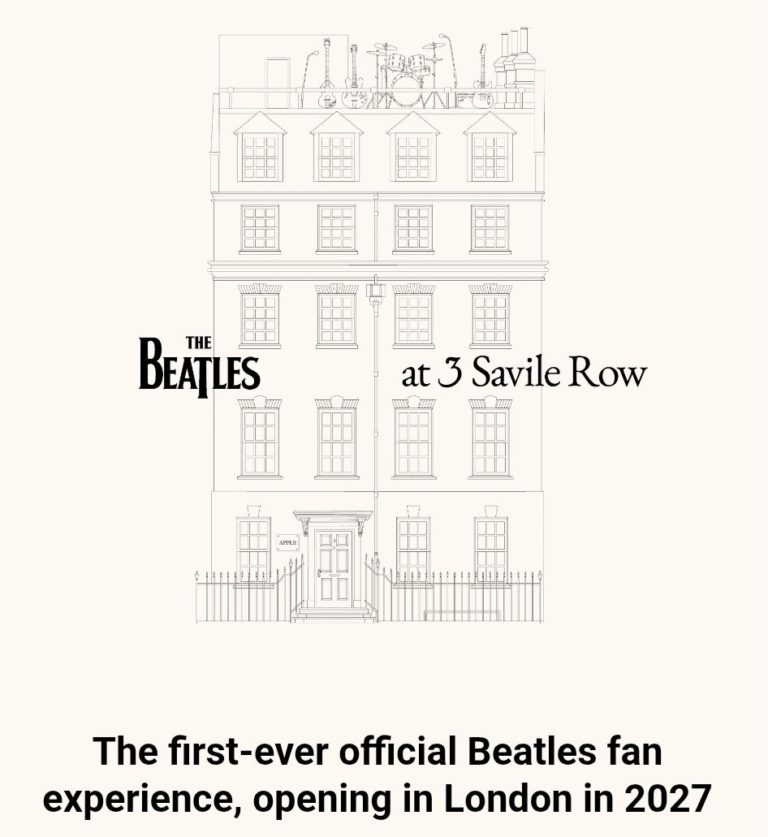
3 Savile Row has always been one of the most storied addresses in rock history. Now, for the first time, fans get to walk through the door. Apple Corps Ltd. has announced The Beatles at 3 Savile Row, the first-ever official Beatles fan experience, opening in London’s Mayfair district in 2027.

The building needs no introduction. It served as Apple Corps headquarters from 1968 to 1972. The band recorded ‘Let It Be’ in its basement. And on January 30, 1969, John Lennon, Paul McCartney, George Harrison, and Ringo Starr climbed five flights and played 42 minutes of music that stopped a city cold, their final public performance together.

All 7 floors of the Grade II listed mansion are part of the experience. Fans will move through never-before-seen archival material from Apple Corps’ extensive collection, rotating exhibitions, and a full recreation of the original basement studio where ‘Let It Be’ came to life.

The destination piece, literally and architecturally, is the rooftop. Apple Corps CEO Tom Greene confirmed the railings remain exactly as they were on that January afternoon in 1969. Fans will stand on the same surface where the Fab Four gave the world one last unforgettable show.

McCartney described the layout to the BBC with characteristic directness. “You go in on the ground floor, and there’s memorabilia and stuff like that,” he said. “Then you work your way up through the building, and see various things that happened here and there, until you get to the top, where you go out on the roof and pretend to be a Beatle.”

McCartney also offered a fuller statement: “It was such a trip to get back to 3 Savile Row recently and have a look around. There are so many special memories within the walls, not to mention the rooftop. The team have put together some really impressive plans and I’m excited for people to see it when it’s ready.”

Starr kept it short and kept it perfect: “Wow, it’s like coming home.”

The experience also includes a fan store for licensed Beatles merchandise. Greene framed the announcement in terms of what fans have always deserved. “Every single day, fans are taking pictures of the outside of 3 Savile Row,” he said, “but next year they can go in and explore all seven floors of the iconic building.”

A second experience is currently in development, with details coming later. A four-film Beatles cinematic event directed by Sam Mendes, starring Harris Dickinson, Barry Keoghan, Paul Mescal, and Joseph Quinn, arrives in April 2028 through Sony Pictures. The Savile Row experience will open well before cameras roll on that one.

Fans can register now at the official Beatles website for ticketing updates and first access to news as it drops.

Why Taylor Swift’s Songwriting Still Sets the Standard

0

In April 2026, the New York Times polled more than 250 music insiders and named Taylor Swift one of the 30 Greatest Living American Songwriters, alongside Bob Dylan, Bruce Springsteen, Dolly Parton, and Carole King. A few weeks later, she became the youngest woman ever inducted into the Songwriters Hall of Fame. She is 36 years old, and the music world is still catching up to her.

She writes with extraordinary detail

Taylor Swift understands that specificity is what makes a song feel true. She writes about a scarf left at a sister’s house, a refrigerator light, a parking lot on a Tuesday. These precise, lived-in details are what pull listeners in and keep them there. Over 90 percent of her songs use action-driven imagery that roots the listener in a specific place and time. That is craft, deliberate and repeatable, and it is one of the reasons her songs connect so deeply with so many people.

She builds real stories

Swift thinks like a novelist. From the Romeo and Juliet reimagining of Love Story at age 17, to the full character study of The Last Great American Dynasty, to the ten-minute emotional journey of All Too Well, she builds songs with genuine narrative arc. Her bridges deserve special mention. They are extended emotional turns that reframe the entire song and leave listeners somewhere completely different from where they started. Few writers working today can build a bridge the way Taylor Swift can.

For her Songwriters Hall of Fame induction, Swift personally chose five songs to represent the full range of her craft: Love Story, Blank Space, Anti-Hero, All Too Well (10 Minute Version), and The Last Great American Dynasty. Together they cover narrative storytelling, satire, confessional writing, long-form emotional depth, and character-driven historical perspective. That range across a single career is remarkable.

She grows across every album

From the country warmth of Fearless to the pop precision of 1989 to the indie-folk intimacy of Folklore and Evermore to the late-night introspection of Midnights, Swift has moved freely across genres while keeping her voice, her wit, and her emotional honesty fully intact. She has been doing this for twenty years, and each record finds a new way to surprise. Artists who sustain that level of creative restlessness across two decades belong in a very short conversation.

She writes melodies that make the words land

Swift writes melodies that serve her lyrics rather than compete with them. Her verses tend to be conversational, sitting close to just a few notes, so that the words arrive first and the melody carries them forward. When the chorus opens up, you feel the release. This approach, where every syllable lands exactly where it should, is a quality shared by the greatest pop songwriters of any era. It is also why her songs are so easy to sing along with and so hard to forget.

She writes with genuine honesty

Swift writes about self-doubt, about power imbalances in relationships, about the way the world treats women differently depending on how much success they have. She writes these things directly, and then wraps them in melodies that reach millions of people. That combination of emotional transparency and pure songwriting craft is what places her in the same conversation as the writers who shaped popular music across generations.

She is already shaping the next generation

Artists including Gracie Abrams, Maisie Peters, and Phoebe Bridgers carry clear elements of Swift’s songwriting approach in their work: the specificity, the melodic restraint, the confessional honesty, the bridge that changes everything. A generation of writers learned how to write songs by listening to hers, and that influence will keep moving forward long after the current era ends.

Taylor Swift wrote Love Story at 17. She spent years restoring All Too Well before releasing the full ten-minute version to the world. The New York Times called her one of the greatest living American songwriters. The Songwriters Hall of Fame opens its doors to her in June 2026. Twenty years in, her songwriting keeps setting the pace.

5 Budget Hacks for Seeing More Live Shows Without Going Broke

0

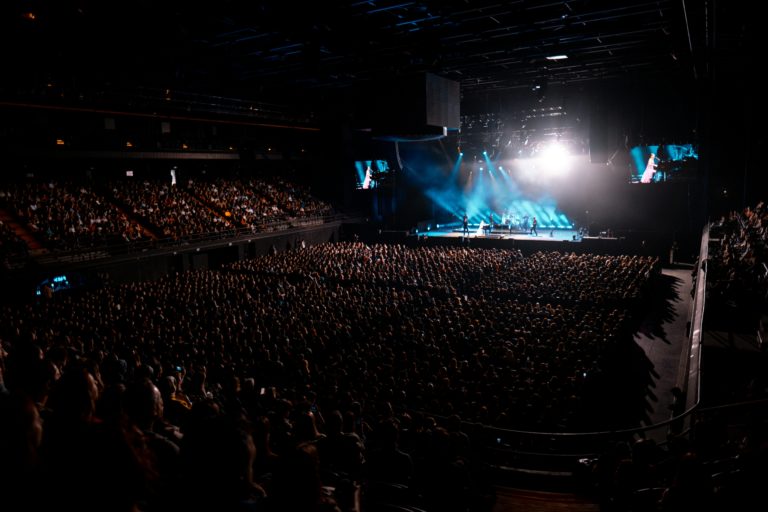
Live music is one of the best things in the world. The bad news? The average concert ticket now costs over $135 — and that’s before fees, drinks, parking, and a t-shirt you absolutely didn’t need but bought anyway.

The good news is that with a little strategy, you can see a lot more shows for a lot less money. Here’s how.

1. Master the presale

Presale tickets give you access to seats before the general public — and sometimes at better prices. The trick is knowing where to look. Sign up for artist newsletters and fan clubs, which often come with presale codes. Your credit card may already have you covered too: Citi, American Express, Capital One, and Chase all offer presale access and concert perks to cardholders. T-Mobile and Verizon do the same for their customers.

On Ticketmaster, you can follow your favourite artists directly and get notified the moment a presale opens. Treat it like a race — have your payment info ready, use your fastest internet connection, and be at your screen the moment the window opens.

Live Nation’s Concert Week typically runs each May and offers tickets to thousands of shows for around $25–$30. It’s one of the best deals of the year for live music fans. Keep an eye out for it.

2. Buy at the box office

This one sounds old-fashioned, but it works. Buying tickets directly at the venue’s physical box office lets you skip the service fees that platforms like Ticketmaster tack on — fees that routinely add 30% or more to the base price. Not every venue has a walk-up box office, but for those that do, it’s worth the trip. Bring a valid ID and check the venue’s website for box office hours before you go.

3. Go on a weeknight

Weekend shows cost more. It’s that simple. Demand drops on Tuesday, Wednesday, and Thursday nights, and ticket prices often follow. Weeknight concerts are also less crowded, easier to get to, and — honestly — a little more fun. You’re there for the music, not the Friday night chaos. If your schedule has any flexibility at all, this is one of the easiest ways to save 15–20% without changing anything else about your concert experience.

4. Wait until the last minute — strategically

For shows that aren’t completely sold out, the day before or the day of can be the best time to buy. Ticket holders who can no longer attend often drop prices sharply to move their seats fast. Platforms like Ticketmaster, StubHub, SeatGeek, Vivid Seats, and Gametime are worth checking in the final 24–48 hours. Gametime in particular has built its entire model around last-minute deals and is a solid app to have on your phone.

A word of caution: this strategy works best for shows where you’re not heartbroken if you miss out. For the artists you absolutely can’t miss, buy early.

5. Think of festivals as a bundle deal

A festival pass that gets you two or three days of music — including headliners, up-and-coming acts, and artists you’d never have discovered otherwise — often costs the same as a single premium ticket to one arena show. Instead of treating a festival as a splurge, think of it as the smartest value in live music. You spread the cost across an entire weekend, discover new favourites, and get more memories per dollar than almost any other option out there.