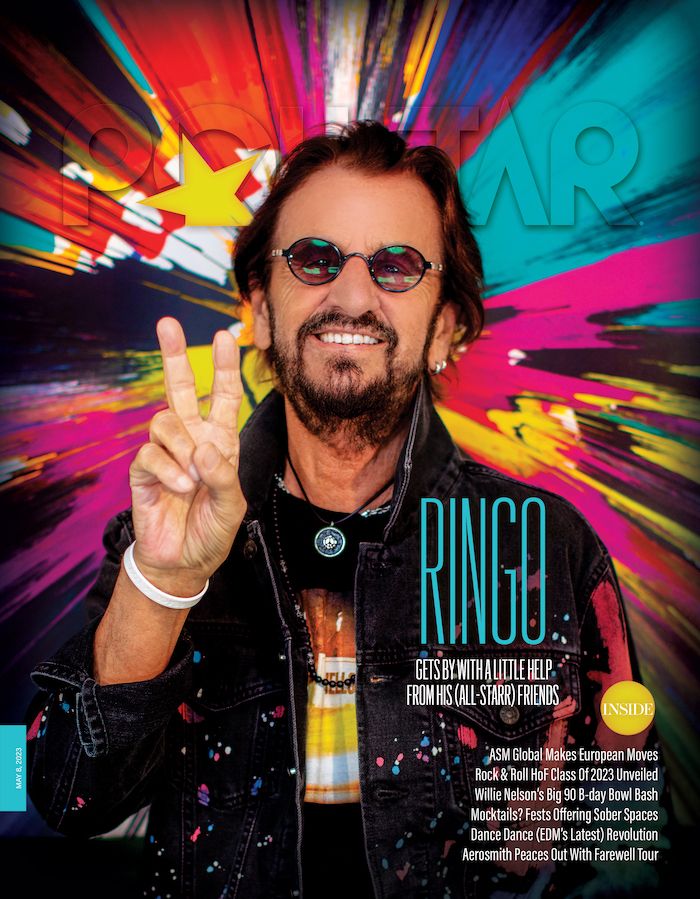
History gives us a map for almost everything, except this. Ringo Starr turns 86 in July and he’s onstage, anchoring a generation of rockers who’ve walked the calendar somewhere no popular musicians have walked before.
Look back and the precedent thins out fast. Jazz and blues handed us the early models. B.B. King kept his road life running into his late 80s, playing hundreds of nights a year as the self-described Ambassador of the Blues, a man who started touring in 1955 and barely stopped. Tony Bennett sang into his 90s, took a Number 1 album at 88, and headlined jazz festivals when most of his peers were long gone. They proved a voice could carry across seven decades.
What’s happening in 2026 stretches even those examples. King and Bennett were singular figures, exceptions standing nearly alone. This summer hands us a whole roster. Mike Love of the Beach Boys is 85. Bob Dylan turns 85. Paul Simon is 84. Randy Bachman of The Guess Who is 82. Jon Anderson and Eric Clapton are 81, joined by Micky Dolenz and Rod Stewart. John Fogerty turns 80.
The reasons run deeper than stubbornness. Rock built its identity around the road, and these players logged sixty years of muscle memory in front of crowds. Touring isn’t a chore they endure, it’s the architecture of who they are. The body remembers the count-in, the crowd, the lights, the work.
Medicine helps too. The musicians who survived the 1960s and 1970s now benefit from joint repairs, vocal coaching, and travel that bears no resemblance to the station-wagon grind of their early days. A 78-year-old can pace a tour with a science their heroes never had.
And the audience keeps the engine turning. Alice Cooper at 78 maintains a schedule that would flatten performers half his age. Robert Plant turns 78. Bruce Springsteen, Rick Springfield, and Foreigner’s Lou Gramm are 76. Steven Van Zandt of the E Street Band is 75. Michael McDonald is 74. Robin Zander, Triumph’s Gil Moore, and Pat Benatar are 73. Geddy Lee and Alex Lifeson of Rush are 72, reunited for the first tour since Neil Peart’s death. Three generations buy those tickets together.
Then there’s Willie Nelson, 93, headlining his own Outlaw Music Festival with a full summer slate. He’s the high-water mark, the proof that the ceiling everyone imagined was never really there.
So why should any of them stop? They love the songs, they love the rooms, and the rooms love them back. We’re lucky to be alive for this. No generation before us got to watch its founders keep playing this far into the story, and no map told us it was possible. They’re drawing the boundary as they go, and we get to stand in the room while they do it. Long may they run.