


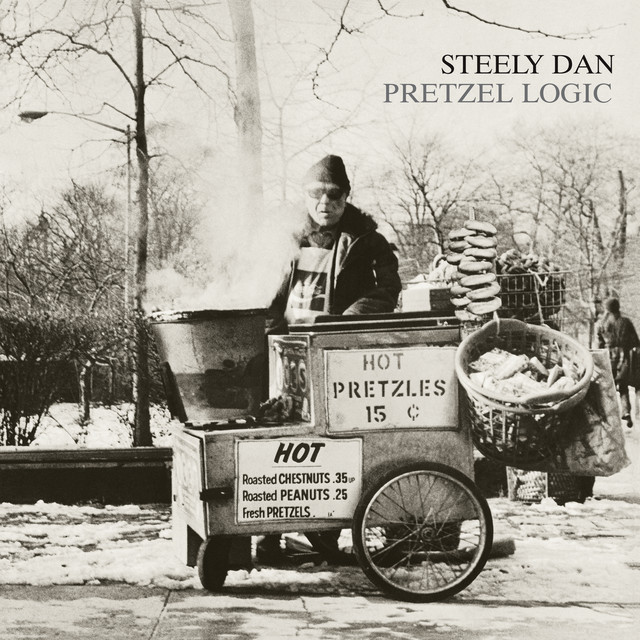
It’s 1974. Steely Dan—at this point still technically a band in the traditional sense—is at a crossroads. They’d done the road. They’d seen the inside of enough dingy clubs and felt the friction of the traveling circus. Walter Becker and Donald Fagen, the cynical, jazz-obsessed architects behind the curtain, were starting to realize that the five-piece rock group they’d assembled was… well, a limitation.
‘Pretzel Logic’ is the pivot point. It’s the record where the band starts to dissolve into a revolving door of the world’s most elite session players. It’s the album where the songs got tighter, the hooks got sharper, and the jazz influences moved from the background to the driver’s seat. It was a massive commercial success, but it was also the beginning of the end for Steely Dan as a live entity for nearly two decades. This wasn’t just pop; it was high-concept musical engineering disguised as radio-friendly gold.
1. The Ghost of Horace Silver
You know that iconic, syncopated piano line that kicks off “Rikki Don’t Lose That Number”? It didn’t just fall out of the sky. It is an almost direct appropriation of the intro to jazz legend Horace Silver’s 1965 track, “Song for My Father.” It’s the ultimate example of Fagen and Becker’s “bop phrasing” leaking into the pop charts.
2. The Mystery of the “Squonk”
On “Any Major Dude Will Tell You,” Fagen sings about a squonk’s tears. During the recording sessions, the studio musicians were actually too intimidated to ask what a squonk was, fearing they’d look out of the loop. It turns out it’s a mythical creature from Pennsylvania folklore that is so ugly it spends its life crying and can dissolve into a puddle of tears when cornered.
3. The Last Stand of the Quintet
While the album used a small army of L.A. session legends (like Jim Gordon and Jeff Porcaro), ‘Pretzel Logic’ holds a bittersweet distinction: it was the last album to feature the original full quintet lineup of Becker, Fagen, Denny Dias, Jim Hodder, and Jeff “Skunk” Baxter. Shortly after, the touring stopped, and Baxter headed off to join The Doobie Brothers.
4. The Secret Trombone on a Pedal Steel
For the instrumental cover of Duke Ellington’s “East St. Louis Toodle-Oo,” Jeff “Skunk” Baxter didn’t just play guitar. He used his pedal steel to painstakingly recreate the classic “Tricky Sam” Nanton trombone solo from the original 1920s arrangement. To keep the vintage vibe, Walter Becker used a talk box to mimic James “Bubber” Miley’s muted trumpet.
5. The Lost Flapamba Intro
If you bought the original single of “Rikki Don’t Lose That Number” back in ’74, you were missing something. The album version starts with a weird, woody percussion solo played by Victor Feldman on an instrument called a flapamba. ABC Records (and later Geffen) ordered it cut from the radio single to get to the hook faster.