


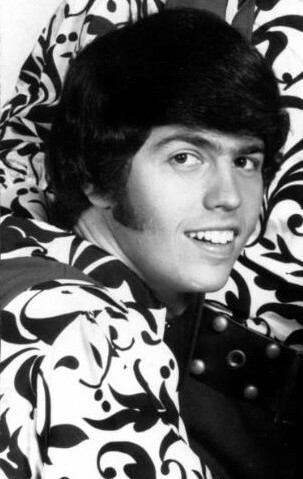
There is a particular kind of person in the music industry who does the most essential work and receives the least amount of credit for it. The one who writes the songs, arranges the choreography, produces the records, holds the vision, and keeps everything pointed in the right direction while someone else stands at the front of the stage and gets the screams. Alan Osmond was that person for one of the most successful family acts in the history of popular music, and when he died on April 20, 2026, at the age of 76, surrounded by his wife Suzanne and their eight sons, the music world lost someone whose fingerprints were on far more of what we loved than most people ever knew.
Alan Ralph Osmond was born on June 22, 1949, in Ogden, Utah, the oldest of a remarkable musical family. He and his brothers Wayne, Merrill and Jay began singing as a barbershop quartet in 1958, when Alan was just eight years old. The group headed to Los Angeles in 1961 to audition for The Lawrence Welk Show, got turned away at the door, met the Lennon Sisters, found their way to Disneyland, and were discovered there by Jay Emery Williams, Andy Williams’s father. That is not a career origin story. That is a movie. And it led to seven years on NBC’s The Andy Williams Show, which is where America first fell in love with them.
By the time the 1970s arrived, The Osmonds were one of the biggest acts on the planet. Donny and Jimmy had joined the group, Marie was building her own parallel career, and the hits were coming fast and relentlessly. “One Bad Apple” hit number one in 1971 and stayed there for five weeks. “Down By The Lazy River” followed. “Love Me For A Reason” became a global phenomenon. But the song that perhaps most reveals who Alan Osmond really was as a creative force is “Crazy Horses,” a hard-driving, genuinely surprising piece of rock and roll that nobody expected from a wholesome family group out of Utah, and which Alan co-wrote with Merrill. That song still sounds extraordinary. It always will.
What made Alan’s contribution so significant was how much of it happened away from the spotlight. He played piano and guitar, co-wrote many of the group’s most important songs, co-produced most of their recordings, and arranged the choreography that made their live shows the spectacle they were. He was the band’s creative architect, the oldest brother who set the standard and held the bar. His brothers called him No. 1 and the name wasn’t ceremonial. It was accurate.
His personal life was as full as his professional one. He married Suzanne Pinegar in 1974, a marriage that lasted fifty-one years and produced eight sons, thirty grandchildren, and five great-grandchildren. His sons performed as the Osmond Boys in the late 1980s and later as The Osmonds Second Generation, which means Alan’s influence on the family’s musical legacy extended across generations in the most direct way possible. He also co-founded Stadium of Fire with his brother Merrill in 1980, which became one of the largest Independence Day celebrations in the United States, held annually in Provo, Utah.
In 1987, during an Osmond Brothers concert, Alan realized he could not raise his right arm. The diagnosis that followed was progressive multiple sclerosis. He was thirty-seven years old. What he did with that diagnosis is part of what defines the man. He did not disappear. He did not go quietly. He spent decades speaking publicly about living with MS, appearing at fundraising events, offering encouragement and practical wisdom to others facing the same diagnosis, and receiving the Dorothy Corwin Spirit of Life Award from the National Multiple Sclerosis Society in 2000. His motto was direct and characteristic: “I may have MS but MS does not have me.” He retired from performing in 2007 but his last documented appearance with his brothers was October 13, 2018, at Neal Blaisdell Arena in Honolulu, and even after that he was still writing songs. He published his autobiography, ‘One Way Ticket,’ in September 2024.
The tributes that have come since his passing reflect a man who was beloved not just as a performer but as a human being. His brother Merrill, who visited him two days before he died, shared that Alan made him laugh even while struggling, and that in a quiet moment he leaned close and whispered a request to do something with the creative work they had built together. “His life was not measured in years but in love, sacrifice, and purpose,” Merrill wrote. That is the kind of thing that gets said at funerals and usually means very little. In this case it means everything.
Beyond the music and the philanthropy, Alan Osmond was someone who lived by a set of values and didn’t waver from them. His faith was central to everything he did. His family was the frame around all of it. He helped launch the OneHeart Foundation, focused on supporting orphans and community humanitarian work. He co-created the Children’s Miracle Network Telethon, which has raised over two billion dollars for children’s hospitals. The scale of what he gave back, quietly, consistently, over decades, is genuinely staggering when you add it all up.
Before his marriage, Alan briefly dated Karen Carpenter in the early 1970s, a detail that speaks to the world he moved through and the era he inhabited. Two of the most gifted, wholesome, and deeply feeling musical presences of a generation, briefly in each other’s orbit. That detail is small but somehow illuminating. He was part of the fabric of that time in a way that is hard to fully articulate now, when the music of the 1970s has been reduced to playlist categories and streaming algorithms. The Osmonds were everywhere then, inescapable and beloved, and Alan was the reason they were as good as they were.
He leaves behind Suzanne, their eight sons, thirty grandchildren and five great-grandchildren, and a body of work that shaped what popular music looked and sounded like for an entire decade. Alan Osmond was seventy-six years old. He was still writing songs near the end. The stage he built for his family was one of the most enduring in the history of the form, and the man who built it deserved every moment of the love that is coming his way now.