


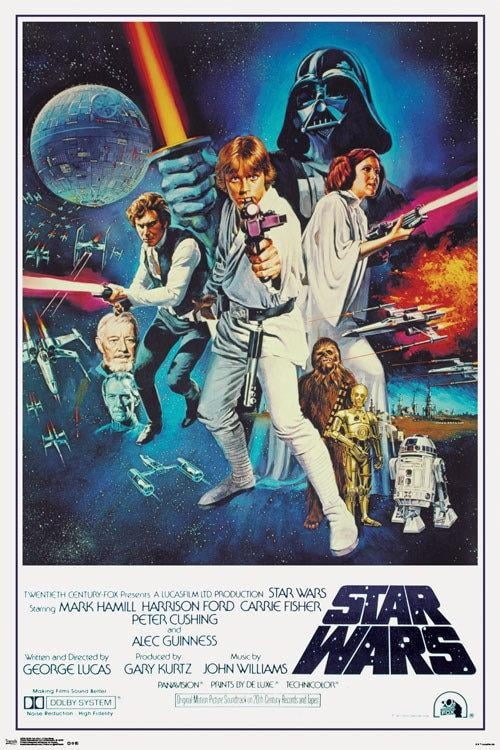
Marcia Lucas, the Academy Award-winning film editor whose contributions to Star Wars and some of the most important films of the 1970s helped define an era of Hollywood filmmaking, died on May 27, 2026 at her vacation home in Rancho Mirage, California. She was 80. The cause was metastatic cancer.
Born Marcia Lou Griffin on October 4, 1945 in Modesto, California, she came to film editing not through any formal training but through persistence and instinct. She started as an apprentice film librarian with no experience, worked her way up to assistant editor by the time she was twenty, and spent eight years in the Motion Picture Editors Guild apprenticeship before earning her full editor’s credit. By the time Hollywood’s most consequential decade came around, she was ready for it.
Her editing credits read like a syllabus for 1970s American cinema. She edited Martin Scorsese’s Alice Doesn’t Live Here Anymore in 1974, brought her supervising touch to Taxi Driver in 1976 and New York, New York in 1977, and received an Academy Award nomination for her work on American Graffiti in 1973. Filmmaker John Milius, who worked alongside her during that period, called her one of the best editors he knew — not one of the best women editors, one of the best editors, full stop.
But it is Star Wars that defines her legacy, and not simply because of the Oscar it earned her. When the first rough cut of the film was screened and director John Jympson was fired, it was Marcia who was brought in to salvage it alongside Richard Chew and Paul Hirsch. She was specifically tasked with the Battle of Yavin sequence — the climactic Death Star assault that determines whether the entire film works or fails. George Lucas later estimated it took her eight weeks to cut that battle alone, working through 40,000 feet of dialogue footage to build what became one of the most thrilling sequences in cinema history. She also gave the film something it badly needed and might not otherwise have had: she warned George that if the audience didn’t cheer when Han Solo arrived in the Millennium Falcon at the last moment, the picture didn’t work. She was right, and the scene was fixed. At the 50th Academy Awards, she won the Academy Award for Best Film Editing for Star Wars alongside Chew and Hirsch.
Her contributions extended beyond the cutting room. It was Marcia who suggested to George that Obi-Wan Kenobi should be killed off and return as a spiritual guide to Luke rather than simply escaping through a blast door — a narrative decision that fundamentally changed the emotional architecture of the film. After viewing the rough cut of Raiders of the Lost Ark, she identified that the ending lacked emotional closure because Marion was absent, which led directly to George shooting the final scene that completed the story. When Return of the Jedi went into production in 1982, she came back as one of three editors on the film, handling what George described as the emotional dying and crying scenes that gave the trilogy its heart.
She and George Lucas married on February 22, 1969 and divorced in 1983, after which she stepped away from the industry to raise her family. She had been clear-eyed about her work, about its value, and about the ways in which it was sometimes overlooked. When people called George the head of Star Wars and Marcia its heart, she pushed back with characteristic honesty: “I definitely made scenes work. I made the end battle work. I definitely had a lot to do with making it work. But I wasn’t the writer and I wasn’t the director.” She knew exactly what she had done, and she knew exactly what she hadn’t, and she had no interest in inflating either.
The films she worked on are still being watched. The galaxy she helped build is still standing. That is the measure of a career.
She is survived by her daughters Amanda and Amy.