


One of cinema’s longest and most remarkable runs has reached its end. Clint Eastwood has officially retired from acting and directing at 96, with his son Kyle confirming the news in 2026. The decision closes a career that stretched across seven decades, from a contract player earning $100 a week to a four-time Academy Award winner and one of the most recognizable figures in film history.
His final work behind the camera came with ‘Juror #2’, the legal thriller released by Warner Bros. in November 2024 to generally favorable reviews. The film marked his tenth straight collaboration with the studio, a partnership that began back in the mid-1970s and outlasted nearly everyone he started with. After ‘Juror #2’, insiders went back and forth on whether it would be his last, but Kyle settled the question.
The beginning was anything but glamorous. Eastwood was signed by Universal in 1954, initially criticized for delivering his lines through his teeth, a trait that later became a trademark. His breakthrough arrived as Rowdy Yates on the CBS western series Rawhide, which ran from 1958 into the mid-1960s and put him through some of the most grueling work of his life, often six days a week for 12 hours a day.
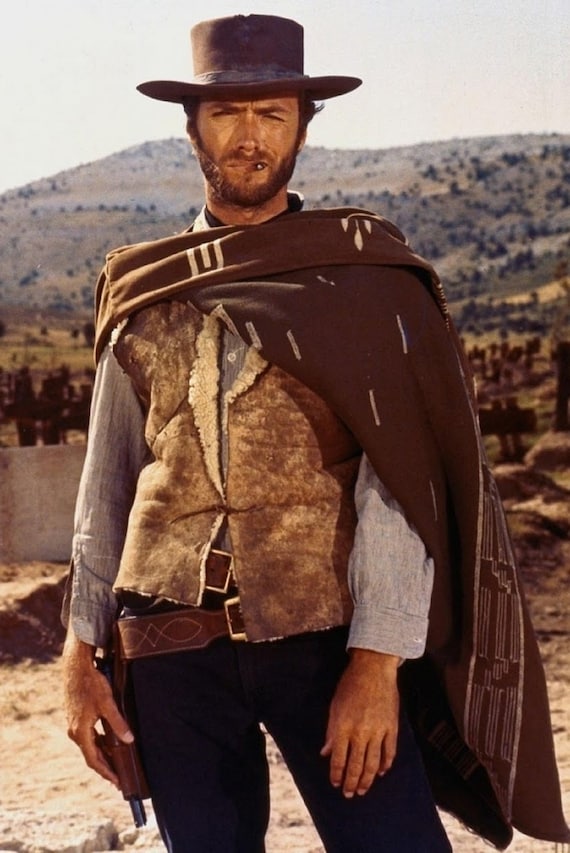
Then came the role that changed everything. When his Rawhide co-star turned down an Italian western, Eastwood took the part for $15,000 and a Mercedes-Benz, traveling to Spain to shoot ‘A Fistful of Dollars’ with a then-unknown director named Sergio Leone. The Man with No Name made him a major star in Italy, and the Dollars trilogy reshaped the western entirely, trading the clean-cut hero for a morally ambiguous antihero. Leone once said he needed a mask more than an actor, and Eastwood gave him exactly that.
The 1970s cemented his status as a cultural force. Dirty Harry arrived in 1971, inventing the loose-cannon cop genre and handing Eastwood one of cinema’s most quotable lines. That same year, he made his directorial debut with ‘Play Misty for Me’, launching a second career that would eventually eclipse his first. He founded Malpaso Productions, named after a creek on his Monterey County property, and used it to take control of nearly everything he made.
His reputation as a director grew on efficiency and instinct. Frustrated by reshoots early on, Eastwood became famous for completing most scenes on the first take, avoiding rehearsals, and bringing films in under budget and ahead of schedule. He favored low-key lighting and a noir-ish feel, and he trusted audiences to fill in the gaps rather than spelling everything out.
The critical respect he chased for years finally arrived in full. ‘Unforgiven’ won Best Picture and Best Director in 1992, and ‘Million Dollar Baby’ repeated the feat in 2004, making him, at 74, the oldest director to win two Best Picture awards. He directed five actors to Oscar-winning performances, including Gene Hackman, Sean Penn, Tim Robbins, Morgan Freeman, and Hilary Swank, and earned acclaim for films he never appeared in, from ‘Mystic River’ to ‘Letters from Iwo Jima’.
His range as a leading man stayed wide to the very end. He moved from the romantic ache of ‘The Bridges of Madison County’ opposite Meryl Streep to the weathered fury of ‘Gran Torino’, which became the highest-grossing film of his career, and on to ‘The Mule’ in his late 80s. Films featuring Eastwood have grossed more than $1.8 billion domestically, a staggering figure spread across more than 50 titles.
Music ran alongside all of it. A devoted jazz and blues aficionado, Eastwood composed scores for several of his films, co-wrote songs, and ran his own Warner-distributed label, Malpaso Records. He received an honorary doctorate from the Berklee College of Music and called it one of the great honors of his life.
The honors piled up across continents. Four Academy Awards, four Golden Globes, the Légion d’honneur, the Order of the Rising Sun, an AFI Life Achievement Award, and France’s highest civilian distinctions all came his way. French President Jacques Chirac told him he embodied the best of Hollywood, and President Obama once described his films as essays in individuality, hard truths, and the essence of what it means to be American.
As he reflected on his late career, Eastwood kept it simple. He said he kept working because there were always new stories to tell, and that as long as people wanted to hear them, he’d be there. After more than 70 years, the storyteller has finally stepped away, leaving behind a body of work few will ever match.