


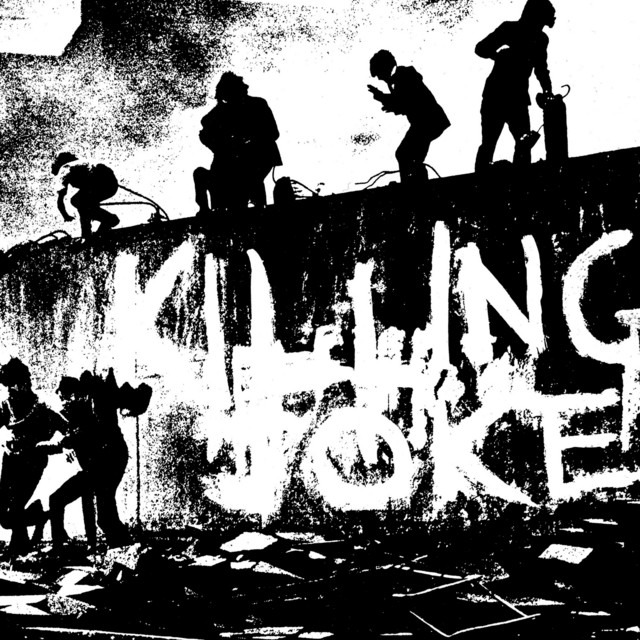
Few debut albums have aged as strangely, or as triumphantly, as Killing Joke’s self-titled first record from October 1980. At the time it crept to a modest No. 39 on the UK Albums Chart and earned a critical mauling, the kind of reception that buries lesser bands. Yet the cold, pounding fusion of post-punk and proto-industrial that Jaz Coleman, Geordie Walker, Youth, and Paul Ferguson laid down would quietly seep into the DNA of metal and alternative music for decades, drawing devotees from Metallica to the Foo Fighters. The backstory is every bit as compelling as the noise. Here are five facts worth knowing.
The Band Formed Through A Cryptic Melody Maker Ad
After Jaz Coleman met drummer Paul Ferguson in late 1978, the pair placed a strange recruitment notice in Melody Maker in February 1979. It asked for bass and lead players “to tell the killing joke,” promising total exploitation, no information, and anonymity. That oddball ad pulled in guitarist Geordie Walker and bassist Youth, completing the lineup.
It Was Recorded Live In About Two Weeks With Almost No Overdubs
The band self-produced the album on purpose, wanting only an engineer who would capture them exactly as they were. They cut it live in the studio as basically as possible, with virtually no overdubs, putting all the difference into the mixing. Engineer Phil Harding reckoned the whole recording took only around two weeks.
The Cover Came From A Famous War Photograph Of The Troubles
The striking artwork was based on a photograph by Don McCullin showing young rioters fleeing clouds of CS gas in Derry, Northern Ireland. The image was captured on 8 July 1971 during the Troubles, as the British Army deployed the gas. It was taken only months before the events of Bloody Sunday unfolded in the same town.
Critics Trashed It Before Calling It Groundbreaking
According to Jaz Coleman, the album was slagged off by just about everyone when it first came out. Then, roughly eight years later, the same record was suddenly being hailed as ground-breaking. As Coleman put it, people are fickle, and you simply have to stand by your own creations.
A Track Was Named After A Berlin Punk Club, Or Maybe A Postcode
The song “S.O.36” shares its name with the legendary Kreuzberg club SO36, a Berlin punk and new wave institution often compared to New York’s CBGB. The name itself comes from the area’s historic postcode, where SO stands for Südost, meaning South East. To this day it’s unclear whether the band named the track after the club or the postal code.