


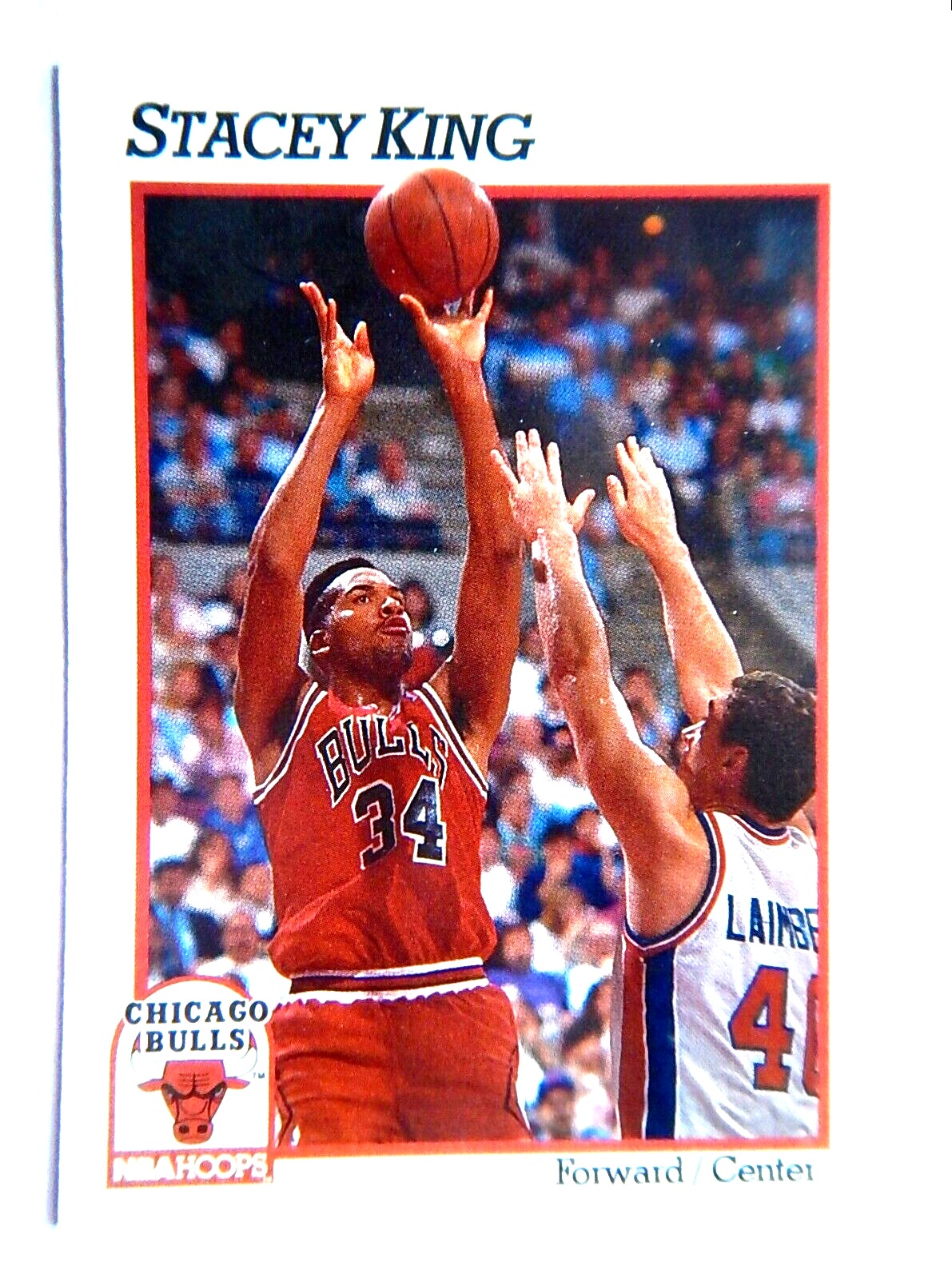
Stacey King spent his playing career standing next to greatness, and then he spent the rest of his life describing it to the rest of us. The three-time NBA champion and longtime Chicago Bulls broadcaster was found dead at his home in River Forest, Illinois on June 7, 2026, at the age of 59. Reports indicate he had fallen at home, with an autopsy still pending. For a generation of Bulls fans, his voice was the sound of basketball nights in Chicago.
An Oklahoma legend before the pros
Ronald Stacey King was born on January 29, 1967, in Lawton, Oklahoma, and came up through Lawton High School before heading to the University of Oklahoma, where he played from 1985 to 1989 under the head coach Billy Tubbs. His college career built to a remarkable crescendo. As a junior he led the Sooners to the 1988 national championship game, their first appearance in 41 years, and was named the tournament’s Most Valuable Player even in a loss to Kansas.
His senior year was the stuff of school history. King averaged 26.0 points, 10.1 rebounds and 2.3 blocks while shooting better than 52 percent, leading the Big Eight in scoring and blocks. He swept up the Big Eight Player of the Year award, consensus first-team All-American honors and The Sporting News Player of the Year. He still ranks among the top scorers and rebounders in Oklahoma history, and the program later honored his number 33.
A role player in the middle of a dynasty
The Chicago Bulls selected King with the sixth overall pick in the 1989 draft, and he played all 82 games as a rookie, earning a spot on the NBA All-Rookie Second Team. What followed was a lesson in the difference between college stardom and professional fit. The NBA writer Sam Smith viewed King as miscast on a Bulls roster already stocked with forwards Horace Grant and Scottie Pippen, and King himself recalled being unhappy at first with life as a role player before accepting the part for the sake of winning.
And win he did. King was a rotational piece during the Michael Jordan-led dynasty, collecting championships in 1991, 1992 and 1993, with a notable contribution to Chicago’s fourth-quarter comeback in Game 6 of the 1992 Finals. After Jordan’s first retirement, the Bulls traded King to the Minnesota Timberwolves in February 1994 for Luc Longley and a draft pick. His travels afterward took him through Miami, the CBA, a stint with the Dallas Mavericks and Boston Celtics, and overseas stops in Turkey and Argentina before his playing days wound down in 1999.
The second act that made him famous
For many fans, King’s biggest impact came after he stopped playing. He moved into coaching in the CBA, leading the Rockford Lightning to a finals appearance, then stepped away to spend more time with his children. He found his true calling in the broadcast booth, joining Comcast SportsNet as a studio analyst in 2004 and becoming the Bulls’ regular game broadcaster for the 2006–07 season.
By 2008 he was the lead color commentator, a role he held alongside Neil Funk and later Adam Amin, carrying it from Comcast SportsNet through to the Chicago Sports Network right up until his death. His popularity rested on an infectious enthusiasm, a gift for nicknames, and catchphrases that became part of the city’s basketball vocabulary. “Gimme the Hot Sauce” was the most famous of them. He christened Derrick Rose “the Windy City Assassin,” Kevin Huerter “Red Velvet” and Matas Buzelis “Lil Buzi Vert.” His calls of Rose’s highlight plays, in particular, became cherished pieces of Chicago sports memory.
A voice that became a fixture
There’s a particular kind of athlete who matters more for who they were around than for their own box scores, and King wore that role with humor and grace. He was never the full-time star the pros once projected, but he understood the game well enough to win three rings inside one of basketball’s great dynasties, and he loved it well enough to spend two decades helping a city fall in love with it all over again.
Stacey King is survived by the countless fans who grew up with his voice in their living rooms. If you’ve got a favorite Bulls memory from the last two decades, chances are good his call is part of how you remember it. Turn one on tonight and listen for the hot sauce.