


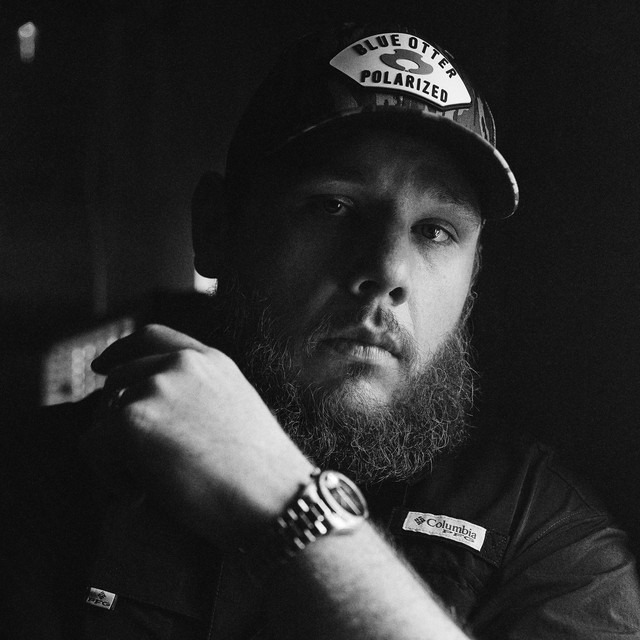
Picture the country charts back in 2016. Glossy pop crossovers were everywhere, tailgate anthems ruled the radio, and the sound coming out of Nashville was leaning further from the twang every season. Into that walked a bearded guy in a ballcap from North Carolina, singing in a thick baritone about heartbreak and beer and small towns, and somehow he became the biggest star the genre has produced in a generation. The way he did it tells you a lot about where country had wandered and what a huge chunk of its audience had been quietly hoping for.
Luke Combs grew up around Asheville, North Carolina, and started shaping his musical ambitions while he was at Appalachian State University, playing local bars with a sound soaked in traditional country. You can hear his record collection in everything he does. He came up on 90s country radio, and legends like Brooks & Dunn and Garth Brooks loom large over his whole approach. On an episode of the trivia show “Track Star” he rattled off artists across genres and lit up the second he heard Tim McGraw, an artist he called a staple of his childhood. That depth of knowledge isn’t a party trick. It’s the foundation everything else sits on.
What he built from those roots is what set him apart. His music fuses a love of classic country and Southern-fried soul, a blend inspired in part by modern mavericks like Eric Church and Chris Stapleton, with a hint of modern R&B layered underneath. That combination flourished on his ballads and made Combs stand apart from the slick country-pop crooners and the bro-country crowd, a distinction that helped him become a hit right out of the gate. Add in touches of Southern rock and a little bluegrass and you get a signature sound that felt like fresh air precisely because it sounded familiar.
The most important thing about Combs might be what he refused to do. He’s championed authentic storytelling and a more traditional country sound, often resisting the pop crossover trends that so many of his peers chased. In a Nashville built more and more around radio-friendly pop machinery, that was a genuine gamble. His success answered the question for good. His massive commercial run proved there’s a real appetite for that genuine approach, and it’s inspired a new generation of artists by showing that relatability and heartfelt lyrics can carry an artist all the way to global superstardom.
The hits make the case better than any think piece could. “Hurricane” arrived in 2016 and went straight to the top of the country charts. “Beautiful Crazy” turned a wedding-dance staple into a phenomenon. “Beer Never Broke My Heart” became a stadium singalong. Then his cover of Tracy Chapman’s “Fast Car” introduced a 1988 classic to a whole new audience and put Chapman back in the spotlight in a way nobody saw coming. Stack up the number one albums and the record-breaking radio runs, and you’re looking at one of the defining careers of the era.
Here’s the part that’s easy to miss. Combs reframed what a country superstar could be by leaning all the way into being ordinary, in the best sense of the word. His songwriting comes straight from his own life and the things he notices day to day, and he writes in plain, direct language instead of reaching for clever metaphor. The themes are the ones we all know, love and heartbreak and the slow ache of a small town you can’t quite leave behind. The ballcap and the beard and the boots became part of the appeal rather than a marketing costume. He’s been credited with helping bring a traditional country sound back to mainstream radio while still embracing modern production, and with his sold-out stadium tours and crossover reach, he represents the next wave of country icons.
What he leaves behind is bigger than a pile of platinum plaques. Younger artists cite him as an influence not just for the music but for how he built the whole thing, proving you don’t need to chase trends to win, you need to connect with people. In a genre that gets accused of following whatever’s hot, Combs offered a completely different blueprint, and it worked at the highest level imaginable.
He didn’t reinvent country music. He reminded it what it already was, then proved there was an enormous crowd waiting for someone to do it sincerely. That’s the quiet kind of reframing, the sort that doesn’t show up with a new subgenre or a flashy gimmick. It just moves the center of gravity. If you want a sense of where mainstream country is heading next, put on the artists following the Combs playbook and listen for the twang coming back.