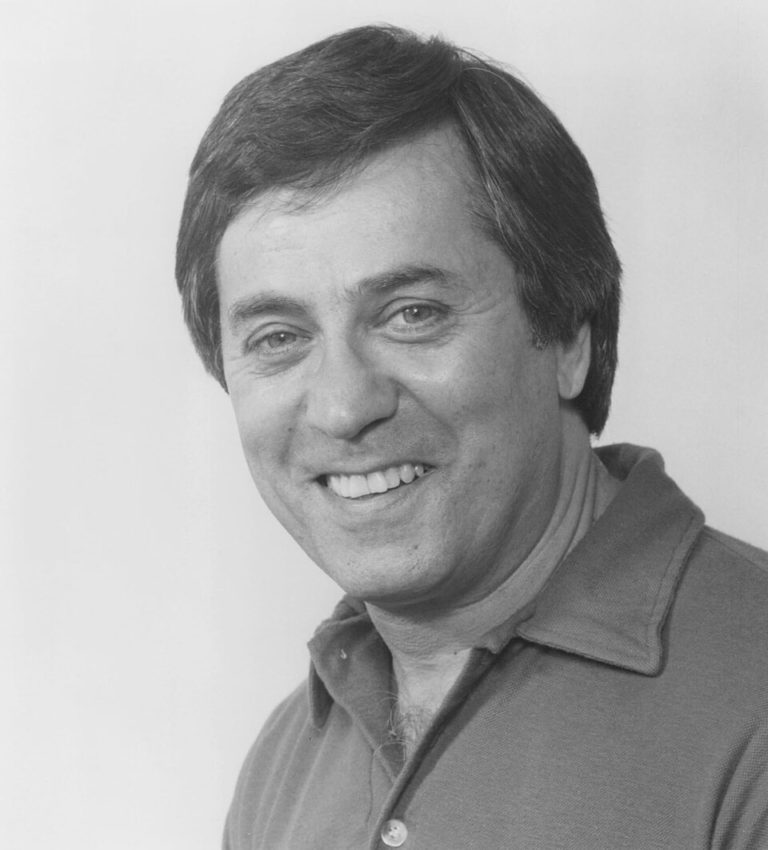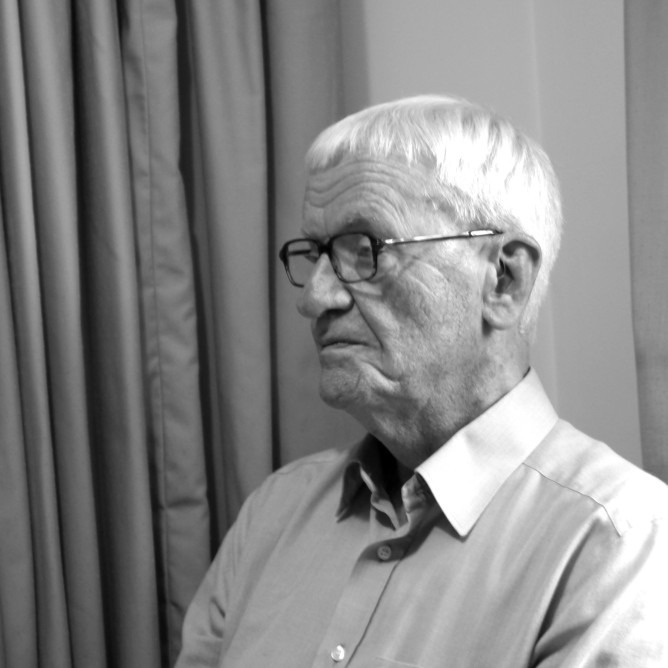
Arnold Whittall, the British musicologist whose decades of writing, teaching, and analysis helped shape how the English-speaking world understands twentieth and twenty-first century classical music, died on May 26, 2026. He was 90. Allen Forte, one of the most distinguished music theorists of the modern era, called him simply “the dean of British music analysis.” That was not hyperbole. It was a description that stuck because it was accurate.
Born in Shrewsbury, Shropshire on November 11, 1935, Whittall was educated at Emmanuel College, Cambridge, where he read History and Music and graduated in 1959. He received his PhD in 1964 and began a teaching career that would take him through the Cambridgeshire College of Arts and Technology, the University of Nottingham, Cardiff University, and finally King’s College London, where he was appointed Professor of Musical Theory and Analysis in 1982 and where he remained, in various capacities, until 2012. In 1985 he was a Visiting Professor at Yale. He was, by any measure, one of the central figures in British music academia for half a century.
His scholarly output was remarkable in both its range and its consistency. He wrote extensively on Benjamin Britten and Michael Tippett, on Schoenberg, Stravinsky, Wagner, Webern, and on a vast array of younger composers pushing the boundaries of serialism, spectralism, and new complexity. His bibliography runs from ‘Music since the First World War’ in 1977 through ‘Musical Composition in the Twentieth Century’ in 1999, ‘The Cambridge Introduction to Serialism’ in 2008, ‘British Music After Britten’ in 2020, and a study of Schoenberg’s ‘Verklärte Nacht’ and ‘Erwartung’ published in 2023 — a book completed in his late eighties that demonstrated a mind still operating at full stretch. His final contribution to academic publishing appeared in 2025, a chapter in a Cambridge University Press volume on Wagner studies.
His work on Wagner in particular earned lasting recognition. Over many years he wrote substantial essays on each of Wagner’s music dramas from ‘Der fliegende Holländer’ to ‘Parsifal’, gathered eventually into ‘The Wagner Style’ in 2015. He positioned Wagner as an early modernist and identified in the music dramas a principle he called rhetorical dialectics — a tension between the continuity Wagner sought through his art of transition and the disruptive, disintegrating forces that run against it. It was exactly the kind of analytical framework that made difficult music more navigable without ever making it smaller.
He was also a committed founder of institutions. He established the journal Soundings at Cardiff in 1970 and co-founded the journal Music Analysis at King’s College London in 1982 alongside Jonathan Dunsby, providing the discipline with two of its most important venues for serious scholarly exchange. He made many broadcasts for BBC Radio 3, introduced the Corporation’s College Concerts series throughout the early 1980s, and wrote record reviews for Gramophone across a long span of years. He was awarded the Derek Allen Prize by the British Academy in 2013, the Pascall Medal by the Society for Music Analysis in 2021, and was made an honorary member of the Royal Musical Association in 2014.
He is survived by the students he taught, the journals he founded, the books he wrote, and the generations of musicians and scholars who came to understand modern music more clearly because of the precision and generosity of his thinking.