Home Blog Page 11

Where Should Taylor Swift and Travis Kelce Get Married? We Have Thoughts.

0

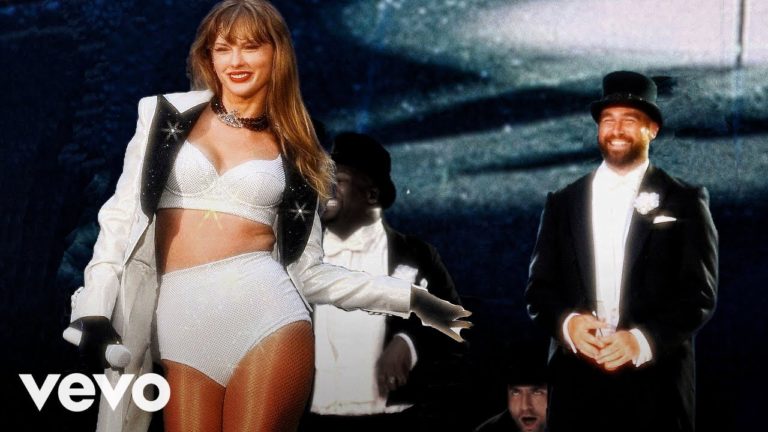
Taylor Swift and Travis Kelce are reportedly getting married on July 3 in the middle of Manhattan, with rumours swirling that the Grammy winner will say “I do” at Madison Square Garden. And honestly, of all the venues on earth, Madison Square Garden might be the only one that makes complete sense for these two specific people. But let’s think bigger. Here are four places where the wedding of the decade should actually happen.

They announced their engagement in a joint Instagram post on August 26, 2025, captioned “Your English teacher and your gym teacher are getting married,” which is the most Taylor Swift caption in history and also somehow perfect. It all started when Kelce revealed he had tried to give Swift a friendship bracelet with his phone number at one of her Eras Tour concerts. A friendship bracelet. This is how the most famous couple in the world got together. The friendship bracelet industrial complex peaked and nobody noticed.

So. Four venues. Let’s do this.

Madison Square Garden, New York City

Taylor Swift and Travis Kelce are reportedly getting married at Madison Square Garden on the 4th of July weekend, with the guest list including close friends of Swift such as Selena Gomez, Gigi Hadid, and the Haim sisters, as well as Kelce’s Kansas City Chiefs teammates and family members. You’re going to need a big room. MSG seats 20,000 people. Problem solved. The Chiefs offensive line can sit together in the upper deck and nobody has to worry about the weight limit on folding chairs. The stage is already there, which means the first dance situation is fully handled. Taylor Swift has played MSG approximately one hundred times, which means she knows where the green room is, she knows where the good lighting hits, and she knows exactly how the acoustics work when she starts crying during her vows. There’s also a Jumbotron, and you absolutely cannot get married at this level of fame without a Jumbotron showing the highlight reel.

Arrowhead Stadium, Kansas City

Travis Kelce has won multiple Super Bowls in a Kansas City Chiefs uniform and Arrowhead Stadium is where his legend was built. It seats 76,000 people, which comfortably fits both the Swiftie fanbase and the entire NFL. Taylor could walk down the aisle on the 50-yard line, Kelce could wait at the end zone, and the whole thing could be set to a custom orchestral arrangement of “Cruel Summer” played by the Chiefs’ marching band. The tailgate options for the reception are genuinely unmatched. Kansas City barbecue at a wedding? This is not a bug. This is a feature.

The Eiffel Tower, Paris

Forbes recently named Swift the world’s richest female musician with a net worth of $2 billion, achieved through the Eras Tour, the highest-grossing concert tour in history. Renting the Eiffel Tower for an evening is well within budget. Paris is already associated with the most romantic moments in Swift’s entire catalogue. The photos would break the internet so thoroughly that the internet would need to go lie down for a week. Travis Kelce in a suit under the Eiffel Tower at night with the lights twinkling behind him is an image that sells itself. The friendship bracelet people would be trading “Paris Era” beads within hours.

The Grand Ole Opry, Nashville

Taylor Swift’s origin story is Nashville. She moved there at 14 years old to chase a music career and the rest is history that has been very well documented. The Grand Ole Opry is the most sacred room in American music and it seats just under 4,500 people, which means it’s the most intimate option on this list. Small by Swift standards. Perfectly sized for the people who actually matter. No Jumbotron, no 50-yard line, just one of the most storied stages in the world and two people who have both, in their own very different ways, earned the right to stand on it.

Sources close to the couple say they’ve been planning the wedding as a genuine partnership, both equally involved and excited, approaching it in a way that feels natural to them. Which makes sense. She’s a perfectionist who has planned world tours down to the lighting cue. He’s a professional athlete who understands preparation and execution. Together they will produce the most efficiently emotional wedding in human history, and the setlist for the reception will be immaculate.

Congratulations to them both. Whatever venue they choose, it’s going to be the most watched event of the year. And somewhere, a Swiftie is already making a friendship bracelet that says “July 3.”
Ovidio Granados, the Accordion Doctor Who Built a Vallenato Dynasty, Dies at 84

0

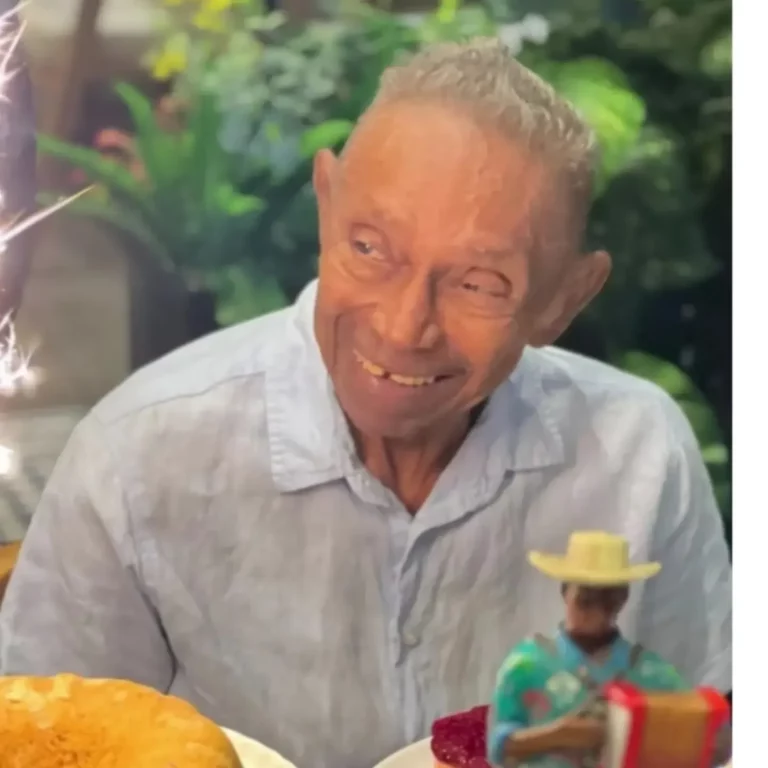
Ovidio Enrique Granados Melo, the Colombian accordionist, songwriter, and master accordion technician known throughout the vallenato world as El Viejo Villo, died on June 5, 2026 at the Instituto Cardiovascular del Cesar in Valledupar. He was 84. The cause was complications from an ischemic episode. Vallenato music, one of Colombia’s most beloved and UNESCO-recognised cultural traditions, lost one of its last great guardians.

Born in October 1941 in the Mariangola neighbourhood of Valledupar, Granados learned to play accordion from his grandfather Juanchito Granados and received his first instrument from his uncle. He learned the craft of accordion repair as a child by watching the master technician Ismael Rudas, an education that would define the second and equally remarkable dimension of his life’s work. By 1959 he was playing with Los Playoneros del Cesar alongside some of the region’s finest musicians, and in 1968, at the very first Vallenato Legend Festival, he competed in the accordionist competition and came second behind the legendary Alejo Durán. He competed again in 1975 and 1983. He never won the crown. He left something more lasting.

In a large kiosk at his home in the Los Caciques neighbourhood of Valledupar, Granados ran an accordion repair workshop for more than sixty years, a place without a sign on the door where damaged instruments arrived from across Colombia and beyond and left singing again. He was considered the finest accordion technician in the country, the man musicians called when nothing else could fix their instrument, a doctor of the accordion in the most literal sense. He performed both roles simultaneously and made them inseparable, accompanying Diomedes Díaz on several recordings including a celebrated 1982 version of Calixto Ochoa’s “Diana,” while composing his own pieces including the paseo “El Pobrecito” and the merengue “El Vicio.”

The dynasty he built is one of the most extraordinary in the history of Colombian music. His sons Juan José and Hugo Carlos Granados won the Vallenato King title at the Vallenato Legend Festival in 2005 and 2007 respectively. His brother Almes Granados was Vallenato King in 2011. Multiple family members have shaped the tradition across generations, from the workshop table and the festival stage in equal measure. In 2025, the Vallenato Legend Festival Foundation awarded him the title of Lifetime Vallenato King, a recognition as overdue as it was deserved for a man who had spent six decades serving the tradition with both hands, the one that played and the one that repaired.

He is survived by his wife Nimia Córdoba, their ten children, and the sound of every accordion he ever brought back to life.

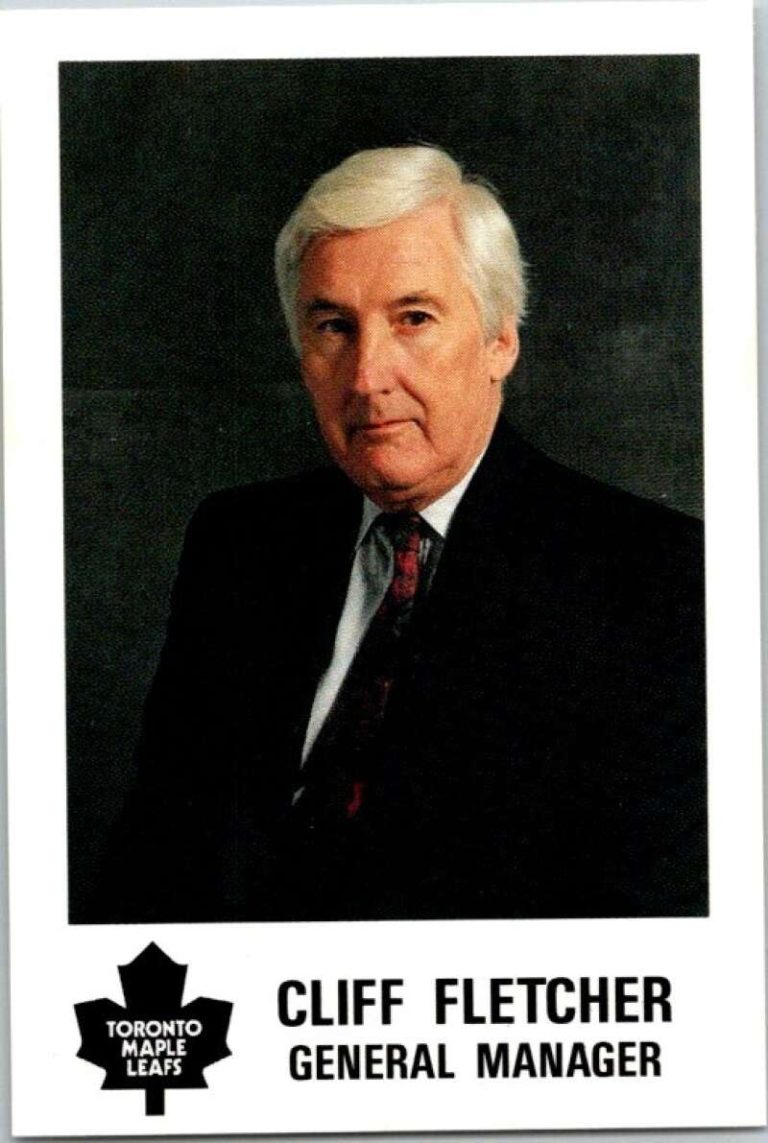
Cliff Fletcher, Hockey Hall of Famer Who Built the Calgary Flames’ Only Stanley Cup Team, Dies at 90

0

Cliff Fletcher, the Hockey Hall of Fame builder whose eight-decade career in professional hockey included building the only Stanley Cup championship team in Calgary Flames history and reviving the Toronto Maple Leafs into genuine contenders in the early 1990s, died on June 5, 2026. He was 90. The Toronto Maple Leafs, the organisation he was still advising at the time of his death, announced the news.

Born George Clifford Fletcher on August 16, 1935 in Montreal, Quebec, he began his hockey career as a scout with the Montreal Canadiens under Sam Pollock in 1956, learning the game’s front-office craft from one of the best administrators the sport has ever produced. He moved to the expansion St. Louis Blues in 1966 and worked his way up to the assistant GM position, helping build a team that reached the Stanley Cup Final in each of its first three seasons, a feat that has never been duplicated. By 1972 he was running an NHL franchise of his own, taking over the newly minted Atlanta Flames as general manager, a role he would hold through and after the team’s relocation to Calgary in 1980.

What he built in Calgary was remarkable by any measure. Over his tenure with the Flames he oversaw two Smythe Division titles, two Campbell Conference championships, and two Presidents’ Trophies. In 1988 he became the first general manager in NHL history to bring a player from the Soviet Union to North America when Sergei Priakin joined the Flames. And in 1989, the Calgary Flames defeated the Montreal Canadiens to win the Stanley Cup, the only championship in franchise history. Fletcher was the architect of that team, and nothing that came before or after it diminished what he built.

He moved to the Toronto Maple Leafs in 1991 and immediately made his presence felt. On January 2, 1992, he engineered one of the most significant trades in Leafs history, sending five players to Calgary for Doug Gilmour, Jamie Macoun, Ric Nattress, Rick Wamsley, and Kent Manderville. The deal transformed the franchise. In the 1992-93 season the Leafs set team records with 44 wins and 99 points, Gilmour scored a franchise-high 127 points and won the Selke Trophy, Pat Burns won the Jack Adams Award, and Fletcher was named Executive of the Year and Man of the Year by The Hockey News. It was the first time since 1967 that Maple Leafs players had won major NHL individual awards. He also hired Fletcher returned to the Leafs as interim GM in January 2008, stepped back into an advisory role once Brian Burke took over, and never really left, holding the position of senior advisor to the organisation until the day he died.

His son Chuck followed him into hockey management, serving as GM of the Minnesota Wild and later the Philadelphia Flyers. His nickname, Trader Cliff, and his other moniker, the Silver Fox, both captured something real about the man — the willingness to make bold moves and the cool authority with which he made them.

He was 90 years old and was working the day he died. That is as fitting an ending as the sport could give him.

Marion Fossett, Singer and Circus Ringmistress Who Represented Ireland at Eurovision, Dies at 71

0

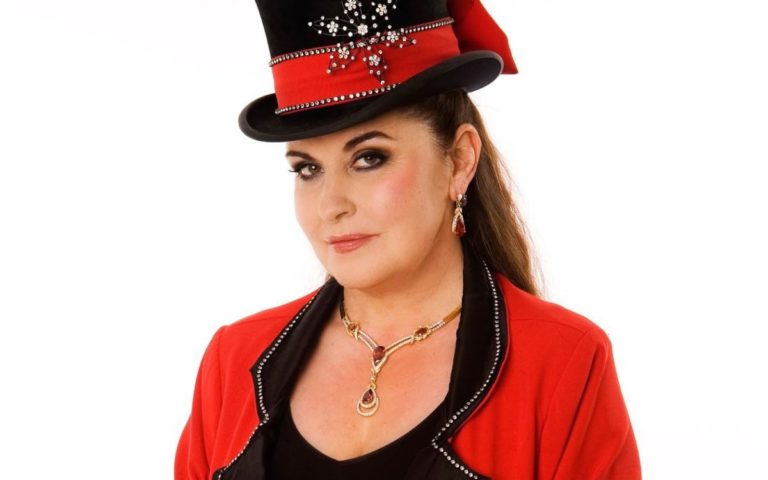
Marion Fossett, the singer who represented Ireland at the Eurovision Song Contest in 1981 as a member of the all-girl pop trio Sheeba and who went on to become one of the most recognisable figures in Irish circus life as ringmistress of the famous Fossetts Circus, died on June 5, 2026. She was 71.

Fossett was one third of Sheeba alongside Maxi and Frances Campbell, a trio that became one of Ireland’s most popular pop acts in the late 1970s and early 1980s. The group first entered the Irish National Song Contest in 1978 with “It’s Amazing What Love Can Do,” failing to win the selection that year but establishing themselves as a genuine presence in the Irish pop landscape. They recorded several singles with producer Roberto Danova and built a following that extended well beyond their Eurovision ambitions.

Their moment on the biggest stage in European pop came in 1981, when they were selected to represent Ireland — the host nation that year — with “Horoscopes.” The song reached number three on the Irish charts, their biggest hit, and the exposure that followed the contest opened doors across the continent and beyond, leading to concert tours in Europe and Japan and a UK recording deal that produced the singles “The Next Night” and “Mystery.” They appeared on BBC2 and ITV and shared vocal duties with Maggie Moone on the UK ITV series Name That Tune. The trio competed in the Irish National Song Contest again in 1982, performing a song in the Irish language, and finished fourth in 1984 behind future Eurovision winners Linda Martin and Charlie McGettigan.

A road accident in the west of Ireland in 1982 shook the group and left them reluctant to continue touring at the same pace, and after a final Japanese tour in 1983 they went their separate ways. Maxi became a prominent broadcaster with RTÉ in Dublin, hosting television and radio programmes for many years. Frances Campbell worked as a broadcaster for BBC Radio Foyle in Northern Ireland. Marion Fossett returned to the world she came from, becoming ringmistress of Fossetts Circus, the family institution that has been part of Irish life for generations.

Two very different stages. The same performer. Both roles suited her.

She was 71 years old.

Eddie Haas, Atlanta Braves Manager and Lifetime Baseball Man, Dies at 91

0

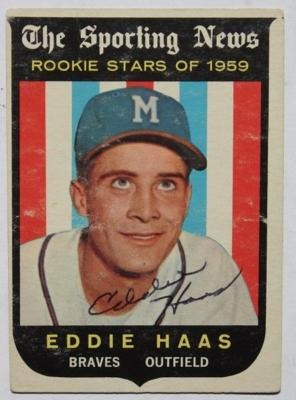
Eddie Haas, the outfielder, coach, manager, and scout who spent the better part of seven decades in professional baseball and managed the Atlanta Braves during one of the franchise’s more difficult seasons, died on June 4, 2026 in his hometown of Paducah, Kentucky. He was 91.

Born George Edwin Haas on May 26, 1935, he signed his first professional contract with the Chicago Cubs out of St. John High School in Paducah and made his Major League debut with the Cubs on September 8, 1957. He was traded to the Milwaukee Braves that offseason and over the course of 55 games across three seasons with Chicago and Milwaukee batted .243 with one home run and 17 total hits. A broken ankle wiped out the entire 1959 season, the kind of injury that changes the trajectory of a career quietly and permanently. His playing days at the Major League level were over by 1960.

What came next was the real career, and it lasted considerably longer. Haas stayed in the Braves organisation after his minor league playing days ended and never really left, serving as a minor league manager and coach from 1965 through 1973, returning in the same capacity from 1978 through 1984, and coaching for the MLB Braves from 1974 through 1977. That is the kind of institutional loyalty that organisations depend on and rarely adequately reward, the career of a baseball lifer who understood the game at every level and spent decades passing that knowledge along.

After Joe Torre departed following the 1984 season, Haas was given the opportunity to manage the Atlanta Braves at the Major League level. His 1985 club went 50-71 before he was let go on August 26 of that year with the team sitting 22 games out of the lead in the National League West. It was not a long run, but it represented the culmination of a lifetime of work in the game, the moment when an organisation trusts you with the whole thing.

After his managerial career he pivoted into scouting, serving as a special assignment scout for the Montreal Expos from 1986 through 1994 and for the Boston Red Sox from 1995 through 2003. That is eighteen more years in the game after most people would have walked away. He was not most people.

Baseball ran in the family at a level that is genuinely remarkable. His brother Louis played in the Braves organisation. His sons Matt and Danny are longtime scouts and former minor league players. His cousins Phil and Gene Roof are former Major League players and coaches with many years as minor league managers. Another cousin, Paul Roof, pitched in the minor leagues. The Haas family did not do things by half measures.

He was 91 years old and had been part of professional baseball for most of them. The game was lucky to have him for that long.

Bob Lacey, Oakland Athletics Relief Ace Who Led the AL in Appearances, Dies at 72

0

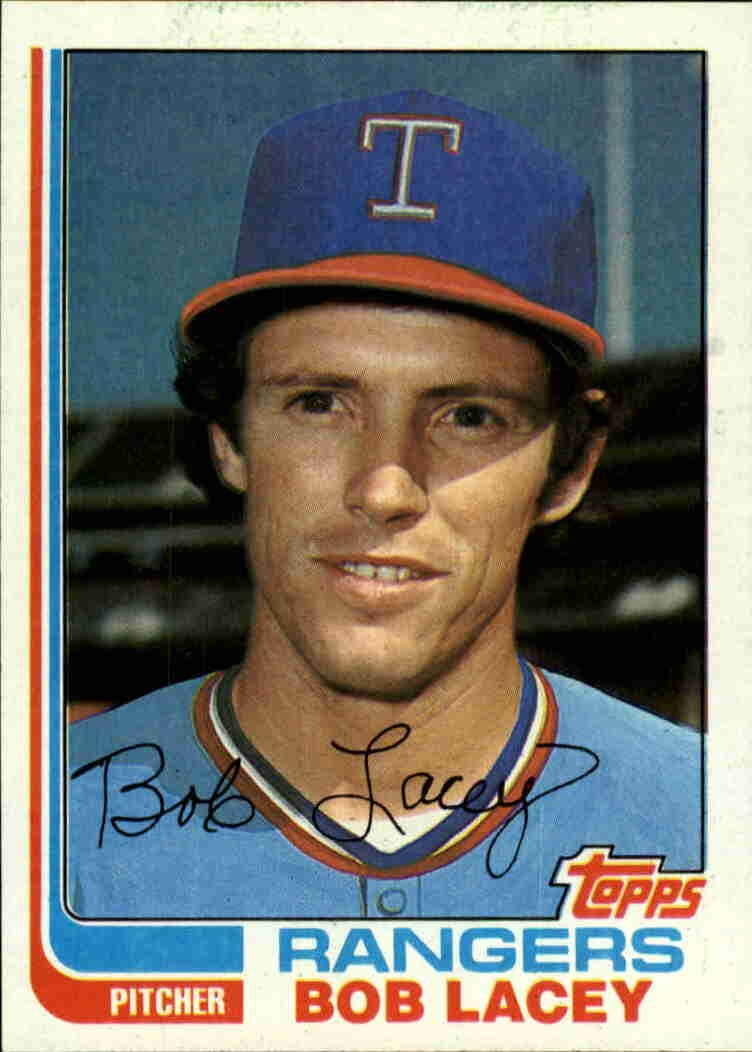
Bob Lacey, the left-handed relief pitcher who became one of the most reliable arms in the Oakland Athletics bullpen during one of the more unusual chapters in baseball history, died on June 4, 2026. He was 72.

Born Robert Joseph Lacey Jr. on August 25, 1953 in Fredericksburg, Virginia, Lacey was a 10th-round draft pick of the Oakland A’s in 1972 and went 13-2 in his first minor league season, a beginning that suggested good things were coming. They were, though the path there was characteristically colourful. In just his fourth Major League appearance, he struck out future Hall of Famer Reggie Jackson twice in a crucial situation, enraging Jackson and the Yankees in the process. Shortly after, he got into a brawl with the Kansas City Royals’ Darrell Porter, who called Lacey “a crazy, immature, punk.” He was settling in nicely.

His best years came in 1978, when he emerged as Oakland’s most reliable relief pitcher and led the American League in appearances. No other pitcher in league history inherited more baserunners than Lacey did that season — 104 — and despite that extraordinary burden he won eight games, posted a 3.01 ERA, and saved five. It was the kind of performance that gets quietly appreciated by people who understand bullpen work and largely ignored by everyone else, which is more or less the story of every great relief pitcher’s career.

The 1980 season produced one of the more striking statistical footnotes in modern baseball. Lacey appeared in a team-high 47 games and finished 31 of them, but earned only six saves. The reason was the Oakland starting rotation, which completed an astonishing 94 games that year, a number that will almost certainly never be matched in the modern era. When your starters finish 94 games, there is simply not much left for the closer. This created friction with manager Billy Martin over how Lacey was being used, a conflict that Billy Martin was probably not losing sleep over. Martin did give Lacey a starting assignment on the next-to-last day of that season, and he responded by shutting out the Milwaukee Brewers on a complete game. Of course it was a complete game.

The rest of his career took him through the San Diego Padres — for exactly three days before they traded him — the Cleveland Indians, the Texas Rangers, the California Angels, and the San Francisco Giants, before he retired after the 1984 season. He bounced through the minors in 1985, resurfaced in the late 1980s to manage the Greensville Bluesmen, and could not resist appearing in eight games of relief himself across 1988 and 1989, four games each year, because some people are simply not done with the game even when the game thinks it’s done with them.

Over seven Major League seasons he posted a 20-29 record with a 3.67 ERA and 251 strikeouts. The record understates the value. Relief pitching in the late 1970s was a different and considerably more demanding job than it is today, and Lacey did it well when it counted.

Rocky Allen, New York Radio Personality and Host of the Rocky Allen Showgram, Dies at 71

0

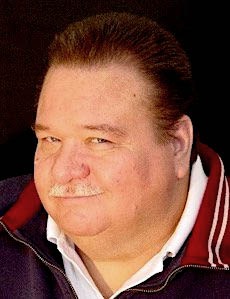
Rocky Allen, the talk radio host whose warm, celebrity-filled afternoon show on WPLJ made him one of New York radio’s most familiar voices across two separate runs at the station, died on June 3, 2026. He was 71. The cause was cancer.

Born Donald Allen Jr. on April 15, 1955 in Georgia, Allen built his career the old-fashioned way, moving city to city and market to market, honing his craft in Cape Girardeau, Providence, Detroit, St. Louis, Buffalo, and Dayton before landing in New York. It’s the kind of radio education that produces broadcasters who know how to talk to anyone, anywhere, about anything, and Allen carried that versatility into everything he did.

His most prominent home was WPLJ in New York, where he hosted an afternoon drive show from 1993 until 1998, a run that established him as a genuine presence in one of the most competitive radio markets in the world. The Rocky Allen Showgram, co-hosted with his long-time on-air partner Blain Ensley, was a mix of celebrity interviews, Top 40 music, and variety talk — the kind of radio that sounds effortless and isn’t. Ensley joined the show in 2002, and the two developed the kind of on-air chemistry that listeners come back for every afternoon without quite knowing why, except that it always feels like good company.

The years between his two WPLJ stints included one of the more remarkable stories in New York radio. Beginning in October 1996, Allen underwent a series of surgeries to remove calcium deposits causing persistent back pain. The surgeries left him partially paralysed and requiring a wheelchair. For a year he couldn’t walk. In October 1997, doctors advised full-time rehabilitation as potentially the only path back to walking, prompting a five-month leave of absence from radio. He came back walking. That is not a small thing, and he never made it a big deal, which tells you something about the man.

He and Ensley returned to WPLJ on September 20, 2005, nearly seven years after leaving, and picked up essentially where they had left off. The show was cancelled in February 2008 as part of cost-cutting measures by parent company Citadel Broadcasting, the kind of ending that the radio industry has delivered to too many good broadcasters over the years.

He is survived by his wife Julie and their two daughters.

Rocky Allen spent decades doing one of the hardest things in broadcasting: showing up every afternoon and making it sound easy. New York radio was richer for both runs he gave it.

The Beginner’s Guide to Music Publishing and How to Collect Every Royalty You’re Owed

Most independent artists are leaving money on the table every single month. Not because their music isn’t good enough, not because they haven’t worked hard enough, but because they haven’t registered with the right organisations, haven’t set up the right accounts, and haven’t connected their songs to the systems that exist specifically to pay them. Music publishing is not complicated once you understand it. But you do have to understand it, because nobody in the industry is going to walk you through it unprompted.

Here’s everything you need to know.

What Music Publishing Actually Is

Music publishing is the business of ensuring songwriters and rights holders get paid when their compositions are used, performed, streamed, or licensed. The key distinction to understand from the beginning is that there are two separate copyrights in every recorded song: the composition, which is the melody and lyrics you wrote, and the sound recording, which is the specific recording of that composition. Publishing deals with the composition. Your distributor deals with the sound recording. They aren’t the same thing, they aren’t handled by the same people, and confusing them is one of the most expensive mistakes an independent artist can make.

Performance Royalties and Your PRO

Every time your song is played on the radio, performed live, streamed, or broadcast in any public setting, it generates a performance royalty. Your PRO, whether that’s ASCAP, BMI, or SESAC in the United States, or SOCAN in Canada, collects these on your behalf. You can only be affiliated with one PRO at a time, so choose carefully, register yourself as a songwriter, and register every song you write as a composition. Many PROs also allow you to log setlists from live shows so you can collect performance royalties from your concerts and events. Without registration the money goes unclaimed. Your PRO won’t track you down. You track them down first.

Mechanical Royalties and the MLC

This is the one most independent artists miss entirely, and it’s costing them real money. Mechanical royalties are paid to the songwriter and publisher whenever a song is reproduced, meaning every time it’s streamed, downloaded, or physically manufactured. In the streaming era, mechanical royalties are collected through the Mechanical Licensing Collective in the US. Before the MLC’s creation in 2021, interactive streaming mechanical royalties were managed by labels and distributors. The MLC is now the entity that ensures songwriters and publishers get paid for every stream or download in the US. Songwriters can’t collect mechanical royalties simply by being a member of a PRO, and they can’t collect performance royalties simply by joining the MLC. They’re two separate systems doing two separate jobs and you need both. Your distributor won’t send you mechanical royalties. Register with the MLC at themlc.com.

SoundExchange: The One Everyone Forgets

If you haven’t registered with SoundExchange and your music gets played on an online indie radio station, that money piles up in SoundExchange’s black box. Once you do register, they send you your share of those digital performance royalties. SoundExchange collects digital performance royalties for the sound recording, meaning non-interactive streaming like satellite radio, internet radio services that act like radio, and other public performance uses of the recording. It’s separate from your PRO, separate from the MLC, and requires its own registration. It takes minutes. There’s no good reason not to do it.

Sync Royalties: The Big Payday

If your music gets placed in a film, TV show, commercial, podcast, or digital content, you earn both a sync fee upfront and performance royalties on the backend. Unlike performance and mechanical royalties, sync fees are negotiated directly rather than collected automatically, which means you either need a publisher pitching your music, a music library representing your catalogue, or the networking skills to get your songs in front of music supervisors yourself. Registering with sync licensing marketplaces like Musicbed, Artlist, Pond5, or Songtradr is a strong starting point. When a placement lands, the upfront sync fee can be substantial, and the performance royalties that follow every time that film or show airs keep generating income long after the deal is signed.

The Publishing Administrator: The Missing Piece

If you’re only registered with a PRO but haven’t appointed a publishing administrator, you’re likely missing a meaningful portion of your publishing income. A publishing administrator works alongside your PRO but covers additional revenue streams that your PRO doesn’t, linking your compositions to collection societies across the world that your PRO alone can’t access. Services like Songtrust act as your publishing administrator without taking ownership of your music, collecting from collection societies across more than 200 countries and territories. It’s not the same as signing a publishing deal. You keep your rights. You just collect more of what you’re owed.

Metadata: The Invisible Foundation

None of this works if your metadata is wrong. Your ISRC code is a unique identifier assigned to each individual recording. It’s how your song is tracked across streaming platforms for royalty purposes, and your distributor typically assigns it. Your song title, your writer credits, your publisher information, your ISRC codes — every piece of that data is what connects your music to your money across every platform and every collection society in the world. Get it right before the music goes live, because fixing it after the fact is significantly harder and slower.

Check your royalty statements regularly from all sources including your PRO, the MLC, SoundExchange, your distributor, and your publishing administrator. The music business won’t pay you for music it doesn’t know you made. Register everything, keep your information current, and treat the administrative side of your career with the same seriousness you bring to the creative side. The money is there. Go and get it.

The Instruments of Irish Traditional Music

0

Belfast is hosting Fleadh Cheoil na hÉireann for the very first time this August, from August 2 to 9, 2026, and the city is going to be full of music in every corner, pub, street, and competition hall for an entire week. If you’ve never been to a traditional Irish music session before, or if you’ve been to plenty but haven’t quite known what you were listening to, here’s your guide to the instruments that make the whole thing sing.

The Uilleann Pipes

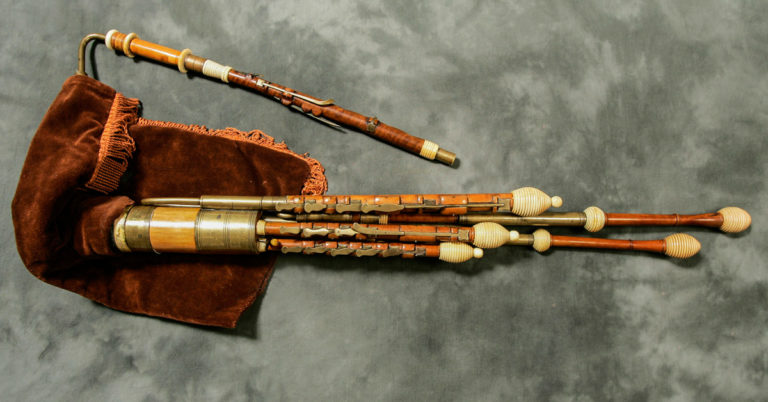
The uilleann pipes are a distinctively Irish form of bagpipes with a complex design, unique sound, and major cultural significance within Irish traditional music. The name comes from the Irish word meaning elbow, which highlights the use of the elbow to operate the bellows. Unlike Scottish bagpipes, the uilleann pipes are powered by bellows strapped around the waist and operated by moving the elbow in and out, which is how they got their name. A full set possesses a chanter with a double reed, three single-reed drones, and three regulators that provide harmony. According to the tradition of this instrument, it takes seven years studying it, seven years practising it, and seven years performing it before one becomes a master. Renowned musicians like Liam O’Flynn and Paddy Keenan have showcased the pipes’ incredible versatility. When you hear them played well in a Belfast pub during Fleadh week, you’ll understand immediately why they’re considered Ireland’s national instrument.

The Fiddle

The fiddle, also called the violin, has strong historical roots in Ireland with some references dating as far back as the 7th century. It’s the instrument you’ll hear most often and most immediately in any traditional session, the melody instrument that defines the sound of Irish music in most people’s imagination. What separates Irish fiddle playing from classical violin playing isn’t the instrument itself but everything done with it, the ornamentation, the bowing patterns, the regional styles that vary from Donegal to Clare to Sligo, each with its own distinct character. During the All-Ireland competitions at Fleadh, the standard of fiddle playing on display will be extraordinary.

The Tin Whistle

The tin whistle is the simplest and most popular instrument in Irish music, a small six-holed flute in D, like a simplified version of the classical recorder. Its history dates back to the early 19th century, and it’s often overlooked as a serious instrument. It becomes magical though in the hands of a skilled player, demonstrating an intricate and fun melodic range. Many traditional tunes can be played on the whistle with a relatively short learning curve, which is why it’s the instrument most people pick up first. Don’t mistake accessibility for simplicity. The whistle players you’ll hear at Fleadh Cheoil have spent years making something deceptively easy sound effortless.

The Bodhrán

The bodhrán (pronounced bow-rawn) is a smallish frame drum, held upright on the thigh and played with either the hand or a tipper (stick). It’s considered the heartbeat of traditional Irish music, with a history that goes back to ancient times. Made from a wooden frame and, traditionally, a goatskin membrane, the bodhrán produces a distinctive, earthy rhythm that underpins many traditional Irish tunes. The style of playing, while the instrument itself is ancient, is largely contemporary, with musicians like Johnny “Ringo” McDonagh among the first to popularise the modern style of bodhrán playing and develop advanced playing techniques. At a session, the bodhrán player is the engine room. Everything else moves around them.

The Irish Bouzouki

Here’s one that surprises people. The bouzouki was first made popular in Irish traditional music by Johnny Moynihan in the 1960s and was also played by famous musicians such as Andy Irvine and Alec Finn. The Irish bouzouki usually has four-course strings tuned to GDAD, accompanying the guitar in the rhythmic section of the band. Fiddles, harps, uilleann pipes, whistles, and flutes have been in the tradition the longest, while free reed instruments such as accordions and concertinas are a more recent addition, as are banjos, bouzoukis, and other string instruments. The bouzouki’s rich, resonant tone gives a session a depth and warmth that you feel as much as hear, and its adoption into the tradition is a reminder that Irish music has always been a living thing, absorbing and transforming influences from wherever it finds them. Groups like Lankum, The Gloaming, and Téada are pushing the boundaries of what these instruments can do, demonstrating that Irish music isn’t confined to history but is a vibrant voice in the present musical landscape.

Fleadh Cheoil na hÉireann takes place in Belfast, August 2–9, 2026. For more information visit fleadhcheoil.ie, visitbelfast.com, and discovernorthernireland.com

Massachusetts Power-Emo Crew Cape Crush Sail Into a Parallel Universe With “Place Memory”

0

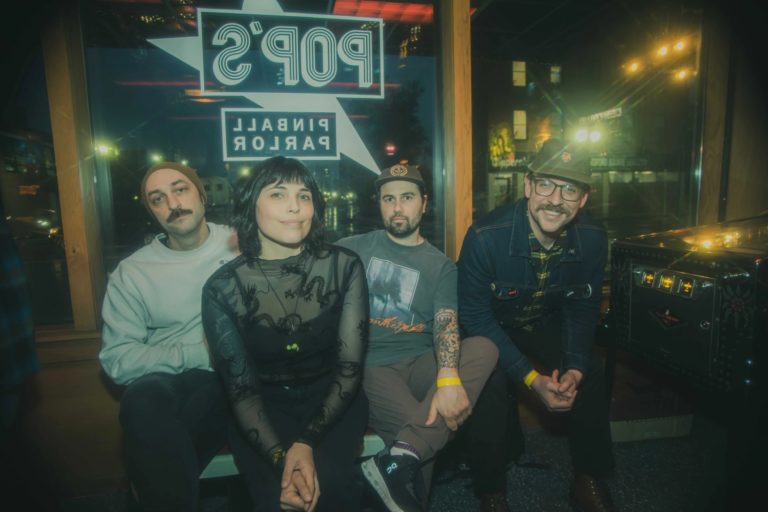
Picture a peaceful day that never happened. That’s where Cape Crush begin on “Place Memory,” the title track and now-released single from the Massachusetts power-emo band’s debut album. Vocalist and guitarist Ali Lipman imagines a quiet afternoon spent with her sister, fixing up a house, painting it a vibrant blue, talking Robert Frost, before her sibling sails out to sea and fades from view on the horizon.

The day is a daydream, a parallel universe where the opposite of Lipman’s real-life choices plays out with calm and comfort. The song carries an urgent swell of emo, post-hardcore, and alt-rock, with lightning guitar riffs that wouldn’t sound out of place on an early-aughts Coheed and Cambria album. Lipman’s saccharine-sweet vocals exude warmth across the top of it all.

“The term ‘Place Memory’ is the supernatural theory that a place can hold an energetic memory,” Lipman says, “like when you hear ghostly footsteps or a disembodied voice, that perhaps you’re not hearing something intelligent, you’re hearing a repeat of that memory played back to you as if on tape. Or maybe you’re hearing your sister on the other side of the veil?”

The song traces its roots to a 2011 Dear Sugar column in The Rumpus, titled “The Ghost Ship that Didn’t Carry Us,” about a reader’s indecision over having children. Lipman was drawn to the fear around life-altering choices, and the column’s reference to Tomas Transtromer’s poem “The Blue House.” “It talks about the choice we don’t make becoming a sister ship bound for a different route,” she reveals. “One that we can only wave at from the shoreline.”

The recording carries real history. The conclusion features a crowd chant of “Co-dy! Co-dy! Co-dy” captured at Salem’s Bit Bar during the final Cape Crush show for co-founder Cody Rico, who stepped away from drumming for health reasons. Over 300 people turned out that night in late 2024. “It was a massive showing of love for Cody,” Lipman says. “We wanted to create some kind of tribute to him on Place Memory, the album, because it’s also his final recorded drum performance.”

Cape Crush now move forward with new drummer Mike O’Toole alongside Lipman, guitarist James Christopher, and bassist Jake Letizia, all longtime mainstays of the New England DIY and hardcore scenes. “The best thing about being in Cape Crush is getting to do something creative every week with our closest friends,” Lipman says. “Nothing is more motivating and inspiring than being one band in a wave of so many great people and talented musicians.”

“Place Memory” was written by Lipman, Christopher, Letizia, and Rico, recorded and produced by Zach Weeks at God City Studio in Salem, with additional vocals from Sam Johnson and auxiliary percussion by Weeks. It was the last song written for the record, and Lipman’s favorite. “I really love the chromatic pre-chorus with the secondary dominants (nerd alert!), and the acoustic chorus before the gang sing-along at the end,” she adds.

The track explodes out of the speakers with lived-in emotion, playful lyrical depth, and anthemic choruses that soar across hope and endurance. “It’s a driving power-pop song with a big sing-along chorus,” Lipman says. “It’s got big guitars, big vocal harmonies, and a big group-sing at the end. If someone asked what we sound like and I could only show them one song, it would be this one.”

The album follows the band’s 2023 debut EP ‘San Souci’ and a pair of 2025 offerings in last summer’s “Blank Wall” and a winter triple-split with Good June and Impossible Dog. Those releases helped earn a Punk/Hardcore Artist of the Year nomination at the Boston Music Awards, plus festival gigs from Pouzza Fest in Montreal to The Fest in Florida, across 15 club and venue shows. The ‘Place Memory’ album is out May 1 on Wanna Hear It Records, on digital, CD, and vinyl.