Home Blog Page 13

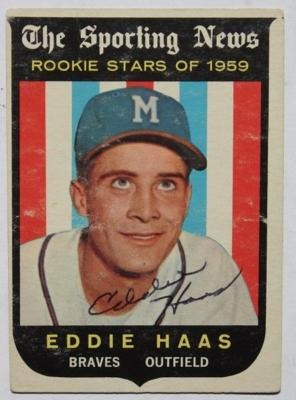
Eddie Haas, Atlanta Braves Manager and Lifetime Baseball Man, Dies at 91

0

Eddie Haas, the outfielder, coach, manager, and scout who spent the better part of seven decades in professional baseball and managed the Atlanta Braves during one of the franchise’s more difficult seasons, died on June 4, 2026 in his hometown of Paducah, Kentucky. He was 91.

Born George Edwin Haas on May 26, 1935, he signed his first professional contract with the Chicago Cubs out of St. John High School in Paducah and made his Major League debut with the Cubs on September 8, 1957. He was traded to the Milwaukee Braves that offseason and over the course of 55 games across three seasons with Chicago and Milwaukee batted .243 with one home run and 17 total hits. A broken ankle wiped out the entire 1959 season, the kind of injury that changes the trajectory of a career quietly and permanently. His playing days at the Major League level were over by 1960.

What came next was the real career, and it lasted considerably longer. Haas stayed in the Braves organisation after his minor league playing days ended and never really left, serving as a minor league manager and coach from 1965 through 1973, returning in the same capacity from 1978 through 1984, and coaching for the MLB Braves from 1974 through 1977. That is the kind of institutional loyalty that organisations depend on and rarely adequately reward, the career of a baseball lifer who understood the game at every level and spent decades passing that knowledge along.

After Joe Torre departed following the 1984 season, Haas was given the opportunity to manage the Atlanta Braves at the Major League level. His 1985 club went 50-71 before he was let go on August 26 of that year with the team sitting 22 games out of the lead in the National League West. It was not a long run, but it represented the culmination of a lifetime of work in the game, the moment when an organisation trusts you with the whole thing.

After his managerial career he pivoted into scouting, serving as a special assignment scout for the Montreal Expos from 1986 through 1994 and for the Boston Red Sox from 1995 through 2003. That is eighteen more years in the game after most people would have walked away. He was not most people.

Baseball ran in the family at a level that is genuinely remarkable. His brother Louis played in the Braves organisation. His sons Matt and Danny are longtime scouts and former minor league players. His cousins Phil and Gene Roof are former Major League players and coaches with many years as minor league managers. Another cousin, Paul Roof, pitched in the minor leagues. The Haas family did not do things by half measures.

He was 91 years old and had been part of professional baseball for most of them. The game was lucky to have him for that long.

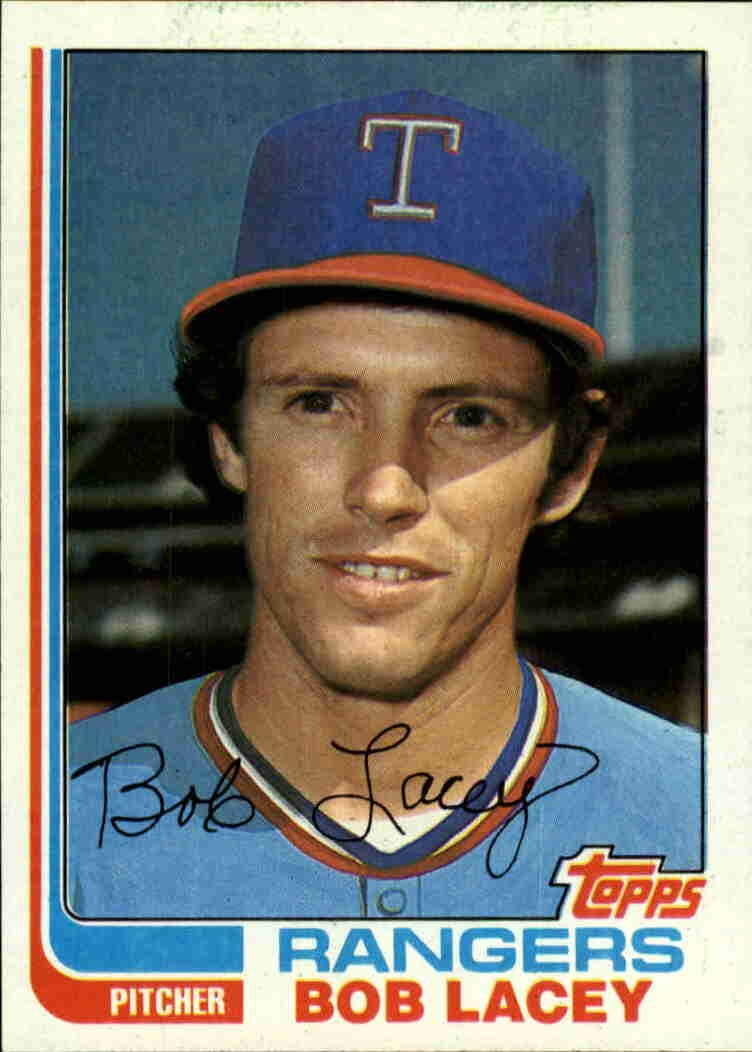
Bob Lacey, Oakland Athletics Relief Ace Who Led the AL in Appearances, Dies at 72

0

Bob Lacey, the left-handed relief pitcher who became one of the most reliable arms in the Oakland Athletics bullpen during one of the more unusual chapters in baseball history, died on June 4, 2026. He was 72.

Born Robert Joseph Lacey Jr. on August 25, 1953 in Fredericksburg, Virginia, Lacey was a 10th-round draft pick of the Oakland A’s in 1972 and went 13-2 in his first minor league season, a beginning that suggested good things were coming. They were, though the path there was characteristically colourful. In just his fourth Major League appearance, he struck out future Hall of Famer Reggie Jackson twice in a crucial situation, enraging Jackson and the Yankees in the process. Shortly after, he got into a brawl with the Kansas City Royals’ Darrell Porter, who called Lacey “a crazy, immature, punk.” He was settling in nicely.

His best years came in 1978, when he emerged as Oakland’s most reliable relief pitcher and led the American League in appearances. No other pitcher in league history inherited more baserunners than Lacey did that season — 104 — and despite that extraordinary burden he won eight games, posted a 3.01 ERA, and saved five. It was the kind of performance that gets quietly appreciated by people who understand bullpen work and largely ignored by everyone else, which is more or less the story of every great relief pitcher’s career.

The 1980 season produced one of the more striking statistical footnotes in modern baseball. Lacey appeared in a team-high 47 games and finished 31 of them, but earned only six saves. The reason was the Oakland starting rotation, which completed an astonishing 94 games that year, a number that will almost certainly never be matched in the modern era. When your starters finish 94 games, there is simply not much left for the closer. This created friction with manager Billy Martin over how Lacey was being used, a conflict that Billy Martin was probably not losing sleep over. Martin did give Lacey a starting assignment on the next-to-last day of that season, and he responded by shutting out the Milwaukee Brewers on a complete game. Of course it was a complete game.

The rest of his career took him through the San Diego Padres — for exactly three days before they traded him — the Cleveland Indians, the Texas Rangers, the California Angels, and the San Francisco Giants, before he retired after the 1984 season. He bounced through the minors in 1985, resurfaced in the late 1980s to manage the Greensville Bluesmen, and could not resist appearing in eight games of relief himself across 1988 and 1989, four games each year, because some people are simply not done with the game even when the game thinks it’s done with them.

Over seven Major League seasons he posted a 20-29 record with a 3.67 ERA and 251 strikeouts. The record understates the value. Relief pitching in the late 1970s was a different and considerably more demanding job than it is today, and Lacey did it well when it counted.

Rocky Allen, New York Radio Personality and Host of the Rocky Allen Showgram, Dies at 71

0

Rocky Allen, the talk radio host whose warm, celebrity-filled afternoon show on WPLJ made him one of New York radio’s most familiar voices across two separate runs at the station, died on June 3, 2026. He was 71. The cause was cancer.

Born Donald Allen Jr. on April 15, 1955 in Georgia, Allen built his career the old-fashioned way, moving city to city and market to market, honing his craft in Cape Girardeau, Providence, Detroit, St. Louis, Buffalo, and Dayton before landing in New York. It’s the kind of radio education that produces broadcasters who know how to talk to anyone, anywhere, about anything, and Allen carried that versatility into everything he did.

His most prominent home was WPLJ in New York, where he hosted an afternoon drive show from 1993 until 1998, a run that established him as a genuine presence in one of the most competitive radio markets in the world. The Rocky Allen Showgram, co-hosted with his long-time on-air partner Blain Ensley, was a mix of celebrity interviews, Top 40 music, and variety talk — the kind of radio that sounds effortless and isn’t. Ensley joined the show in 2002, and the two developed the kind of on-air chemistry that listeners come back for every afternoon without quite knowing why, except that it always feels like good company.

The years between his two WPLJ stints included one of the more remarkable stories in New York radio. Beginning in October 1996, Allen underwent a series of surgeries to remove calcium deposits causing persistent back pain. The surgeries left him partially paralysed and requiring a wheelchair. For a year he couldn’t walk. In October 1997, doctors advised full-time rehabilitation as potentially the only path back to walking, prompting a five-month leave of absence from radio. He came back walking. That is not a small thing, and he never made it a big deal, which tells you something about the man.

He and Ensley returned to WPLJ on September 20, 2005, nearly seven years after leaving, and picked up essentially where they had left off. The show was cancelled in February 2008 as part of cost-cutting measures by parent company Citadel Broadcasting, the kind of ending that the radio industry has delivered to too many good broadcasters over the years.

He is survived by his wife Julie and their two daughters.

Rocky Allen spent decades doing one of the hardest things in broadcasting: showing up every afternoon and making it sound easy. New York radio was richer for both runs he gave it.

The Beginner’s Guide to Music Publishing and How to Collect Every Royalty You’re Owed

Most independent artists are leaving money on the table every single month. Not because their music isn’t good enough, not because they haven’t worked hard enough, but because they haven’t registered with the right organisations, haven’t set up the right accounts, and haven’t connected their songs to the systems that exist specifically to pay them. Music publishing is not complicated once you understand it. But you do have to understand it, because nobody in the industry is going to walk you through it unprompted.

Here’s everything you need to know.

What Music Publishing Actually Is

Music publishing is the business of ensuring songwriters and rights holders get paid when their compositions are used, performed, streamed, or licensed. The key distinction to understand from the beginning is that there are two separate copyrights in every recorded song: the composition, which is the melody and lyrics you wrote, and the sound recording, which is the specific recording of that composition. Publishing deals with the composition. Your distributor deals with the sound recording. They aren’t the same thing, they aren’t handled by the same people, and confusing them is one of the most expensive mistakes an independent artist can make.

Performance Royalties and Your PRO

Every time your song is played on the radio, performed live, streamed, or broadcast in any public setting, it generates a performance royalty. Your PRO, whether that’s ASCAP, BMI, or SESAC in the United States, or SOCAN in Canada, collects these on your behalf. You can only be affiliated with one PRO at a time, so choose carefully, register yourself as a songwriter, and register every song you write as a composition. Many PROs also allow you to log setlists from live shows so you can collect performance royalties from your concerts and events. Without registration the money goes unclaimed. Your PRO won’t track you down. You track them down first.

Mechanical Royalties and the MLC

This is the one most independent artists miss entirely, and it’s costing them real money. Mechanical royalties are paid to the songwriter and publisher whenever a song is reproduced, meaning every time it’s streamed, downloaded, or physically manufactured. In the streaming era, mechanical royalties are collected through the Mechanical Licensing Collective in the US. Before the MLC’s creation in 2021, interactive streaming mechanical royalties were managed by labels and distributors. The MLC is now the entity that ensures songwriters and publishers get paid for every stream or download in the US. Songwriters can’t collect mechanical royalties simply by being a member of a PRO, and they can’t collect performance royalties simply by joining the MLC. They’re two separate systems doing two separate jobs and you need both. Your distributor won’t send you mechanical royalties. Register with the MLC at themlc.com.

SoundExchange: The One Everyone Forgets

If you haven’t registered with SoundExchange and your music gets played on an online indie radio station, that money piles up in SoundExchange’s black box. Once you do register, they send you your share of those digital performance royalties. SoundExchange collects digital performance royalties for the sound recording, meaning non-interactive streaming like satellite radio, internet radio services that act like radio, and other public performance uses of the recording. It’s separate from your PRO, separate from the MLC, and requires its own registration. It takes minutes. There’s no good reason not to do it.

Sync Royalties: The Big Payday

If your music gets placed in a film, TV show, commercial, podcast, or digital content, you earn both a sync fee upfront and performance royalties on the backend. Unlike performance and mechanical royalties, sync fees are negotiated directly rather than collected automatically, which means you either need a publisher pitching your music, a music library representing your catalogue, or the networking skills to get your songs in front of music supervisors yourself. Registering with sync licensing marketplaces like Musicbed, Artlist, Pond5, or Songtradr is a strong starting point. When a placement lands, the upfront sync fee can be substantial, and the performance royalties that follow every time that film or show airs keep generating income long after the deal is signed.

The Publishing Administrator: The Missing Piece

If you’re only registered with a PRO but haven’t appointed a publishing administrator, you’re likely missing a meaningful portion of your publishing income. A publishing administrator works alongside your PRO but covers additional revenue streams that your PRO doesn’t, linking your compositions to collection societies across the world that your PRO alone can’t access. Services like Songtrust act as your publishing administrator without taking ownership of your music, collecting from collection societies across more than 200 countries and territories. It’s not the same as signing a publishing deal. You keep your rights. You just collect more of what you’re owed.

Metadata: The Invisible Foundation

None of this works if your metadata is wrong. Your ISRC code is a unique identifier assigned to each individual recording. It’s how your song is tracked across streaming platforms for royalty purposes, and your distributor typically assigns it. Your song title, your writer credits, your publisher information, your ISRC codes — every piece of that data is what connects your music to your money across every platform and every collection society in the world. Get it right before the music goes live, because fixing it after the fact is significantly harder and slower.

Check your royalty statements regularly from all sources including your PRO, the MLC, SoundExchange, your distributor, and your publishing administrator. The music business won’t pay you for music it doesn’t know you made. Register everything, keep your information current, and treat the administrative side of your career with the same seriousness you bring to the creative side. The money is there. Go and get it.


The Instruments of Irish Traditional Music

0

Belfast is hosting Fleadh Cheoil na hÉireann for the very first time this August, from August 2 to 9, 2026, and the city is going to be full of music in every corner, pub, street, and competition hall for an entire week. If you’ve never been to a traditional Irish music session before, or if you’ve been to plenty but haven’t quite known what you were listening to, here’s your guide to the instruments that make the whole thing sing.

The Uilleann Pipes

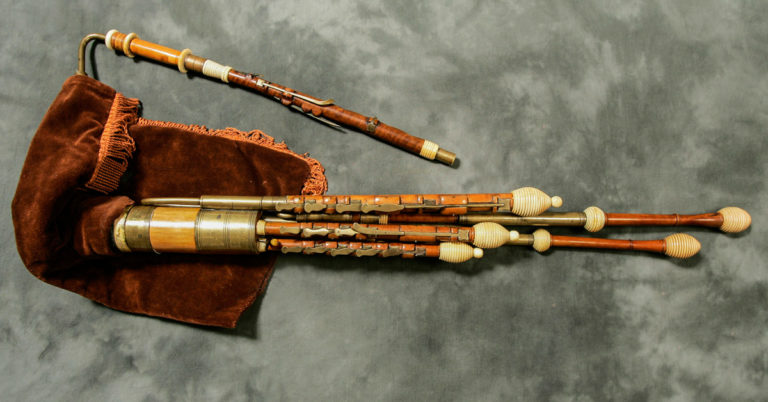
The uilleann pipes are a distinctively Irish form of bagpipes with a complex design, unique sound, and major cultural significance within Irish traditional music. The name comes from the Irish word meaning elbow, which highlights the use of the elbow to operate the bellows. Unlike Scottish bagpipes, the uilleann pipes are powered by bellows strapped around the waist and operated by moving the elbow in and out, which is how they got their name. A full set possesses a chanter with a double reed, three single-reed drones, and three regulators that provide harmony. According to the tradition of this instrument, it takes seven years studying it, seven years practising it, and seven years performing it before one becomes a master. Renowned musicians like Liam O’Flynn and Paddy Keenan have showcased the pipes’ incredible versatility. When you hear them played well in a Belfast pub during Fleadh week, you’ll understand immediately why they’re considered Ireland’s national instrument.

The Fiddle

The fiddle, also called the violin, has strong historical roots in Ireland with some references dating as far back as the 7th century. It’s the instrument you’ll hear most often and most immediately in any traditional session, the melody instrument that defines the sound of Irish music in most people’s imagination. What separates Irish fiddle playing from classical violin playing isn’t the instrument itself but everything done with it, the ornamentation, the bowing patterns, the regional styles that vary from Donegal to Clare to Sligo, each with its own distinct character. During the All-Ireland competitions at Fleadh, the standard of fiddle playing on display will be extraordinary.

The Tin Whistle

The tin whistle is the simplest and most popular instrument in Irish music, a small six-holed flute in D, like a simplified version of the classical recorder. Its history dates back to the early 19th century, and it’s often overlooked as a serious instrument. It becomes magical though in the hands of a skilled player, demonstrating an intricate and fun melodic range. Many traditional tunes can be played on the whistle with a relatively short learning curve, which is why it’s the instrument most people pick up first. Don’t mistake accessibility for simplicity. The whistle players you’ll hear at Fleadh Cheoil have spent years making something deceptively easy sound effortless.

The Bodhrán

The bodhrán (pronounced bow-rawn) is a smallish frame drum, held upright on the thigh and played with either the hand or a tipper (stick). It’s considered the heartbeat of traditional Irish music, with a history that goes back to ancient times. Made from a wooden frame and, traditionally, a goatskin membrane, the bodhrán produces a distinctive, earthy rhythm that underpins many traditional Irish tunes. The style of playing, while the instrument itself is ancient, is largely contemporary, with musicians like Johnny “Ringo” McDonagh among the first to popularise the modern style of bodhrán playing and develop advanced playing techniques. At a session, the bodhrán player is the engine room. Everything else moves around them.

The Irish Bouzouki

Here’s one that surprises people. The bouzouki was first made popular in Irish traditional music by Johnny Moynihan in the 1960s and was also played by famous musicians such as Andy Irvine and Alec Finn. The Irish bouzouki usually has four-course strings tuned to GDAD, accompanying the guitar in the rhythmic section of the band. Fiddles, harps, uilleann pipes, whistles, and flutes have been in the tradition the longest, while free reed instruments such as accordions and concertinas are a more recent addition, as are banjos, bouzoukis, and other string instruments. The bouzouki’s rich, resonant tone gives a session a depth and warmth that you feel as much as hear, and its adoption into the tradition is a reminder that Irish music has always been a living thing, absorbing and transforming influences from wherever it finds them. Groups like Lankum, The Gloaming, and Téada are pushing the boundaries of what these instruments can do, demonstrating that Irish music isn’t confined to history but is a vibrant voice in the present musical landscape.

Fleadh Cheoil na hÉireann takes place in Belfast, August 2–9, 2026. For more information visit fleadhcheoil.ie, visitbelfast.com, and discovernorthernireland.com

Massachusetts Power-Emo Crew Cape Crush Sail Into a Parallel Universe With “Place Memory”

0

Picture a peaceful day that never happened. That’s where Cape Crush begin on “Place Memory,” the title track and now-released single from the Massachusetts power-emo band’s debut album. Vocalist and guitarist Ali Lipman imagines a quiet afternoon spent with her sister, fixing up a house, painting it a vibrant blue, talking Robert Frost, before her sibling sails out to sea and fades from view on the horizon.

The day is a daydream, a parallel universe where the opposite of Lipman’s real-life choices plays out with calm and comfort. The song carries an urgent swell of emo, post-hardcore, and alt-rock, with lightning guitar riffs that wouldn’t sound out of place on an early-aughts Coheed and Cambria album. Lipman’s saccharine-sweet vocals exude warmth across the top of it all.

“The term ‘Place Memory’ is the supernatural theory that a place can hold an energetic memory,” Lipman says, “like when you hear ghostly footsteps or a disembodied voice, that perhaps you’re not hearing something intelligent, you’re hearing a repeat of that memory played back to you as if on tape. Or maybe you’re hearing your sister on the other side of the veil?”

The song traces its roots to a 2011 Dear Sugar column in The Rumpus, titled “The Ghost Ship that Didn’t Carry Us,” about a reader’s indecision over having children. Lipman was drawn to the fear around life-altering choices, and the column’s reference to Tomas Transtromer’s poem “The Blue House.” “It talks about the choice we don’t make becoming a sister ship bound for a different route,” she reveals. “One that we can only wave at from the shoreline.”

The recording carries real history. The conclusion features a crowd chant of “Co-dy! Co-dy! Co-dy” captured at Salem’s Bit Bar during the final Cape Crush show for co-founder Cody Rico, who stepped away from drumming for health reasons. Over 300 people turned out that night in late 2024. “It was a massive showing of love for Cody,” Lipman says. “We wanted to create some kind of tribute to him on Place Memory, the album, because it’s also his final recorded drum performance.”

Cape Crush now move forward with new drummer Mike O’Toole alongside Lipman, guitarist James Christopher, and bassist Jake Letizia, all longtime mainstays of the New England DIY and hardcore scenes. “The best thing about being in Cape Crush is getting to do something creative every week with our closest friends,” Lipman says. “Nothing is more motivating and inspiring than being one band in a wave of so many great people and talented musicians.”

“Place Memory” was written by Lipman, Christopher, Letizia, and Rico, recorded and produced by Zach Weeks at God City Studio in Salem, with additional vocals from Sam Johnson and auxiliary percussion by Weeks. It was the last song written for the record, and Lipman’s favorite. “I really love the chromatic pre-chorus with the secondary dominants (nerd alert!), and the acoustic chorus before the gang sing-along at the end,” she adds.

The track explodes out of the speakers with lived-in emotion, playful lyrical depth, and anthemic choruses that soar across hope and endurance. “It’s a driving power-pop song with a big sing-along chorus,” Lipman says. “It’s got big guitars, big vocal harmonies, and a big group-sing at the end. If someone asked what we sound like and I could only show them one song, it would be this one.”

The album follows the band’s 2023 debut EP ‘San Souci’ and a pair of 2025 offerings in last summer’s “Blank Wall” and a winter triple-split with Good June and Impossible Dog. Those releases helped earn a Punk/Hardcore Artist of the Year nomination at the Boston Music Awards, plus festival gigs from Pouzza Fest in Montreal to The Fest in Florida, across 15 club and venue shows. The ‘Place Memory’ album is out May 1 on Wanna Hear It Records, on digital, CD, and vinyl.

Manchester Lo-Fi Charmers Succulents Bow With Fuzzed-Out Debut Single “Underdog”

0

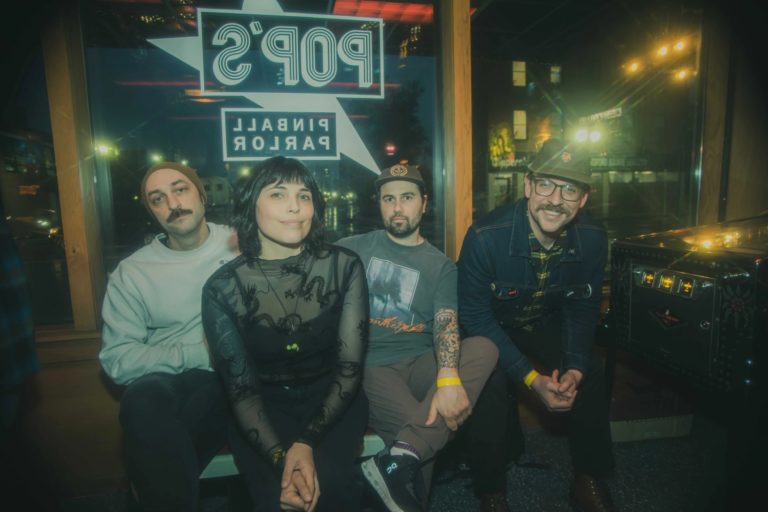
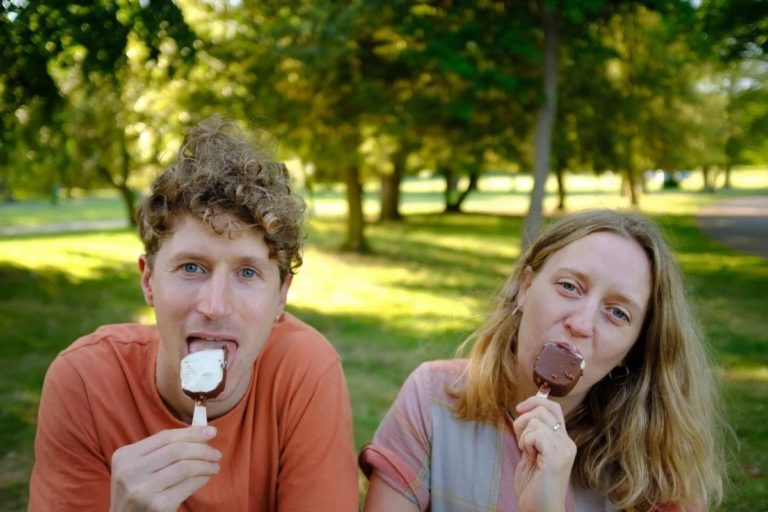
Manchester just gained a new lo-fi duo worth knowing. Succulents, the boy-and-girl pairing of Laurie Hulme and Lucy Ridges, have released their debut single “Underdog,” and it lands with the sparky immediacy of the best cult indie-pop.

The track blends plugged-in college rock riffs with candy floss-sweet harmonies. Krautrock tendencies sit quietly underneath before a motorik middle section cuts loose. It’s a charming two-hander that nods to The Pains of Being Pure at Heart, The Field Mice, Yo La Tengo, The Clean, The Courtneys, The Pastels and Comet Gain, all wrapped in the hazy nostalgia Hulme does so well.

Hulme already has a track record. He fronts the long-running solo project Songs For Walter, releasing two critically acclaimed albums, ‘Songs For Walter’ (2016) and ‘An Endless Summer Daze’ (2018), both praised for heartfelt songwriting and a generous devotion to deeply personal storytelling. He also plays in Manchester four-piece Big Other. Ridges, an established photographer by day, joins on vocals and brings fresh energy to the duo’s sense of joyful togetherness.

“Underdog” came out of a period of retreat. Expecting a child, Hulme left the city for his partner’s parents’ home in the South Lakes, spending three to four hours a day writing and playing guitar. The result captures both intimacy and restlessness, a snapshot of abundant creativity made under unusual circumstances.

Hulme says of the single: “‘Underdog’ centres on a mischievous protagonist deliberately trying to provoke their partner, delighting in pushing buttons and watching the sparks fly. There’s a darkly playful edge to the narrative, not unlike the gleeful antagonism found in The Twits, wrapped in warm, fuzzed-out indie-pop textures.”

He adds: “It started life as an acoustic, finger picking song and then I realised it would be better louder. At the time I was also playing in a kraut-punk band called Chew Magna and I was really into Can and kraut-rock middle eights, so there’s an obvious nod to that time in my life too.”

The first cut from a growing batch of unreleased Succulents songs, “Underdog” was recorded in a South Manchester bedroom before being mixed and refined by Hulme’s brother, Alex Hulme, whose patient studio craft turns the track’s lo-fi core into something richly textured and emotionally resonant. It’s a confident, warm-hearted opening statement, and a strong sign of what this pairing can do.

Nonpoint, Powerman 5000, Soil And DED Headline Rock Lansing 2026

0

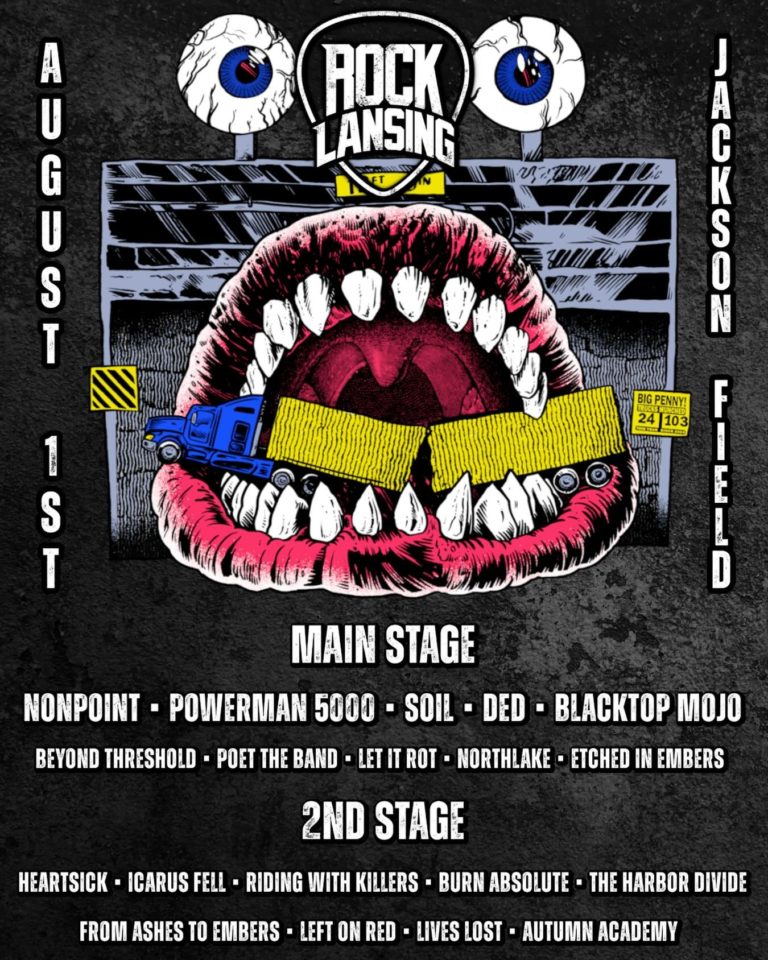
Twelve straight hours of loud guitars are coming to Lansing. ROCK LANSING 2026 invades Jackson Field in Lansing, Michigan on Saturday, August 1, with two stages running rock, metal and high-energy performances from 11:00 AM to 11:00 PM.

A powerhouse lineup leads the way, headed by rock heavyweights Nonpoint, Powerman 5000, Soil and DED. Organizers are calling this the biggest and loudest edition of the festival to date.

ROCK LANSING has quickly become one of the Midwest’s must-attend independent music festivals, pulling together national touring acts and rising regional talent for a day-long celebration of crushing riffs and unforgettable live sets. The bill runs deep, from the aggressive grooves of Nonpoint to the industrial-fueled energy of Powerman 5000, the hard-hitting anthems of Soil, and the modern rock aggression of DED.

The festival keeps its focus on emerging artists too, giving fans the chance to discover the next generation of rock and metal alongside established names. The two stages sit side by side with a 5-minute changeover between bands, so the music flows nearly non-stop all day.

There’s plenty beyond the music. ROCK LANSING brings the community atmosphere that turned it into a Midwest destination event, with food vendors, merchandise and artist interactions. This year adds a new wrinkle, the “Tattoo You” area sponsored by Vivid Ink, featuring more than 20 tattoo artists showcasing their work and inking fans on-site.

Main Stage Lineup:

Nonpoint

Powerman 5000

Soil

DED

Blacktop Mojo

Beyond Threshold

Poet The Band

Let It Rot

Northlake

Etched In Embers

Second Stage Lineup:

Heartsick

Icarus Fell

Riding With Killers

Burn Absolute

The Harbor Divide

From Ashes To Embers

Left On Red

Lives Lost

Autumn Academy

Dutch Singer-Songwriter Noble Steps Boldly Into Country With Empowering New Single “Ugly Heart”

0

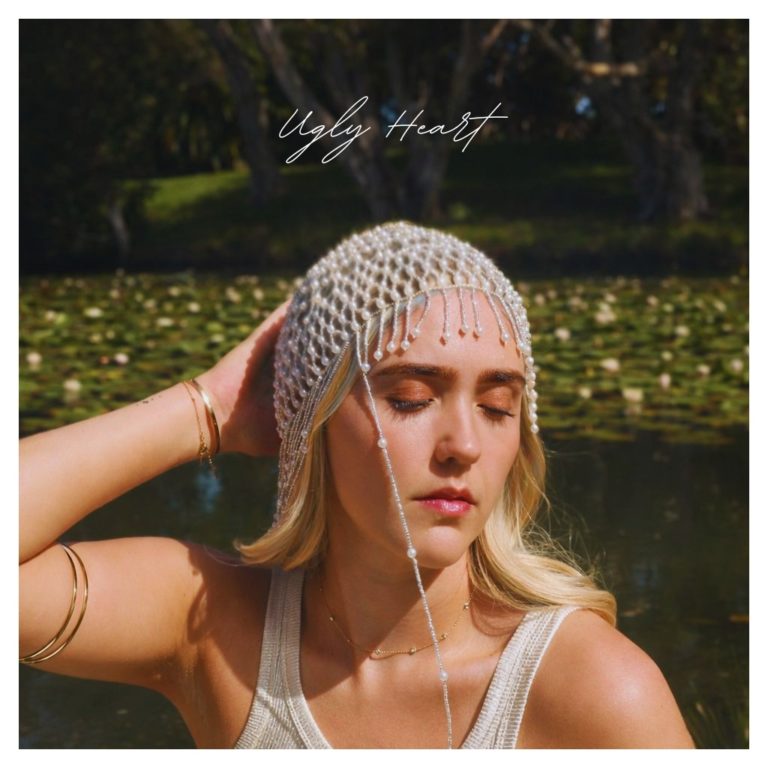
A snowy Sunday in the Netherlands changed everything. Dutch singer-songwriter Noble is entering an exciting new chapter with her latest single “Ugly Heart,” an empowering, upbeat country anthem that shows off a bold new side of her artistry.

Born and raised in the Netherlands, Noble felt drawn to storytelling through song from a very young age. She first stepped into the spotlight as a teenager when she reached the semi-finals of The Voice Kids Belgium, and she’s been developing her craft as a songwriter and performer ever since.

In 2022 she released her debut cinematic pop-rock album ‘Silence,’ featuring standout tracks “All I Wanted” and “Creeping,” which have gathered more than 800,000 combined streams. As her songwriting evolved, she moved toward a folk-pop sound on her EP ‘True Calling,’ a deeply personal project that became the catalyst for discovering her true home in country and folk music.

On May 8 she introduced that new direction with “chasing space,” a dreamy country-folk single that bridged her into the evolving sound, earning warm support from outlets including Triple J, Lefuture Wave and Caesar Live N Loud.

Now comes “Ugly Heart,” a spirited, unapologetic anthem about self-respect, boundaries and rejecting superficiality. “When I went into the studio with my producer Paul Aiden, we started with a blank canvas as we usually do,” Noble says. “I wanted to create something more upbeat and empowering. Paul started playing a guitar riff that I instantly loved, and before we knew it, we had the foundation of the song. While improvising melodies and lyrics, I found myself writing about setting boundaries and calling out people who value status and material things over genuine connection.”

Inspired in part by Louis Theroux’s documentary The Manosphere, “Ugly Heart” takes aim at toxic attitudes and the growing culture of performative masculinity. “It’s a song that tells certain men that women aren’t interested in them because of money or power,” she explains. “Real connection comes from authenticity, empathy, and emotional depth. ‘Ugly Heart’ is about recognizing when someone lacks those qualities and walking away.”

The single hits with real spark and conviction, a confident statement from a writer who sounds fully at home in her new lane. Originally set for June 12, its launch moved forward after an unexpected radio debut on ABC Country Australia on May 25, followed by support from ABC Radio, Triple J and Radio Australia on May 30. Days later, on June 1, “chasing space” also made its Triple J debut.

The move into country has been years in the making. “When I made True Calling, I was searching for who I was both as a person and as an artist,” Noble reflects. “Looking back now, I realize that project was helping me discover my true identity.” The turning point arrived that snowy afternoon when she wrote her first country song. “I completely fell in love with it,” she says. “I started listening to artists like Kacey Musgraves, Shania Twain, and Ella Langley, and it felt like an entirely new world opened up. For the first time, I feel completely aligned with who I am and the music I love creating.”

Video: Panic! At The Disco Go Out In Style At Inglewood’s Intuit Dome In 2022

0

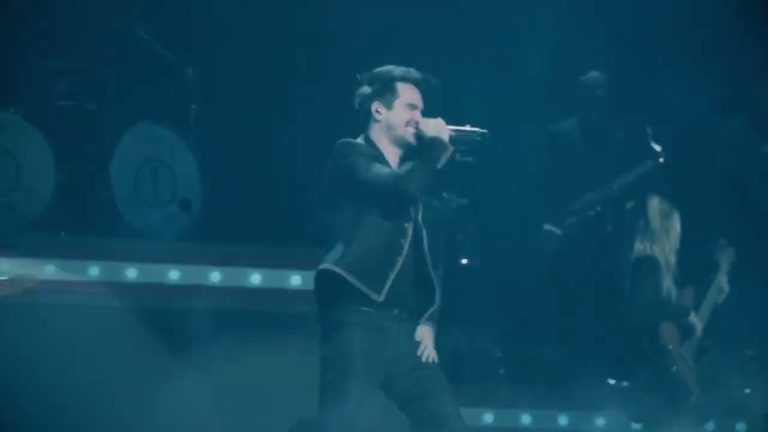
Brendon Urie knew how to throw a finale. This full concert recording from Panic! At The Disco’s ‘Viva Las Vengeance’ tour, filmed at the Intuit Dome in Inglewood in 2022 and titled “Everybody Needs A Place To Go,” catches the band at the height of its theatrical powers, with a full backing band, a horn section, and a complete in-sequence run through their final album bookended by greatest hits like “Say Amen (Saturday Night),” “I Write Sins Not Tragedies,” “Death Of A Bachelor” and “High Hopes.”