Home Blog Page 13

How to Use YouTube to Build Your Music Career

YouTube is the world’s largest music discovery platform. With over 2.7 billion active users in 2026 and 60 percent of listeners finding new artists there first, it is the one platform every independent artist needs to take seriously.

And the good news is that growing on YouTube as a musician is more achievable than most people think. You just need to know how to approach it. Here is a step-by-step guide.

1. Claim your Official Artist Channel

Your Official Artist Channel is your home base on YouTube. It consolidates all your music, including uploads from distributors, into one professional profile. It signals to listeners and to YouTube’s algorithm that you are a serious artist. To get one, you need to distribute your music through a partner like DistroKid, TuneCore, or CD Baby and meet YouTube’s basic eligibility requirements.

Once your channel is live, treat it like a storefront. Add a high-quality banner, a clear profile photo, a well-written About section, and links to all your social platforms. First impressions on YouTube carry real weight, and a polished channel makes new visitors far more likely to stay and explore.

2. Build a content strategy across three pillars

The fastest-growing musician channels in 2026 follow a three-pillar content approach. Think of it this way:

  • Discovery content (40% of your uploads): YouTube Shorts, covers of popular songs, trend-based clips, and anything designed to reach new listeners who have never heard of you.
  • Engagement content (40%): Behind-the-scenes footage, songwriting sessions, studio breakdowns, gear tours, and day-in-the-life vlogs that build genuine connection with people already following you.
  • Conversion content (20%): Full music videos, official audio releases, and live performances that turn curious viewers into committed fans who follow you everywhere else.

Artists who combine Shorts with long-form content consistently see 20 to 35 percent higher cross-platform engagement than artists who only upload music videos.

3. Use YouTube Shorts as a discovery engine

Shorts are the single most powerful discovery tool on YouTube right now. A strong 10 to 20 second clip from a song, a studio moment, or a live performance can introduce you to thousands of new listeners overnight. Think of every Short as a trailer for the full experience of your music.

The strategy that works best is using Shorts to test hooks before a full release. Put the most compelling moment of a new song into a Short, watch how audiences respond, and use that data to inform how you promote the full track. YouTube’s algorithm is actively pushing Shorts to new audiences, and monetization on Shorts is now available for artists who qualify through the Partner Program.

As of January 2026, YouTube withdrew its streaming data from all Billboard US and global charts. That means YouTube streams now matter entirely on their own terms, which makes building a genuine YouTube audience more important than ever for artists who want to track real impact.

4. Master your metadata and SEO

YouTube is a search engine as much as a video platform. The way you title, describe, and tag your videos determines whether new listeners ever find them. Here is what works in 2026:

  • Titles: Always include your song name, your artist name, and the version type (official video, live session, acoustic, etc.). Keep it clear and specific.
  • Descriptions: Write a genuine description of the video, include your most important links at the top, and add a standardized block of credits and social links at the bottom of every upload.
  • Tags: Connect your music to related artists, genres, and moods. Use a mix of broad and specific terms to help the algorithm understand who should be watching your videos.
  • Thumbnails: Create custom thumbnails using Canva or Adobe Express. Thumbnails are often the deciding factor between a click and a scroll-past.

5. Use Premieres to build event energy around releases

YouTube Premieres let you schedule a video to go live at a specific time, with a countdown and a live chat that opens before the video starts. Fans gather in the chat lobby, build excitement together, and you can join the conversation in real time. For major releases, Premieres turn a simple upload into a genuine event. They drive watch time in the first 24 hours, which YouTube’s algorithm weighs heavily when deciding how widely to recommend a video.

6. Go live regularly

Live streams are one of the most effective ways to build a loyal community on YouTube. You can perform songs, answer fan questions, take listeners behind the scenes of a recording session, or simply hang out and talk about music. Live content generates Super Chat revenue, builds real-time connection, and signals to YouTube that your channel is active and engaging. Even a 30-minute casual stream once a month makes a meaningful difference in channel growth and audience retention.

YouTube now integrates live event listings through Bandsintown directly on your channel. Keep your tour dates updated so that listeners discovering you on YouTube can immediately find out where you are playing next.

7. Study your analytics and act on them

YouTube Studio gives you detailed data on watch time, audience retention, click-through rates, geographic breakdown, and which videos are driving new subscribers. Review your analytics every week. Find out which videos hold attention the longest and build more content in that direction. If a Short is pulling in listeners from a specific country or city, that is a market to prioritize in your promotion and touring plans. The artists who grow fastest on YouTube are the ones who treat their data as a creative tool, not just a report card.

8. Turn on every monetization option available to you

YouTube offers multiple revenue streams for artists in 2026: ad revenue on long-form videos and Shorts, Super Thanks on uploads, Super Chat during live streams, and Channel Memberships that give fans access to exclusive perks. If you distribute through TuneCore, DistroKid, Symphonic, or similar services, you are likely already eligible for most of these. Make sure Content ID is set up correctly so that any use of your music across YouTube generates royalties back to you, including user videos that feature your songs in the background.

9. Collaborate to accelerate growth

YouTube now lets you add up to five creators as collaborators on a single video, with the upload appearing on all of your channels simultaneously. For musicians, this is a powerful tool. A collaboration with another artist in a related genre introduces both of you to each other’s audiences instantly, and the combined watch time and engagement tells the algorithm that something worth promoting is happening.

10. Post consistently and stay patient

Consistency is the most important factor in YouTube growth, and it is the one most artists underestimate. Building a publishing schedule and sticking to it, whether that is one Short per week and one long-form video per month, signals to YouTube that your channel is worth recommending. Growth on YouTube is often slow at first and then accelerates sharply once the algorithm begins to understand your audience. The artists who break through are the ones who keep showing up.

You do not need expensive equipment to start. Many of the fastest-growing musician channels in 2026 are built entirely on smartphone footage. What matters is consistency, authenticity, and a genuine connection with your audience. Start with what you have and improve as you grow.
DMX Demystified: A Beginner’s Guide to Automating Your Live Show Without Hiring a Lighting Tech

0

By Mitch Rice

Lights do more than keep your band out of the dark—they shape the crowd’s first impression, pump up social-media photos, and even nudge fans toward the merch table. For larger productions, achieving high-end professional stage lighting once required a dedicated touring lighting designer. 

Today, many compact LED fixtures with DMX ports can be found for under $50, comparable to or sometimes less than an entry-level pedalboard. And the software to control them is often free. 

In other words, smart lighting is no longer an arena-only luxury; it’s a DIY super-power waiting to be tapped.

DMX in One Paragraph (Skip the Jargon)

DMX—short for Digital Multiplex—is a simple language that tells lighting fixtures what to do. One “universe” carries 512 control channels over a single XLR cable (or wireless link). 

Each fixture grabs a block of those channels—maybe three for RGB color, or fifteen for a moving head—and follows the values you send from a controller. 

That’s it: no coding, no soldering, just a numbered address and a few sliders.

Core Gear You Actually Need

Lighting Fixtures

Start with color-changing PAR cans or wash bars to paint the stage. Add strobes for impact and moving heads when you want beams sweeping the room. 

Affordable options like the SHEHDS 230 W moving-head spot give you motorized pan/tilt, gobos, and prism effects for a fraction of big-brand pricing—proof that professional stage lights aren’t just for festival budgets.

Controllers

You have three pathways:

  1. Hardware desks. Great tactile feel, zero latency, but bulkier in the van.
  2. USB or Ethernet interfaces. Plug into a laptop running free software such as QLC+, supporting output via USB and Ethernet (Art-Net/sACN).
  3. Handheld remotes/apps. Chauvet DJ’s RFC remote provides wireless, omnidirectional RF control of compatible fixtures without line-of-sight, up to 100 ft.

Data Links

Classic 3-pin or 5-pin XLR cables still rule indoors. For cluttered festival stages, swap them for CRMX or W-DMX wireless nodes—latency is a negligible <5 ms, and you’ll thank yourself during changeovers.

Setting Up Your First Universe: Step-By-Step

  • Address every fixture. Locate the tiny LED menu, choose DMX mode, and enter a starting channel (e.g., 001, 009, 025…).
  • Patch channels inside your software or desk. Drag icons or type addresses so the controller knows who’s who.
  • Build basic presets. Program static colors, a white front-wash, and a blackout cue.
  • Create chases. Duplicate your presets, tweak brightness or hue, and set a tempo.
  • Save the show file and blackout-test. Hit the panic button—if the stage goes completely dark, you mapped everything correctly.

Going Cable-Free—When & How

Wireless DMX shines when you have rotating stages, roaming cameras, or zero time for tape runs. 

Eurovision 2024 reached an audience of 163 million viewers across its three live shows and deployed wireless DMX across camera fill lights (Aputure MC Pro panels on Steadicams), Astera HydraPanel units used for fill light and strobing, and battery-powered scenic props like Bambie Thug’s candle chandelier — freeing those elements from cables where movement and safety demanded it.

If it worked for the world’s biggest live televised music event, it will work for your local festival. 

A pair of CRMX transceivers replaces hundreds of feet of XLR—and because the protocol hops frequencies automatically, dropout risk is minimal. 

Still, keep one spare cable in the gig bag as insurance.

Programming Killer Cues in Under an Hour

Dimmer flash. One approach is to duplicate your main wash, set intensity to 0%, then 100% on the next cue; assign to the snare.

Beat-synced color chase. Tap your song’s BPM in the software, copy a rainbow palette across four steps, and loop.

Audience blinder. Aim two washes forward, select warm-white, fade in over 0 s, fade out over a short duration determined by operator preference and the desired effect. Instant hands-in-the-air moment.

Tip: Most software lets you copy cues between songs. Program once, then tweak the tempo per track.

Scaling Your Rig: Three Milestones

Bars & Rehearsal Rooms

  • Rig: A typical entry-level bars/rehearsal room rig might include four RGB PARs on tripods, a USB-to-DMX dongle, and free software such as QLC+.
  • Budget: ≈ $500–$1,000+ (fixtures only, excluding controller and stands) depending on fixture choice.
  • Setup: Setup for a simple PA rig in a bar can take as little as 30–45 minutes for a solo act or duo, and around 1–2 hours for a four-piece band, not including soundcheck. More complex rigs can extend total time to 3+ hours.

Club Level

One suggested approach is to add two moving heads and a hazer, and upgrade to a laptop interface with MIDI so you can trigger scenes from your drum pad. A club rig might include a pair of SHEHDS 230 W spots for aerial beams on a 12-foot truss.

Festival Stage

Universes are commonly divided by rig zone or fixture type; in smaller festival setups, one universe may carry front-of-house fixtures while another handles backline/floor specials. 

Art-Net over Ethernet is widely recommended for large festival productions, redundant data paths are generally advised, and saving your show file on a thumb drive for the house LD is common practice. 

The global programmable stage-lighting market is projected to reach USD 4.25 billion by 2030, growing at an 8.46% CAGR.

Troubleshooting in 60 Seconds

  • No response? Check that the fixture’s DMX channel range doesn’t overlap another unit.
  • Flicker? Replace suspect cable, add a DMX terminator, or move the wireless receiver beyond Wi-Fi routers.
  • One fixture misbehaving? Hard-reset it, then re-patch in the controller.

Cost & Time Checklist

  • Starter rig: Costs vary significantly depending on fixture choice (fixture count, fixture quality, interface type, and retailer pricing all affect the total) + free software (such as QLC+ or FreeStyler); basic programming achievable in a few hours.
  • Club rig: ≈ $1,500 hardware; rehearsal requirements vary widely based on show complexity, rig size, and operator experience.
  • Festival rig: Price of your dreams—but setup times vary depending on rig size and crew; pre-addressing fixtures can significantly reduce patching time during changeovers.

[Level up your promo game by syncing lighting shots with these music-marketing tips.]

Caveats & Counterpoints

Wireless is incredibly stable, but clubs packed with Bluetooth users can still clog the 2.4 GHz band. Pack a backup XLR cable to use if wireless fails, and always label your universes so a hired lighting tech can jump in without guesswork.

Conclusion

DMX isn’t witchcraft—it’s a daisy-chain topology of numbered channel values. With a handful of affordable fixtures, a laptop, and the right addresses, you can transform a dimly lit bar stage into a festival-ready light show that elevates your music and brand. 

Master the basics today, and you’ll never look at a dark stage the same way again.

Data and information are provided for informational purposes only, and are not intended for investment or other purposes.

How DramaBox Coins Change the Streaming Experience for Mobile Users

0

By Mitch Rice

There is a particular kind of restlessness that comes with modern life. Gaps between meetings, long commutes, the ten minutes before sleep finally arrives — these pockets of time used to disappear into nothing. Now they disappear into DramaBox, and for good reason.

The app has built something that genuinely works for mobile users: short, punchy drama episodes designed around real viewing habits rather than the idealized ones. Nobody is sitting down for a three-hour film on a phone screen. But a five-minute episode of a romance drama with a twist ending? That fits anywhere.

What keeps the whole thing running smoothly, though, is a currency system that most new users underestimate at first.

Coins Over Subscriptions — And Why That Gap Matters

Subscription fatigue is real. Between music, video, news, and fitness apps, the average smartphone owner is already paying for more monthly services than they actively use. DramaBox sidesteps this entirely by running on DramaBox coins — a virtual currency users spend to unlock individual episodes rather than paying a blanket monthly charge for access they may never fully use.

The practical difference hits quickly. A light viewer who catches one or two series a month spends a fraction of what a heavy user does. Nobody is locked into recurring charges. Nobody pays for a month of access they barely touched. The cost tracks the actual behavior, which is a more honest model than most entertainment apps currently offer.

Beyond economics, there is a psychological shift that comes with coin-based viewing. Choosing to spend currency on an episode — even virtual currency — makes the decision feel more deliberate. Users gravitate toward content they are genuinely curious about rather than defaulting to whatever appears first on a home screen. That selectivity tends to produce better viewing sessions and stronger satisfaction with the content overall.

When the Story Has Its Hooks In You

Anyone who has spent time with DramaBox will recognize the feeling. An episode ends. A character says something that reframes the entire previous story. The screen cuts to black. The next episode is locked.

This is not a bug in the experience — it is the whole architecture of it. Short drama content is engineered around exactly these moments. The cliffhanger is not a side effect of good writing; it is the delivery mechanism. And it only works if the viewer has a way to keep going.

DramaBox coins exist precisely for this. A loaded coin balance means that moment of peak engagement — the exact second when a viewer most wants to continue — never becomes a dead end. The episode unlocks, the story moves forward, and the emotional thread stays intact. For content built around compulsive momentum, that continuity is worth far more than it might appear on paper.

LootBar — The Smarter Way to Stock Up

Buying coins inside the app is simple enough, but it is not always the best deal available. Regular DramaBox users have gravitated toward LootBar as an alternative top-up option, and the reasons are practical rather than complicated.

LootBar is a dedicated shop for in-app currencies and credits across a wide range of titles. It handles DramaBox among many others, and the advantage it consistently offers is price. LootBar top-up rates for DramaBox coins regularly come in below what users would pay going through the default app store route, especially when promotional pricing is active. For someone watching across multiple series each week, that difference in cost is not trivial — it compounds into meaningful savings over time.

The top-up process itself is genuinely low-effort. Visit the LootBar shop, select a coin package, enter the relevant account details, pay, and the coins land in the account. No lengthy verification steps, no navigating through nested menus, no delay before the coins are usable. The whole thing is built for people who want to get back to watching, not spend twenty minutes managing a transaction.

The shop also handles payment flexibility well. Multiple methods are accepted, which removes the friction that can appear when app store payment options do not align with what a user in a particular region actually has available. That accessibility has made LootBar top-up a reliable choice for DramaBox users across different markets.

Building a Better Viewing Habit

One thing that does not get discussed much about coin-based systems is how they quietly improve the relationship between a viewer and their content. With a flat subscription, every show is technically free at the point of watching, which sounds better than it is. It encourages passive, almost indifferent consumption — scrolling, half-starting things, abandoning series two episodes in.

Coins introduce a small but meaningful layer of intention. Spending them on a series is a micro-commitment. Users finish what they start more often. They seek out content in genres they already know they enjoy. They build preferences rather than just grazing. The result is a viewing habit that feels more satisfying and less like time spent by default.

DramaBox has a catalogue deep enough to reward this kind of engagement. There is genuine variety across romance, thriller, family drama, and revenge storylines — enough that once a user identifies what they actually enjoy, there is always something new worth spending coins on.

A Few Practical Notes for New Users

Starting with the free content makes sense before spending any coins. The catalogue is large and preferences are personal — spending coins on a genre that turns out to be a poor fit is a minor but avoidable frustration. A few free episodes across different series is usually enough to identify where a viewer’s interests sit.

Once that is settled, keeping a consistent coin balance through LootBar top-up is the most friction-free approach to regular viewing. Reactive top-ups — buying coins only when the balance hits zero mid-episode — create unnecessary interruptions. Staying ahead of that curve keeps the experience smooth.

What It All Adds Up To

DramaBox works because it respects how mobile users actually live. Short sessions, genuine storytelling, content that earns attention rather than assuming it. The coin system extends that respect into the commercial side of the app — flexible, proportional, and honest about what it costs.

With the LootBar store making top-ups more accessible and affordable than the default route, there has never been a better time to build a proper DramaBox habit. The stories are there. The coins make them reachable.

Data and information are provided for informational purposes only, and are not intended for investment or other purposes.

How U.S. Companies Build Intelligent Operational Systems for Scalable Digital Growth 

0

By Mitch Rice

Artificial intelligence has moved far beyond experimentation.

What once felt like an emerging technology discussed mostly by engineers and researchers is now influencing nearly every part of modern business:

  • Customer support
  • Data analysis
  • Marketing operations
  • Product development
  • Internal workflows
  • Financial systems

But despite the growing excitement surrounding AI, many businesses are discovering something important:

Technology alone does not create transformation.

Operational structure does.

Companies adopting AI successfully are not simply installing new tools and expecting immediate results. They are redesigning workflows, improving communication systems, restructuring operations, and building environments where intelligent technology can support real business outcomes.

This shift is reshaping how organizations operate, collaborate, and scale—especially as globally distributed teams become increasingly common and professionals across Latin America play larger roles in digital operations for U.S.-based companies.

In this article, we’ll explore how businesses are building intelligent operational systems, why scalable infrastructure matters more than short-term automation trends, and how global collaboration is influencing the future of AI-driven organizations.

The Real AI Challenge Is Organizational, Not Technical

When companies first begin exploring artificial intelligence, they often focus heavily on technology itself:

  • Which tools to use
  • Which models perform best
  • Which platforms integrate fastest

But after initial experimentation, many organizations encounter a different problem entirely.

Their operational systems are not prepared.

Without strong infrastructure:

  • Data becomes inconsistent
  • Workflows remain fragmented
  • Communication breaks down
  • Automation creates confusion instead of efficiency

The issue is rarely the AI technology itself.

It’s the surrounding operational environment.

Why Distributed Teams Are Becoming Central to AI Operations

As AI adoption accelerates, demand for technical and operational talent continues growing rapidly.

Organizations increasingly need professionals experienced in:

  • Cloud infrastructure
  • Data workflows
  • Automation systems
  • Backend engineering
  • AI-related operations
  • Process optimization

At the same time, U.S. businesses face:

  • Rising hiring costs
  • Strong competition for technical specialists
  • Local talent shortages

This has accelerated the growth of distributed operational models.

Why Latin America Has Become a Strategic Talent Region

Among global regions, Latin America has emerged as one of the strongest partners for U.S.-based companies building modern digital operations.

Several factors contribute to this trend.

Time Zone Compatibility

AI-driven operations often require continuous collaboration between:

  • Engineers
  • Product teams
  • Operations specialists
  • Leadership

Latin American professionals can frequently collaborate during standard U.S. business hours, improving communication speed and workflow coordination.

Strong Technical Expertise

The region has a growing number of professionals skilled in:

  • Backend systems
  • Automation infrastructure
  • Data engineering
  • Cloud operations
  • Workflow optimization

Many already work within globally distributed organizations.

Cultural Alignment

Successful collaboration depends heavily on communication quality and shared operational expectations.

Cultural compatibility reduces friction and improves integration.

Long-Term Collaboration Potential

Many professionals seek stable, ongoing opportunities rather than isolated project work.

This supports continuity and long-term operational growth.

Why AI Success Depends on Operational Integration

One of the most common mistakes businesses make is treating AI as an isolated initiative.

But AI systems are deeply connected to everyday workflows.

Poor operational integration creates:

  • Inconsistent outputs
  • Workflow bottlenecks
  • Misaligned automation
  • Reduced team trust in systems

Strong integration creates:

  • Reliability
  • Predictability
  • Better collaboration
  • Sustainable scalability

Operational integration matters more than experimentation alone.

Communication Becomes Even More Important in Intelligent Organizations

As automation increases, communication quality becomes even more critical.

Without operational clarity:

  • Teams misunderstand AI capabilities
  • Expectations become unrealistic
  • Processes become fragmented

Strong communication systems include:

  • Clear documentation
  • Transparent workflows
  • Defined operational ownership
  • Structured collaboration systems

The strongest organizations prioritize clarity over complexity.

Why Documentation Becomes Operational Infrastructure

AI-driven systems require consistency.

Without documentation:

  • Workflows become difficult to maintain
  • Knowledge becomes isolated
  • Onboarding slows down
  • Scaling becomes harder

Documentation supports:

  • Operational continuity
  • Team alignment
  • Workflow reliability
  • Long-term scalability

At scale, documentation becomes infrastructure.

The Difference Between Automation and Transformation

Many organizations automate individual tasks without improving larger operational systems.

This often creates disconnected workflows rather than meaningful progress.

True transformation happens when companies redesign systems around:

  • Efficiency
  • Scalability
  • Collaboration
  • Operational visibility

Technology alone does not create transformation.

System design does.

How Businesses Begin Expanding AI Capabilities

As organizations modernize operations, many begin exploring areas like custom ai development as part of broader efforts to improve scalability, automation, and operational intelligence.

However, the companies that succeed long term rarely focus only on building tools.

They focus on building operational systems where intelligent technology supports real workflows and sustainable business outcomes.

Common Challenges in AI-Driven Operations

Fragmented Data

AI systems rely heavily on reliable information.

Solution: Centralized and organized operational data structures.

Workflow Misalignment

Automation may not integrate properly into existing systems.

Solution: Workflow redesign and operational mapping.

Unrealistic Expectations

Businesses sometimes expect immediate transformation.

Solution: Long-term implementation strategies and phased integration.

Communication Gaps

Teams may misunderstand AI-related workflows.

Solution: Transparent documentation and operational clarity.

Opportunities for Professionals in Latin America

The growth of intelligent digital operations has created major opportunities across Latin America.

Professionals who succeed internationally often focus on:

Technical Adaptability

AI-related systems evolve rapidly.

Communication Skills

Clear communication improves collaboration and trust.

Workflow Understanding

Understanding business operations improves implementation effectiveness.

Reliability

Consistency remains one of the most valuable professional qualities.

Professionals who combine these strengths are increasingly sought after by global organizations..

A New Era of Business Operations

Organizations are entering a fundamentally different operational era.

The defining characteristics are:

  • Intelligent systems
  • Distributed collaboration
  • Digital-first workflows
  • Global talent integration

The companies that succeed will not necessarily be the ones with the most advanced technology stacks.

They will be the ones with the clearest operational systems.

Final Thoughts

Artificial intelligence is transforming business operations rapidly.

But long-term success will not come from technology adoption alone.

It will come from building operational systems capable of integrating intelligent technology sustainably, collaboratively, and effectively over time.

U.S. companies that combine scalable operational design with globally distributed talent—especially professionals across Latin America—are building organizations that are more adaptable, more resilient, and better prepared for the future of digital business.

At the same time, professionals across Latin America are becoming increasingly important contributors to modern intelligent operations and globally connected organizations.

The future of business is not defined only by automation.

It’s defined by how effectively people, systems, and technology work together.

And the organizations that understand this shift will shape the next era of global innovation.

Data and information are provided for informational purposes only, and are not intended for investment or other purposes.

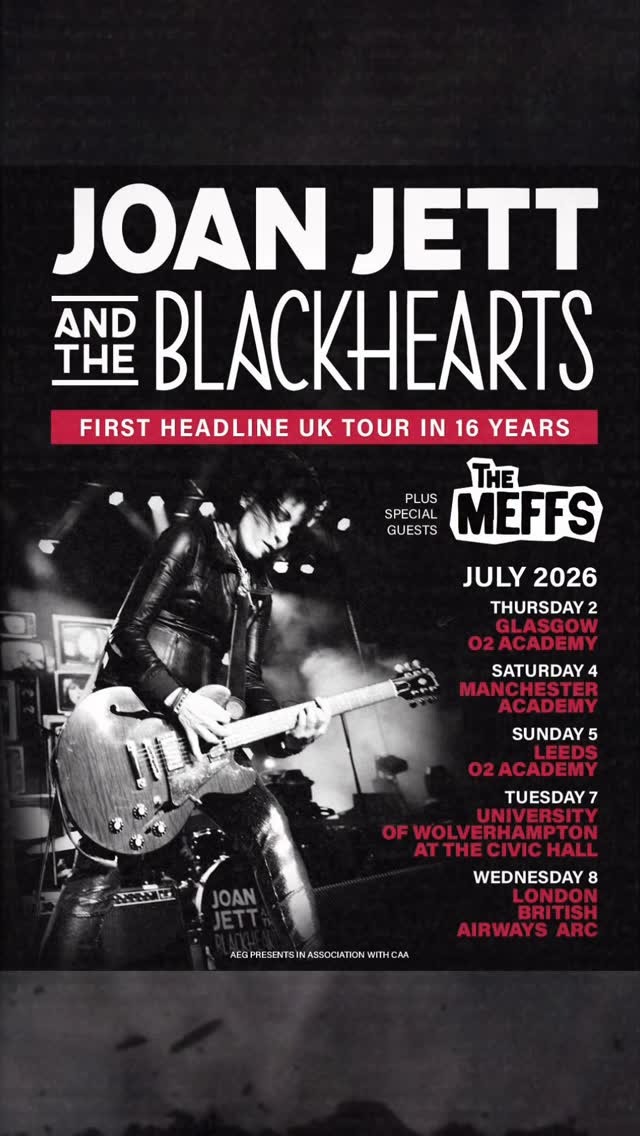
Joan Jett and the Blackhearts Return to the UK for First Headline Dates in Over 15 Years

0

Joan Jett and the Blackhearts are heading back to the UK this summer for their first headline dates there in more than 15 years, with stops in Glasgow, Leeds, and Manchester anchoring a run that stretches across 2 continents and opens at BottleRock Napa Valley on May 23.

The tour carries added weight. It’s Jett’s first since the death of Thommy Price, who drummed for the Blackhearts for nearly 30 years between 1986 and 2016, appearing on 8 of their albums. He was 68 when he died.

The BottleRock opener puts Jett on a bill alongside Foo Fighters, Kool and the Gang, Men at Work, and Bush before she heads to Europe for Sweden Rock Festival on June 5 and a stop in Tilloloy, France. In between, she plays the America250PA Commonwealth Concert Series in Hershey, Pennsylvania on June 13. The UK headline run follows in July.

Joan Jett’s 2026 Tour Dates:

5/23 – Napa, CA @ BottleRock Napa Valley 2026

6/5 – Solvesborg, Sweden @ Sweden Rock Festival 2026

6/13 – Hershey, PA @ America250PA Commonwealth Concert Series

6/28 – Tilloloy, France @ Retro c Trop

7/2 – Glasgow, UK @ O2 Academy Glasgow

7/4 – Manchester, UK @ Manchester Academy

7/5 – Leeds, UK @ O2 Academy Leeds

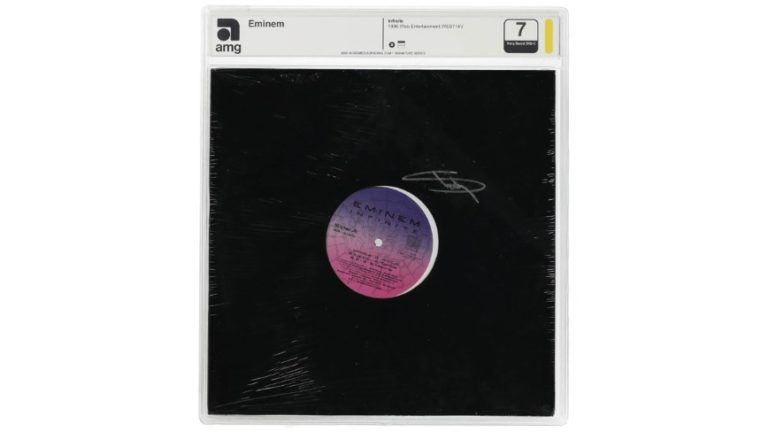
Eminem’s Rare ‘Infinite’ LP Shatters Records at Goldin’s Music Memorabilia Auction

0

Goldin’s Music Memorabilia Auction closed May 6 with a string of record-breaking results anchored by a copy of Eminem’s 1996 debut ‘Infinite’, one of only 250 signed copies released by WEB Entertainment, which sold for $104,920, the highest price ever paid publicly for any Eminem item. A sealed CD of ‘The Slim Shady LP’ from 1999 added a second record, fetching $19,993 as the highest price ever paid for any Eminem compact disc.

The hip-hop category produced another all-time high with a sealed copy of The Notorious B.I.G.’s ‘Ready to Die’, graded at a perfect AMG Mint 10 and featuring the original “If You Don’t Know, Now You Know” hype sticker, selling for $27,313, the highest price ever paid publicly for any CD.

Kurt Cobain items drove strong rock results. A self-released Nirvana ‘Bleach’ demo tape from the 1980s, with “Nirvana” handwritten by Cobain, sold for $19,520. A handwritten concert setlist from June 15, 1991, accompanied by a ticket stub, realized $17,690. A custom black fedora worn by Michael Jackson in a Pepsi commercial circa 1987-88 rounded out the top results, selling for $28,670.

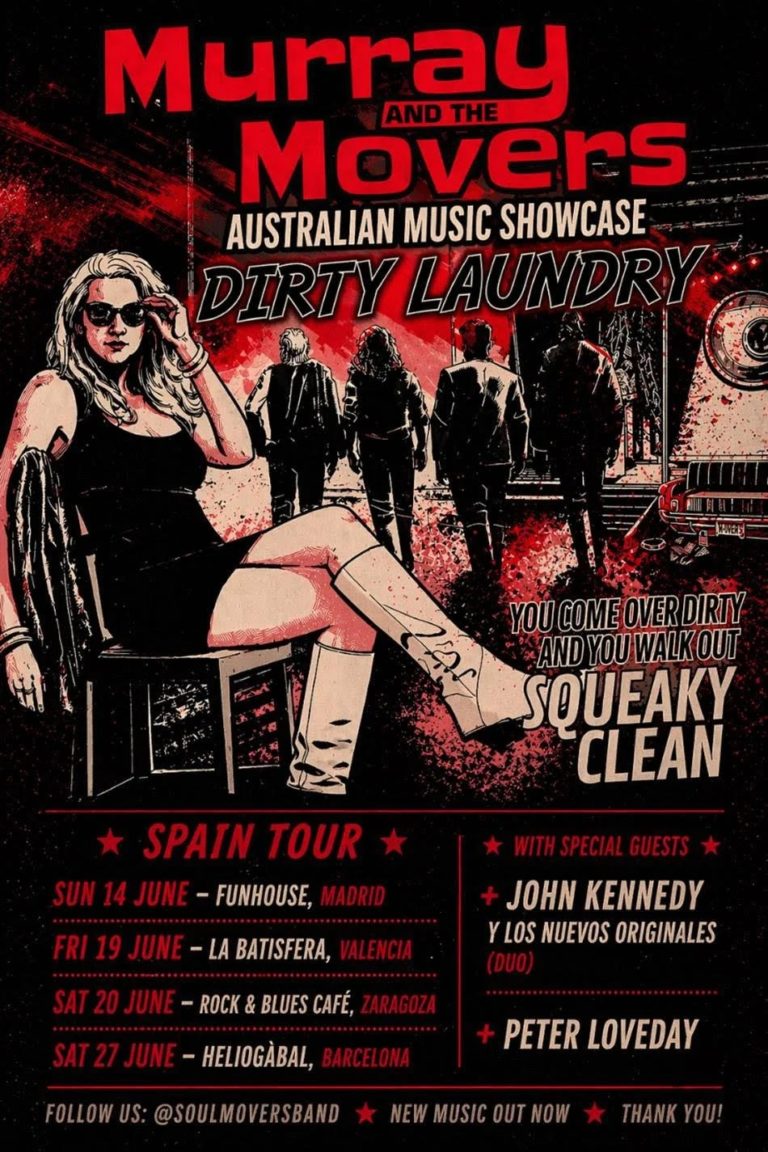
Murray and the Movers Go Darker and More Cinematic With New Single “Dirty Laundry”

0

“Dirty Laundry” doesn’t announce itself loudly. The new single from Murray and the Movers settles in slowly, a slow-burning blues-rock cut built on mood, tension, and deliberate restraint, with Lizzie Mack’s voice moving between raw intimacy and controlled power while Murray Cook’s minimal guitar work holds the whole thing in careful suspension.

The track leans into shadow and suggestion rather than declaration, letting atmosphere do the work. It’s cinematic in the truest sense, blues, country, garage rock, and classic soul filtered through a distinctly filmic sensibility that makes it an obvious candidate for film and TV placement.

A second version, “Squeaky Clean,” arrives May 22, pushing the same song into sharp-edged rockabilly territory. Where “Dirty Laundry” simmers, “Squeaky Clean” accelerates, and together the 2 versions offer a deliberately contrasting pair that shows the full range of what Murray and the Movers can do with a single piece of material.

Following the releases, Mack and Cook head to Spain in summer 2026 for a run of intimate duo shows, bringing their stripped-back chemistry to close, atmospheric rooms from Madrid to Barcelona.

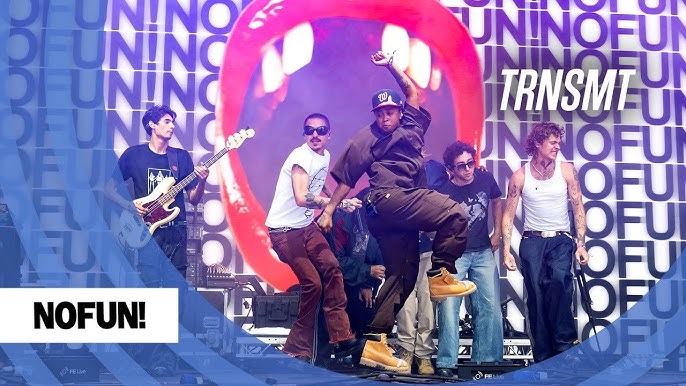
Video: NOFUN! Brought Raw Indie Rock Energy to Glasgow’s TRNSMT Festival in 2025

0

On July 11, 2025, NOFUN! took the stage at Glasgow Green on the opening day of TRNSMT Festival, sharing a bill with headliners 50 Cent, Biffy Clyro, and Snow Patrol, and delivered a raw, energetic indie rock set that held its own against one of the UK’s most prominent festival lineups.

Gracie Abrams Announces Third Album ‘Daughter from Hell’ With Lead Single “Hit the Wall” This Thursday

0

Gracie Abrams has announced ‘Daughter from Hell’, her third studio album, arriving July 17 via Interscope Records. Written and produced alongside longtime collaborator Aaron Dessner, the album follows ‘The Secret of Us’ and marks a deliberate new direction. Lead single “Hit the Wall” drops this Thursday at 5 pm PST / 8 pm EST, with pre-order available now.

Speaking with Vogue at the 2026 MET Gala, Abrams described the single with the kind of directness that defines her best work. “It’s the introduction to this new chapter, and I feel grateful and relieved that this is the introduction,” she said. “It feels embodied and that feels good. I’m excited for it to belong to everyone else.”

‘The Secret of Us’, released in June 2024, established Abrams at a new commercial level. The album debuted at number 2 on the Billboard 200 and reached number 1 in the UK, Australia, and the Netherlands. “Close to You” marked her first solo Billboard Hot 100 debut, while deluxe track “That’s So True” climbed to number 6 on the chart and entered Spotify’s Billions Club with over 1.5 billion streams. The album also produced “us.” featuring Taylor Swift, which earned Abrams a GRAMMY nomination for Best Pop Duo/Group Performance.

Her debut album ‘Good Riddance’ (2023) earned a Best New Artist nomination at the 66th Annual GRAMMY Awards and sold out its headline tour in under an hour. She subsequently joined Taylor Swift as opening act on select dates of the Eras Tour, then spent 2024 and 2025 on back-to-back world tours behind ‘The Secret of Us’, including her first solo North American arena run.

Beyond music, Abrams recently became a house ambassador for Chanel and makes her acting debut in the upcoming A24 film Please, directed by Halina Reijn.

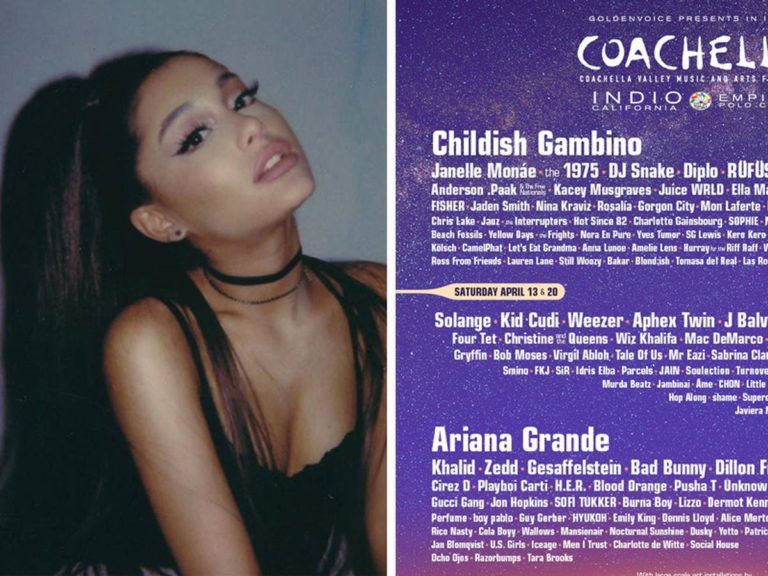
Video: Ariana Grande’s Historic 2019 Coachella Headline Set Is Streaming Now

0

Ariana Grande’s 2019 Coachella headline set, the one that made her the youngest artist to ever top the festival’s main stage, is streaming now at OnlyLiveConcert.com. The performance moved through hits from ‘Sweetener’ and ‘thank u, next’ alongside a surprise appearance from Justin Bieber for a live duet of “Sorry,” his first performance in 2 years, all backed by a full orchestra and production that matched the scale of the moment.