


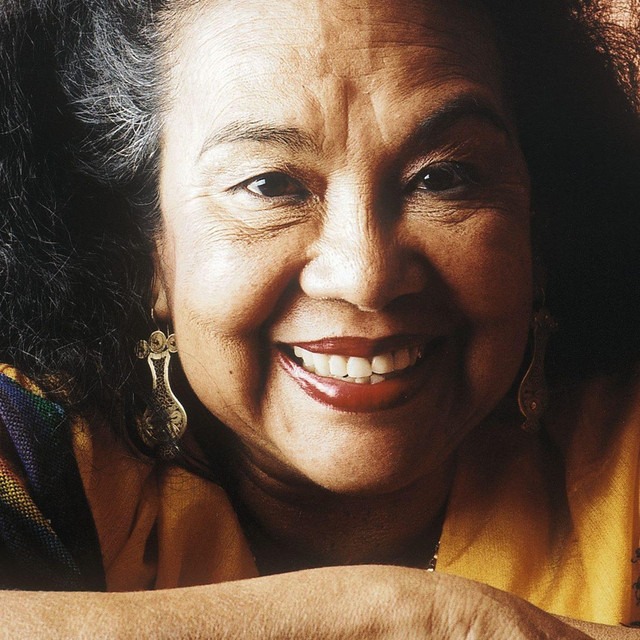
She didn’t introduce the world to Colombian folk music so much as she refused to let the world ignore it. Totó La Momposina, born Sonia Bazanta Vides in Talaigua Nuevo, Bolívar, died May 17 in Celaya, Mexico, surrounded by family. She was 85. Her death was confirmed by her children, Colombia’s Ministry of Culture, and President Gustavo Petro, who called her “an exalted figure of Caribbean Colombian art and culture.”
Born in 1940 into a family where music wasn’t a hobby but a generational calling, Totó came from 5 generations of musicians. Her grandfather directed a band and played clarinet. Her father played percussion. Her mother sang and danced. By the time Totó was a teenager, the family had formed a group gaining national recognition through the Saturday television program “Acuarelas Costeñas,” bringing cumbia, bullerengue, mapalé, and baile cantao into living rooms across Colombia every week.
Her education was both formal and deeply immersive. She studied at the National University of Colombia and spent time at the Sorbonne in Paris studying music history, performance organization, and choreography. Alongside anthropologist Gloria Triana, she traveled the riverside towns along the Magdalena River, learning directly from the singers and drummers who had kept these traditions alive in their communities for generations.
The international turning point came in 1993 with ‘La Candela Viva,’ released on Peter Gabriel’s Real World Records. The album introduced Colombian folk music to a global audience years before Latin music became a mainstream worldwide conversation. Songs like “La Verdolaga,” “El Pescador,” and “Cururá” became cultural touchstones, sampled decades later by Major Lazer, Jay-Z, and others, her voice weaving itself into contemporary music without ever losing its roots.
In 1982, she accompanied Gabriel García Márquez to Stockholm for his Nobel Prize in Literature ceremony, performing for the assembled audience and communicating something precise about the depth of what Colombia had contributed to world culture. The moment became part of Colombian cultural history.
Her collaborations ranged far and wide. She appeared alongside Calle 13, Susana Baca, and Maria Rita on “Latinoamérica,” one of the most celebrated Latin recordings of its era, winning Latin Grammy awards for Record of the Year and Song of the Year in 2011. In 2013, the Latin Recording Academy honored her with its Lifetime Achievement Award.
She was among the first women to bring the bullerengue, a form rooted in the Afro-Colombian communities of Colombia’s Caribbean coast, to international stages, always with full cultural context intact. She never allowed audiences to receive these traditions as mere entertainment detached from the people who created them. That discipline was central to everything she did.
Totó officially retired from performing in 2022 after revealing she had been living with aphasia and other neurocognitive complications. Her final public appearance was at the Festival Cordillera in Bogotá, where audiences gave her an emotional farewell. She spent her remaining years in palliative care in Mexico.
A public tribute will be held at the Capitolio Nacional in Bogotá on May 27, where her family and the Tambores de Totó will gather to honor her life and legacy. Her body is being transported from Mexico to Colombia for the ceremony.
Colombia’s Ministry of Culture said it best: she was “the eternal teacher who traveled the entire world to the rhythm of cumbias, porros, mapalés, and bullerengues born in the heart of our land.” She spent 6 decades proving that music rooted in survival, memory, and community could reach every corner of the planet.
Totó La Momposina is survived by her children Marco Vinicio, Angélica María, and Euridice Salomé Oyaga Bazanta. She was 85.