

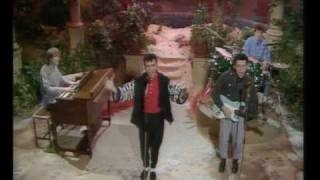
Tears for Fears’ “Everybody Wants to Rule the World,” released in 1985, is a timeless anthem that captures the essence of the ’80s, and here they are performing the billon-streamed song on The Kenny Everett Show.
My Next Read: “The Mark of Criminality: Rhetoric, Race, and Gangsta Rap in the War-on-Crime Era” by Bryan J. McCann

In The Mark of Criminality: Rhetoric, Race, and Gangsta Rap in the War-on-Crime Era, Bryan J. McCann argues that gangsta rap should be viewed as more than a damaging reinforcement of an era’s worst racial stereotypes. Rather, he positions the works of key gangsta rap artists, as well as the controversies their work produced, squarely within the law-and-order politics and popular culture of the 1980s and 1990s to reveal a profoundly complex period in American history when the meanings of crime and criminality were incredibly unstable.
At the center of this era-when politicians sought to prove their “tough-on-crime” credentials-was the mark of criminality, a set of discourses that labeled members of predominantly poor, urban, and minority communities as threats to the social order. Through their use of the mark of criminality, public figures implemented extremely harsh penal polices that have helped make the United States the world’s leading jailer of its adult population.
At the same time when politicians like Ronald Reagan, George H. W. Bush, and Bill Clinton and television shows such as COPS and America’s Most Wanted perpetuated images of gang and drug-filled ghettos, gangsta rap burst out of the hip-hop nation, emanating mainly from the predominantly black neighborhoods of South Central Los Angeles. Groups like NWA and solo artists (including Dr. Dre, Snoop Dogg, and Tupac Shakur) became millionaires by marketing the very discourses political and cultural leaders used to justify their war on crime. For these artists, the mark of criminality was a source of power, credibility, and revenue. By understanding gangsta rap as a potent, if deeply imperfect, enactment of the mark of criminality, we can better understand how crime is always a site of struggle over meaning. Furthermore, by underscoring the nimble rhetorical character of criminality, we can learn lessons that may inform efforts to challenge our nation’s failed policies of mass incarceration.
Bryan J. McCann writes and teaches on crime and public culture, the cultural politics of higher education, white masculinity, and gendered violence. He is the author of one book and several journal articles. He is also founding coeditor of the Michigan State University Press journal Rhetoric, Politics & Culture. Dr. McCann is an employee of Louisiana State University.
Video: Sister Rosetta Tharpe and Muddy Waters Enchant Audiences at Historic British Train Station in 1964
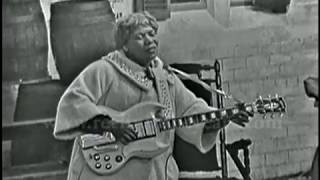
In the vibrant musical tapestry of 1964, Granada Television orchestrated an unforgettable moment in history by capturing the electrifying performances of blues legends at a disused railway station in Manchester, England. The lineup featured the unparalleled Muddy Waters, the gospel powerhouse Sister Rosetta Tharpe, the soulful Cousin Joe Pleasant, and the dynamic duo of Sonny Terry and Brownie McGhee. Against the backdrop of the industrial setting, these musical luminaries brought the disused station to life with the soulful echoes of blues and gospel. The Granada Television filming not only documented the raw, authentic talent of these iconic performers but also served as a testament to the universal language of music that transcends time and borders. This historic event remains a cherished chapter in the legacy of blues and roots music, showcasing the convergence of American musical traditions on British soil.
Green Cross Street Safety PSA From 1983 Blends Grandmaster Flash’s ‘Message’ With Vital Road Safety Advice
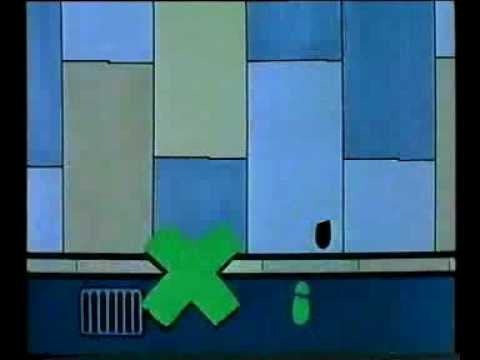
The Green Cross Street Safety PSA from 1983 stands as a brilliant intersection of entertainment and public service. Seamlessly blending the iconic beats of Grandmaster Flash’s “Message” with essential road safety advice, the PSA transcends its era.
Laughs and Lessons: Martin Short’s Hilarious Guide In 1992 To Home Safety And Childproofing In ‘Home Safe’

This home safety video hosted by Martin Short takes a humorous approach at covering ways to make safe and childproof each space in your home as well as handling household emergencies.
Toni Basil Followed Up Her Pop Smash “Mickey” With A Song About Buying Groceries

Toni Basil’s single “Shoppin’ from A to Z” takes listeners on a whimsical journey through the world of retail therapy. Released with infectious energy, the song encapsulates the thrill and joy of a comprehensive shopping adventure.
Ready?
A (apple) B (banana) C (chili) D (dog food) E (eggplant) F (fish) G (garlic) H (hairspray) I (ice) J (junkfood) K (ketchup) L (liver) M (matzoh) N (nuts) O (onion) P (pizza) Q (qiuche) R (relish) S (soap) T (tuna) U (undies) V (veal) W (wieners) X (nothing) Y (yams) Z (zippers)
Electric Mayhem Band On ‘Muppets Mayhem,’ Musical Idols And Influences

Electric Mayhem Band members Dr. Teeth, Janice, Floyd Pepper, Lips, Zoot and Animal take a break from the recording studio to talk new Disney+ series “The Muppets Mayhem,” musical idols and their influence on rock.
Here’s The Music From Pocket Rockers: The Fisher-Price Cassette for Kids

Pocket Rockers was a brand of personal stereo produced by Fisher-Price in the late 1980s, aimed at elementary school-age children. They played a proprietary variety of miniature cassette (appearing to be a smaller version of the 8-track tape) which was released only by Fisher-Price themselves. Designed to be as much of a fashion accessory as a music player, the devices were enough of a youth craze to even be banned in some schools for a brief period. Housed in a variety of stylish, translucent colors, each tape had two songs in mono which could be clipped to clothing to showcase one’s musical taste. Tapes were available from several pop stars, including Michael Jackson, Whitney Houston, Tiffany, or Debbie Gibson and even rock stars like Bon Jovi or The Bangles. The commercials featured an original theme song which was a parody of “Down on the Corner” by Creedence Clearwater Revival. In addition to standard blue on black and pink on black color schemes, 3 variations of Pocket Rockers were released utilizing Memphis Milano (a popular and contemporary design style at the time). A collectors set was released featuring one such design, and a deluxe system was also released which included speakers and a display stand with an amplifier. Other official Pocket Rockers branded accessories included bracelets, a bandana, a multitude of tape storage options (cases, frames, and clips), mini tape clip-ons, a carrying case, a purse, and headphones. Following a sharp decline in sales, the Pocket Rockers line was discontinued in 1991 until ultimately being removed from Fisher-Price’s toy catalog in 1992. Today, the player and cassettes are sought after by collectors for their unique novelty and design.
You can listen to it all here.
My Next Read: “Icons of Rock – In Their Own Words: From Eric Clapton to Mick Fleetwood, Joni Mitchell to George Harrison, An Intimate Portrait Of Their Craft” by Jenny Boyd
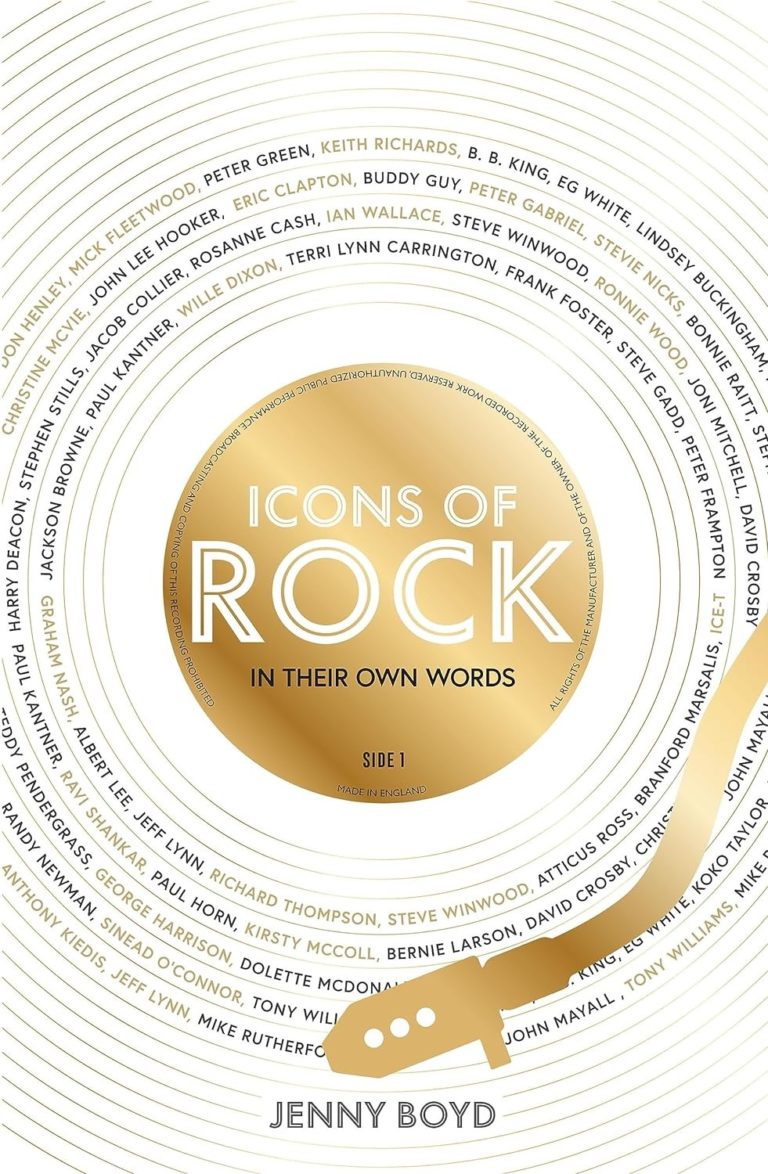
there have been innumerable ‘rock star’ biographies and music histories before, but there is no book that presents the deepest, innermost thoughts from some of the industry’s most legendary musicians on not only how they create, but what drives their creative process. Have you ever wondered how your favourite rock stars get inspired? How they write a song? How an album is put together? What made them choose a life devoted to music?
Written and compiled by Jenny Boyd, who has lived at the heart of the rock world since the 1960s and experienced many of its most iconic moments, the book contains interviews with each musician to give the reader a compelling and groundbreaking insight into the creative process at the heart of each rock star’s musical success. From Eric Clapton to Mick Fleetwood, Joni Mitchell to George Harrison, this is a bible of rock royalty that provides an intimate portrait of their craft.
Icons of Rock is the perfect book for any fan that wants to know more about their favourite musicians and bands – or any budding composer and performer who wants a unique insight into how the world’s most legendary rock stars created and delivered their greatest music.
Video: Sammy Hagar and The Grateful Dead’s Bob Weir Jam in Mill Valley

Sammy Hagar meets up with his neighbor from the Grateful Dead, Bob Weir, to jam and talk all things music. Then, he heads to Mickey Hart’s house to learn about how Mickey makes his music.