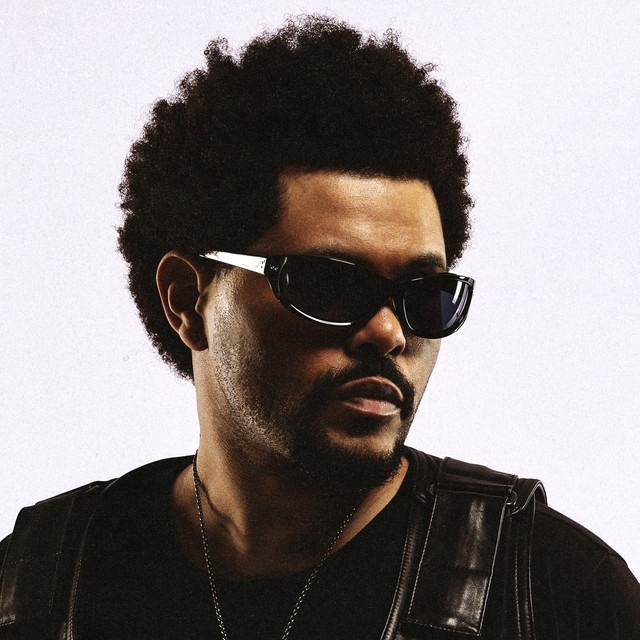
Abel Makkonen Tesfaye was born on February 16, 1990, in Scarborough, Ontario, raised by his Ethiopian mother and grandmother, largely without his father — a void that later echoed through his lyrics. At 17, he dropped out of high school, left home, and started couch-surfing around Toronto while writing songs nobody had heard yet. He began releasing music anonymously in 2009, with a collection of leaked demos simply titled “The Noise.” Tracks like “Love Through Her” and “Material Girl” attracted interest from listeners online, establishing the dark R&B sound and hedonistic themes The Weeknd would become known for. He uploaded songs to YouTube without a photo, without a press release, and without a name anyone could attach to a face. The mystery was not a marketing strategy. It was just how he operated.
What happened next was one of the most organic rises in modern music history. In 2011, Tesfaye capitalized on the buzz generated by his first releases by putting out a flurry of additional mixtapes — ‘House of Balloons’, ‘Thursday’, and ‘Echoes of Silence’ — which he would later repackage into the platinum compilation album ‘Trilogy’. The Weeknd’s first entry on the Billboard Hot 100, the haunting “Wicked Games,” opened with waves crashing and his signature falsetto layered on top. The painful but alluring lyrics, plucked straight out of the Tumblr generation where he thrived, earned the track triple platinum status. ‘House of Balloons’ was never even intended to be an R&B project — its architects called heavily upon dream pop and post-punk to lay the groundwork for what would become one of popular music’s most successful disruptors. The underground loved it immediately and the mainstream was about to catch up.
The transition from cult favourite to global force happened album by album, each one a deliberate expansion of the sonic and commercial territory he was willing to claim. ‘Beauty Behind the Madness’ in 2015 launched him into stadiums. ‘Starboy’ in 2016 refined the sound with Daft Punk and delivered one of the defining pop records of the decade. Then came ‘After Hours’ in 2020, and with it, “Blinding Lights” — the first song to reach five billion streams on Spotify. His Super Bowl LV halftime show in 2021 drew 96.5 million viewers, blending spectacle with personal narrative in a performance that felt less like a halftime show and more like a cinematic statement. He has become the architect of modern pop’s darker, more cinematic turn.
What separates The Weeknd from his contemporaries is not just the music but the world-building. Every album era arrives with its own visual identity, its own emotional logic, its own colour palette. The bandaged face of the ‘After Hours’ era. The radio static of ‘Dawn FM’. ‘Hurry Up Tomorrow’ in 2025, which dropped alongside a film starring Jenna Ortega and Barry Keoghan, capping the trilogy and expanding his storytelling into a full multimedia universe. After spending 15 years building his reputation as the dark prince of pop, he is now in the process of making a major career shift, dropping The Weeknd stage name in favour of his real name, Abel Tesfaye. It is exactly the kind of move that makes sense for an artist who has never been interested in standing still.
In 2025 alone, his total streams exceeded 20 billion globally. He has notched ten number-one hits on the Billboard Hot 100. He has sold over 120 million records worldwide and built a career estimated at $300 million. None of those numbers, impressive as they are, quite capture what he actually did. He took the darkest corners of R&B, the loneliest hours of the night, the parts of human experience that pop music usually polishes away, and he put them at the centre of some of the biggest songs of the last fifteen years. His ability to evolve — from the hazy drug anthems of ‘House of Balloons’ to the polished pop of ‘Dawn FM’ — keeps him ahead of trends he helps create. That is not an accident. That is a career built exactly the way he intended, from the very first anonymous upload in a city where nobody knew his name yet.