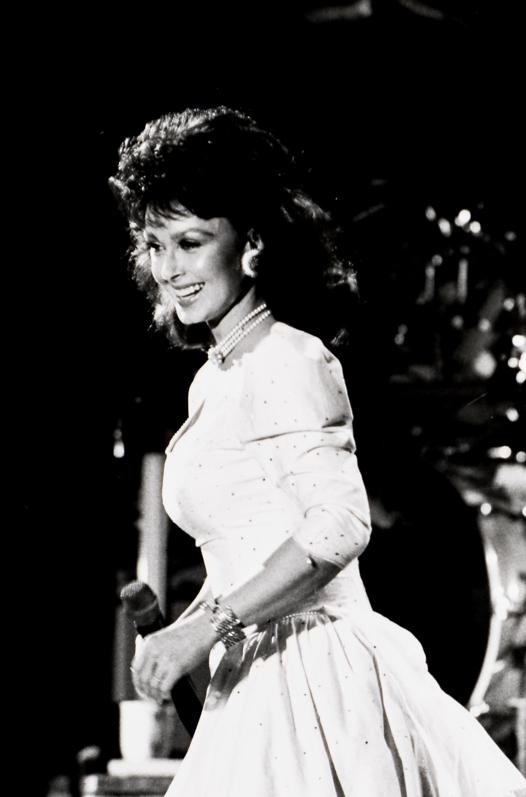
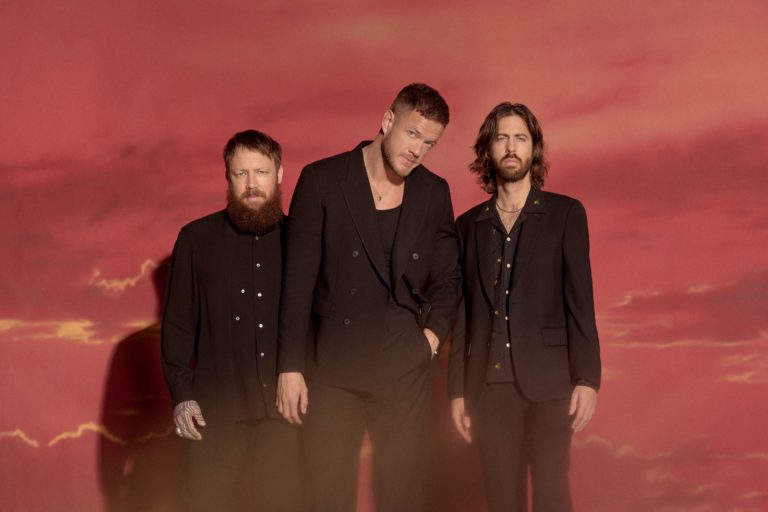
All photos by Mini’s Memories. You can contact her at minismemories@hotmail.com


All photos by Mini’s Memories. You can contact her at minismemories@hotmail.com


Since her debut album arrived in 1968, Joni Mitchell’s songs have been embraced across generations, inspired multitudes of artists around the world, and earned every conceivable accolade. She is now opening her vault for the first time to create the Joni Mitchell Archives, a new series of boxed set releases that will span the next several years, featuring deep dives in to unreleased content from different eras of her storied career. Mitchell has been intimately involved in producing the archive series, lending her vision and personal touch to every element of the project.
The series debuts on October 30 with JONI MITCHELL ARCHIVES VOL. 1: THE EARLY YEARS (1963-1967), which features nearly six hours of unreleased home, live, and radio recordings that flow chronologically to paint a rich portrait of Mitchell’s rapid growth as a performer and songwriter during the period leading up to her debut album. This treasure trove of unheard audio includes 29 original Mitchell compositions that have never been released before with her vocals. The collection will be available as a deluxe 5-CD set as well as digitally.
The collection begins in 1963 with her earliest-known recording as a 19-year-old Mitchell performs at CFQC AM, a radio station in her hometown of Saskatoon, Saskatchewan. The first song from this set, Mitchell’s take on “House Of The Rising Sun,” is available today as a digital single. The box culminates with a stirring, three-set 1967 nightclub performance recorded at the Canterbury House in Ann Arbor, Michigan.
Both of these performances will be available separately on 180-gram vinyl on October 30. The first, EARLY JONI – 1963 will be released as a single LP on 180-gram vinyl. Like several of Mitchell’s past albums, the cover for EARLY JONI features a self-portrait and marks her first new art in many years. The other, LIVE AT CANTERBURY HOUSE – 1967, is a 3-LP set and includes Mitchell’s entire three-set performance from October 27, 1967. Production of this 180-gram vinyl set will be limited to 10,000 copies.
To coincide with the JONI MITCHELL ARCHIVE series, Mitchell has launched an official website (www.jonimitchell.com), social media properties (Facebook, Instagram, Twitter), and YouTube channel. These platforms will be sources for news, photos, videos and other historical content as well as exclusive album release, merchandise, and more. Limited edition, colored vinyl versions of both EARLY JONI (1,500 copies on 180-gram clear vinyl) and LIVE AT CANTERBURY HOUSE – 1967 (1,500 copies on 180-gram white vinyl) are available for pre-order now exclusively at store.jonimitchell.com. Any music product purchased on the official Joni Mitchell store comes with an exclusive 7”x7” art print honoring the launch of the archive series.
Through a wealth of unreleased live performances, home recordings, and radio broadcasts, ARCHIVES VOL. 1 brings into focus the period when Mitchell was finding her voice artistically. It shows her moving away from the folk standards of her early days (“John Hardy” and “House Of The Rising Sun”) and starting to write and sing her own songs (“Day After Day” and “Urge For Going.”)
ARCHIVES VOL. 1 reveals just how prolific a songwriter Mitchell was at the time. In addition to early versions of songs that would appear on Song To A Seagull (“Michael From Mountains” and “I Had A King”), the set also features songs destined for later albums: “Chelsea Morning” “Both Sides Now” (Clouds, 1969); “The Circle Game” (Ladies of the Canyon, 1970); and “Little Green” (Blue, 1971).
More than a just historic document, these recordings crackle with energy thanks to a vibrant and enchanting Mitchell. On many, you can hear her tuning her guitar and telling a story about the song before playing it. That includes her rare 1967 cover of Neil Young’s “Sugar Mountain,” a song she says inspired her to write “The Circle Game.”
The 5-CD collection includes a 40-page booklet that features many unseen photos from Mitchell’s personal collection as well as new liner notes featuring conversations between writer/filmmaker Cameron Crowe and Mitchell, who recently spent a couple of Sunday afternoons together discussing her archives. Crowe will continue to provide liners for future releases in the series.
Liner notes for both vinyl releases were each composed by people who were in the room when the original performances were recorded. Barry Bowman was working as a DJ at radio station CFQC in 1963 and provides the notes for EARLY JONI. Bob Franke, who was covering Mitchell’s show at Canterbury House for the Michigan Daily while also moonlighting as a doorman at the club, pens the liners for LIVE AT CANTERBURY HOUSE. His original review for the Michigan Daily is also included.
Looking back, Mitchell reflects on her early label of “folk singer”: “The early stuff, I shouldn’t be such a snob against it. A lot of these songs, I just lost them. They fell away. They only exist in these recordings. For so long I rebelled against the term, ‘I was never a folk-singer.’ I would get pissed off if they put that label on me. I didn’t think it was a good description of what I was. And then I listened and…it was beautiful. It made me forgive my beginnings. And I had this realization…I was a folk singer!”
JONI MITCHELL ARCHIVES VOL. 1: THE EARLY YEARS (1963 TO 1967)
Full Track Listing
Disc One
Radio Station CFQC AM, Saskatoon, Saskatchewan, Canada (ca. 1963)
Live at the Half Beat: Yorkville, Toronto, Canada (October 21, 1964)
First Set
Second Set
Disc Two
Myrtle Anderson Birthday Tape: Detroit, MI (1965)
Jac Holzman Demo: Detroit, MI (August 24, 1965)
Let’s Sing Out, CBC TV: University of Manitoba, Winnipeg, MB, Canada (October 4, 1965)
Home Demo: Detroit, MI (ca. 1966)
Let’s Sing Out, CBC TV: Laurentian University, London, ON, Canada (October 24, 1966)
Live at the 2nd Fret: Philadelphia, PA (November 1966)
Disc Three
Folklore, WHAT FM: Philadelphia, PA, (March 12, 1967)
Live at the 2nd Fret: Philadelphia, PA (March 17, 1967)
Second Set
Third Set
Folklore, WHAT FM: Philadelphia, PA (March 19, 1967)
“A Record Of My Changes” – Michael’s Birthday Tape: North Carolina (May 1967)
Folklore, WHAT FM: Philadelphia, PA (May 28, 1967)
Disc Four
Home Demo: New York City, NY (ca. June 1967)
Live at Canterbury House: Ann Arbor, MI (October 27, 1967)
First Set
Disc Five
Live at Canterbury House: Ann Arbor, MI (October 27, 1967)
Second Set
Third Set
EARLY JONI – 1963
LP Track Listing
Side One
Side Two
LIVE AT CANTERBURY HOUSE – 1967
3LP Track Listing
Side One: First Set
Side Two
Side Three: Second Set
Side Four
Side Five: Third Set
Side Six
CIMA and Indie Week have partnered to present an online live mentorship program in October which will run for four weeks with a focus on becoming “Export and Business Ready”.
Over a total of 8 sessions participants will get the opportunity to:
• Learn how to pitch their company and artists to international delegates
• Learn how to compile all the appropriate assets
• Learn about and how to access different markets
• Understanding Metadata in markets
• Tune Up your Social Media
Each week participants will be given a tasks to complete and at the end of these sessions will be evaluated and will receive feedback.
***This opportunity is available to 40 CIMA members (20 artist-entrepreneurs and 20 companies) as well as 20 non-CIMA members (10 artist-entrepreneurs and 10 companies). CIMA Member fee will be $50, non-members, $75.
Attendees will also receive a free full conference pass to Indie Week Canada online 2020 in which they can participate in all of Indie Week’s programming as well as a Digital Swag Bag with a value of over $100.
Register here.
Put Frank Zappa and ZZ Top in one picture. What you will have is a lot of beards in one picture. These artists made a name for themselves with their craft and their facial hair. But was there a time that these beards influenced their music?
Not many artists can keep up with the workaholic Frank Zappa in delivering his craft. Frank had a 30-year music career and in that period, he released 60 albums.
Frank Zappa’s road to success was not an easy one. It was filled with setbacks and years of little or no rewards. Before his breakthrough into the limelight, Frank Zappa had to leave his boyhood band, The Blackouts, to join The Soul Giants. After Frank joined his latest band, the name mutated into The Mothers on Mother’s Day. There, he recorded some measure of success, but it was still nothing to be compared with the success he enjoyed later in his career. Even then, it took the inclusion of Herb Cohen, who already had a remarkable history in music, to revamp the band.
Their first release was a double album, Freak Out, in 1966. It was this album that influenced The Beatles’ hit song, Sgt. Pepper Lonely Hearts Club Band. After this double album, the group grew in popularity until 1971 when it experienced some major setbacks, one of which affected Frank Zappa’s health. He fell from the stage during one of his performances and sustained serious injuries. And no. He was not high on drugs or anything. In fact, his resistance to drugs was one reason he left the band. But the injuries he had from the fall doomed him to a lifetime of back pain and left him with a crushed larynx.
One thing Frank Zappa had was what we can call one of the most outstanding beards of all time. You could never have this kind of beard and mix in with the crowd. Frank kept a thick moustache that framed his upper lips in a neatly trimmed fashion. His lower lip was not to be without support in the form of beards as the musician kept a thick rectangular patch of hair right under his lower lip.
His unique facial hairstyle lived on long after the artist died in 1993. You could even argue that his signature look outlived his songs. Today, there are still a lot of people who sport the Frank Zappa beard.
ZZ Top was a band that comprised three artists, Billy Gibbons, Dusty Hill, and Frank Beard. Billy handled the guitar, Dusty did the bass, and Frank was the man on the drums. And with those three instruments, the trio ruled the worlds of rock-and-roll and blues throughout their time in the limelight, which lasted from the 70s to the mid-80s.
One thing the band was known for was its creativity in the way it delivered its songs and its videos. Its songs always stood out from the songs of other bands, and you could say that was what its fans loved about it. They never knew what was coming, but they were sure that whatever it was would blow their minds.
ZZ Top released its first album in 1970 and that was when they turned the ears of listeners towards themselves. However, what established the band was the hit single, La Grange in 1973. The song made its way to the top 20 on Billboard singles chart. Since then, ZZ Top went ahead to be a household name.
The year 1983 came, and the band released another album, Eliminator. This album was one of the most successful albums from ZZ Top, going ahead to sell 10 million copies all over the world. The band may not be as popular as it used to be, but it established its legacy in 2004 when it made it into the Rock-and-roll Hall of Fame.
Music was not the only thing that made ZZ Top stand out in its time. Whenever you looked at the images of the trio, one thing that always stood out was the enormous beards hanging down the faces of two of the artists, Gibbons and Dusty. Ironically, Frank Beard was the only one of the three who didn’t have any beards. He, however, made up for the slack of beards with a well-trimmed moustache.
The beards were so iconic that they could have been worth a million dollars if only the group had agreed to cut it off. Gillette, a renowned manufacturer of shaver products offered the bearded men that enormous amount of money if they would agree to shave it off for an advert. They refused.
“No dice,” Gibbons disclosed in an interview with Bravewords.com. “Even adjusted for inflation, this isn’t going to fly. The prospect of seeing oneself in the mirror clean-shaven is too close to a Vincent Price film…a prospect not to be contemplated, no matter the compensation.”
If the beards were worth that much, you may then begin to wonder about the story behind them. The men revealed the secret when they described that they had both grown the beards coincidentally without planning it. After a long break in which the artists had limited contact with one another, the group returned to continue its music.
Tom Vickers, a music journalist, wrote that “[The manager] called a band meeting, and when the three members arrived, they noticed something had changed during their time apart. They had always had some form of facial hair, with Frank usually sporting a moustache, while Billy and Dusty had scruffy little beards no more than an inch or two long.”
“I walk into the room, and I’m lookin’ at a guy I think I know,” Gibbons said after the group re-converged. “My beard has grown to doormat proportions. And I realize that Dusty had done the same thing.”
Nope. While there aren’t many pictures of a time when Frank Zappa was without his trademark beards, ZZ Top already formed the band name long before the beards came. So, it wasn’t the beards that influenced the names or the arts of the artists. However, it makes a lot of sense to say that the beards of these artists formed important parts of their brands. I mean, these beards were celebrities living on the faces of celebrities!
Learn how to increase your online fanbase, followers, streams, and other opportunities through online radio! There are thousands of fans tuning in and listening from around the world – and they could be YOUR FANS!
Cashbox Radio has assembled a diverse panel from Sweden, Spain, Colombia and Canada with backgrounds in online radio, magazine, network TV, and artist management!
Industry Professionals discuss the new importance and value of online radio and media exposure on a global level.
Speakers are the fab Sandy Graham (Cashbox Radio / Cashbox Magazine), Peter Astedt (Cashbox Radio / Future Echoes), Grace Puluczek (Cashbox Radio / Three Notes Management), and Hector Mora (Colombian National TV & Radio Public Network).
Register for free here.
When Stevie Ray Vaughan’s guitar tech used to change tires at NASCAR.
https://youtu.be/JIFdMbhCa94
From a song that she needs to hear at a cookout to the track that reminds her of her college days at Howard, this Senator Kamala Harris’ Mood Mix.
There are few creative acts more mysterious and magical than writing a song. But what if the goal wasn’t so mysterious and was actually achievable for anyone who wants to experience more magic and creativity in their life? That’s something that anyone will be inspired to do after reading Jeff Tweedy’s How to Write One Song, out October 13.
Why one song? Because the difference between one song and many songs isn’t a cute semantic trick—it’s an important distinction that can simplify a notoriously confusing art form. The idea of becoming a capital-S songwriter can seem daunting, but approached as a focused, self-contained event, the mystery and fear subsides, and songwriting becomes an exciting pursuit.
And then there is the energizing, nourishing creativity that can open up. How to Write One Song brings readers into the intimate process of writing one song—lyrics, music, and putting it all together—and accesses the deep sense of wonder that remains at the heart of this curious, yet incredibly fulfilling, artistic act. But it’s equally about the importance of making creativity part of your life every day, and of experiencing the hope, inspiration, and joy available to anyone who’s willing to get started.
Today CBC Music launched a new video series called The Intro, a weekly feature bringing essential emerging Canadian talent to the world. Hosted by CBC Music Mornings’ Saroja Coelho, this series showcases talented artists across the country from all genres. Each episode highlights one band or artist and includes two live performances and an enlightening conversation about the music.
The first four episodes featuring Alex Porat, Paul Chin, Loony and Tops are now available to stream on CBC Music and the free CBC Gem streaming service. New episodes will be released on CBC Gem and CBC Music every Wednesday.
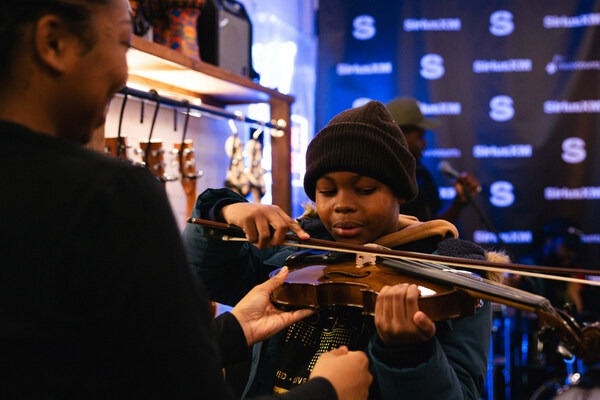
The National Music Centre (NMC) is pleased to announce a hybrid live music and virtual concert series sponsored by RBC, which will also include recording and mentorship sessions for four artists affected by COVID-19.
The concert series, RBC Live from the King Eddy, will happen at the historic venue at 8:30 pm every Friday night, from September 18 to October 9. Selected artists will perform safely from inside the Rolling Stone Mobile Studio room, and admission will be free. For those who can’t make it to the show in-person, concerts will be livestreamed via the National Music Centre’s Facebook page.
RBC Live from the King Eddy schedule:
Selected artists will also receive half-day recording sessions inside Studio Bell’s world-class facility, and mentorship from NMC’s in-house producer Graham Lessard (Basia Bulat, Kevin Drew, Reuben and the Dark, Stars, Timber Timbre), whose recordings have earned multiple JUNO Award-nominations, and a nod on the Polaris Music Prize shortlist.
With roots in the soulful simplicity of classic country and lyrics that offer more than surface meaning, Robert Adam will make you nostalgic for a place you may have never known. Among the few queer country artists, he offers an inclusive take on the genre, telling stories of the people left behind in the history of country music, while creating a universally empathetic message to all.
Lucette is the moniker of Edmonton-bred artist Lauren Gillis whose self-described “country infused dream-pop” sound eschews the rootsy clichés of Americana music. Known for her velvet vocals, her writing has evolved over the years from narrative storytelling to an existential exploration and expression of emotions.
Wyatt C. Louis is a Plains Cree folk singer-songwriter based in Moh’kinstsís (Calgary). With songs built from soaring melodies, railroad-like fingerpicking, lyrical phrasing and quiet, haunting vocals, he is making a name for himself in the eclectic city.
A tour-de-force hip hop act, Sinzere started first as a singer, then joined a dance crew, went on to become a DJ and rapper, and then melded all those modes into one multi-faceted music identity. There is no single musical box that the Calgary-based artist can be put into. For her, music serves as a vessel to inspire people through her cutting-edge lyrics, and deep cinematic sound.
RBC Live from the King Eddy runs September 18 to October 9. Admission is free and all shows will also be streamed on NMC’s Facebook page.