Home Blog Page 1913

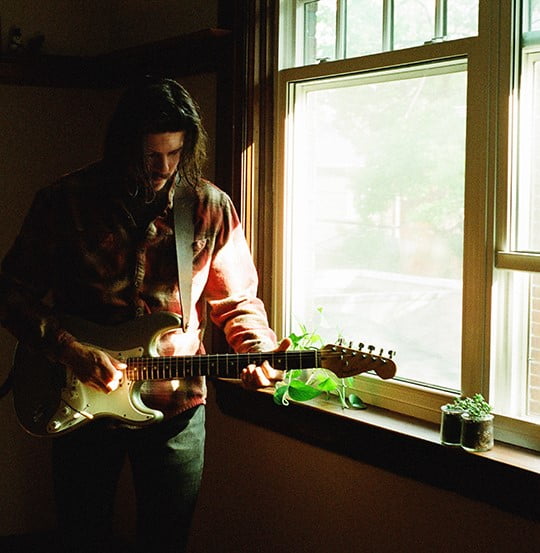
Toronto Folk Rocker Oliver James Brooks Has “Set Free” His New Single

0

Fresh off last year’s breakout debut release, Toronto-based folk rocker Oliver James Brooks has “Set Free” a new message for the masses with his latest single — available now.

“This song was written in response to the current state of our planet,” he shares of the track and its origins. “The turmoil in which we live has reached an unfathomable level… Some days it becomes unbearable to even exist.

“It was on one of those very days that ‘Set Free’ was written.”

“Set Free” is the second new single for Brooks since his 2019 take-notice debut, A Turn in the Bend. Written and mostly recorded while living in Brooklyn, New York, the eight-track LP quickly cemented the singer, songwriter and multi-instrumentalist’s ability to capture and creatively express nuance in an intuitive, layered and carefully considered way.

“A Turn in the Bend was inspired by the prevalent contrast between two landscapes: Brooklyn and the small town in Ontario where I grew up,” he recalls. “When it comes to the recording process — for that album and for “Set Free” — capturing sounds that are unrehearsed and unexpected is just as important as the words themselves.

“It’s what I feel gives music impulse and emotion.

“A song or album can easily lose its meaning if the sound becomes too clinical or robotic, so everything is recorded with great care in order to maintain its originality and realness.”

He didn’t have to worry about his assembled team missing the memo when it came to laying down “Set Free.”

“I was lucky enough to have my friends Jimmy-Tony (Dilly Dally) play bass and Collin Carnegie (Midnight Vesta) play Wurlitzer, as well as engineer the track,” Brooks shares on the technical aspects of the track; it was mixed by Jack Emblem at Berkeley Sound and mastered by Noah Mintz at Lacquer Channel Mastering. “In terms of the music video, I had the pleasure of working with Edward Pond; not only is he a great director, but he’s also a good friend of mine. The idea for the video came quickly, and we were lucky to get some very talented individuals to help bring the story to life.”

“Set Free” is available now.

1-minute tip for bands and artists: ‬‪Offer yourself up.‬

Letting people know you’re available is half the battle.

Getting Out There

0

No matter what your level of mobility is, taking advantage of green spaces is good for both your mind and body. With mobility aids like lightweight bariatric wheelchairs and knee walkers making public greenways and parks more accessible to more people than ever, it’s a good time to consider making time spent outside part of your daily routine. There is no shortage of research touting the benefits of being outside. There is an argument to be made for breathing fresh air and taking in sights that have nothing to do with technology. Being outside also encourages physical activity, any amount of which is proven to improve both short-term and long-term health.

For people with all levels of mobility, it can be hard to find a few spare minutes in the day to take a break and go outside. Whether you’re stuck in the office throughout your workday or you’re one of the millions of people who work from home, some days it feels impossible to tear yourself away from your computer screen. But while there’s always a task that seems like it needs to be completed right this minute, more often than not the world will keep spinning if you step away for a little while. Though we all know that spending time in the great outdoors is good for us, it may actually be essential.

Spending time in nature not only has physical benefits, it is also an important key to psychological well-being. Whether you are a fan of communing with nature or not, it’s hard to deny the mountain of scientific evidence that supports spending at least a few minutes of your day out in the sun. Exposure to sunlight is a natural mood booster, and Vitamin D is vital to human health. So backing away from your screen and treating yourself to a sojourn through the park is perhaps the best definition of a mental health break.

History of barcodes in the Music Industry

0

The inception of barcodes dates back to the 1940s, when Norman Joseph Woodland invented the barcode symbology. It was only after 3 decades that we started seeing what is now commonplace today – barcodes on products in retail stores. In 1974, a packet of Wrigley’s chewing gum was the first with a bar code ever to be scanned in a retail store. But almost another decade had passed until the music industry gradually implemented the usage of bar codes.

Some record labels were faster than others and started putting barcodes on the LP and CD covers of their artists, whereas other record labels went without it. This may have been due to costs but were especially due to the fact that albums could be sold in cardboard long boxes or plastic blister packs which would have the retail barcode printed on the back. There was even controversy and annoyance amongst some artists who were unhappy about barcode images ruining the design of their album covers – Neil Young and Bruce Springsteen to name a few.

Barcodes on LPs

It was in the US that the first LPs were sold with barcodes. According to some, though it is not certain, Elvis Costello – Armed Forces was the first LP released with a barcode; this was in the year 1979. More and more record label companies joined in on the barcode revolution and barcoded their album releases from that year on. Some labels, CBS for example, went back and added barcodes to most of their albums that were still in print. This is one of the ways you’re able to spot the original releases – they will not have barcodes on the album cover. Wish You Were Here, The Stranger or Journey’s Infinity are prime examples of cover designs which do not have barcodes on the albums that were released before the 1980s.

CBS also introduced the barcode to the 45 rpm (vinyl format) label in early 1983 with Separate Ways (Worlds Apart) by Journey. That at first was an exception, but near the end of 1983 of the CBS 45s had barcodes on the label design. WEA labels added barcodes several years later, as did the PolyGram labels. A&M didn’t have a bar code on the label until 1990. Some record companies such as MCA’s and RCA/BMG didn’t have barcodes on the 45s until well into the 1990s.

Barcodes on CDs

The first CD ever released was ABBA’s The Visitors in 1981 and was one of the first records ever to be recorded and mixed digitally. Again, the release in 1981 did not include a barcode on the album, so it’s easy to spot issues that were remastered and remixed. Barcoded CD production was only really introduced in 1983, and here it was Sony and Polygram record companies who headed up the process. At the time, CDs were still seen as expensive, and record label companies were unsure of whether the public would be willing to make the change from vinyl. Of course, their fears were unnecessary – by the year 2007, over 200 billion CDs had been sold across the world. Now in 2015, it’s possible that CDs, just like LPs and even cassettes, will in time become rare collectables and things of the past.

It’s clear that throughout the years, different technologies emerged in an attempt to make listening to music a simpler and more authentic experience. With each invention, sounds became clearer in tracks, and people were better equipped to recreate the sense of the band or artist being right there in the room with you. Barcodes however, ever since its implementation in retail and various other sectors, have always been just perfect in its purpose. A simple symbology allowing users to scan, and track products has never gone out of trend or become predated by a “better” barcode.


My Next Read: “Channel Kindness: Stories of Kindness and Community” by Lady Gaga

0

For Lady Gaga, kindness is the driving force behind everything she says and does.

The quiet power of kindness can change the way we view one another, our communities, and even ourselves. She embodies this mission, and through her work, brings more kindness into our world every single day.

Lady Gaga has always believed in the importance of being yourself, being kind to yourself, and being kind to others, no matter who they are or where they come from. With that sentiment in mind, she and her mother, Cynthia Germanotta, founded Born This Way Foundation, a nonprofit organization dedicated to making the world a kinder and braver place. Through the years, they’ve collected stories of kindness, bravery and resilience from young people all over the world, proving that kindness truly is the universal language. And now, we invite you to read these stories and follow along as each and every young author finds their voice just as Lady Gaga has found hers.

Lady Gaga and her team are releasing Channel Kindness: Stories of Kindness and Community, out September 22, a book where you’ll meet young changemakers who found their inner strength, who prevailed in the face of bullies, who started their own social movements, who decided to break through the mental health stigma and share how they felt, who created safe spaces for LGBTQ+ youth, and who have embraced kindness with every fiber of their being by helping others without the expectation of anything in return.

In one story, you’ll read about a young person with an autoimmune disease, who after being bullied at school, learned how to practice self-love and started an organization with the mission of educating others about the importance of self-love, too; and in another story, you’ll meet a young person who decided to start a movement to help eliminate the stigma surrounding mental health and encouraged others to talk about their feelings openly and honestly, a reminder that kindness and mental wellness go hand in hand.

Not only were we moved by these individual acts of kindness, but we were also touched by the many stories of organizations, neighborhoods, and entire communities that fully dedicated themselves to helping those in need and found new, innovative ways to make our world a kinder and braver place.

Individually and collectively, these stories prove that kindness not only saves lives but builds community. Kindness is inclusion, it is pride, it is empathy, it is compassion, it is self-respect and it is the guiding light to love. Kindness is always transformational, and its never-ending ripples result in even more kind acts that can change our lives, our communities, and our world.

Crystal Shawanda announces new True North Records album, Church House Blues available April 17th, 2020

0

For her second album on True North Records, Nashville-based singer Crystal Shawanda has channeled the spirit and strength of blues greats such as Etta James and Koko Taylor, paired with a contemporary delivery that makes the 10 tracks on Church House Blues a rousing testament to her powerful vocal and songwriting abilities.  

 Recorded at several Nashville area studios, Crystal Shawanda says that the recording sessions for Church House blues allowed her to express herself without feeling like anyone was looking over her shoulder. “This is the most I’ve ever loved an album out of everything I’ve ever done,” she offers. “This is really who I am. It’s my most definitive album yet. All these songs reflect different aspects of who I am. It’s putting a finger on that definitively. I’m not trying to prove anything. I’m just being me. I’m done with trying to fit in.”

For the recording sessions, a sympathetic cast of all-star musicians was assembled, including session superstar Dave Roe on bass (Johnny Cash, Yola, Cee-lo Green), the McCrary Sisters on backing vocals, Dana Robbins of Delbert McClinton’s band on sax, and Peter Keys of Lynyrd Skynyrd on keyboards. Produced by her husband, collaborator and co-writer Dewayne Strobel, it not only marks her fourth blues effort to date, but one of her most demonstrative as well. That’s evident at the outset, from the fiery delivery of the title track, the riveting drive of “New Orleans Is Sinking,” and the assertive strains of “Rather Be Alone,” to the quiet, contemplative desire and despair that scorches “Evil Memory,” the radio-ready hooks illuminated in “Hey Love,” and the emotive strains instilled in the bittersweet ballads “When It Comes To Love” and “Bigger Than the Blues.” At the center of it all are Crystal’s evocative vocals, a powerful, provocative force of nature that elevates each encounter and sends the album’s entries soaring towards the stratosphere.

An indigenous musician who grew up on the Wikwemikong reserve on an island in Ontario, Canada, Crystal lived in a home filled with the music her oldest brother loved most: the blues – even though her parents encouraged her to play country songs. Moving to Nashville brought her some early success in country music, but as Crystal herself admitted in an interview, “The whole time I was singing Patsy Cline on stage, I was singing Etta James at home.”

Originally signed as a country artist to RCA Records in 2007, she produced a Top 20 hit on country radio, sold over 50,000 copies in the US, and reached Top 20 on the Billboard Country Album Chart; but the pull of the blues music she heard in her heart and soul was too strong to ignore. Eventually, she left RCA, formed her own label and began making the blues music that is her true calling.

It’s that free spirited approach that’s found her becoming a critical favorite. Her first album for True North Records, VooDoo Woman (2018) elevated her to the upper strata of today’s most expressive and exhilarating performers. Although influenced by such iconic individuals as Etta James, Koko Taylor and the Staple Singers, she claims a specific signature style all her own.

The critics agreed. “Shawanda is a real deal blues artist who isn’t dabbling in blues so much as channeling it,” Steven Ovadia wrote in Elmore Magazine. JD Nash of American Blues Scene raved, “Not only does Shawanda capture Koko Taylor’s Southside growl, but after a brief slow down for breath, morphs into a primal scream that would grab Janis Joplin by the shorthairs.”

Still, Crystal is hardly what one might call an overnight sensation. “I grew up with blues music and I used to jam with blues musicians when I was still living in Canada,” she recalls. “It’s funny. After moving to Nashville the second time in 2000, I was discovered while actually playing the blues —the music made by Muddy Waters, B.B. King, Big Mama Thornton, Janis Joplin. But when I was offered the record deal to make country music, it felt like the opportunity of a lifetime, and so I took it and ran.”

After scoring initial success as a country artist, she garnered a legion of devotees, marquee status as a major headliner, and even became the subject of a reality show, “Crystal: Living the Dream,” on the CMT television network.

She followed her stint at RCA with an independent effort Just Like You, garnering Canada’s prestigious Juno Award in the process. She also had the distinction of performing at President Barack Obama’s inauguration festivities in 2013. She’s since made her name as a motivational speaker and currently serves as board member of the not-for-profit Nike 7 charitable foundation.

“I veered towards the blues because that’s the music I love to sing,” Crystal says in retrospect. “It feels so natural, the kind of music I was meant to sing. It’s a beautiful release. It’s like letting a bird out of a cage. This is what I’m supposed to do. This is how I fly.”

 Church House Blues Track Listing: 

1. Church House Blues

  2. Evil Memory

  3. Move Me

  4. Rather Be Alone

  5. When It Comes to Love

  6. Hey Love

  7. Blame It on the Sugar

  8. Bigger Than the Blues

  9. I Can’t Take It

  10. New Orleans Is Sinking

 

Best Part-Time Jobs for Graduate Students

0

Choosing a suitable side hustle or side-gig even when studying for an advanced degree can help you earn extra cash. Besides, you can also gain experience in your chosen profession. This can be an added advantage for your job search in the future. Teaching assistant and the paragraphs below will tell you the part-time job that is perfect or ideal for the life of a graduate both on and off-campus.

6 Part-Time Jobs Suitable for Graduate Students

  1. Teaching Assistant (TA)

A teaching assistant job can fetch you $12 per hour. You’re also offered the option to fulfill the needed requirements of a teaching assistant before graduation. Such personnel usually assist a professor in teaching an undergraduate class. They also help out in grading tests or exams, lesson planning, and holding office hours.

2. Library Assistant

The primary duties of a Library assistant are to work at the main desk, give answers to questions, keep shelves in order, or take care of administrative tasks during downtime. As a Library assistant, you can earn an average of $15 per hour. Besides, you get to pick up some service, organizational, and networking skills that can be of immense value to your employer.

 3. Research Assistant

As informed by Ez Assignment Help, becoming a research assistant is a good way to earn money as a postgraduate student. Research assistants can help to plan, develop and execute research projects led by professors or instructors. Additionally, there are graduate programs that  require students to work as a research assistant to fulfill part of their requirements for graduation. Also, you can decide to work as a paid research assistant on part time basis.

  1. Test Prep

This is one of the highest paying part-time jobs you can get as a graduate student. They can make up to $70 per hour. For example, working as an SAT instructor enables you to prepare high school students for the SAT. This remains one of the flexible ways to generate income for both undergraduate and graduate students. Another perk is that you can develop your schedule so that it doesn’t interfere with your classes within the semester.

  1. Freelance Writer

You can become a freelance writer if you’re blessed with excellent writing skills. Freelance writing can be a lucrative part-time job for graduate students, as excellent writing skills are highly valued. Furthermore, you can find good job postings on sites like Fiverr, Upwork, and Guru.com. The amount earned depends on the level of skills and experience. Nevertheless, the average pay of a freelance writer is $31 per hour.

  1. Resident Advisor or Resident Assistant (RA)

The average pay of a resident assistant is $13 per hour, and they usually get a free room, which is a significant perk. Being a resident advisor or a resident assistant will enable you to provide support to students staying in the dormitory. Furthermore, the primary responsibilities of the resident advisor include; making sure policies and guidelines are communicated and followed by dorm residents via the organizing of community events

Conclusion

Aside from the jobs above mentioned, here is other part-time jobs ideal for graduate students. Part-time jobs can go a long way to make both undergraduate and postgraduate students financially independent. However, it’s best to choose a job that will boost your resume and help you acquire a great deal of experience in your area of study.

The 4 Best Tips to Start Your Own Folk Band

0

There are so many different genres of music in the world today. From the hair metal of the 80’s to trap music of the 2010’s, music has come so far in ways we could never predict. However, genres from older decades are still around and kicking, including one that’s had a major influence: folk music.

Many of us associate folk music with the music of the 1960’s, a time where civil rights stood at the forefront of society. That’s why musicians feel inspired enough to still create folk bands today.

Here are the 4 best tips for starting your own folk band!

1) Pick Your Instrument

The first thing you should do is decide what kind of instrument you’d like to play. If you don’t know one, it’s a great time to pick it up. Folk music is ideal for beginners because you don’t necessarily have to be a perfect player. “Folk music” by definition is for and by the American people, many of whom don’t have music training.

You probably already know the acoustic guitar is the most popular folk music instrument. But you can also choose among other strings like the dobro, banjo, and the mandolin.

Wind instruments, like the harmonica, are also available. You can find the best harmonica for your style of playing easily through online retailers.

2) Find Your Bandmates

If you don’t already have folk-loving friends to start your band with, you can look to your community. Posting flyers in hangout spots like cafes and music venues is a great way to find like-minded individuals. If all else fails, you can even find online communities of folk musicians eager to group up!

You don’t need a band to play music, either. There are many folk musicians who rose to fame with solo careers. You can look to Bob Dylan, Joni Mitchell, and Leonard Cohen for examples on how to play by yourself on stage.

3) Write Songs

You can’t have a band if you can’t play any songs! Writing your own folk music is a difficult, yet rewarding task. Most folk music has a heavy emphasis on acoustic string instruments, as we mentioned before. However, you can give your songs a unique flair with other things that can accent the main instrumentation.

Folk fans would argue the most important element of writing in this style is the lyrics. Each song has a unique message, often using metaphors and abstract ideas to tell it. It’s necessary to put genuine emotion into these songs, whether it’s anger, grief, or hope. That’s truly what makes this music stand the test of time.

4) Use Social Media

The wonderful thing about being a musician today is that it’s easy to market yourself to a huge audience through social media. Once you’re ready to perform, creating official band social media accounts is the best way to get yourself out there. You can create flyers, record songs and videos, and post them all on the internet with one click of a button.

It’s also the perfect way to network with other musicians and venues. Because a career in music is largely based on who you know, social media is the perfect way to network.

What Are You Waiting For?

Starting a folk band isn’t easy, but it’s rewarding. With these 4 tips, you can begin your journey as a professional musician with ease.

The more folk music you listen to, the easier it is to fully understand the genre. Giving your favorite artists another listen and discovering new ones is a great way to broaden your horizons and gather ideas for your first #1 hit!

Kurt Cobain’s Isolated Vocals For “Where Did You Sleep Last Night”

0

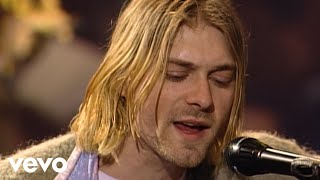
Nirvana’s Kirt Cobain earned critical acclaim for his acoustic performance of the song during Nirvana’s MTV Unplugged appearance in 1993. Canadian musician Neil Young described Cobain’s vocals during the final screamed verse as “Unearthly, like a werewolf, unbelievable.” This version was originally sanctioned to be released as a b-side to the band’s “Pennyroyal Tea” single in 1994, but the single was cancelled following Cobain’s death in April 1994. It was posthumously released on the band’s MTV Unplugged in New York album in November 1994, and as a promotional single from the album.

Randy Bachman and His Son Tal Unite for a Rare Live-Stream Performance on Monday, March 23

0

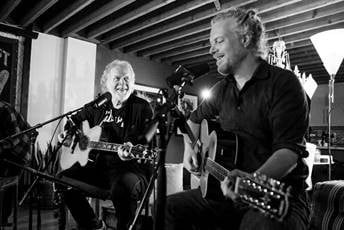
Musical icons Randy Bachman and his son Tal Bachman are teaming up to give worldwide audiences a rare glimpse into their powerful musical synchronicity through a livestream, set to air via YouTube on Monday, March 23 at 6PM PT.  This premiere special musical union is in response to the realities of social distancing, and will be a testament to the powers of music as a source of healing and community for everyone.

The performance will be streamed from Randy’s home studio by the ocean on Vancouver Island and will promise to be a unique musical experience. It will last for approximately a half-hour. Click HERE to access the YouTube Livestream.

Randy Bachman is the founder of The Guess Who (“American Woman”, “These Eyes”, “Laughing”) and Bachman-Turner Overdrive (“Takin’ Care of Business”, “You Ain’t Seen Nothing Yet”) among others, while his son Tal Bachman is best known for his worldwide hit “She’s So High.”