

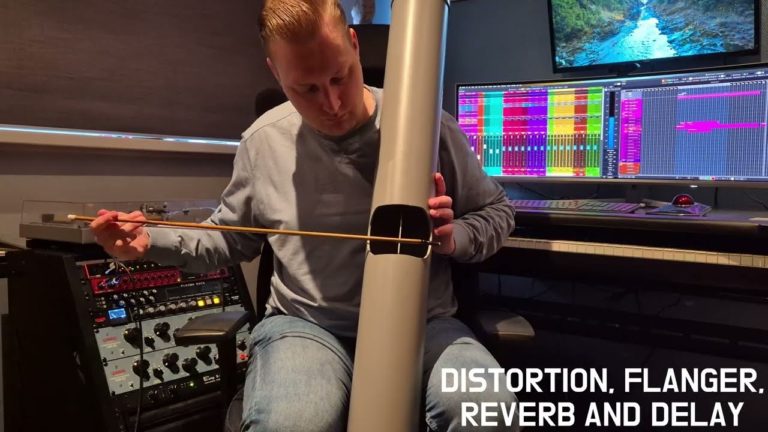
Sometimes the most fascinating musical instruments aren’t found in a music store. Dutch composer Jelle Dittmar has captured the imagination of hundreds of thousands of viewers with a custom-built instrument made from a double bass string stretched through a drainage pipe. In a short but unforgettable video, Dittmar demonstrates the eerie, cinematic sounds the creation can produce, first in its raw form and then layered with effects including reverb, delay, distortion, and flanger. The result is a deep, haunting drone that prompted viewers to compare it to the soundtracks of ‘Dune’, science fiction blockbusters, Viking epics, and dark fantasy films. Whether heard dry or fully processed in a mix, Dittmar’s unconventional creation is a reminder that musical inspiration can come from just about anywhere – even the plumbing aisle.
How Luke Combs Reframed Modern Country
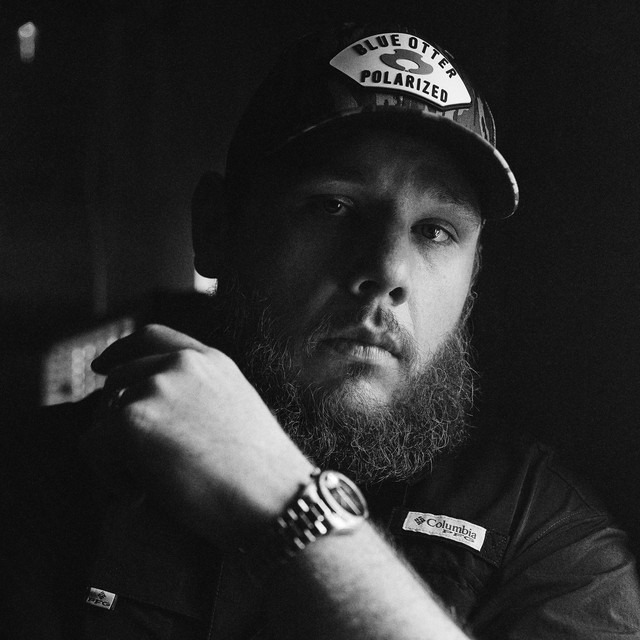
Picture the country charts back in 2016. Glossy pop crossovers were everywhere, tailgate anthems ruled the radio, and the sound coming out of Nashville was leaning further from the twang every season. Into that walked a bearded guy in a ballcap from North Carolina, singing in a thick baritone about heartbreak and beer and small towns, and somehow he became the biggest star the genre has produced in a generation. The way he did it tells you a lot about where country had wandered and what a huge chunk of its audience had been quietly hoping for.
Luke Combs grew up around Asheville, North Carolina, and started shaping his musical ambitions while he was at Appalachian State University, playing local bars with a sound soaked in traditional country. You can hear his record collection in everything he does. He came up on 90s country radio, and legends like Brooks & Dunn and Garth Brooks loom large over his whole approach. On an episode of the trivia show “Track Star” he rattled off artists across genres and lit up the second he heard Tim McGraw, an artist he called a staple of his childhood. That depth of knowledge isn’t a party trick. It’s the foundation everything else sits on.
What he built from those roots is what set him apart. His music fuses a love of classic country and Southern-fried soul, a blend inspired in part by modern mavericks like Eric Church and Chris Stapleton, with a hint of modern R&B layered underneath. That combination flourished on his ballads and made Combs stand apart from the slick country-pop crooners and the bro-country crowd, a distinction that helped him become a hit right out of the gate. Add in touches of Southern rock and a little bluegrass and you get a signature sound that felt like fresh air precisely because it sounded familiar.
The most important thing about Combs might be what he refused to do. He’s championed authentic storytelling and a more traditional country sound, often resisting the pop crossover trends that so many of his peers chased. In a Nashville built more and more around radio-friendly pop machinery, that was a genuine gamble. His success answered the question for good. His massive commercial run proved there’s a real appetite for that genuine approach, and it’s inspired a new generation of artists by showing that relatability and heartfelt lyrics can carry an artist all the way to global superstardom.
The hits make the case better than any think piece could. “Hurricane” arrived in 2016 and went straight to the top of the country charts. “Beautiful Crazy” turned a wedding-dance staple into a phenomenon. “Beer Never Broke My Heart” became a stadium singalong. Then his cover of Tracy Chapman’s “Fast Car” introduced a 1988 classic to a whole new audience and put Chapman back in the spotlight in a way nobody saw coming. Stack up the number one albums and the record-breaking radio runs, and you’re looking at one of the defining careers of the era.
Here’s the part that’s easy to miss. Combs reframed what a country superstar could be by leaning all the way into being ordinary, in the best sense of the word. His songwriting comes straight from his own life and the things he notices day to day, and he writes in plain, direct language instead of reaching for clever metaphor. The themes are the ones we all know, love and heartbreak and the slow ache of a small town you can’t quite leave behind. The ballcap and the beard and the boots became part of the appeal rather than a marketing costume. He’s been credited with helping bring a traditional country sound back to mainstream radio while still embracing modern production, and with his sold-out stadium tours and crossover reach, he represents the next wave of country icons.
What he leaves behind is bigger than a pile of platinum plaques. Younger artists cite him as an influence not just for the music but for how he built the whole thing, proving you don’t need to chase trends to win, you need to connect with people. In a genre that gets accused of following whatever’s hot, Combs offered a completely different blueprint, and it worked at the highest level imaginable.
He didn’t reinvent country music. He reminded it what it already was, then proved there was an enormous crowd waiting for someone to do it sincerely. That’s the quiet kind of reframing, the sort that doesn’t show up with a new subgenre or a flashy gimmick. It just moves the center of gravity. If you want a sense of where mainstream country is heading next, put on the artists following the Combs playbook and listen for the twang coming back.
Stacey King, Three-Time NBA Champion and Beloved Bulls Broadcaster, Dies at 59
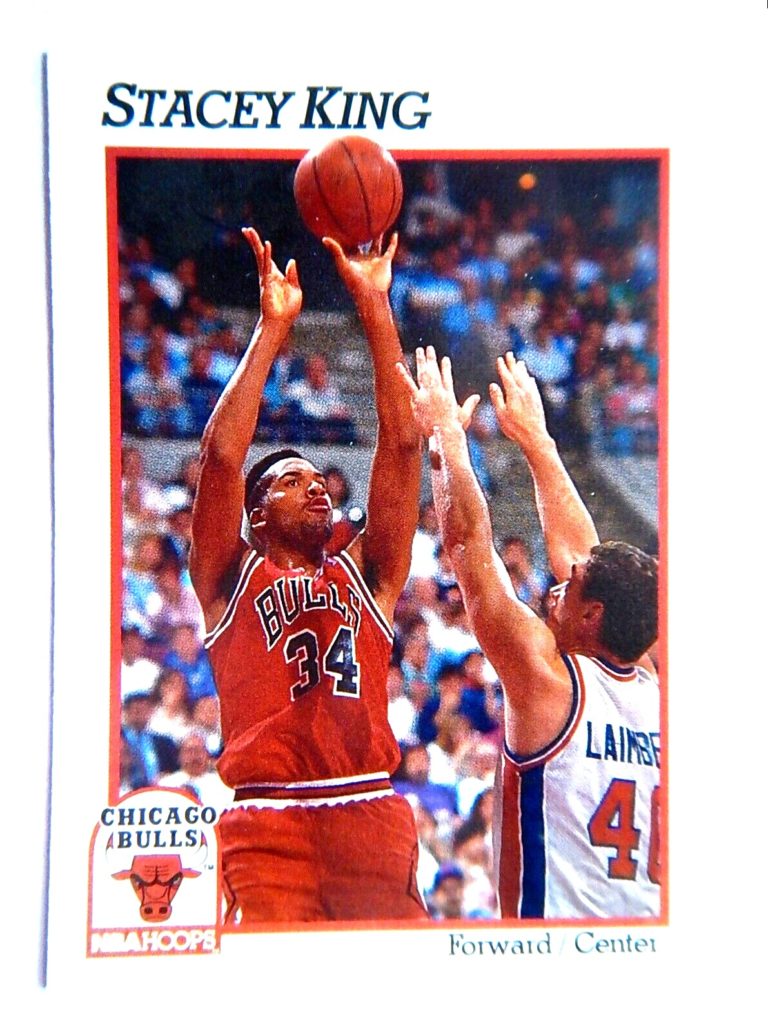
Stacey King spent his playing career standing next to greatness, and then he spent the rest of his life describing it to the rest of us. The three-time NBA champion and longtime Chicago Bulls broadcaster was found dead at his home in River Forest, Illinois on June 7, 2026, at the age of 59. Reports indicate he had fallen at home, with an autopsy still pending. For a generation of Bulls fans, his voice was the sound of basketball nights in Chicago.
An Oklahoma legend before the pros
Ronald Stacey King was born on January 29, 1967, in Lawton, Oklahoma, and came up through Lawton High School before heading to the University of Oklahoma, where he played from 1985 to 1989 under the head coach Billy Tubbs. His college career built to a remarkable crescendo. As a junior he led the Sooners to the 1988 national championship game, their first appearance in 41 years, and was named the tournament’s Most Valuable Player even in a loss to Kansas.
His senior year was the stuff of school history. King averaged 26.0 points, 10.1 rebounds and 2.3 blocks while shooting better than 52 percent, leading the Big Eight in scoring and blocks. He swept up the Big Eight Player of the Year award, consensus first-team All-American honors and The Sporting News Player of the Year. He still ranks among the top scorers and rebounders in Oklahoma history, and the program later honored his number 33.
A role player in the middle of a dynasty
The Chicago Bulls selected King with the sixth overall pick in the 1989 draft, and he played all 82 games as a rookie, earning a spot on the NBA All-Rookie Second Team. What followed was a lesson in the difference between college stardom and professional fit. The NBA writer Sam Smith viewed King as miscast on a Bulls roster already stocked with forwards Horace Grant and Scottie Pippen, and King himself recalled being unhappy at first with life as a role player before accepting the part for the sake of winning.
And win he did. King was a rotational piece during the Michael Jordan-led dynasty, collecting championships in 1991, 1992 and 1993, with a notable contribution to Chicago’s fourth-quarter comeback in Game 6 of the 1992 Finals. After Jordan’s first retirement, the Bulls traded King to the Minnesota Timberwolves in February 1994 for Luc Longley and a draft pick. His travels afterward took him through Miami, the CBA, a stint with the Dallas Mavericks and Boston Celtics, and overseas stops in Turkey and Argentina before his playing days wound down in 1999.
The second act that made him famous
For many fans, King’s biggest impact came after he stopped playing. He moved into coaching in the CBA, leading the Rockford Lightning to a finals appearance, then stepped away to spend more time with his children. He found his true calling in the broadcast booth, joining Comcast SportsNet as a studio analyst in 2004 and becoming the Bulls’ regular game broadcaster for the 2006–07 season.
By 2008 he was the lead color commentator, a role he held alongside Neil Funk and later Adam Amin, carrying it from Comcast SportsNet through to the Chicago Sports Network right up until his death. His popularity rested on an infectious enthusiasm, a gift for nicknames, and catchphrases that became part of the city’s basketball vocabulary. “Gimme the Hot Sauce” was the most famous of them. He christened Derrick Rose “the Windy City Assassin,” Kevin Huerter “Red Velvet” and Matas Buzelis “Lil Buzi Vert.” His calls of Rose’s highlight plays, in particular, became cherished pieces of Chicago sports memory.
A voice that became a fixture
There’s a particular kind of athlete who matters more for who they were around than for their own box scores, and King wore that role with humor and grace. He was never the full-time star the pros once projected, but he understood the game well enough to win three rings inside one of basketball’s great dynasties, and he loved it well enough to spend two decades helping a city fall in love with it all over again.
Stacey King is survived by the countless fans who grew up with his voice in their living rooms. If you’ve got a favorite Bulls memory from the last two decades, chances are good his call is part of how you remember it. Turn one on tonight and listen for the hot sauce.
What Musicians Should (and Shouldn’t) Be Saying on Social Media
One of the biggest misconceptions about social media is that the artists who break through are the ones posting the most, shouting the loudest, or constantly asking people to stream their music.
They’re usually not.
The artists who seem to figure it out understand something much simpler: social media is a conversation, not a billboard.
That’s never been more important than it is right now. In 2026, artists have access to tools that used to belong exclusively to major labels. You can build an audience, promote new releases, connect directly with listeners, sell tickets, and find fans all over the world from your phone. The opportunity is enormous.
The challenge is knowing what actually works.
The thing I keep seeing over and over again is that people respond to people. Fans don’t fall in love with algorithms. They fall in love with stories.
They want to know where the song came from. They want to see the late-night voice memo that turned into a chorus. They want to know what inspired the lyric, what gear you’re obsessed with, what city shaped your sound, and what you’re listening to when nobody’s watching.
In many ways, your social media presence becomes the context around your music. It’s the little plaque beside the painting in a gallery. The music might catch someone’s attention, but the story is often what makes them stay.
That’s also why behind-the-scenes content works so well.
Artists often assume they need perfectly edited videos and expensive content. Most of the time, they don’t. Some of the strongest-performing posts are a quick phone clip from the studio, a snippet of a songwriting session, a rough mix playing through the speakers, or a glimpse into the process that fans never normally get to see.
People are fascinated by how things are made.
The same goes for short-form video. Whether it’s TikTok, Instagram Reels, YouTube Shorts, or whatever platform comes next, short-form content remains one of the fastest ways to reach new listeners. Lyric videos, in particular, continue to punch above their weight because they’re simple, affordable, and instantly tell people what a song is about, even with the sound off.
But the word “social” matters too.
One of the easiest mistakes artists make is treating social media like a megaphone. Post. Promote. Leave.
The artists who build real communities do the opposite. They reply to comments. They ask questions. They run polls. They celebrate the venues they’re playing. They support other musicians. They share music they genuinely love.
In other words, they participate.
That participation matters even more in community-driven spaces. If you’re joining a group, a forum, or a niche online community, the fastest way to be ignored is to drop a link and disappear. The people who succeed become part of the conversation first and promote second.
Another thing I tell artists all the time is that they don’t need to be everywhere.
Trying to master every platform at once is exhausting. Two or three platforms done well will always outperform six platforms done poorly. Figure out where your audience actually spends their time and invest your energy there.
If your listeners live on TikTok, focus there. If they’re buying tickets and merchandise through Facebook, spend time there. Let your audience tell you where to show up.
And once you choose your platforms, be consistent. Use the same photos. Keep your visual identity recognizable. Make it easy for someone who discovers you on one platform to recognize you everywhere else.
There are also a few things I’d strongly encourage artists to leave in the drafts folder.
Don’t make every post an announcement.
Nobody wants to follow an account that feels like a never-ending stream of release dates and “out now” graphics. Share the music, of course, but share the moments around it too.
Don’t chase trends that have nothing to do with who you are.
The artists who benefit from trends aren’t copying them. They’re adapting them to fit their own personality and voice.
And perhaps most importantly, don’t try to appeal to everyone.
The artists who try to reach everybody usually end up connecting with nobody. The artists who know exactly who they’re speaking to tend to build the strongest communities.
When I strip away all the tactics, platform updates, and marketing advice, I keep coming back to the same three words: consistency, authenticity, and connection.
The artists who win long-term are rarely the ones chasing the latest viral moment. They’re the ones who consistently show up, share something real, and make people feel like they’re part of the journey.
If I can leave you with one practical challenge, it’s this: choose the platform where your audience already spends the most time and commit to it for the next ninety days. Pay attention to what resonates. Keep track of what works and what doesn’t.
The artists who grow aren’t guessing.
They’re learning.
And that’s where the real momentum begins.
Why the Oh Yeah Music Centre Is the Beating Heart of Belfast Music
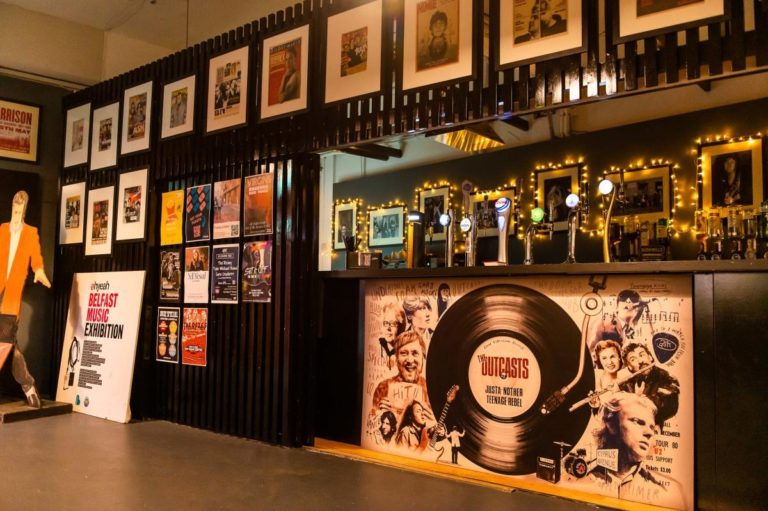
There’s a converted whiskey warehouse in Belfast’s Cathedral Quarter that’s done more for the city’s musicians than just about any glossy concert hall ever could. The Oh Yeah Music Centre opened its doors in 2007, and it grew out of a 2005 conversation between Belfast music industry folks and Snow Patrol, with frontman Gary Lightbody throwing his weight behind the idea. The name comes from the Ash song, which is about as Belfast as it gets, and the whole point was beautifully simple. Lightbody once described what the city needed as a nexus to focus musical energy and unite the scene, and that’s exactly what got built.
A whiskey warehouse with a mission
The building runs to 14,500 square feet across three floors, and every inch of it earns its keep. There’s affordable rehearsal space, a venue that welcomes under-18s, a recording studio, a songwriting room, a café, and office units for music start-ups finding their feet. Oh Yeah became a registered charity in 2008, and it operates as a social enterprise with a mission statement worth framing: “Open Doors To Music Potential.”
What makes it special isn’t the square footage though. It’s who’s walked through those doors. Over the years the centre has hosted live events with Elbow, The Undertones, Gary Lightbody, Tim Wheeler of Ash, Duke Special, Lisa Hannigan, Foy Vance and even Jello Biafra. It launched compilation albums of homegrown talent like ‘The Oh Yeah Sessions’, giving bands a leg up when they needed it most.
The unofficial museum of Northern Irish music
Pop in and you’ll find a permanent music exhibition that’s free to visit and packed with the kind of artefacts that make a music nerd’s heart race. Electric guitars, historic gig posters, ticket stubs, stage clothing donated by famous bands, and pride of place given to Terri Hooley, the Good Vibrations legend who put Belfast punk on the map. The exhibition traces Northern Ireland’s musical story from folk through Van Morrison and The Undertones right up to Snow Patrol and beyond.
Oh Yeah also curates the annual Sound of Belfast festival and the Northern Ireland Music Prize, runs youth and older people’s programmes, and arranges music tours around the city’s most storied spots. It’s a venue, a hub, a safe space and a launchpad all at once, which is why it sits so neatly at the centre of Belfast’s identity as the island of Ireland’s only UNESCO City of Music.
And then there’s 2026
Here’s where things get properly exciting. Belfast will be the host city for Fleadh Cheoil na hÉireann 2026, which will take place from Sunday 2 August to Sunday 9 August 2026. Fleadh Cheoil na hÉireann (the Fleadh) is the world’s biggest celebration of Irish music and culture.
A little history for the uninitiated. Established in 1951, the event takes place in Ireland every August with qualifying performers from all over the world showcasing the very best of traditional music talent in all-Ireland competitions. The organising body is Comhaltas, the international movement dedicated to promoting Irish music, song and dance. And the Belfast hosting is genuinely historic, because this is only the second time the Fleadh has been held in Northern Ireland, having taken place in Derry~Londonderry in 2013 as part of the UK City of Culture celebrations.
The scale is staggering. The Fleadh is a major, high profile cultural event, expected to attract around 800,000 visitors, with peak daily attendance of up to 120,000 people. Across the eight days you’ll get concerts, street performances, céilí bands, marching bands, pageants, drama, exhibitions and the prestigious All-Ireland competitions, all spilling out across a city that already lives and breathes music. From lively pub sessions to headline concerts, pop-up street performances to prestigious All-Ireland competitions, the Belfast Fleadh is where tradition meets imagination.
Why it all connects
A city doesn’t earn the right to host the world’s biggest Irish music festival by accident. It earns it through decades of nurturing players, protecting venues, and treating music as something that belongs to everyone. The Oh Yeah Music Centre is a huge part of that story, the place where the next generation of Belfast musicians learns their craft and where the city’s musical past is kept alive and celebrated. So when the Fleadh rolls into town in August 2026, it’ll be landing in a city that’s been getting ready for this its whole life.
A practical note for anyone planning to come over: book your accommodation early, because 800,000 visitors will fill the place fast. And do leave room in your schedule to wander into the Cathedral Quarter and step inside Oh Yeah while you’re here. It’s free, it’s friendly, and it’ll tell you everything you need to know about why Belfast deserves this moment.
Fleadh Cheoil na hÉireann takes place in Belfast, August 2–9, 2026. For more information visit fleadhcheoil.ie, visitbelfast.com, and discovernorthernireland.com.
Your Like Count Is Not Your Reach Score

A lot of musicians are still building their whole Instagram strategy around a number the platform quietly stopped caring about. You post a new single announcement, you watch the likes tick up, and you feel like things are working. Meanwhile the post barely leaves your existing followers, and the reach number sits flat. Here’s the uncomfortable truth: in 2026, likes are the weakest major signal Instagram uses to decide who sees your content, and chasing them is a bit like tuning your guitar to a station that went off the air.
Instagram never runs on a single algorithm. It uses separate ranking systems for Feed, Reels, Stories, and Explore, and each one weighs different signals depending on what you’re posting and who it’s trying to reach. What’s changed is the hierarchy. Adam Mosseri, who heads Instagram, has confirmed that the signals carrying the most weight across the app are now watch time, sends per reach, and likes per reach, in that order. Likes still get counted. They just no longer move the needle on distribution the way artists assume they do.
The signal that matters most for reaching people who don’t already follow you is the send. That’s when someone taps the little paper-airplane icon and fires your post into a friend’s DMs. Mosseri has called sends one of the biggest signals Instagram uses in ranking, and the reason is intuitive once you sit with it. A like is cheap. It costs nothing and means little. Sending something to a specific person is a small act of vouching, a way of saying “this is worth your time,” and the platform treats it accordingly. Industry trackers in 2026 estimate DM shares are worth roughly three to five times more than likes when it comes to reaching new audiences, and an estimated 694,000 Reels get shared by DM every single minute.
For musicians, this reframes what a “good post” even is. The track announcement that gets 400 likes from people who already love you is doing far less for your growth than the 15-second clip someone watched twice and forwarded to a friend who needs new music for a road trip. Distribution on Instagram is earned in stages now. A post first goes to a small slice of your audience, and if those people watch, save, or share it, the platform widens the circle. If they scroll past, it stops there. Reach isn’t handed out. It’s won in the first minutes and hours based on how people actually behave.
Watch time is the other piece artists tend to underestimate, and it rewards a counterintuitive instinct. The opening three seconds of a Reel decide most of its fate, so a song’s best hook or your most arresting visual belongs at the very front, not 20 seconds in after a tasteful intro. A 14-second Reel that gets watched twice will often outperform a polished 60-second one watched halfway and abandoned. Completion and rewatches tell Instagram the content held attention, and held attention is what the system is hunting for. Longer Reels up to three minutes can now reach non-followers too, but length is never the goal. Keeping someone watching is.
There are a few practical shifts worth making once you stop optimizing for likes. Post original content, since reposts get meaningfully less distribution and accounts leaning too heavily on reposted material can be cut out of recommendations entirely. Build clips and carousels around a moment someone would want to send to a specific person, whether that’s a lyric that lands, a funny studio outtake, or a genuinely useful tip for other players. Use trending audio when it actually fits what you’re making rather than bolting it on. Track the metrics that map to how the algorithm really works, which means watching your sends and your accounts-reached numbers in Insights, not just the heart count under each post.
None of this means likes are worthless or that you should feel bad about enjoying them. They’re a perfectly nice bit of encouragement, and there’s nothing wrong with appreciating that your community shows up for you. The point is simply that they’re a comfort metric, not a growth metric, and confusing the two keeps a lot of talented artists stuck wondering why their reach won’t climb. The musicians breaking through right now have made one quiet adjustment. They’ve stopped asking “will people like this?” and started asking “would someone send this to a friend?”
That second question is the one Instagram is actually scoring you on. Build your posts around it, watch your sends instead of your likes, and you’ll be optimizing for the platform you’re actually on in 2026, rather than the one you remember from a few years ago.
5 Surprising Facts About Brian Eno And David Byrne’s ‘My Life In The Bush Of Ghosts’
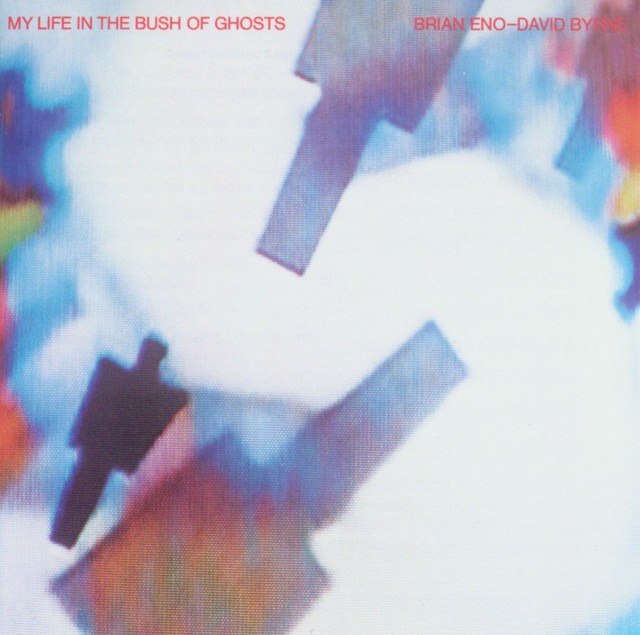
Few albums have rippled out as far as this one. Released February 25, 1981, ‘My Life in the Bush of Ghosts’ was the first collaboration between Brian Eno and David Byrne, and Byrne’s first record away from Talking Heads. Built from sampled vocals, found sounds, and African and Middle Eastern rhythms, it became a foundational text for sample-based music. Here are five things you might not know about it.
Neither Eno Nor Byrne Had Read The Book That Gave It Its Name
The album title comes from Nigerian writer Amos Tutuola’s 1954 novel ‘My Life in the Bush of Ghosts’. By Byrne’s own admission in the 2006 liner notes, neither he nor Eno had actually read the book. They simply felt the title seemed to encapsulate what the record was about.
It Was Recorded Before ‘Remain In Light’ But Held Up By Sample Clearances
The album was made mostly during a break between Talking Heads’ ‘Fear of Music’ and ‘Remain in Light’, both produced by Eno. Despite being recorded first, its release was delayed by several months while legal rights were sought for the large number of samples used across the record.
One Track Was Pulled After A Religious Objection
Soon after release, the Islamic Council of Great Britain objected to the use of Qur’anic recital samples on the track “Qu’ran,” considering it blasphemy. Byrne and Eno removed the track from later pressings, replacing it with “Very, Very Hungry.” Byrne later said they were “feeling very cautious about this whole thing.”
A Lebanese Singer Didn’t Know She Was On It Until 2017
Two tracks, “Regiment” and “The Carrier,” sample the voice of Lebanese singer Dunya Younes. Although the duo had cleared and paid for the samples, Younes was unaware her voice was on the album until 2017. The songs were briefly pulled before the matter was settled amicably, and Younes ultimately expressed flattery at the inclusion.
Its Influence Reached Hip-Hop’s Most Important Producers
The album’s sample-driven approach left a deep mark. Hank Shocklee of the Bomb Squad cited it as an influence on his production work for Public Enemy, while Kate Bush said it left “a very big mark on popular music” and Pink Floyd’s Richard Wright recalled it knocking him sideways.
5 Surprising Facts About ABBA’s ‘The Visitors’
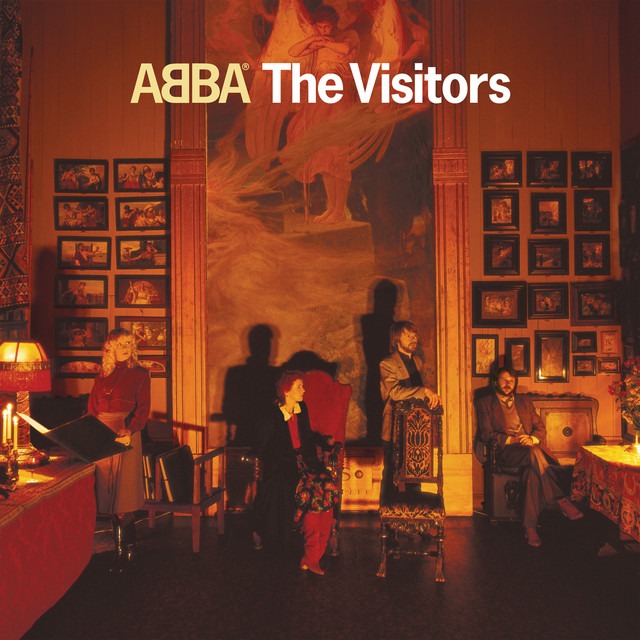
ABBA’s eighth album was the sound of a group coming apart. Released November 30, 1981 on Polar, ‘The Visitors’ traded the gloss of their earlier hits for something more complex and mature, full of Cold War unease, isolation, and the pain of two collapsing marriages. It topped charts around the world and stood as ABBA’s final studio album for four decades, until ‘Voyage’ arrived in 2021. Here are five things you might not know about it.
It Was One Of The First Albums Ever Recorded And Mixed Digitally
‘The Visitors’ was among the earliest albums made using digital recording and mixing. It was also one of the first ever manufactured commercially on compact disc, released after Billy Joel’s ’52nd Street’, which was the first available in the format. The record sat right at the dawn of the CD era.
The New Digital Gear Caused The Band Real Headaches
Sound engineer Michael Tretow had to adjust to a brand-new 32-track digital recorder bought for Polar Studios. He found that digital cut out the hiss but also made the sound “too clean,” so he had to compensate. Since the first three tracks were recorded on analogue tape, he had to keep transferring later tracks between digital and analogue to match the quality.
Two Songs Captured The Band’s Real-Life Divorces
By the time recording began, both ABBA couples had split, with Benny and Frida announcing their divorce in February 1981. “When All Is Said and Done” detailed that breakup, and Björn sought approval from Benny and Frida before working on it. As Frida later recalled, “All my sadness was captured in that song.”
The Cover Showed The Members Apart For The First Time
Designer Rune Söderqvist built an “angel” concept around the closing track, locating painter Julius Kronberg’s old studio at Skansen park in Stockholm, full of angel paintings, for the shoot. On the finished cover, the members stand apart in the shadows, depicted as separate individuals rather than a close-knit group, capturing the band’s general fatigue.
One Track Was Cut Down To The Wire Before Release
“One of Us,” the album’s biggest hit, was one of the last songs recorded, with the working titles “Number 1” and “Mio Amore.” The decision to release it as the lead single came so late that it wasn’t available in Swedish shops until after the album itself had already come out. It became ABBA’s final No. 1 single.
5 Surprising Facts For The Jam’s ‘Sound Affects’
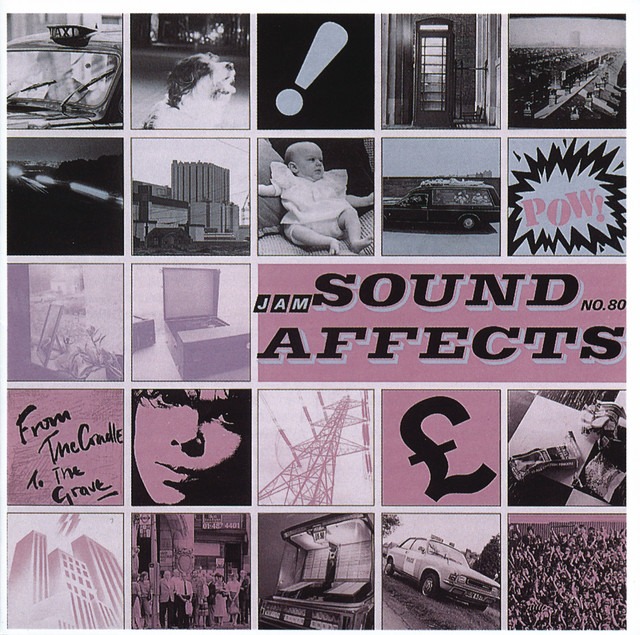
The Jam’s fifth album found Paul Weller at his most adventurous. Released November 28, 1980 on Polydor, ‘Sound Affects’ blended post-punk edge with pop psychedelia, spun off two of the band’s most beloved songs, and climbed to No. 2 on the UK Albums Chart. Weller himself has called it the Jam’s best album. Here are five things you might not know about it.
Weller Described It As A Cross Between Michael Jackson And The Beatles
The album drew on post-punk groups like Wire, Gang of Four, and Joy Division, but two other records loomed large. Weller has admitted the Beatles’ ‘Revolver’ was a major influence, and Michael Jackson’s ‘Off the Wall’ shaped Rick Buckler’s drumming. At the time, Weller said he considered the album a cross between those two.
“Start!” Lifts Its Bassline Straight From The Beatles’ “Taxman”
The lead single is built around an almost exact copy of the bassline from “Taxman,” the opening track on ‘Revolver’, and nods to its guitar solo too. Bruce Foxton admitted it wasn’t intentional, saying “Taxman” subconsciously went in. He joked that it wasn’t exactly the same, “otherwise I’m sure Paul McCartney would have thought about suing us!”
The Back Cover Quotes A Famous Protest Poem
The album’s artwork is a pastiche of the BBC’s 1970s Sound Effects records, complete with a taxi, a phone box, and Dungeness B power station. Less noticed is the back cover, which features an excerpt from Percy Bysshe Shelley’s poem ‘The Masque of Anarchy’. It’s a fitting touch for a record steeped in working-class imagery.
Weller Overruled His Label On The First Single
Polydor pushed for “Pretty Green” as the lead single, but Weller insisted on “Start!” To settle it, A&R man Dennis Munday polled a small group of the band’s friends who’d been around the sessions, and they chose “Start!” The decision was vindicated when it entered at No. 3 and hit No. 1 in its third week, knocking David Bowie off the top.
Weller Wrote “That’s Entertainment” In Ten Minutes
The album’s enduring classic came together almost instantly. “I wrote it in 10 mins flat, whilst under the influence,” Weller said, explaining that the song’s slice-of-life images were all around him in London. It never got a domestic UK single release during the band’s lifetime, yet charted as an import at No. 21 and became one of the country’s biggest-selling import singles ever.
5 Surprising Facts For The Cure’s ‘Seventeen Seconds’
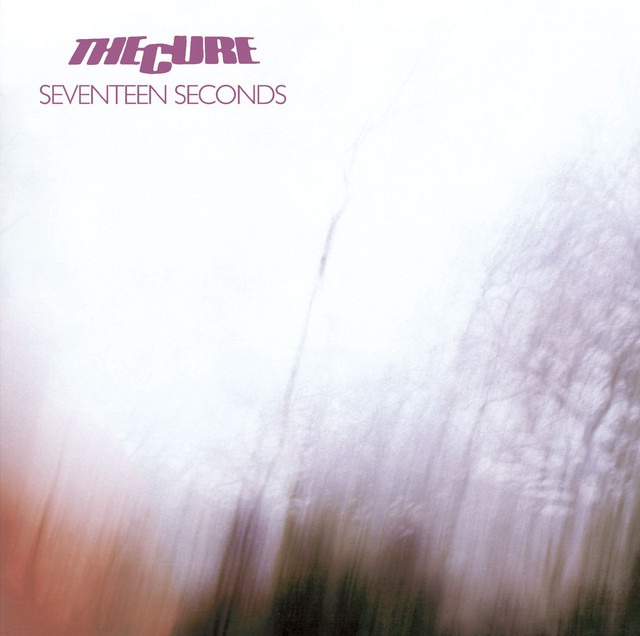
The Cure’s second album turned them from a scrappy post-punk trio into architects of a whole new mood. Released April 18, 1980 on Fiction Records, ‘Seventeen Seconds’ traded the jittery energy of their debut for spare, echoing atmosphere, and it gave them their first UK top 40 single in “A Forest.” Decades on, it’s considered an early blueprint for gothic rock. Here are five things you might not know about it.
The Whole Album Was Recorded In Seven Days
Money was short, so the band recorded and mixed ‘Seventeen Seconds’ between January 13 and 20, 1980, on a budget of between £2,000 and £3,000. That tight window meant working 16 or 17-hour days. The pressure shaped the record’s stripped, economical feel.
One Track Was Cut Short Because The Tape Ran Out
“The Final Sound” was planned to be much longer, but the tape ran out while the band was recording it. With no money to do it again, they were stuck with what they had. The result is a fragment that runs just 53 seconds.
Playing With Siouxsie And The Banshees Changed Robert Smith’s Direction
Smith spent two months playing guitar with the Banshees, learning their songs, and it opened up a new horizon for him. He came away wanting a band built around a bassline and a drum part with the vocals floating on top, the way Steven Severin and Budgie backed Siouxsie. He said he wanted the Cure to be “the Banshees part 2.”
A Clash Over Basslines Reshaped The Lineup
Original bassist Michael Dempsey hated the demos and wanted the band to be “XTC part 2,” so he left. Simon Gallup replaced him, which relieved Smith, who felt Dempsey’s basslines were too ornate. Keyboardist Matthieu Hartley joined too, though he’d later clash with Smith, since Hartley liked complex chords while Smith wanted single notes.
The Deluxe Reissue Featured Robert Smith’s Postman
The 2005 Deluxe Edition bonus disc included material by Cult Hero, a 1970s-style progressive rock project along the lines of Easy Cure. Its lead singer was Frank Bell, who happened to be Robert Smith’s postman. It’s an unexpected footnote to one of the band’s most influential records.