Home Blog Page 21

Universal Music Group Just Built the Jazz World a Home With the Global Launch of Everything Jazz

0

Universal Music Group’s Global Classics & Jazz (GCJ) division announces the global launch of Everything Jazz, a new digital platform and online store dedicated to jazz music and culture. Developed in partnership with acclaimed jazz labels Blue Note, Verve, Impulse!, Decca, Fontana, and ECM, Everything Jazz blends a carefully curated retail offering with original editorial designed for fans, celebrating the history, artistry, and future of jazz. Now available worldwide at www.everythingjazz.com, the store provides music lovers with a central hub to access and purchase jazz releases wherever they are in the world.

The launch comes as Everything Jazz builds momentum with its first major initiative, (Re)Discover Jazz – a month-long series of 20 digital lessons curated by their editorial team, exploring the genre’s history, key subgenres, artists and labels, to mark Jazz Appreciation Month in April. The programme has already attracted hundreds of registered fans following its exclusive preview to mailing list subscribers in January, and is now available online at everythingjazz.com/discoverjazz, with plans to expand into multiple languages in the coming months. The initiative underscores the digital platform’s mission to deepen engagement with jazz by connecting audiences to its history, context, and cultural impact.

Following a phased rollout of online stores across Europe (including local stores in France and United Kingdom), Japan, Australia, Canada, and United States, Everything Jazz provides fans with unprecedented access to rare repertoire, premium releases such as Blue Note’s acclaimed Tone Poet and Classic Vinyl editions, as well as Verve’s Vault and Acoustic Sounds series, and trusted editorial in one destination.

Led by a dedicated team of curators, writers, editors, and producers deeply embedded in the jazz community, Everything Jazz features exclusive interviews with acclaimed artists including Samara Joy, Julian Lage, Gregory Porter, Jon Batiste, Brandee Younger, Jeff Goldblum, Maya Delilah and Jacob Collier, alongside in-depth features on legends such as John Coltrane, Ella Fitzgerald, Norah Jones, Charles Lloyd, and many more.

Beyond the digital platform, Everything Jazz continues to make an impact in bringing fans closer to the artists and music they love by partnering with leading jazz festivals worldwide, and creating moments where editorial, commerce, and community intersect. Teaming up with Festival International de Jazz de Montréal (Canada), Melbourne International Jazz Festival (Australia), Love Supreme and EFG London Jazz Festival (United Kingdom), Everything Jazz has curated festival activations, exclusive product offerings, and original on-site coverage that connects audiences to the culture where it is lived and experienced.
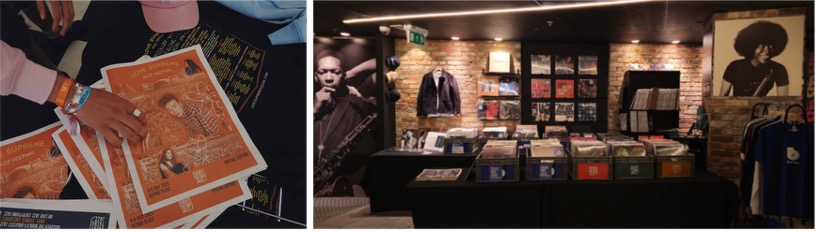
Everything Jazz’s 2025 partnership activations at Love Supreme and EFG London Jazz Festivals

On the announcement, Tina Poyser, Vice President of Everything Jazz said: “The response to Everything Jazz from both fans and artists shows how vital jazz is today, as both a growing, global movement and through thriving local scenes around the world. The future of jazz is deeply entwined with its fascinating history and diverse recorded legacy, and the expansion of Everything Jazz reflects both the depth of the catalogue and fans’ enduring passion for quality and excellence.”

Don Was, President of Blue Note Records commented: “Everything Jazz has done tremendous work building an essential jazz destination, combining great storytelling with expert curation. Blue Note is thrilled to see them continue to expand their reach and spread their passion for jazz with audiences around the world.”

Jamie Krents, President and CEO of Universal Music Enterprises and Verve Label Group said: “It’s incredibly exciting to see a store dedicated to the best in jazz launched on a global scale. With strong curation and a wealth of editorial content and features, the team at Verve is excited to see Everything Jazz become a meaningful destination for anyone interested in the genre.”

Tom Lewis, President of Fontana Records added: “Everything Jazz is a powerful vote of confidence in the global strength of jazz today. The genre is thriving, and the platform has quickly established itself as one of its most dynamic and authoritative destinations. This marks an exciting new global chapter for the platform.”

As jazz continues to evolve across generations and geographies, Everything Jazz aims to play a central role in celebrating its legacy while championing its future.
Billie Eilish Brings Her Sold-Out World Tour Home on Limited Live Vinyl and 3D Concert Film

0

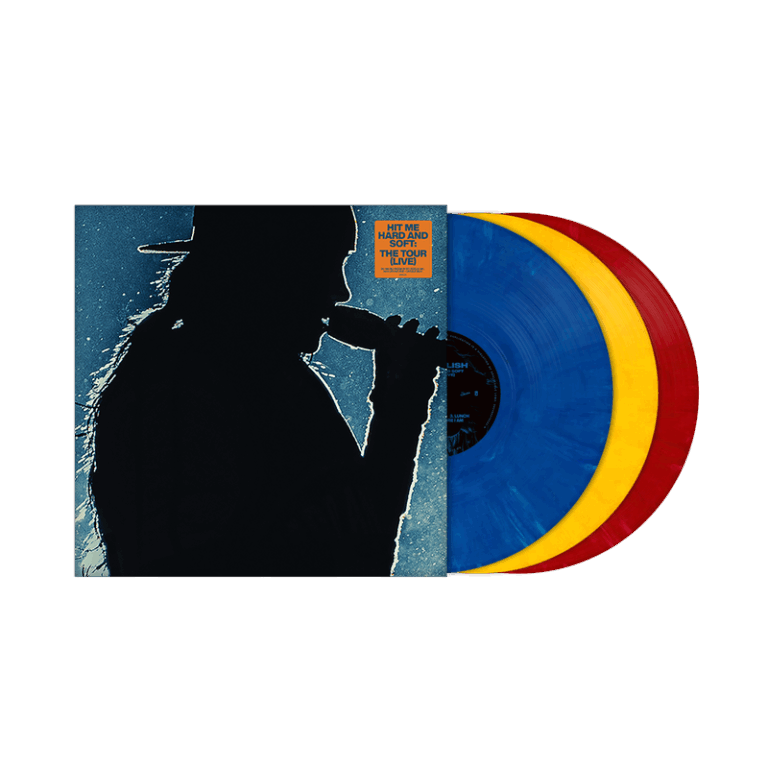
Billie Eilish is releasing ‘HIT ME HARD AND SOFT: THE TOUR (LIVE)’ on vinyl, a three-disc document of her sold-out world tour pressed exclusively on 100% recycled vinyl with a lenticular insert. It’s a one-time pressing, limited to four per customer, and it ships May 1. This isn’t a standard live album drop. It’s a physical artifact from one of the most talked-about tours in recent memory. Order here.

The vinyl lands alongside something equally ambitious. On May 8, ‘HIT ME HARD AND SOFT: THE TOUR (LIVE IN 3D)’ hits the big screen as a full immersive concert film, co-directed by Billie Eilish and Academy Award winner James Cameron. Presented in 3D, the film takes the live experience somewhere a standard concert recording simply can’t go. That’s a serious creative partnership applied to a serious piece of work.

The three-disc set spans 23 tracks across six sides, moving through the full arc of the live show. From “OCEAN EYES” and “BAD GUY” through to “HAPPIER THAN EVER” and “BIRDS OF A FEATHER”, the sequencing holds the shape of the tour intact. Live versions of “LUNCH”, “WHAT WAS I MADE FOR?”, and “CHIHIRO” sit alongside deeper cuts that rewarded audiences who were there in person.

The recycled vinyl format is consistent with Eilish’s long-standing sustainability commitments, and the lenticular insert adds a visual dimension that makes the package worth holding. Pre-orders are live now at her official store.

Tracklist:

DISC 1 – Side 1

  1. INTRO – THE TOUR (LIVE) VERSION
  2. CHIHIRO – THE TOUR (LIVE) VERSION
  3. LUNCH – THE TOUR (LIVE) VERSION
  4. NDA / THEREFORE I AM – THE TOUR (LIVE) VERSION

DISC 1 – Side 2

  1. WILDFLOWER – THE TOUR (LIVE) VERSION
  2. WHEN THE PARTY’S OVER – THE TOUR (LIVE) VERSION
  3. THE DINER – THE TOUR (LIVE) VERSION
  4. ILOMILO – THE TOUR (LIVE) VERSION
  5. BAD GUY – THE TOUR (LIVE) VERSION

DISC 2 – Side 1

  1. THE GREATEST – THE TOUR (LIVE) VERSION
  2. YOUR POWER – THE TOUR (LIVE) VERSION
  3. SKINNY – THE TOUR (LIVE) VERSION
  4. TV – THE TOUR (LIVE) VERSION

DISC 2 – Side 2

  1. BITTERSUITE – THE TOUR (LIVE) VERSION
  2. BURY A FRIEND – THE TOUR (LIVE) VERSION
  3. OXYTOCIN – THE TOUR (LIVE) VERSION
  4. GUESS – THE TOUR (LIVE) VERSION
  5. EVERYTHING I WANTED – THE TOUR (LIVE) VERSION
  6. BLUE – THE TOUR (LIVE) VERSION
  7. LOVELY – THE TOUR (LIVE) VERSION

DISC 3 – Side 1

  1. IDONTWANNABEYOUANYMORE – THE TOUR (LIVE) VERSION
  2. OCEAN EYES – THE TOUR (LIVE) VERSION
  3. L’AMOUR DE MA VIE / OVER NOW (EXTENDED) – THE TOUR (LIVE) VERSION

DISC 3 – Side 2

  1. WHAT WAS I MADE FOR? – THE TOUR (LIVE) VERSION
  2. HAPPIER THAN EVER – THE TOUR (LIVE) VERSION
  3. BIRDS OF A FEATHER – THE TOUR (LIVE) VERSION
  4. BLUE OUTRO – THE TOUR (LIVE) VERSION

Lana Del Rey and David Arnold Join Forces to Write the Title Song for 007 First Light

0

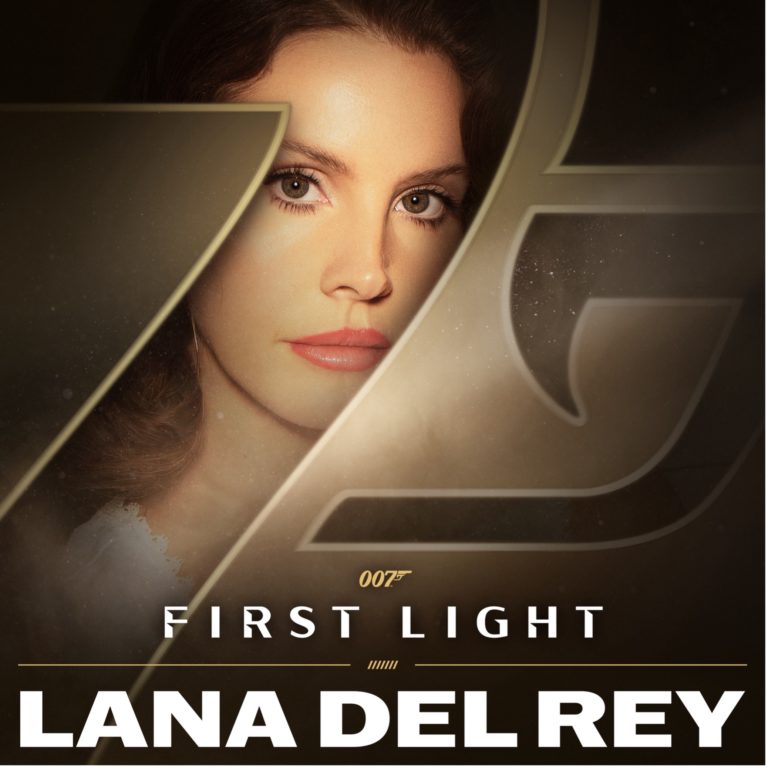
 IO Interactive, the award-winning developer and publisher behind the globally acclaimed HITMAN franchise, and Amazon MGM Studios announced today that multi platinum selling and award-winning singer-songwriter Lana Del Rey will perform the official title song for 007 First Light, the upcoming video game developed and published by IO Interactive, featuring a reimagined origin story of James Bond. The title song for the upcoming 007 video game has been written and composed by Lana Del Rey & David Arnold, marking the return of the composer to the Bond franchise. The song and title sequence will be showcased for the first time on 007 First Light’s official channels on Twitch, YouTube, TikTok, Steam, and X.

Lana Del Rey is recognized as one of the greatest singer songwriters of her generation. She has created a truly unique aesthetic.  With 007 First Light’s title song, Lana brings the James Bond universe into her world, re-defining the classic genre and creating her own musical interpretation for the game’s reimagined origin story.

It’s a joy to watch two extraordinary talents like Lana Del Rey and David Arnold combine forces, the result feels instantly ‘Bond’ while still bringing a fresh identity for 007 First Light. Bond’s return to gaming is a landmark moment for us at IO Interactive, and having a title song of this quality makes it all the more unforgettable,” highlighted Hakan Abrak, CEO at IO Interactive.

David Arnold’s contribution to the title song as both co-writer and composer marks a significant moment for the franchise. Having helped define the modern musical identity of James Bond across five consecutive films, David Arnold’s involvement reinforces 007 First Light’s deep connection to Bond’s heritage.

“The Bond theme is a unique storytelling moment; it has to capture scale, drama, and intrigue all at once. Having been part of that musical lineage, I understand how important it is to honor its heritage while allowing it to evolve. Lana brought an elegance and atmosphere to the song that felt perfectly suited to continuing that tradition while introducing something fresh for a new era” stated David Arnold.

The collaboration was conceived by producer Gabriel Moszkowski from Media W, who brought Lana Del Rey and David Arnold together to create the next musical chapter in Bond history.

007 First Light presents a bold new take with a reimagined origin story, following a young James Bond at the very beginning of his journey in the world of espionage.

007 First Light is scheduled to launch on May 27, 2026, pre-order now and get a free deluxe upgrade. All details can be found at https://ioi.dk/007firstlightgame.

Dan Langa’s Fugue State Unravels Something Strange With New Track “So What Is There?”

0

Fugue State has shared “So What Is There?”, the third single from the debut album ‘After Nothing Comes’, arriving May 22 via Switch Hit Records. The track foregrounds Javanese singer, composer, and educator Peni Candra Rini, whose presence shapes the song’s most arresting moments. A John Kim-directed music video accompanies the release, and it’s as disorienting and compelling as the music deserves.

The track traces back to a recording session at Figure 8 Studio, where Langa and Rini worked through material introduced via album co-producer William Brittelle. “There was a powerful, cathartic energy that came through in the performance,” Langa recalls. That session ultimately shaped the sequencing of the entire record. Rini’s voice cuts through the album’s dense, maximalist soundworld like a signal breaking through static.

Fugue State is the project of Northampton, MA-based composer, producer, and engineer Dan Langa, built around an obsessive process of recording, deconstructing, and reshaping studio material into spectral, barely recognizable forms. The whole thing started with an unplaceable five-syllable sound Langa found buried in session recordings, something he couldn’t identify or reproduce. That mystery became the methodology. The album moves between ambient saxophone, chamber dub, and fractured art song, with contributions from multi-instrumentalist Shahzad Ismaily and singer-songwriter Maia Friedman (Dirty Projectors, Coco).

‘After Nothing Comes’ is a record that rewards close listening and resists easy categorization, which is exactly what makes it worth your time. The release show happens May 30 at Ki Smith Gallery in New York City, with BlankFor.ms opening. It’s an intimate room for a record that demands attention.

Tracklist:

01 “Warmer”

02 “In This Moment”

03 “Everything Happens Again”

04 “Floating”

05 “We Are Lasting”

06 “Dark”

07 “The Dancer At Midnight”

08 “So What Is There”

09 “He Was Always So Precise”

10 “Reflections”

Upcoming Shows:

May 30 – New York, NY @ Ki Smith Gallery (w/ BlankFor.ms)

North London Indie-Pop Songwriter Natalie Shay Bares Everything on New EP ‘ATMOSPHERE’

0

Natalie Shay writes like she has nothing left to hide. The North London indie-pop songwriter has released her new EP ‘ATMOSPHERE’, a five-track sonic diary tracing love, obsession, trauma bonds, and the hard lessons that come with feeling everything at full volume. It’s her most focused body of work yet, and it arrives with real emotional weight behind it.

The EP moves through distinct emotional chapters, each one drawn from the two years of collaboration and late-night solo sessions that shaped it. The title track “atmosphere” was written with long-time collaborator Kaity Rae (Remember Monday, The Shires), circling the question of whether a magnetic connection is genuine love or just something in the air. It’s a question that hangs over the whole record. Standout track “sorry for u” hits differently, a defiant indie-pop anthem built with RNDMBEATS (Wes Nelson) and Call Me Loop (Pussycat Dolls) about the specific frustration of someone who had everything and chose to throw it away.

Shay puts it plainly: “I crave love, but I’ve also been damaged by it.” That tension is what makes ‘ATMOSPHERE’ work. It doesn’t resolve neatly, and it doesn’t try to. With 20M+ streams, BBC Radio 1 and BBC Radio 6 Music support, and coverage in Rolling Stone, Billboard, and CLASH, she’s built this platform song by song and show by show.

The live dates arriving this month reflect exactly where Natalie Shay is right now. She plays her biggest headline to date at Oslo in London on April 23, and makes her first regional headline appearance at Manchester’s Deaf Institute Lodge on April 17. These are rooms she’s earned.

Tour Dates:

April 17 – Manchester @ Deaf Institute Lodge

April 23 – London @ Oslo

GLAAD-Nominated Pop Auteur JORDY Proves He’s Anything But “DUMB” With Clever New Single

0

JORDY’s new single “DUMB” lands today via EMPIRE, and the title is the joke. The song is sharp, self-aware pop built around humor, vulnerability, and hooks that stick. JORDY wrote it with collaborators OSTON, Kate The Dreamer, and Drew Polovick of Friday Pilots Club on a day he’d decided to stop overthinking his next album and just write. The result is one of the most purely enjoyable tracks in his catalog.

“DUMB” is a night out with your best friends, meeting someone at the bar, a dance party, a drunk makeout, a break from reality. JORDY’s words, and he means every one of them. The song does exactly what great pop is supposed to do: it pulls you out of your head and puts you somewhere better. The music video is out now alongside the single, and it matches the track’s energy beat for beat.

JORDY’s been building toward this for years. With 350M+ career streams, a million-plus social followers, and albums like ‘BOY’ (2023) and ‘SEX WITH MYSELF’ (2024) earning serious critical attention from Billboard, Rolling Stone, and PAPER, he’s one of the most consistently compelling voices in queer pop. GLAAD Media Award and Queerties nominations (twice over) aren’t handed out lightly.

The live schedule is filling up fast. JORDY makes his U.K. festival debut at Mighty Hoopla in London on May 31, then heads to Columbus Pride on June 20 for a headline set. New music is also in the works and coming soon.

Tour Dates:

May 31 – London, U.K. @ Mighty Hoopla Festival

June 20 – Columbus, OH @ Columbus Pride (Headline)

Italian-Danish Modern Metal Powerhouse W’t’M Drops Ferocious New Single “A Million Mistakes (Is All it Takes)”

0

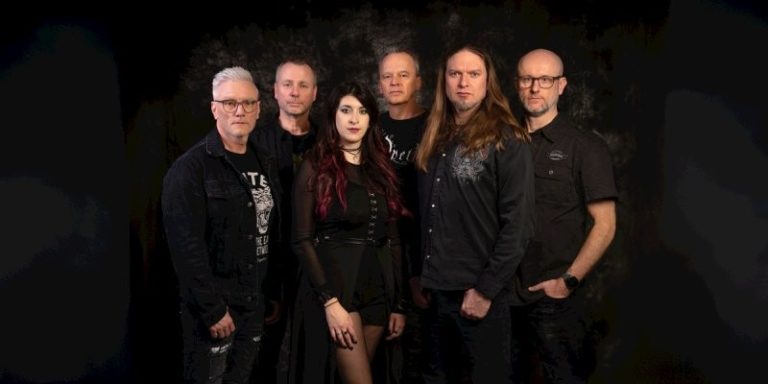
W’t’M has arrived with force. The Italian-Danish modern metal outfit has released their new single “A Million Mistakes (Is All it Takes)” via Popshit Records, and it’s a declaration. Atmospheric melody collides with crushing riffs and soaring vocals in a track that hits hard from the first note. The accompanying music video, produced at Hop House Studio by Andreas Linnemann, gives the song a visual presence that matches its intensity.

The track delivers exactly what W’t’M does best: melodic firepower wrapped in high-voltage metal energy. It sits comfortably alongside the sonic world of Halestorm, Within Temptation, Pretty Maids, and Deep Purple, while carving out something distinctly their own. The single continues the momentum built by their 2025 debut album ‘Witness the Madness’, and makes clear this band isn’t slowing down.

W’t’M formed in 2022 around a remote collaboration between Italian vocalist Marica Moire and a core of Danish musicians. The 2023 addition of Michael Bastholm Dahl (ex-Artillery) strengthened their vocal depth and live power considerably. Since then, they’ve performed at the Nordic Noise Festival, the Copenhell Pre-Event, and most recently brought their sound to audiences in Poland.

Bassist and creative force Ole Quist says it plainly: “This video brings the song to life in a way that really shows the emotion and power behind W’t’M. It’s raw, it’s melodic, and it’s everything we stand for.” That’s not hype. That’s a band that knows exactly what they’re building.

12 Songs That Sound Like They Were Made Decades Ago

There’s a particular kind of magic that happens when a modern artist doesn’t just reference the past but actually inhabits it so completely that you genuinely have to check the release date. It’s not nostalgia exactly, and it’s not pastiche. It’s something closer to channeling: the production choices, the vocal phrasing, the arrangement, all of it locking into a frequency from another era so precisely that the present moment just falls away. Here are twelve songs that did exactly that.

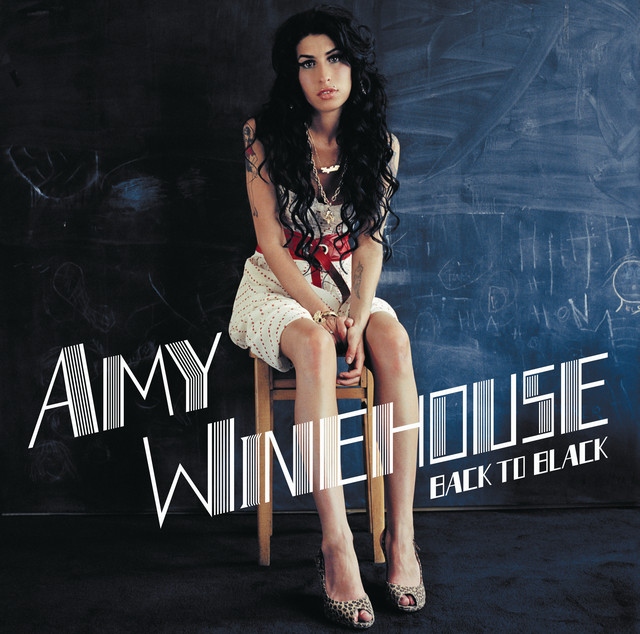
Amy Winehouse, “Back to Black” (2006)

Winehouse didn’t borrow from the early 1960s girl-group sound so much as she moved into it and changed the locks. Mark Ronson’s production stacked the Dap-Kings’ raw, dry instrumentation against lyrics of such devastating self-awareness that the vintage frame made the heartbreak feel timeless rather than retro. The walking bassline, the muted trumpet, the barely-there reverb: it sounded like something pulled from a jukebox in 1961, except no one in 1961 was writing quite this honestly about being complicit in their own destruction.

Bruno Mars, “Treasure” (2012)

Bruno is going to show up a lot here. From the opening four-on-the-floor kick drum and the stabbing brass hits, “Treasure” commits so completely to the early 1980s funk-pop template that you half expect to see a Prince credit somewhere. Mars understood that the era’s genius wasn’t just the sound but the economy of it: tight arrangements, nothing wasted, every element locked to the groove. The falsetto vocal sits right in that Minneapolis pocket, and the production by The Smeezingtons keeps it warm and analog-feeling in a way that most digital-era pop simply doesn’t bother with anymore.

Duffy, “Mercy” (2008)

Duffy arrived fully formed as a kind of missing link between Dusty Springfield and mid-period Aretha, and “Mercy” was the moment that made the case most forcefully. The production leans hard into that late-1960s Atlantic Records soul blueprint: the call-and-response brass, the punchy rhythm section, the vocal delivery that sits right on the beat and then suddenly floats above it. What kept it from feeling like a costume was Duffy’s voice itself, which carried enough genuine ache that the period trappings felt earned rather than borrowed.

Meghan Trainor, “All About That Bass” (2014)

Strip away the cultural conversation that surrounded this song and what you have is a genuinely impressive piece of doo-wop and early 1960s pop reconstruction. The finger-snapping rhythm, the barbershop-adjacent backing vocals, the breezy walking bass and the bright, almost tinny production all point squarely at the girl-group era. Producer Kevin Kadish kept the arrangement deliberately sparse and light, and Trainor’s delivery has that quality of sounding like it was cut live in a room with four other people rather than built track by track in Pro Tools.

Mark Ronson ft. Bruno Mars, “Uptown Funk” (2014)

This song is basically a master class in mid-1980s Minneapolis funk, and the fact that it became one of the biggest singles of the century says something interesting about how deeply that era is embedded in popular music’s DNA. The horn charts, the call-and-response vocal dynamics, the locked groove between bass and kick drum: Ronson and Mars studied their James Brown and their early Prince records and then built something that didn’t feel like homework. The production is deliberately dry and punchy, with almost no reverb, which is exactly what gives it that period-correct intimacy.

Lana Del Rey, “Summertime Sadness” (2012)

Del Rey built her entire early career on a very specific hallucination of early 1960s California, and “Summertime Sadness” is where that vision crystallized most completely. The production by Emile Haynie wraps her voice in a warm, slightly woozy orchestral haze that recalls Phil Spector’s Wall of Sound without being a direct copy of it. The lyrical imagery, the highways and the heaven references and the glamour-adjacent melancholy, belongs to a very particular strain of mid-century American romanticism that Del Rey didn’t revive so much as reinvent entirely on her own terms.

Adele, “Someone Like You” (2011)

The production here is almost aggressively minimal: piano, vocal, a light string arrangement that enters late and sits underneath rather than in front. That simplicity is what anchors it so firmly in the early 1970s singer-songwriter tradition, the James Taylor and Carole King school of just putting a voice and a feeling in a room together and trusting both of them. Adele’s phrasing has that quality of sounding entirely unmediated, like the emotion is arriving in real time, which is exactly the aesthetic that Tapestry and Sweet Baby James were built on.

Cee Lo Green, “Forget You” (2010)

The Motown influence here is worn completely openly and without apology: the bright, punchy horns, the bright piano triplets, the ascending chord structure, the sheer good-naturedness of the groove. Producer Salaam Remi built the track around the energy of mid-1960s soul at its most exuberant, the kind of music that was designed to make people move regardless of what the lyrics were actually saying. The gap between the cheerful, radio-friendly sound and the actual content of those lyrics is itself a very Motown trick, stretching back to songs like “My Girl” and “Ain’t Too Proud to Beg.”

Janelle Monáe, “Tightrope” (2010)

“Tightrope” sounds like James Brown produced a record for someone who had just read every word of the Black Power movement and decided to set it to the most purely joyful funk groove imaginable. Big Boi’s co-production locks into a mid-1970s Southern funk template with a precision that feels almost scholarly, but the song never sounds like an exercise. Monáe’s vocal delivery, all controlled urgency and sudden explosive release, draws a direct line back to the hardest working man in show business while carving out something that was entirely and unmistakably her own.

Michael Bublé, “Haven’t Met You Yet” (2009)

Bublé has built an entire career on inhabiting the great American songbook tradition, but “Haven’t Met You Yet” is interesting because it’s an original song that genuinely sounds like a lost standard from the late 1950s big band era. The swinging brass arrangement, the lightly swinging rhythm section, the melodic construction that feels designed to be played in a supper club: all of it points back to a era of music-making that most artists Bublé’s age wouldn’t have known firsthand. What makes it work is that he doesn’t play it as irony. He means every note of it.

Leon Bridges, “Coming Home” (2015)

The debt to Sam Cooke is audible in every single element of this record: the warm, slightly dusty production, the gospel-adjacent chord changes, the restrained vocal delivery that communicates enormous feeling through understatement rather than runs. Producer Austin Jenkins kept the sonic palette deliberately narrow and analog, recording to tape in a way that gives the album a physical warmth that digital recording simply doesn’t replicate. Bridges wasn’t doing an impression of early 1960s soul. He was extending it, picking up a thread that had been left hanging and following it somewhere new.

Silk Sonic, “Leave the Door Open” (2021)

Bruno Mars and Anderson .Paak didn’t just borrow from late 1970s soul. They essentially became it for the duration of this album. “Leave the Door Open” has the lush, unhurried quality of early Earth, Wind and Fire or the Commodores at their most romantic: the warm electric piano, the slow-burning groove, the layered background harmonies that sound like they were tracked live in a room full of people who all loved each other. The production by Mars and D’Mile keeps the low end round and full in a way that feels almost nostalgic for vinyl, and the vocal interplay between the two leads captures something genuinely communal about how that music was made

How to Release Music Without Burning Out: Five Things Every Artist Needs to Hear Right Now

The music industry has never demanded more from artists than it does right now. Not just the music itself — the content, the posting, the engaging, the storytelling, the touring, the syncing, the pitching, the branding, the newsletters, the TikToks, the Reels, the Discord servers, the Patreons, the merch drops, and somewhere in the middle of all of that, the actual sitting down and making something worth hearing. Burnout isn’t a risk in this environment. It’s practically the business model. But it doesn’t have to be, and the artists who figure that out early are the ones who are still standing ten years later. Here are five things that actually help.

1. Stop Treating Every Release Like a Campaign

The album cycle as it existed in 2005 is dead, and the artists still trying to execute a full press-and-promo machine around every single are exhausting themselves chasing a format that streaming killed. The most durable artists working today, your Bon Ivers, your Khruangbins, your Beyoncés when she’s in her bag, release music on their own terms and let the quality do the heavy lifting. That doesn’t mean going dark and being mysterious. It means being intentional rather than perpetual. Not every song needs a strategy deck. Some songs just need to exist and find their people.

2. The Algorithm Is a Tool, Not a Boss

Every few months there’s a new piece of conventional wisdom about what the algorithm rewards: short-form video, posting frequency, engagement bait, whatever Spotify’s editorial team is apparently prioritizing this quarter. And artists tie themselves in knots trying to optimize for a system that changes without warning and was never designed with their creative health in mind. The artists who build lasting audiences are almost never the ones who cracked the algorithm. They’re the ones who built something real enough that the algorithm eventually had to notice them. Use the tools. Don’t become one.

3. Release Smaller, More Often — But Only If It Feels True

The data argument for frequent releasing is real: more music means more touchpoints, more playlist opportunities, more algorithmic surface area. But there’s a version of this advice that turns into a content treadmill that produces a lot of music and almost no art. The sweet spot, and plenty of artists have found it, is the EP or the single that comes out when it’s ready, not when the content calendar says it should. Phoebe Bridgers didn’t build her audience by flooding the zone. Neither did Arooj Aftab. Frequency matters less than the sense that what you’re putting out actually means something to you.

4. Build a Team Before You Think You Need One

One of the most reliable paths to burnout is the solo artist trying to be their own manager, publicist, social media director, booking agent, and accountant while also writing and recording music. The music industry has a deep bench of people who genuinely love this work and are good at it, and you don’t need to be at a major label level to access some version of that support. A good manager who believes in you, even a part-time one, changes the entire texture of the experience. So does a publicist who actually listens. The goal isn’t to outsource your vision. It’s to stop spending creative energy on things that drain it.

5. Protect the Thing That Made You Want to Do This

This one sounds obvious until you realize how many artists quietly stop enjoying music somewhere around their third year of trying to make a career out of it. The industry is very good at turning a calling into a job, and then into a grind, and then into something you resent. The artists who last, the ones you can see in their seventies still clearly meaning every note, are the ones who protected some private relationship with music that no streaming dashboard or follower count could touch. That might mean keeping a project that never gets released. It might mean playing in a cover band on weekends just for fun. It might just mean turning off the analytics and going for a long drive with something you love on the speakers. Whatever it is, guard it. It’s the source of everything else.

Val Kilmer’s Final Role Was Always Going to Be Like This – Using AI

0

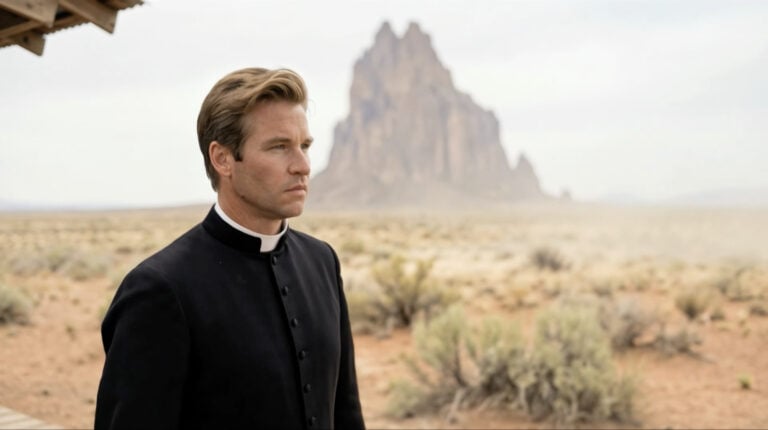
Val Kilmer died in April 2025, but he’s about to spend roughly an hour and seventeen minutes on screen in a western called As Deep As the Grave — as a Catholic priest and Native American spiritualist, no less, a role that by all accounts was written specifically around the man and his heritage. The production had been in motion since 2020, stalled by Covid and the cruel arithmetic of a prolonged cancer battle, and Kilmer never shot a single frame. So UK-based company Sonantic reconstructed his voice from old recordings, his estate and daughter Mercedes signed off on the visual deepfake, and suddenly we have something genuinely new in cinema history: a major authorized AI performance by an actor who agreed to the role while alive but never lived to play it. The trailer aired at CinemaCon this week, and the most striking moment is an AI Kilmer looking into someone’s eyes and saying, quietly, “Don’t fear the dead and don’t fear me.” Whether that line lands as poetry or provocation probably depends on where you stand on all of this.

Here’s the thing, though — this was always coming, and arguing about whether it’s right or wrong mostly misses the point. The more useful question is whether it was done with integrity, and by the standards the industry has so far set, this one actually clears the bar: the family was involved, SAG-AFTRA guidelines were followed, the estate was compensated, and the role was designed around who Kilmer actually was as a person. Compare that to the nightmare scenarios — estates being exploited, likenesses licensed without meaningful consent, studios using AI to quietly replace living actors on the cheap — and As Deep As the Grave starts to look less like a warning and more like a template. It won’t be the last film to do this. Bruce Willis licensed his digital twin before his dementia diagnosis, the estates of Laurence Olivier and James Dean have signed deals with ElevenLabs, and the commercial logic of keeping beloved performers “available” indefinitely is not going to get weaker.

What’s worth watching now is how audiences actually respond when they’re sitting in the dark watching it — because the technology argument and the ethics argument are ultimately secondary to the emotional one. Kilmer’s voice was a singular instrument: soft and authoritative at once, always with that faint current of controlled unpredictability running underneath it. Early reports suggest the AI approximation is close but not quite there, which is almost the most interesting outcome possible. Cinema has always been about the suspension of disbelief, and we’ve accepted plenty of illusions far cruder than this. If audiences find themselves genuinely moved by a man who died a year ago delivering a performance he never got to give, the conversation about AI in Hollywood will shift permanently — from “should we allow this” to “how do we do it right.” That’s the conversation we should be having anyway.