Home Blog Page 2151

Destino & Time – Salvador Dali, Walt Disney and Pink Floyd

0

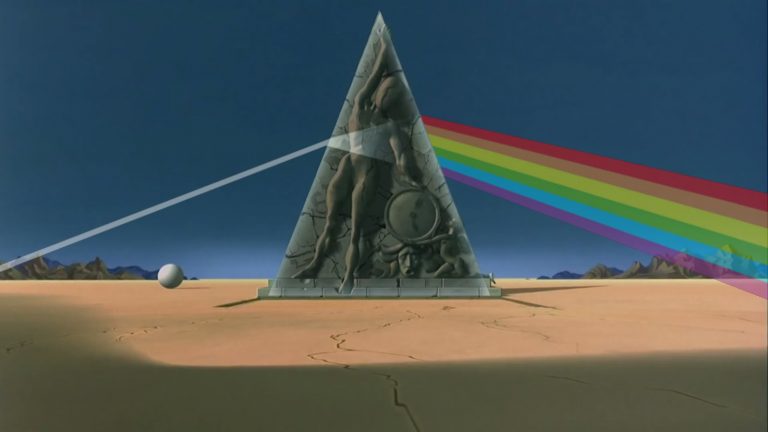
Destino is an animated short film released in 2003 by Walt Disney Feature Animation1. Destino is unique in that its production originally began in 1945, 58 years before its eventual completion in 2003. The project was originally a collaboration between Walt Disney and Spanish surrealist painter Salvador Dalí, and features music written by Mexican songwriter Armando Domínguez and performed by Mexican singer Dora Luz.

Someone has mashed it up with Pink Floyd, and it’s the most wonderful thing I can show you today.

Florence + The Machine’s “Dog Days Are Over” As Played By Students On The Marimba

0

Florence + The Machine’s 2010 hit track Dog Days Are Over, arranged by Michael Charles Smith and performed by the students of his Marimba Lab.

Watch The Morphing Changes Of The Rolling Stones’ Faces, Set To Their Music

0

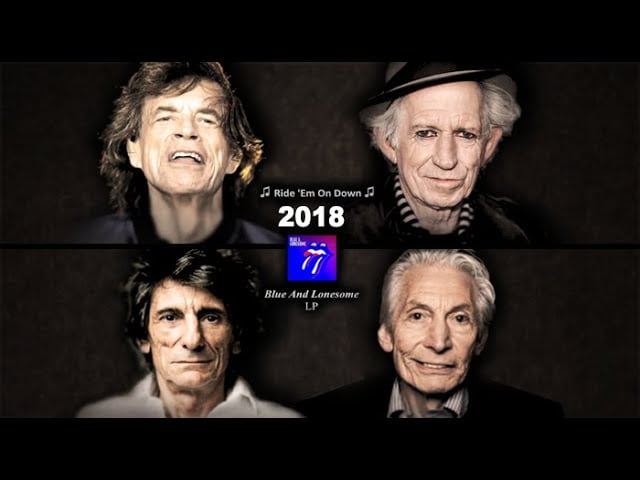
Take a look at the face changes of The Rolling Stones and studio album chronology between year 1960 and 2017, accompanied by some of their best songs. I’ll bet most people will be Keith Richards’s transformation the most.

https://youtu.be/T2vTuOaqo74

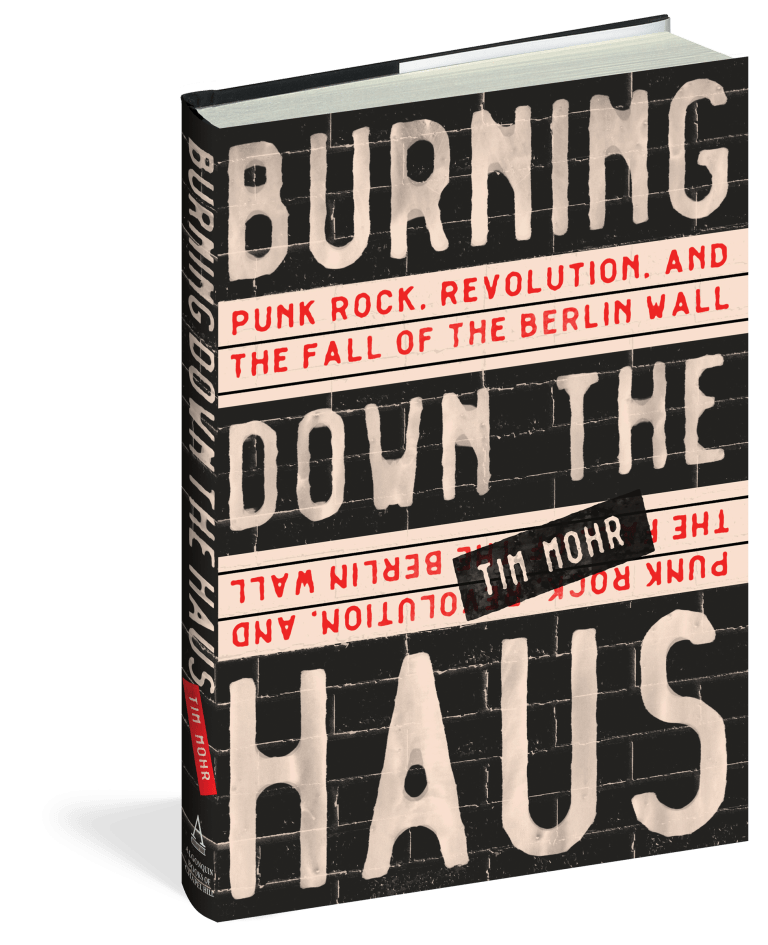
My Next Read: BURNING DOWN THE HAUS: Punk Rock, Revolution, and the Fall of the Berlin Wall

0

Long before the Berlin Wall came down, social discontent and a shared fear of nuclear annihilation among the young on both sides had already galvanized a generation of resisters. The end of a divided Germany actually came from within, fueled in part by punk rock. Throughout the 1980s, punk, with its clashing music and in-your-face fashion, became a secret but powerful tonic—the rallying point of an East German youth revolution and the soundtrack to a history-changing uprising.

In BURNING DOWN THE HAUS: Punk Rock, Revolution, and the Fall of the Berlin Wall renowned music journalist and award-winning German-language translator Tim Mohr brilliantly captures this historic moment.

Telling the little-known story of a group of East German kids who rebelled and helped set the world on fire, Mohr takes readers on a fascinating trip through the 1980s. Rejecting the dismal, pre-ordained futures that the state tried to impose on them, these teenagers embraced punk—the aesthetic, the music, the liberating feeling of collective anarchy—and defied the dictatorship. Banding together, they faced down surveillance, repression, beatings, and even imprisonment as they fought to create and control their own, individual futures.

Mohr, who arrived in Berlin in 1992 and discovered a netherworld of dark and dirty clubs in derelict buildings, learned the secret history of punk rock under the dictatorship from those who had lived it, and he fell in love with the world they had created.

Writing with the keen eye for observation and the narrative grace of a novelist, he resurrects this all-but-forgotten story with insight and cinematic urgency. Timely and resonant, Mohr’s incredibly accomplished first book, BURNING DOWN THE HAUS, is a testament to the essential power of youthful protest in the face of authority.

Tim Mohr is an award-winning literary translator of authors such as Alina Bronsky, Wolfgang Herrndorf, and Charlotte Roche. He has also collaborated on memoirs by musicians Gil Scott-Heron, Duff McKagan of Guns N’ Roses, and Paul Stanley of KISS. His own writing has appeared in the New York Times Book Review, New York Magazine, and Inked, among other publications. He also spent several years as a staff editor at Playboy magazine, where he edited Hunter S. Thompson, John Dean, and Harvey Pekar, and many others. Prior to starting his writing career he earned his living as a club DJ in Berlin.

Spider-Man makes his first ever live-action appearance, narrated by Morgan Freeman, in The Electric Company, 1971

0

I used to love this segment when I was a kid. SPIDER MAN, WHERE ARE YOU COMIN’ FROM SPIDER MAN… NOBODY KNOWS WHO YOU ARE!!!

David Bowie TV Ads For Crystal Japan, 1980

0

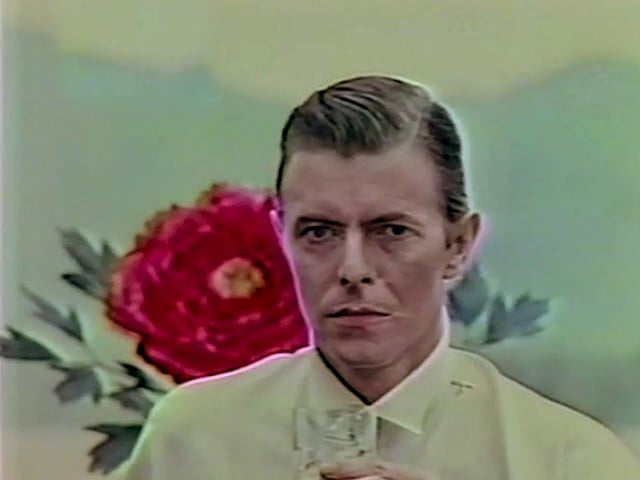
More proof that David Bowie was an alien, the coolest person on the planet, and can get away with doing TV ads without ever being branded as a sell-out.

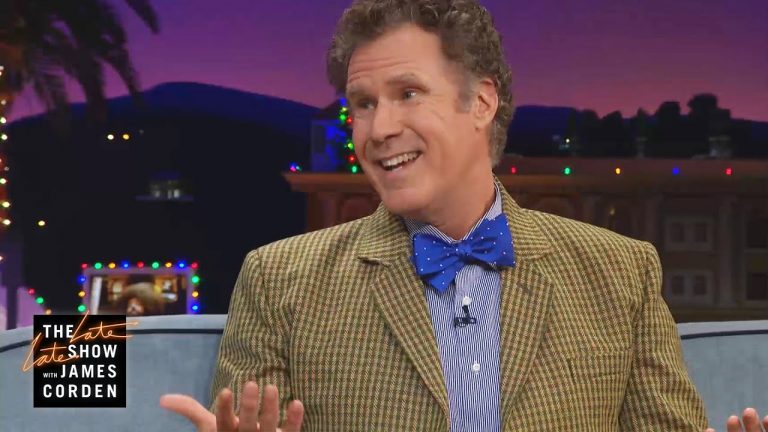
Will Ferrell Wasn’t Sure About ‘Elf’ at First

0

It’s been 15 years since “Elf” became an instant modern Christmas classic, and James Corden asks Will Ferrell about his hesitation at the beginning of filming and what James Caan said to him at the premiere about his acting performance.

Festival technology; Millennials Changing the face of festivals

0


Festivals are fast escaping the shackles of cash transactions and long boring ticket queues at kiosks or stands. In the past decade, there has been a technological advancement with regards to safer, easier and more reliable payment methods, especially at highly populated gatherings in public spaces like  malls, movies and most importantly music festivals. The cashless concept was first introduced in 2011 by the famous Sziget festival, which takes place annually in Hungary. Since then, many festival organizers have adopted it as a faster and easier method of making payment. The need to provide a more user-friendly and safer method of payment especially at crowded music festival prompted the different contactless transactions available today. In recent years, an increasing number of festivals worldwide have adopted cashless payments based on contactless wristbands and these payment apperatys have overtaken traditional payment methods, such as cash or cards.

According to the 2017 World Payment Report, “Contactless Payments such as RFID’s are fast becoming the new normal.” These payment methods are specially designed to make faster, easier payments. Currently, aside from U.K and U.S most countries have adopted these methods including Africa. Most importantly, as the festive season approaches, contactless technologies will serve perfectly for carrying out transactions with numerous point-of-sale terminals, ticket transactions, and transit system.

How it works

Whether it the wristband, contactless card or watch technology, each piece of festive technology serves the same purpose during festivals- to facilitate ‘Safety and convenience.’ These new technologies are designed with a state of the art wireless communication technology, an inbuilt Data label, microchip and micro antenna for quick wireless communication with any nearby payment terminal through a near field communication (NFC) technology. The major advantage is the ability of users to pay without the use of bogus Pins or payment signatures especially for payments below a certain limit, known as the floor limit.

For Festival participants to make use this technology, they are required to load money on a cashless account before the festival or to link it to a credit card. At the festival, each participant is assigned a personal wristband to be exclusively used at the event for purchases and tickets. After the festivals, users can request that any money not spent be returned. This is usually done within 1 to 4 week of festival ending. This ensures security, as many organizers have discovered.

Millennials- the driving force of festival technology

Millennials or Generation Y are the demographic or generation from the mid-1980s to early 2000. They are known as technology generations because of their uncanny familiarity with media, communications and digital technology, beyond previous sects.

Recently, a recent study by an online label company revealed that millennials are leaning more towards these new technologies. They were discovered that nearly 50% of them are championing these advancements.

Just as it is always said, “Change is constant,” and as time changes, new technology and improvements are bound to occur. Music festivals are fast upgrading from what they used to be. The whole festival experience has transformed, from ticketless entry to contactless payment options, they offer an entirely different and better user experience. Planning and logistics mean there are better ways to enjoy music festivals.

An online label company Data Label,  researched into what festival goers prefer when it comes to making purchases at festivals and creating an ideal and faster method of entrance.

Paper tickets, fabric wristbands, and cash:

  • Generation Z – 20%
  • Millennials – 17%
  • Generation X – 31%
  • Baby boomers – 32%

People within the Generation X category, are likely to go for paper tickets, cash, and fabric wristbands. They are individuals born within 1960-1980s.

RFID technology wristband entry already preloaded with cash:

  • Generation Z – 16%
  • Baby boomers – 21%
  • Millennials – 18%
  • Generation X – 45%

RFID enabled devices are programmed to automate quick recognition once scanned, thereby enabling faster entries for people and reducing the possibility of fake tickets at festivals. Contactless payments are so popular in general these days that they have now expanded to festivals. These also enable fast transactions with bank cards or smart cards, as well as mobile phones and smart watches with this option activated.

Mobile ticket entry, contactless card, and smartwatch payments:

  • Generation Z – 24%
  • Millennials – 48%
  • Generation X – 18%
  • Baby boomers – 10%

Contactless purchase technologies at fairs and festivals have revolutionized the mode of money exchange, reducing theft, and increasing profitability and performance. During a recent interview with Brian Wilkinson, a Cashless festival tech vendor at the 2018,” it provides a safer and more reliable paying system for both customer and vendors, hence increasing profitability by over 25%.”

Currently, most organizers are opting for the cashless technologies especially during the crowded music festivals, and if things continue progressively in this manner, by the year 2022, festivals and gathering will entirely be digitized.


How music can help after breakup?

0

Everybody has gone through a breakup at some point in our life. It might be better or worse but it is rarely a pleasant thing. And if it is really bad you would want to get out of that mood as soon as possible. Rationally we all know that there is absolutely no point in being sad about something we have no control of, can’t change and happened in the past. But unfortunately, we cannot always act on our rationality and need some help. There is a lot of advice about how to get over an ex but one of the things that would definitely help you is listening to music.

The best thing about music is that it is there when you need it. It won’t get upset if you turn it on at 2 a.m. or that you listen to the same song over and over. You can call upon this friend of yours whenever you need. At it really is like a friend. A study found that listening to mood-congruent music is just like having a friend that understands how you feel. Especially when the sorrow comes from some interpersonal stuff like a bad breakup. The recipe is not a happy song but a sad song for a broken heart. That might be a bit counterintuitive but people often prefer sad songs in these situations and it actually helps them to go through the grief stage and move on.

Another good thing about music is that you probably can find any kind of music you need at the moment. Don’t get me wrong, the support of your best friends is very important in times of need. But even your best friends do not read your mind. And they can’t know what you feel and what words you need to hear at the moment. They might try to cheer you up when you need to hear the depressed breakup songs. That’s why the music is best in this situation.

But that doesn’t mean that you will listen only to the sad songs for broken-hearted all the time. Those songs would eventually change to more cheerful and happy stuff as you go through your breakup. And cheerful songs will help you to move on with your life and go find your own piece of happiness. The awesome thing about the music is it can support you on every stage of your life. So dive in and feel that therapeutic effect!

Here’s a list of my personal favorites for going through a breakup:

  • Prince – “Nothing Compares 2 U”
  • Adele – “Rolling in the Deep”
  • Lorde – “Writer in the Dark”
  • Bob Dylan – “Idiot Wind”
  • Beyonce – “Irreplaceable”
  • The Walkmen – “The Rat”

I’m sure you know a lot of other suitable songs and you might have a completely different taste.

Music may be a powerful tool to get through life. It can help you when you feel that you need additional support or it may enhance the good experiences you have. Listening to a sad song for broken hearts and eventually switching to more joyful songs is one of the best ways to go through a tough breakup.