Home Blog Page 2316

Nile Rodgers has been appointed to the specially created role of Chief Creative Advisor at Abbey Road

0

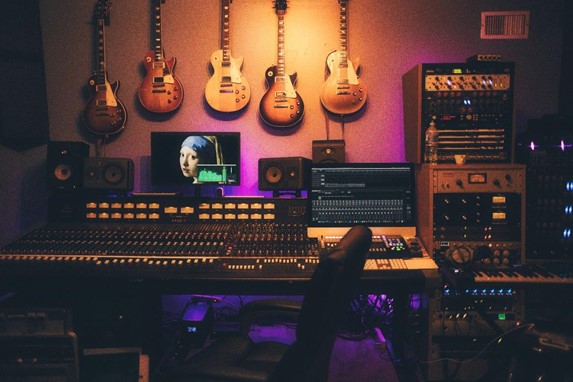
In a unique partnership celebrating a shared legacy and vision for creative innovation, Nile Rodgers is establishing Abbey Road Studios as his primary creative base in the UK and will serve as the Studios’ global ambassador within the artist and creative community. His remit extends to consultation on Abbey Road’s pioneering experiments in audio technology, including Spatial Audio.

Of the new role, Nile Rodgers says: “I have been blessed with a career that has provided some of the highest highs an artist, writer and producer can experience. From the first time I heard The Beatles I Want To Hold Your Hand, I dreamt of Abbey Road. Forget about practice getting you to Carnegie Hall, I wanted to get to Abbey Road! I’ve had the privilege of now working here many times and in the last few months alone I’ve been joined by Nao, Anderson .Paak, Anais, Mura Masa, Bruno Mars, Disclosure and many others. To be Abbey Road’s Chief Creative Advisor, its first and only, is something I consider a great responsibility and I would like to thank not only the Abbey Road team for entrusting me with this duty, but also Sir Paul for his congratulations.”

Mark Robertson, Abbey Road Studios’ Head of Brand & Marketing says: “With an incomparable career and reputation, there is no other artist or producer who has the legacy, influence and relevance to be awarded this role at Abbey Road Studios. Having made Abbey Road his creative home-from-home in 2017, it was only logical to create this unique partnership between two of the icons of modern music history. Nile’s creative energy and limitless vision are inspiring – indeed the whole house dances with joy when he is in residence.”

Isabel Garvey, Abbey Road Studios’ MD says: “We are extremely excited to formalise our relationship with Nile Rodgers in this new role as he shares the history and brilliance of Abbey Road with artists across the globe. The timing couldn’t be better, as we’re making Abbey Road increasingly more accessible with our new studios and services, taking artists on a journey through all our studio spaces as their careers develop. Equally, we’re excited to have the benefit of Nile’s experience and creative vision to push our audio tech innovation even further.”

Celebrity Nano-Impressions with Jay Pharoah

0

Jay Pharoah performs nano impressions of celebrities, including Will Smith watching Black Panther, Kevin Hart trying to get the bartender’s attention, and Tracy Morgan thinking his co-worker is pregnant. Jay Pharoah stars in “Unsane” in theaters on March 23rd.

Tony Bennett, Bill Haley, Chic, Kenny Loggins And More Now In Library Of Congress

0

Tony Bennett’s hit single, “I Left My Heart in San Francisco”; the Latin beat of Gloria Estefan and the Miami Sound Machine’s 1987 “Rhythm is Gonna Get You”; the timeless soundtrack of “The Sound of Music”; Run-DMC’s 1986 crossover hit album “Raising Hell”; and radio coverage of the birth of the U.N. have been honored for their cultural, historic and aesthetic importance to the American soundscape.  Librarian of Congress Carla Hayden today named these recordings and 20 other titles to the National Recording Registry of the Library of Congress as aural treasures worthy of preservation.

“This annual celebration of recorded sound reminds us of our varied and remarkable American experience,” Hayden said. “The unique trinity of historic, cultural and aesthetic significance reflected in the National Recording Registry each year is an opportunity for reflection on landmark moments, diverse cultures and shared memories—all reflected in our recorded soundscape.”

Under the terms of the National Recording Preservation Act of 2000, the Librarian, with advice from the Library’s National Recording Preservation Board (NRPB), is tasked with annually selecting 25 titles that are “culturally, historically, or aesthetically significant” and are at least 10 years old. More information on the National Recording Registry can be found at loc.gov/programs/national-recording-preservation-board/about-this-program/.

The recordings selected for the class of 2017 bring the total number of titles on the registry to 500, a small part of the Library’s vast recorded-sound collection of nearly 3 million items.

The recordings named to the registry feature a rich and diverse array of spoken-word and musical recordings spanning the years 1911 to 1996.  The selections range from American standards and live radio to crossover hip-hop and Latin sounds.  Among the selections are the 1939 “If I Didn’t Care” by The Ink Spots; Merle Travis’ 1946 album “Folk Songs of the Hills”; the 1954 rock and roll anthem “(We’re Gonna) Rock Around the Clock” by Bill Haley and His Comets; Harry Belafonte’s 1956 album “Calypso”; Fleetwood Mac’s landmark 1977 album “Rumours”; Kenny Loggins’ 1984 mega-hit song “Footloose”; the disco single “Le Freak” by Chic in 1978; and Kenny Rogers’ 1978 single “The Gambler,” which was written by Don Schlitz.

“The song was not written about gambling, it was written with a very personal look at life,” said Rogers.  “To say I’m proud is an understatement. It speaks very highly for Don Schlitz’s writing ability. I am very impressed and appreciative of this great award.”

“I actually wrote it in my head,” said Schlitz about penning “The Gambler.” “To have anyone listen to any of your songs and appreciate any of them is miraculous, is great. To have Kenny Rogers sing one of your songs is way over the moon.”

There are six recordings from the 1960s named to the 2017 registry, including Arlo Guthrie’s 1967 anti-war song, “Alice’s Restaurant Massacree,” and the first album in the avant-garde “Music of Our Time” series, “New Sounds in Electronic Music.”  Bennett’s 1962 single “I Left My Heart in San Francisco” became an American standard.  “It was wonderful because it was the very first show that Johnny Carson did and that was the song that I sang that night,” Bennett recalls.

Another song added to the registry from that decade is The Temptations’ 1964 Motown hit, “My Girl,” which was co-written and co-produced by Smokey Robinson with fellow Miracle Ronald White.  “I’m totally overwhelmed by ‘My Girl’ receiving such an honor,” said Robinson. “As a songwriter, it has become my international anthem. People in countries where English is not the primary language know and sing ‘My Girl’ when I perform it.”

One of the contemporary recordings on the registry is Run-DMC’s 1986 crossover hit. “The thing that I remember most about ‘Raising Hell’ is that it was so much great energy that it was made very easily,” said Joseph Simmons (aka Rev. Run).  “To think that something that just came out of my mouth and out of my creativity is being put on this level of honor just blows my mind.”

The oldest and newest recordings on the list are both classical music—the 1911 recording of “Dream Melody Intermezzo: Naughty Marietta” by Victor Herbert and his Orchestra and the 1996 “Yo-Yo Ma Premieres: Concertos for Violoncello and Orchestra.” A third classical recording named to the registry is Artur Schnabel’s tribute to Beethoven, “The Complete Beethoven Piano Sonatas” (1932-1935).

Several recordings reflect the diverse sounds of the nation’s audio heritage.  The music of the Sioux’s Yanktoni-Dakota band in 1928 tells the story of a culture in transition.  The collection of recordings is comprised of nearly 200 fragile wax cylinders.

The blues group Mississippi Sheiks’ “Sitting on Top of the World” (1930) became a part of the region’s musical vernacular, and the 1950 song “How I Got Over” by Clara Ward and the Ward Singers—one of the earliest female gospel performing groups to cross from gospel to popular music—has remained a gospel standard. Latin culture was also reflected in two registry selections—the song “Lamento Borincano,” performed by Canario y Su Grupo in 1930, and Gloria Estefan and the Miami Sound Machine’s “Rhythm Is Gonna Get You.”

“When we wrote ‘Rhythm Is Gonna Get You,’ we set out to create a fusion of rhythms that reflected the musical cultures of our native Cuba and our adopted country, the United States,” said Estefan.  “So it is an accolade of particular significance to us that it be honored as an important part of the creative legacy of this great country with its induction into the National Recording Registry.”

Spoken-word recordings on the list include NBC radio’s two-month long coverage in 1945 of the United States Conference on International Organization, which led to the creation of the United Nations, and the radio show “King Biscuit Time” in 1965, which is still heard daily on KFFA in Arkansas.  The newest comedy selection to the registry is Groucho Marx’s 1972 album “An Evening with Groucho.”

Nominations were gathered through online submissions from the public and from the NRPB, which is comprised of leaders in the fields of music, recorded sound and preservation. The Library is currently accepting nominations for the next registry additions at loc.gov/programs/national-recording-preservation-board/recording-registry/nominate/.

Some registry titles have already been preserved by the copyright holders, the artists or other archives.  In cases where a selected title has not already been preserved, the Library of Congress Packard Campus for Audio Visual Conservation works to ensure that the sound recording will be preserved by some entity and available to future generations, either through the Library’s recorded-sound preservation program or through collaborative ventures with other archives, recording studios and independent producers.

The Packard Campus is a state-of-the-art facility where the nation’s library acquires, preserves and provides access to the world’s largest and most comprehensive collection of films, television programs, radio broadcasts and sound recordings (www.loc.gov/avconservation/).  It is home to more than 7 million collection items.

The Library’s National and International Outreach service unit (NIO) National Programs Directorate manages and provides staff support for the Library of Congress National Film Preservation Board, the National Recording Preservation Board and the National Registries for film and recorded sound.  This constitutes part of NIO’s broader mission to administer the public-facing programs and activities of the Library of Congress with the mission of “broadening awareness and use of the Library and its resources through outreach and external partnerships.”

The Library of Congress is the world’s largest library, offering access to the creative record of the United States—and extensive materials from around the world—both on-site and online. It is the main research arm of the U.S. Congress and the home of the U.S. Copyright Office.  Explore collections, reference services and other programs and plan a visit at loc.gov, access the official site for U.S. federal legislative information at congress.gov and register creative works of authorship at copyright.gov.

 2017 National Recording Registry

“Dream Melody Intermezzo: Naughty Marietta” (single), Victor Herbert and his Orchestra (1911)
Victor Herbert’s “Dream Melody Intermezzo” is one of several iterations of the immortal song “Ah, Sweet Mystery of Life” heard throughout Herbert’s most successful operetta, “Naughty Marietta.”  This recording is the intermezzo version of “Sweet Mystery,” which is heard near the beginning of Act II as a transitional piece during which time the locale moves from the marionette theatre to the Juenesse Doree Club’s ballroom.  As “Ah, Sweet Mystery of Life,” the work has lived on as a free-standing song, heard to both dramatic and comic effect.  In this 1911 Edison cylinder recording, listeners are transported back to the fall of 1910.  The arrangement calls for a sprightly, annunciatory introduction by brass and pizzicato strings.  First released as a black wax cylinder in 1911, it was remastered in 1913 in Edison’s new Blue Amberol cylinder line, capturing nuances of the orchestra not possible with disc recording technology of the time.

Standing Rock Preservation Recordings, George Herzog and Members of the Yanktoni Tribe (1928)
The voices of several of the Sioux’s Yanktoni-Dakota band, recorded at the Standing Rock Reservation in 1928, preserve a snapshot of a culture in a moment of great transition.  Comprised of nearly 200 fragile wax cylinders, George Herzog’s work documented both old songs, remembered from before the band was relocated to Standing Rock, and modern songs that try to harmonize that past with the life they have found in their new home.  Today, Herzog’s scholarship complements and contextualizes these field recordings and contributes to their value as a resource. This collection tells the extraordinary story of collaboration and indigenous scholarship, archiving and advocacy.

“Lamento Borincano” (single), Canario y Su Grupo (1930) 
“Lamento Borincano” was written about the plight of the Puerto Rican farmer during the Great Depression. It is well known in Puerto Rico and throughout Latin America to this day and has been recorded dozens of times, including versions by contemporary singers such as Marc Anthony and Placido Domingo. The song’s success launched the careers of three major Puerto Rican artists: songwriter Rafael Hernández, bandleader “Canario” (Manuel Jiménez) and singer “Davilita” (Pedro Ortiz Dávila), who was just 18 when he recorded the song. The term “Borincano” derives from the indigenous name for Puerto Rico—Borinquen. The song tells of a proud mountain farmer who rides into the cities of Puerto Rico to sell his wares, but finds them empty and abandoned and returns home wondering “what will become of Borinquen … what will become of my children and my home?”

“Sitting on Top of the World” (single), Mississippi Sheiks (1930) 
Guitarist Lonnie Chatmon and violinist Walter Vinson styled themselves as the “Mississippi Sheiks” when they were recorded by an OKeh Records field recording team in Shreveport, Louisiana, in February 1930. At the time, the word “sheik” was slang for a suave lover, inspired by Rudolph Valentino’s success in the films “The Sheik” and “Son of the Sheik.” They had recorded before with other players, and the name might not have stuck but for the success of a song from the session entitled “Sitting on Top of the World.” Though the guitar and violin pairing was not unique in blues at the time, the song was structured differently than most other commercial blues records, and the melody, as well as the ironic, defiant refrain of the title, stayed with listeners from the first hearing. The song, composed by Vinson, quickly became part of the Southern and Southwestern musical vernacular, with distinctive versions recorded by black and white artists, including Charlie Patton, Bob Wills and the Texas Playboys, Bill Monroe, Ray Charles, Howlin’ Wolf and many others.

The Complete Beethoven Piano Sonatas (album), Artur Schnabel (1932-1935) 
Ludwig van Beethoven’s 32 sonatas for piano alone are legendary in the history of classical music.  The German conductor and pianist Hans von Bülow called them music’s “New Testament,” while the scholar Charles Rosen referred to them as “a bridge between the worlds of the salon and the concert hall.”  It was Artur Schnabel who first committed the entire 32 sonatas to disc.  The Austrian pianist was already a towering intellectual and artistic figure in 1932 when His Master’s Voice launched the Beethoven Sonata Society, through which subscribers could purchase Schnabel’s discs as they became available.  Today, there are countless complete collections of these works by others, but it is Schnabel who remains the pre-eminent Beethoven pianist on record.

“If I Didn’t Care” (single), The Ink Spots (1939) 
In 1939, when songwriter Jack Lawrence brought his new song to Bill Kenny and the other three members of his group—The Ink Spots—Kenny and his bandmates were at first reluctant to record it.  Yet, they did, and soon after, it became one of the best-selling singles in history, eventually moving 19 million copies worldwide.  The song’s lovely opening guitar riff, flawless countertenor-singing and arresting mid-song spoken-word passage created a recording that is charming, haunting, evocative and both timely and timeless more than 75 years after its release.  “If I Didn’t Care” has since been covered by everyone from Connie Francis to Bryan Ferry, while the original has become a go-to standard for use in movies, television shows and even video games.

Proceedings of the United Nations Conference on International Organization (4/25/45-6/26/45)
As World War II ground through its final months, thousands of people from around the world gathered in San Francisco to draft the charter that would create the United Nations.  NBC Radio broadcast coverage of the United Nations Conference on International Organization (UNCIO) from April 25 through June 26, 1945.  These recordings survive in the form of 146 lacquer disc recordings and serve as testament to the energy surrounding the momentous endeavor toward a new experiment in global cooperation while enhancing our understanding of that time in history.

“Folk Songs of the Hills” (album), Merle Travis (1946) 
It’s ironic that Merle Travis most enduring recording is titled “Folk Songs of the Hills” because Travis insisted that, “You don’t write a folk song … They come up out of the ground–the hills.  That’s why they’re called folks songs.”  Nevertheless, after being signed to a record contract in 1946, Travis was asked to come up with an album of folk songs to take advantage of the post-World War II folk revival.  Travis bristled at the assignment and came up with “Sixteen Tons,” which to him was a sarcastic response because “… you just can’t load sixteen tons of number nine-coal.  No man can do that.”  Despite his personal reservations, in 1947, Capitol Records released a four-disc, 78 rpm album set containing four traditional songs and four original songs, all sung by Travis accompanied by his guitar.  An early concept album, “Folk Songs of the Hills,” achieved only modest sales but has seldom been out of print and spawned a #1 hit in Tennessee Ernie Ford’s 1955 version of “Sixteen Tons.”  The most enduring song, though, might be “Dark as a Dungeon,” which country music singer-songwriter Marty Stuart praised as a song “… as deep as any in the American Songbook.”  Besides his songwriting, Travis was an exceptional guitarist who influenced such country music legends as Chet Atkins and Scotty Moore.

“How I Got Over” (single), Clara Ward and the Ward Singers (1950) Clara Ward wrote her song “How I Got Over” in gratitude for and as a promise to overcome the challenges and struggles she met in her life.  The song has served as a song of praise and a call to action ever since.  According to her sister, Willa, she wrote it after the singers were menaced with racial epithets while on their way to a performance at an Alabama church in 1951. This experience led Clara to contemplate hardship and survival, and she published her reworking of a gospel standard as “How I Got Over.”  The Ward Singers were one of the earliest female gospel performing groups to bring their distinctive sound outside the church and into popular culture.  Mahalia Jackson performed the song at the 1963 March on Washington, and it has remained vital as a standard in the gospel genre and via the work of many artists, including The Blind Boys of Alabama and Aretha Franklin.

“(We’re Gonna) Rock Around the Clock” (single), Bill Haley and His Comets (1954)
Critics and journalists could describe this rollicking hit as the definitive anthem of rock and roll decades after its release, but its early history is riddled with uncertainty.  The recording session was rushed and beset by technical difficulties that were overcome through the quick thinking of veteran producer Milt Gabler.  Upon its release, the record performed fairly well, but it took the song’s inclusion in the 1955 film “Blackboard Jungle,” a popular film centered on teen culture, for its popularity to explode with young audiences.  Despite its early difficulties, the song has survived because it is absolutely compelling.  The start/stop intro—“One, two, three o’clock, four o’clock, rock”—masterfully sets up the final line of the stanza in which the entire group hammers down single, quick chords on the emphasized syllables:  “ROCK” “aROUND” “the CLOCK” “toNIGHT.” Haley’s energetic vocal, the simple yet effective saxophone break, the speedy and brief guitar lead and even the final, intentionally irregular drum riff sustain interest to the end.

“Calypso” (album), Harry Belafonte (1956) 
The child of a Jamaican mother and a Martinican father, Harry Belafonte had tried singing conventional pop songs in New York in the 1940s, but was drawn to the city’s small but vibrant folk scene of the time. There, he encountered Josh White, Pete Seeger and Lead Belly and developed a folk-influenced repertoire that included West Indian songs. In the fall of 1955, he performed several Caribbean songs in a televised musical production number, including “Day-O,” a Jamaican folk song he adapted with his friend, writer, Bill Attaway, and Irving Burgie, another New York singer with West Indian roots. The positive audience response convinced Belafonte that a full album of such songs was viable.  The album “Calypso,” featuring “Day-O” and more song contributions by Burgie, was released in May 1956, on the heels of Belafonte’s second album, which had been the nation’s best-selling LP in April. “Calypso” proved to be a far bigger hit, exceeding all expectations. The title was evocative; only a few of the songs on the album were actually in the calypso song form of Trinidad, which Belafonte acknowledged. The album was rather a masterfully presented celebration and exploration of Caribbean song. Initially, it sold mainly to the older audience that purchased albums. However, when “Day-O” and “Jamaica Farewell” were released as singles, Belafonte became popular with the teenage audience as well, a unique achievement at the time, and perhaps the reason that “Calypso” is still a much-beloved album.

“I Left My Heart in San Francisco” (single), Tony Bennett (1962) 
It takes a truly remarkable song—and vocal performance—to become the hallmark tune in a career as legendary as Tony Bennett’s, but “I Left My Heart in San Francisco” is exactly that.  Written by George Cory with lyrics by Douglass Cross, it was originally released as the “b” side of another Bennett record by his label, Columbia. Soon after, DJs across the country became far more infatuated with it than the song on the other side of the disc and soon listeners were in love with it too.  “I Left My Heart in San Francisco” would be covered by dozens of other artists, but Bennett’s version remains the definitive rendition.  His recording would later be adopted as one of the official themes for The City by the Bay.

“King Biscuit Time” (radio), Sonny Boy Williamson II and others (1965) 
Blues harmonica master Sonny Boy Williamson II (aka Rice Miller, 1912-1965) achieved his first wide popularity as a regular performer on the daily daytime radio show “King Biscuit Time,” sponsored by the flour brand of the same name, in West Helena, Arkansas, in 1941. From early on, he was billed as “Sonny Boy Williamson,” the name used by popular blues recording artist John Lee Williamson (1914-1948), a star of the Chicago blues scene. Their styles were different, but the name stuck, and although he did not record commercially until 1951, the second Sonny Boy reached a large audience, becoming a best-selling blues artist himself when he relocated to Chicago. In the early 1960s, he found a young, large and even worshipful blues audience in Europe and toured there extensively, working with young musicians from groups like the Animals and the Yardbirds. When he returned to Arkansas in early 1965, he reportedly told friends that he expected to die soon, but he kept performing and made a return appearance on “King Biscuit Time.” On May 25, 1965, he failed to show up for his broadcast and was later found dead in his room. “King Biscuit Time” is still heard daily on KFFA. Sunshine Sonny Payne, the host of this lone surviving broadcast featuring Williamson, died earlier this year at the age of 92, having continued as host until shortly before his death.

“My Girl” (single), The Temptations (1964) 
“Were it not for The Temptations, I never would have written ‘My Girl,’” declared Smokey Robinson, who co-wrote the song and co-produced the recording with fellow Miracle Ronald White.  According to Robinson, “My Girl” wasn’t written about a specific girl, but it was written for a specific guy, David Ruffin.  Robinson felt Temptations tenor Ruffin could be a star if he had the right song to show off his talent.  Both he and The Temptations (Ruffin, Eddie Kendricks, Melvin Franklin, Paul Williams and Otis Williams) believed “My Girl” was that song and began working out the arrangements and rehearsing it while on the road.  The recording took place in Studio A of Hitsville U.S.A., Motown’s Detroit headquarters and featured the legendary group of session musicians known as the Funk Brothers.  One of the most remarkable outcomes of “My Girl” is that James Jamerson’s barely there opening bassline has become so iconic that the song is instantly recognizable from just those three notes.  Guitarist Robert White quickly adds an ascending guitar riff, a pentatonic scale.  From there, the sound builds, layer by layer:  finger snaps, drums, Ruffin’s lead vocal, other members of the Funk Brothers, vocal harmonies by the other Temptations and, finally, strings by members of the Detroit Symphony.  “My Girl” was at the top of the charts for only one week, but it remained on jukeboxes for years, becoming a classic of the Motown era.

“The Sound of Music” (soundtrack), various (1965)
It was the era of the Beatles and big screen Hollywood musicals were already on the wane, yet the 1965 film “The Sound of Music” became one of the biggest box office hits in the history of movie-making.  Named to the Library of Congress’ National Film Registry in 2001, the decades-old film is a beloved, multi-generational cornerstone of American life.  The movie’s accompanying soundtrack, featuring the lush orchestrations of Irwin Kostal, the musical supervision by Saul Chaplin and cast performances led by Oscar winner Julie Andrews, all contribute to this remarkable achievement.  Selections include such timeless singalongs as “Do-Re-Mi” and “My Favorite Things,” to the rousing title tune and, of course, “Climb Ev’ry Mountain.”

“Alice’s Restaurant Massacree” (single)Arlo Guthrie (1967)
A “massacree” is a Southern colloquialism for “an event so wildly and improbably and baroquely messed up that the results are almost impossible to believe.”  In this signature song, Arlo Guthrie (the son of the celebrated Woody Guthrie) immortalized his own true-life massacree.  Years earlier, as a youth, he helped a friend take out trash on Thanksgiving Day, forgetting that the dump would be closed that day.  Subsequently, Guthrie and his friend were arrested for littering, which eventually led to his rejection by the draft board to serve in Vietnam.  A monologue set to music—and epic in length at 18 minutes—Guthrie’s song is both a neo-comedy and an anti-war statement.  In the past 10 years or so, the song (either by listening to it or by playing and singing it themselves) has become a yearly Thanksgiving tradition for many families and gatherings.

“New Sounds in Electronic Music” (album), Steve Reich, Richard Maxfield, Pauline Oliveros (1967)  
This avant-garde release was the first in composer and producer David Behrman’s adventurous “Music of Our Time” series for CBS’ budget label Odyssey.  While each of the three compositions are unique, all employed tape machines as an expressive instrument, and each composer was as interested in the process of making the sounds as in the sounds themselves. Richard Maxfield’s “Night Music” employs the tape machine’s bias tone and an oscilloscope as the main sound sources.  Neither of these sounds is typically heard: Bias is an inaudible signal that improves the tape’s fidelity, whereas an oscilloscope is an audio-measurement device normally encountered on a work bench.  Maxfield uses these sources to create a series of complex sounds intended to mimic the nighttime vocalizations of birds and insects.  The sound source for minimalist composer Steve Reich’s “Come Out” is, almost entirely, the phrase “come out to show them,” heard both on the left and right of the stereo field and timed so the two repetitions slowly fall in and out of sync.  In “I of IV,” composer Pauline Oliveros used 12 tone generators, an eight-second tape delay and reverb to create a dense, reverberant recording that was entirely improvised; individual sound will rise to the surface and fade only to repeat later and disappear altogether.  As with her later compositions that emphasized what Oliveros called “deep listening,” close attention to “I of IV” reveals a wealth of detail. Maxfield died in 1969, but both Reich and Oliveros continued to develop the ideas evident here to create celebrated bodies of work.

“An Evening with Groucho” (album), Groucho Marx (1972) 
On May 6, 1972, 81-year-old Groucho Marx took the stage at Carnegie Hall and dazzled an audience young enough to be his children and grandchildren for more than an hour with songs, stories and insults. Though he was still well remembered by fans of the Marx Brothers and his quiz show “You Bet Your Life,” he had recently become an unlikely countercultural hero and was determined to make the most of it. Introduced by Dick Cavett and ably accompanied by Marvin Hamlisch on piano, Groucho began with a violin-smashing tribute to Jack Benny and concluded with a sing-along of “Lydia the Tattooed Lady.” In between, he recounted his long and varied life in vaudeville, theater, films, radio and television. The album “An Evening with Groucho” was released six months later and remains a unique and hilarious document of one of the 20th-century’s greatest entertainers.

“Rumours,” (album)Fleetwood Mac (1977)
Stevie Nicks said: “Devastation leads to writing good things.”  It’s little wonder, then, that Fleetwood Mac’s “Rumours” is so highly regarded, having been forged by the crumbling relationships of every member of the group.  In 1974, the then-remaining members of Fleetwood Mac—drummer Mick Fleetwood, bassist John McVie and his wife, vocalist and keyboard player Christine McVie—found themselves without a male vocalist or guitarist.  A chance meeting at a recording studio led to guitarist and vocalist Lindsey Buckingham and vocalist Stevie Nicks, who were romantically involved, joining the group.  The newly formed Anglo-American lineup soon struck gold with their eponymous 1975 album.  They should have been on top of the world, but as they began working on their follow-up album, “Rumours,” relationships became so strained that, except as musically necessary, they would barely speak to each other while playing songs about each other.  However, because the group had a sense that the songs were so strong, they not only endured, they prevailed.  As engineer and co-producer Richard Dashut put it, they wanted to “ … make sure that every song on [“Rumours”] was worth its weight in gold.”

“The Gambler” (single), Kenny Rogers (1978)
Don Schlitz was a young night shift computer operator at Vanderbilt University in Nashville in 1976, writing songs and shopping them around on Music Row on the side, when he came up with “The Gambler,” a haunting story about a mysterious card player and a metaphor for navigating life’s ever-changing stakes.  Recorded and released by Bobby Bare to little attention in spring 1978, the song was later recorded by Johnny Cash, whose career was at a low point because of his struggles with drugs. Kenny Rogers, however, hit the jackpot with the song, the centerpiece of the accompanying album.  As a former pop star with the group First Edition who had come into his own as a solo country artist, Rogers was well-positioned to bring the song to both pop and country audiences, earning the song its indelible place in popular culture.  Placing high in both the country and pop charts that year, “The Gambler” later spawned a made-for-TV movie featuring Rogers and even a duet between Rogers and one of the Muppets in 1979.

“Le Freak” (single), Chic (1978) 
One of the most influential disco acts of the 1970s, the five-member band Chic had a unique sound propelled by the innovative, funky guitar work of guitarist Nile Rodgers and bassist Bernard Edwards.  Rodgers and Edwards were also the writers of this, the group’s biggest hit—an infectious, danceable confection that lyrically celebrated the then-moment (with its mention of “54”) as well as the past (with its mention of the Savoy), while rhythmically keeping everyone on the dance floor in motion.  Chic’s work has gone on to influence a host of other acts, including Madonna, Mtume, The Pointer Sisters, The Sugarhill Gang, Evelyn “Champagne” King, Teena Marie, Shalamar, Soul II Soul and Justin Timberlake, among others.  Despite the supposed “death” of disco, Chic’s “Le Freak” has become a staple of wedding receptions, movie soundtracks and nightclubs.

“Footloose” (single), Kenny Loggins (1984) 
Inspired remarkably by real-life events, the 1984 movie “Footloose” was one of the biggest film hits of the decade and the career-breakthrough for its leading man, Kevin Bacon.  The film’s title tune, performed by Kenny Loggins, remains today deeply emblematic of the 1980s—fun, invigorating and, in its way, a little rebellious.  Co-written by Loggins and the film’s screenwriter, Dean Pitchford, the song would prove to be the biggest hit of Loggins’ long career (dating back to his work with Jim Messina from the early 1970s) and the biggest hit from the film’s multi-platinum soundtrack.  Since its debut and initial 16 weeks on the Billboard charts, the song has served as the musical centerpiece for both the 1998 Broadway musical and the big-screen remake released in 2011.

“Raising Hell” (album), Run-DMC (1986) 
Darryl “DMC” McDaniels, Joseph “Run” Simmons and Jason “Jam Master Jay” Mizell, or Run-DMC, introduced hip-hop to mainstream audiences on this, their third and best album.  DMC has observed that the lyric from “My Adidas,” which affirms that “[w]e took the beat from the street and put it on TV,” describes what the album achieved as a whole.  The album’s mass appeal can partially be explained by their collaboration with Steven Tyler and Joe Perry of Aerosmith on a remake of the rock band’s 1975 hit “Walk This Way.”  Co-producer and guitarist Rick Rubin added power chords and guitar riffs on the title track, lending the album a rock flavor in keeping with DMC’s mission to “take rock to the left.”  While this element of rock with a twist brought many new fans, songs like “Peter Piper” stayed true to the band’s earlier stripped down minimalism in which only beats, lyrics and samples were required.

“Rhythm Is Gonna Get You” (single)Gloria Estefan and the Miami Sound Machine (1987)
From the moment of her debut on the U.S. charts—fronting the Miami Sound Machine with their 1985 earworm “Conga”—Gloria Estefan has been recognized as not only the banner-carrier for Latin rhythms within American music but also for her superlative vocal abilities.  She is equally adept in either slow, contemplative ballads or, as in this selection, with high-octane, dance-oriented party anthems.  “Rhythm,” the first single from Estefan and the Machine’s 1987 album “Let It Loose,” was co-written by Estefan and Sound Machine drummer Enrique “Kiki” Garcia.  His pounding backbeat, along with the song’s lively congas and Estefan’s spirited vocals, have turned “Rhythm” into a modern classic and one that repeatedly proves the promise made in its title.

“Yo-Yo Ma Premieres: Concertos for Violoncello and Orchestra” (album), Various (1996)
This album contains cello concertos by two generations of award-winning American composers:  Richard Danielpour, Leon Kirchner and Christopher Rouse.  They are all premiered by Yo-Yo Ma in this recording.  The album won two Grammy Awards in 1997—Best Classical Album and Best Instrumental Soloist Performance with an Orchestra.  Ma is considered the best living cellist in the world.  He has made over 100 recordings and won 18 Grammy Awards.


2017 National Recording Registry (Listing Titles in Chronological Order)

  1. “Dream Melody Intermezzo: Naughty Marietta” (single), Victor Herbert and his Orchestra (1911)
  2. Standing Rock Preservation Recordings, George Herzog and Members of the Yanktoni Tribe (1928)
  3. “Lamento Borincano” (single), Canario y Su Grupo (1930)
  4. “Sitting on Top of the World” (single), Mississippi Sheiks (1930)
  5. The Complete Beethoven Piano Sonatas (album), Artur Schnabel (1932-1935)
  6. “If I Didn’t Care” (single), The Ink Spots (1939)
  7. Proceedings of the United Nations Conference on International Organization (4/25/45-6/26/45)
  8. “Folk Songs of the Hills” (album), Merle Travis (1946)
  9. “How I Got Over” (single), Clara Ward and the Ward Singers (1950)
  10. “(We’re Gonna) Rock Around the Clock” (single), Bill Haley and His Comets (1954)
  11. “Calypso” (album), Harry Belafonte (1956)
  12. “I Left My Heart in San Francisco” (single), Tony Bennett (1962)
  13. “King Biscuit Time” (radio), Sonny Boy Williamson II and others (1965)
  14. “My Girl” (single), The Temptations (1964)
  15. “The Sound of Music” (soundtrack), Various (1965)
  16. “Alice’s Restaurant Massacree” (single), Arlo Guthrie (1967)
  17. “New Sounds in Electronic Music” (album), Steve Reich, Richard Maxfield, Pauline Oliveros (1967)
  18. “An Evening with Groucho” (album), Groucho Marx (1972)
  19. “Rumours,” (album), Fleetwood Mac (1977)
  20. “The Gambler” (single), Kenny Rogers (1978)
  21. “Le Freak” (single), Chic (1978)
  22. “Footloose” (single), Kenny Loggins (1984) remake released in 2011.
  23. “Raising Hell” (album), Run-DMC (1986)
  24. “Rhythm Is Gonna Get You” (single), Gloria Estefan and the Miami Sound Machine (1987)
  25. “Yo-Yo Ma Premieres:  Concertos for Violoncello and Orchestra” (album), Various (1996)

Once in a Lifetime Pearl Jam Memorabilia Event and Incredible Giveaway

0

On March 28Collectionzz is offering a truly unique upcoming sale for rock n roll collectors and fans.

Their Art of ‘Do The Evolution’ Event will be a once in a lifetime opportunity to purchase the original, hand drawn and painted animation cells and storyboards from Pearl Jam’s classic, Grammy nominated music video ‘Do The Evolution’, directed by Spawn comics creator Todd McFarlane!

In tandem with this epic “event”, Collectionzz will also be doing a special promotion, giving 5 new members each a $100 credit to use anywhere on their site! All you need to do is simply sign up by clicking HERE for a FREE account, to have a chance to win and enjoy some amazing rock n roll items!!

Collectionzz is presenting a truly unique platform for passionate collectors and fans of music memorabilia and music. The site offers a peer to peer marketplace, curated, one of a kind sales, and exclusive collaborations with rock poster artists. Their mission is to create the go to destination for collectors by collectors and a community where rock n roll artifacts live online for eternity…

Preview the Pearl Jam Memorabilia Event

British Columbia music community celebrates new music fund, AMPLIFY BC

0

Music BC and Music Canada today applaud the Government of British Columbia’s announcement of a new music fund for the province called AMPLIFY BC. Administered through Creative BC, the new Fund will provide much-needed support for the development of BC artists and musicians, music companies, skills development and live music production, stimulating economic growth and activity in the sector.

“Music Canada would like to applaud the Government of BC and Minister Beare for this important investment which demonstrates their confidence in the music sector,” says Amy Terrill, Executive Vice President of Music Canada. “The intense interest in the former BC Music Fund’s suite of programs underscores that BC is home to a vibrant, diverse and engaged music community ready to take their songs and businesses to the next level. With this new investment BC will continue to benefit from leveraged private and other government dollars, and ensure the BC music sector remains competitive with other jurisdictions.”

The announcement was made during JUNOs Week, as the Canadian music industry was congregated in Vancouver for the 47th annual JUNO Awards, celebrating excellence in Canadian music while also showcasing Vancouver, and the province’s music sector to the rest of the country.

“This is a great day for the province’s music scene allowing us to build on the momentum of the last two years,” says Alex Grigg, Executive Director of Music BC. “In this time, our industry has focused on helping BC artists develop their careers and showcase their talent around the world, boost business in BC studios, create greater opportunities for live music performances that bolster activity in our communities, and facilitate professional development so that we can build a stronger, more sustainable industry. On behalf of the staff, board of directors and the BC music industry we extend our gratitude to the Government of BC and Minister Beare for their continued support and investment into the BC Music sector.”

Music BC and Music Canada would also like to thank all members of the BC music community who participated in the effort to secure provincial funding and shared their insights, experiences and success stories. The one-year investment of $7.5 million will contribute to BC’s strong and vibrant communities and also benefit BC tourism, arts and creative industries, and small business development.

Music Canada is a non-profit trade organization that represents the major record companies in Canada: Sony Music Entertainment Canada, Universal Music Canada and Warner Music Canada. Music Canada also works with some of the leading independent record labels and distributors, recording studios, live music venues, concert promoters, managers and artists in the promotion and development of the music cluster. For more on Music Canada, please visit www.musiccanada.com.

Music BC Industry Association is a not for profit association serving the for profit and non-profit music industry, including artists from all genres, industry professionals, service providers, studios, promoters, venues, festivals, producers, agents, managers and educational institutions. For more on Music BC, please visit www.musicbc.org.

New Deadpool 2 Full-Length Trailer

0

After surviving a near fatal bovine attack, a disfigured cafeteria chef (Wade Wilson) struggles to fulfill his dream of becoming Mayberry’s hottest bartender while also learning to cope with his lost sense of taste. Searching to regain his spice for life, as well as a flux capacitor, Wade must battle ninjas, the yakuza, and a pack of sexually aggressive canines, as he journeys around the world to discover the importance of family, friendship, and flavor – finding a new taste for adventure and earning the coveted coffee mug title of World’s Best Lover.

Bill Hader Gives the Worst Audition of All Time

0

Bill Hader gives the worst audition of all time. Bill’s new HBO series “Barry” premieres on March 25th. Bill is one of the funniest people on the planet. That is all.

Panic! At The Disco Announce Sixth Studio Album “Pray For The Wicked” Out June 22

0

After a week of cryptic clues to their fans that set the internet a buzz, Grammy-nominated Panic! At The Disco today announced that their highly anticipated sixth studio album, Pray For The Wicked, will be released on June 22, 2018 via Fueled By Ramen/DCD2 Records. The album, produced by Jake Sinclair, is available for pre-order now HERE with new single “Say Amen (Saturday Night)” and “(Fuck A) Silver Lining.”

“After being away in New York for months doing Kinky Boots, I just wanted to hang out at home when I got back to LA. I was so revved up that I asked some friends to come over to my home studio to help me write about all the incredible things I’ve experienced the last couple of years,” said Brendon Urie, Panic! At The Disco frontman. “Pray For The Wicked is my ‘thank you’ to our fans and the most fun I’ve ever had making album.”

Panic! At The Disco also unleashed an accompanying music video for “Say Amen (Saturday Night)” directed by longtime collaborator Daniel “Cloud” Campos and Spencer Susser. The video is part of a trilogy that acts as the prequel to “This Is Gospel” and “Emperor’s New Clothes, also directed by Cloud. P!ATD will perform the song on “The Tonight Show Starring Jimmy Fallon” tonight on NBC (check local listings for times).

The release of the album will be celebrated by a North American arena tour, produced by AEG Presents, that will kick off on July 11, 2018 in Minneapolis, MN, and will visit major markets throughout the summer before concluding in the band’s hometown of Las Vegas on August 18th. A R I Z O N A and Hayley Kiyoko be support for the 28 city tour. Fans who pre-order Pray for the Wicked via Panic’s webstore before March 29th at 9pm ET will receive a unique presale code for first access to tickets. General tickets will be available to the public beginning March 30th at 12:00 p.m. local time at PanicAtTheDisco.com. The complete list of upcoming dates for the Pray For The Wicked Tour can be found below.

Pray For The Wicked follows Panic! At The Disco’s critically acclaimed fifth album, Death Of A Bachelor, which was released on January 15, 2016 via Fueled By Ramen/DCD2 Records. The album debuted at No. 1 on the Billboard 200 Chart and was nominated for Best Rock Album at the 2017 GRAMMY® Awards. The RIAA platinum selling release was the highest selling rock album and fourth-highest selling album released in 2016, according to Nielsen Soundscan. The album has also spawned RIAA certified gold singles “Hallelujah,” “Emperor’s New Clothes,” and platinum single “Death Of A Bachelor.” Most recently, frontman Brendon Urie starred as Charlie Price in the critically acclaimed Broadway hit Kinky Boots.

PRAY FOR THE WICKED TRACKLISTING

  1. (Fuck A) Silver Lining
  2. Say Amen (Saturday Night)
  3. Hey Look Ma, I Made It
  4. High Hopes
  5. Roaring 20s
  6. Dancing’s Not A Crime
  7. One Of The Drunks
  8. The Overpass
  9. King Of The Clouds
  10. Old Fashioned
  11. Dying In LA


PANIC! AT THE DISCO – PRAY FOR THE WICKED TOUR DATES

7/11/2018 Minneapolis, MN Target Center
7/13/2018 Indianapolis, IN Bankers Life Fieldhouse
7/14/2018 Detroit, MI Little Caesars Arena
7/15/2018 Columbus, OH Nationwide Arena
7/17/2018 Chicago, IL United Center
7/18/2018 Pittsburgh, PA PPG Paints Arena
7/20/2018 Uniondale, NY NYCB Live: Nassau Coliseum
7/21/2018 Baltimore, MD Royal Farms Arena
7/22/2018 Toronto, ON Air Canada Centre
7/24/2018 New York, NY Madison Square Garden
7/25/2018 Boston, MA TD Garden
7/27/2018 Philadelphia, PA Wells Fargo Center
7/28/2018 Raleigh, NC PNC Arena
7/29/2018 Duluth, GA Infinite Energy Center
7/31/2018 Sunrise, FL BB&T Center
8/1/2018 Tampa, FL Amalie Arena
8/3/2018 Houston, TX Toyota Center
8/4/2018 Dallas, TX American Airlines Center
8/5/2018 Tulsa, OK BOK Center
8/7/2018 Denver, CO Pepsi Center
8/8/2018 Salt Lake City, UT Vivint Smart Home Arena
8/10/2018 Seattle, WA KeyArena
8/11/2018 Vancouver, BC Rogers Arena
8/12/2018 Portland, OR Moda Center
8/14/2018 San Jose, CA SAP Center
8/15/2018 Los Angeles, CA STAPLES Center
8/17/2018 Glendale, AZ Gila River Arena
8/18/2018 Las Vegas, NV T-Mobile Arena

Photo Gallery: Pink at Toronto’s Air Canada Centre

0

All photos and review by Mini’s Memories. You can contact her at minismemories@hotmail.com

Sensory overload is the only way to accurately describe the Beautiful Trauma Tour which took over Toronto on Tuesday evening. Fans of all ages from 6 to 60 flocked to the Air Canada Centre, some with freshly dyed pink hair in homage to Pink to witness night one of two sold out concerts.

P!nk is no stranger to adding acrobatics to her performances and Toronto was no exception, starting off the night with “Get This Party Started”. P!nk was hanging from the largest chandelier I have ever seen high in the rafters of the Air Canada Centre. The fans needed no prompting to get out of their seats as they jumped up on the very first note.

P!nk’s larger than life persona resonated throughout the whole entire show but she made a point of waving, smiling and even shaking hands of some lucky fans consistently through the concert. At one moment during the show she pointed out one concertgoer  “I can see you, you in your sequins” which undoubtedly made that fans evening.

We were all given a huge surprise as Niagara’s own Dallas Green was brought on stage to do a duet of “You + Me”.  The duet was soft and sweet which was quite the contrast from the rest of the evening.  P!nk even dropped a hint that there may be another recording with the duet in the near future.

Flawlessly belting out song after song P!nk used every square inch of the arena, flying high over head during numerous songs. Topping off the night while performing “So What” she flew to the 300 section and then across the entire arena feeling like she was so close you could almost touch her.

There is so much more I could add to this review like the pyro, confetti, a 30ft high marionette puppet of Eminem, and a set list, but I would rather suggest you go and see the show for yourself.  I would be remiss if I didn’t mention the kick ass band that was backing her tonight, playing note for note with what looked like the greatest of ease.

I have been a long time fan of P!nk, not necessarily for just her music but what she stands for, women empowerment.  In the words of P!nk “It feels really good to say I’m just a girl In 2018”

Once again thanks to the crew because without them there is no show!

Pink
Pink
Pink
Pink
Pink
Pink
Pink
Pink
Pink
Pink

Wait…There’s a Bob Ross Board Game??

0

Today, I learned there is a Bob Ross board game. It’s called The Art Of Chill, just like it’s supposed to be named.

Earn “chill points” by painting landscape features like Happy Little Trees and Almighty Mountains using colors and brushes from your hand of cards. Keep your eye on what other players are doing and be strategic about the sequence in which you complete the features. If another player beats you to the brush, you may want to wash your palette and shift your painting plan. All the while, Bob sets the painting pace as he advances across the easel, offering sage encouragement and bonus opportunities for even more chill.

You can get it only at Target.