

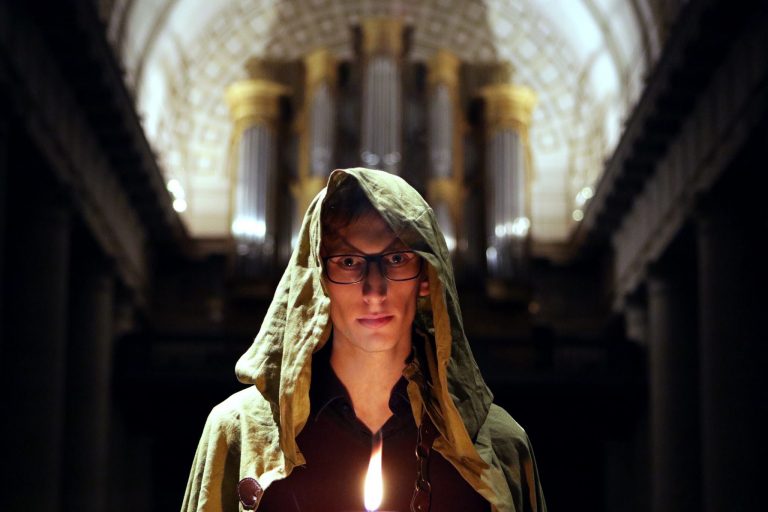
Romain Vaudé and Marwane of the Grissini Project performed a majestic cover of the Game of Thrones theme song on an pipe organ, a piano, and a cello.
Sonny Rollins on Monk and the Bridge from This Lost 1985 Interview

“I didn’t have a lot of confidence that I was really good enough to really make it” – Sonny Rollins in 1985, as told to Ben Sidran.
It was beautiful because you’re playing against the air. You know the sky it was just a beautiful place to practice a horn. It’s a magical thing you know the keys are there on the piano but what you do with them Tuesday night is going to be different than anything you could have thought about Sunday. So this is the magic of it and it’s a beautiful life.
Sonny Rollins on Monk and the Bridge from Quoted Studios on Vimeo.
2 Girls! 3 Harps! Black Sabbath! Iron Man!
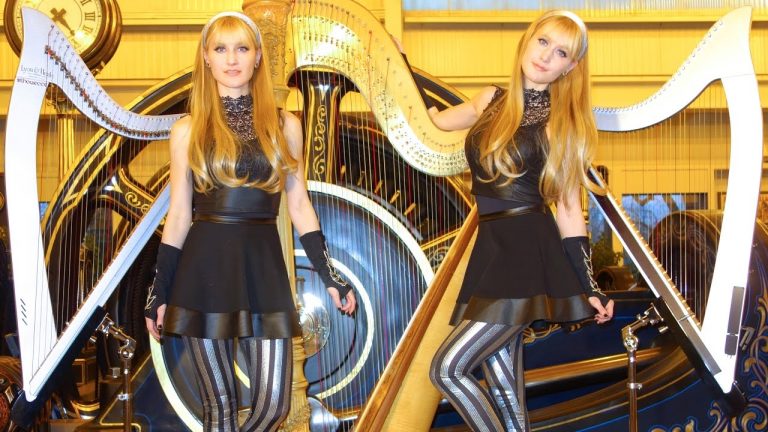
Iron Man by Black Sabbath is one of my favorite classic heavy metal songs. To get a wide array of sounds, they use fuzz distortion on their electric harp and well as numerous mechanical techniques on their acoustic harp, including hand percussion and pedal buzzes.
The Beatles’ Famous Runoff Groove Found On ‘Sgt. Pepper’ Forwards…And Backwards

The Beatles “Sgt. Pepper’s Inner Groove” from the mono UK Parlophone LP, 1967, first played normal forwards for a little over a minute … then listen to what happen when the reverse button is hit. It plays backwards for another minute. If you listen closely you might be able to hear the dog whistle that precedes the inner groove weirdness.
Boy George On How The 1970’s Moulded The Person And Artist He Has Become
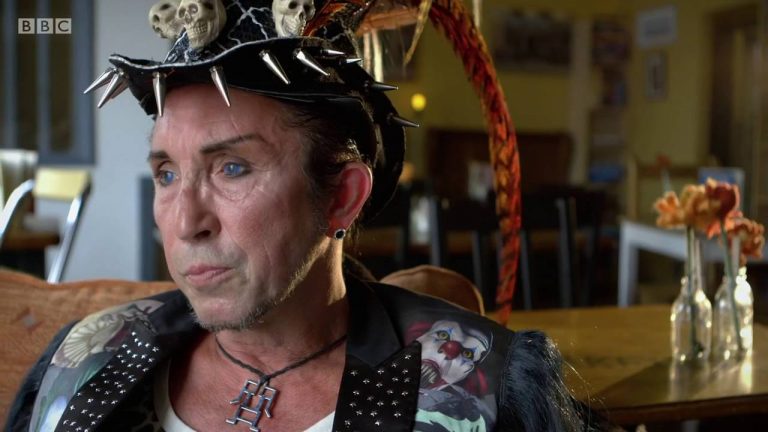
British pop star Boy George recalls, revisits and assesses how the 1970’s moulded the person and artist he has become. This is his musical, social and sexual coming of age, when he discovered the power of his own sexuality before setting about turning that persona into a popstar. Set against a backdrop of social discord, disenfranchisement and sexual repression, the seventies was also conversely the decade that revelled in colour and creative chaos, giving the world glam rock, disco and punk, and the young George O’Dowd was at the birth of them all. The documentary includes contributions from contemporaries like Martin Degville (Sigue Sigue Sputnik), Andy Polaris (Animal Nightlife), DJ Princess Julia and popstar Marilyn. This is, as George said, ‘the last ever bonkers decade’, and it totally and completely shaped him.
Boy George says: ‘I think of the 70’s as being this glorious decade where I discovered who I was and discovered all these amazing things – punk rock, electro music, fashion, all of that. And yeah of course there was that dark side to the 70’s, the rubbish, the strikes, the poverty, and I’d get chased and confronted for the way I looked. But I was a teenager. I didn’t have any time for misery. I was just having a great time with my friends!’
https://youtu.be/BMYfsPTsK0Q
Go Behind-The-Scenes At The Dream Factory, The Legendary Fender Custom Shop
The Fender Custom Shop has been called nirvana for guitar lovers. This year marks the 30th anniversary of the legendary shop that’s built guitars for the likes of Eric Clapton, Johnny Cash, Merle Haggard, The Stones, Jimmy Page, Bob Dylan and more.
From its inception as a “wild experiment” to current world famous status, this short documentary traces the story using never before seen archival imagery and conversations with the eight original master builders.
The Dream Factory (dir cut) from Ross Haines on Vimeo.
That Time Leadbelly Hosted A Radio Show With Guest Woody Guthrie
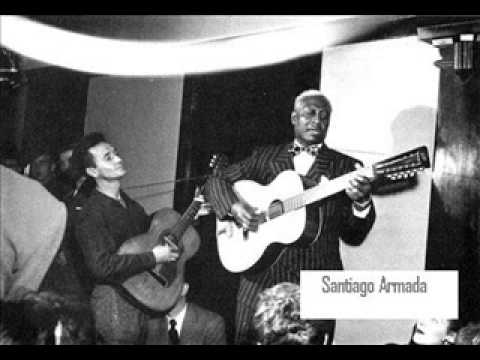
On December 12, 1940, the 25-minute episode of “Folk Songs of America”, a program produced by noted folklorist Henrietta Yurchenco. It was Leadbelly’s show, and that week the guest was Woody Guthrie.
85% Of You Will Stop Watching A Video If It Takes Too Long To Load

Video streaming quality issues continue to be a big problem for the advertising and media industries. Whether they’re caused by problems with slow internet connections, or high demand for streaming video content during peak periods, the continued troubles are turning off viewers and causing headaches for media executives.
Finding evidence of video viewers’ distaste for bad-quality video isn’t difficult. The latest example comes from a Q1 2017 study released by video performance and analytics firm Mux.
Light In The Attic Looks To Japan For New Batch Of Releases
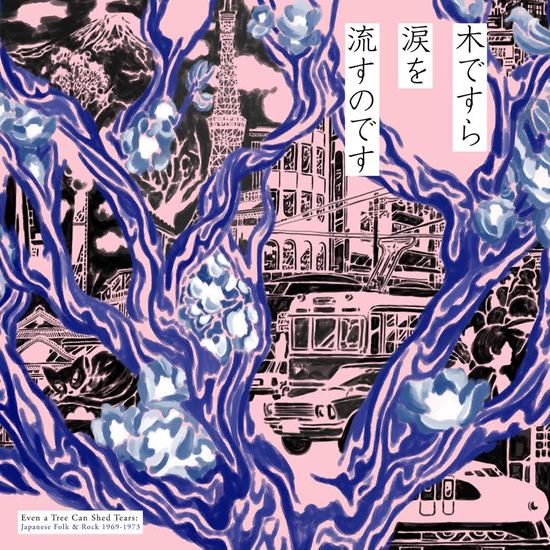
There was something in the air in the urban corners of late ‘60s Japan. Student protests and a rising youth culture gave way to the angura (short for “underground) movement that thrived on subverting traditions of the post-war years. Rejection of the Beatlemania-inspired Group Sounds and the squeaky clean College Folk movements led the rise of what came to be known in Japan as “New Music,” where authenticity mattered more than replicating the sounds of their idols.
Some of the most influential figures in Japanese pop music emerged from this vital period, yet very little of their work has ever been released or heard outside of Japan, until now. Light In The Attic is thrilled to present Even a Tree Can Shed Tears, the inaugural release in the label’s Japan Archival Series. This is the first-ever, fully licensed collection of essential Japanese folk and rock songs from the peak years of the angura movement to reach Western audiences.
In mid-to-late 1960s Tokyo, young musicians and college students were drawn to Shibuya’s Dogenzaka district for the jazz and rock kissas, or cafes, that dotted its winding hilly streets. Some of these spaces doubled as performance venues, providing a stage for local regulars like Hachimitsu Pie with their The Band-like ragged Americana, Tetsuo Saito with his spacey philosophical folk, and the influential Happy End, who successfully married the unique cadences of the Japanese language to the rhythms of the American West Coast. For many years Dogenzaka remained a center of the city’s “New Music” scene.
Meanwhile a different kind of music subculture was beginning to emerge in the Kansai region around Osaka, Kyoto, and Kobe. Far more political than their eastern counterparts, many of the Kansai-based “underground” artists began in the realm of protest folk music. They include Takashi Nishioka and his progressive folk collective Itsutsu No Akai Fuusen, the “Japanese Joni Mitchell” Sachiko Kanenobu, and The Dylan II, whose members ran The Dylan cafe in Osaka, which became a hub for the scene.
Even a Tree Can Shed Tears also includes the bluesy avant-garde stylings of Maki Asakawa, future Sadistic Mika Band founder Kazuhiko Kato with his fuzzy, progressive psychedelia, the beatnik acid folk of Masato Minami, and the intimate living room folk of Kenji Endo.
Nearly 50 years on, this “New Music” is born anew.
Award-Winning Story Is 84 Years In The Making
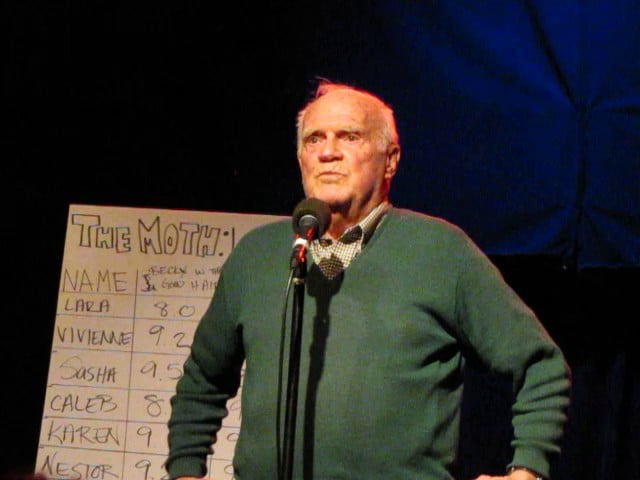
Tom Sitter won The Moth in Madison StorySLAM at the High Noon Saloon February 13, 2017. Tom scored our first ever 10 with his winning story that year. The memory of the girls he carefully selected to give his five valentines to in 1933 was strong enough that 84 years later he still knew their names.
The Moth StorySLAMs are open-mic storytelling competitions. Storyteller hopefuls put their names in a hat. During the evening ten names are picked, and one by one, storytellers take the stage. The ten featured stories are scored by teams of judges selected from the audience. Each StorySLAM generates a StorySLAM winner. After ten SLAMs, the winners face off in their GrandSLAM Championships.