


18-year-old pop superstar Billie Eilish swept the 2020 Grammy Awards, and now, she celebrates her Vogue cover by sitting down with the toughest interviewer of all; an AI bot.
How to Choose the Right Pillow for You
Today every single person knows that it is necessary to have a good rest during night hours because it is the main key to a great mood for the next day, a healthy body and an energy boost for daily life. And a mattress made of high-quality fabrics and with modern technologies provides you such a healthy rest. An orthopedic mattress is no longer just a wish or an accessory but became already a necessity for everyone not only for those who try to live their lifestyle healthily. Moreover, there is still not so big amount of people who think about the importance of such a usual accessory as a pillow.
Unfortunately, the role of a pillow in our rest is highly underestimated! Feeling of tiredness, permanent sore head, the tension in shoulders or muscle pains may indicate that your pillow the right for you. In spite of a diversity of pillows all over, not every single one is good for you. There exist various primary goods pillows are made of as, for example, sobakawa pillow.

Regular One or Orthopedic Pillow: What to Choose
How to find a proper kind of place for a good dream? Diversity of shapes, fabrics, fillings, colors, and sizes is large and you will never find the one if you do not really know what to look for. Sometimes some manufacturers make regular pillows look like special ergonomic orthopedic ones.
Orthopedic pillows are characterized by:
- irregular shapes for a stronger body and head hold during the night;
- hypoallergenic and moist resistant fabrics of a topcoat;
- special foam filling products for stronger hold of your neck.
Regular pillow filling is usually made of simple natural or synthetic materials such as feathers, holofiber, and others. They can not provide you with good maintenance as orthopedic pillows can. Forms of them are usually either square or rectangular.
How to Buy the Proper One
Orthopedic pillows were made to relax stressed muscles and to improve the blood flow in the neck to the brain. That is why the size and stiffness of it matters a lot. Reading different reviews on jonsguide helps a future pillow owner to understand all pros and cons and to find a place to sleep on with proper characteristics. Because if the pillow doesn’t fit your body or way of night sleep, it will not work as it should.
- Sleep on the back. Pillow with a low hardness in a medium size with a recess for the neck.
- Sleep on sides. High and stiff pillows are great to fill up all the space between an ear and a shoulder and conveniently maintain the whole body.
- Sleep on the stomach. Soft and thin almost flat pillow for slight maintenance of your head.
Each person is individual and this is the reason you have to learn all the information about your future pillow. Pay attention to every detail before purchase because it will affect your body every day for several hours at least.
Pros & Cons Of Listening To Music While Writing An Essay
The effect of background music on thought processes is somehow more complicated than we previously thought. Pros and cons of music in essay writing in researches are not about “melodies in general” or “writing in general”, but works of particular styles that help (or prevent) solving certain tasks.
- Pros of writing with music
Many students and schoolchildren listen to melodies while studying even in class. There is nothing wrong with this because all the people are different and background music can really help someone concentrate, especially if he does a monotonous job. While looking for free essays or writing your paper assignment, students may experience stress and calm melodies can reduce it or even remove it. Also, favorite songs in the background can improve the student’s mood and concentration. Moreover, sometimes students can associate a certain moment of study with a song and memorize the necessary material through melodies.
- Cons of listening to music while studying
Unfortunately, despite all the positive aspects, scientists have proved that music is more distracting than helps in learning. Students who listen to songs while doing reading or writing assignments tend to be less effective and walk away, absorbing less information. Loud or too fast melodies can interfere with your concentration during the performance of tasks. Above we mentioned a trick when a material is remembered when associated with a song. The disadvantage of this method is that in the exam you are unlikely to be given the opportunity to listen to music in order to remember something.
- MYTH. Music helps you concentrate on work
Truth. Recent studies have shown that music can have a beneficial effect on creativity. In particular, Simone M. Ritter and Sam Ferguson of the University of Nijmegen in the Netherlands have shown in their recent work that people who perform creative tasks while listening to classical music are more productive than their counterparts who work in silence.
At the same time, several decades have been spent researching how sound affects work productivity. A review of laboratory research on this topic shows that there is a phenomenon called “inappropriate sound effect”. Basically, this effect means that the performance gets worse when the task is performed in the presence of background sound. This effect is more pronounced when not only instrumental music but also human language sounds in the background.
Scientists note that this effect is manifested when performing complex tasks that require maximum concentration. In addition, the nature of the background sounds matters. If they do not meet the preferences of the person, the productivity drops significantly.
- Can music motivate you to write?
Music can definitely influence the mood by exacerbating the bad and maintaining the good, it can improve or worsen the mood and it all depends on certain situations. During studies, sometimes it is too lazy to do something. Especially with regard to paperwork. But listening to your favorite songs can cheer you up and motivate you to work, do research work and write an essay. This is true because a person’s mood can depend on weather and melodies. Concentrating on working on your essay, you don’t have to listen to melodies, but it can definitely motivate you to find the materials you need to work and at least read them. Then it all depends on how you prefer to continue to work. Perhaps you are from the tech who writes scientific papers to music, or maybe the one who works only in silence. The main thing is that melodies can push you to the beginning of work!
Conclusion:
Playing music in the background helps or hinders performance, depending on the person’s task and the type of melodies. Only understanding these relationships will help people increase their level of productivity. If the task requires a creative approach, listening to your favorite melodies can improve performance. If the job requires a lot of information, it’s better to work with or without music at all, or with background music.
1-minute tip for artists: Do a Reddit AMA

Popular on Reddit, an AMA (ask me anything) series are an awesome – and free – opportunity to educate and engage with your followers.
Musically Sound: How a Great Website Benefits Musicians and Bands

There are few things more satisfying – and challenging – than trying to leave your mark on history as a musician. Whether you decide to go solo or are a part of a band, it is often an experience running on nothing but the passion to play and a willingness to get the job done. While some of the more popular bands out there make so much more than their fair share of profit, it is crucial to note that about ninety-nine percent of bands do not have the same kind of luxury.
It can be quite easy to fall into obscurity, especially if you have a challenging time getting people to listen to your music or watch your gigs. A great way to stay in touch with potential fans would be to make use of a social media account. Aside from that, however, one of the best ways to fight irrelevance would be to build a website. As far as which website builder musicians should choose, the link can help you get started. That said, here are a few reasons why a great website benefits musicians and bands.
On the topic of professionalism
Many people often think of those in a band as people enjoying a hobby rather than an actual career. However, that could not be farther from the truth. There are plenty of people out there who support their families with the money they make from playing gigs and album downloads, which is why it is crucial to show those who are on the fence how serious you are about your musical career.
A website is often the first step when it comes to showing people that you mean business. It showcases a professional side of your band, giving potential supporters the impression that you are in it to win it.
A website can be just as important as a social media account
While having a social media account provides a free venue to build a marketing campaign or two, it is not the only foundation for your career. The use of a social media account is just one piece of the puzzle – building a website is just as crucial. After all, a social media account should not be the only source of information for your band. It is crucial to have a website so those who are curious have an opportunity to see your band in a new light.
How a well-built website can help
That said, while a website will undoubtedly help, making it needlessly complicated and challenging to navigate will only turn off potential visitors. Keep in mind that most visitors give websites less than a minute before they figure out whether or not they want to keep going.
A well-built website ensures that your message is the main focus, and people understand what your site is all about the moment they enter. A musician’s site has to be entirely professional, providing visitors with exactly what they want without any fuss.
Vancouver Alt. Rocker My Oldest Friend (Jacob Richter of Legends of Tomorrow, Nikita) Unveils New Video/Single, “Ghost”

Canadian alt rock outfit My Oldest Friend pulls the sheet off its newest single and first mixed-media collaborative project, “Ghost”— available now!
The nom de plume for Vancouver-based multi-faceted artist Jacob Richter, My Oldest Friend first landed in 2017; it features back-up vocals and keys from Melinda Richter, Jacob’s sister, and drums from Kurt Dahle.
“The name comes from the title of one of my previous songs that dealt with nostalgia, sadness, and existentialism,” Richter explains of My Oldest Friend as a whole. “This project started when I moved from Toronto to Vancouver, and in wanting to combine my love for music and acting into one creative expression.
“For ’Ghost’ specifically, it’s an exploration of coping with abandonment,” he continues.
Writing songs since first picking up the guitar at age 13, Richter is also an accomplished actor, including roles in Legends of Tomorrow and Nikita. To this end, it’s unsurprising My Old Friend aims to combine his passion for music with alternative mediums, such as film, video games, animation, the written word, and visual art.
“One of my primary inspirations is the idea of combining my art with artists from different mediums,” he explains, forecasting the nature and scope of various upcoming creative crossovers. For example, next on deck are a dancer and her choreography, and a photo series with a photographer. “‘Ghost’ — and its animation — is the first collaboration, and it will continue with other artists.”
“Two creative forces came together in the Fall of 2018 in an effort to create something eye catching and ear pleasing that would make a lasting impact on as many viewers as possible,” adds Peter Jones, the video’s director. “Jacob and I are both parents of young children, deeply involved in the arts, and both have an appreciation for the duality of life.”
An accomplished animator and illustrator, Jones studied the craft at Brigham Young University in his home state of Utah, and contributed to two student Emmy-winning short films, DreamGiver and Estefan. His newly minted animation and art studio, Lotus Mountain, boasts a bold mission to aid in the spiritual progress and enlightenment of the universe, and gives critical insight to why he and Richter connected so organically on the project.
“Ghost,” their first film together, explores the emotional journey of a young man; symbols from the idea of a wife held hostage by pregnancy and childbirth are combined with a tormenting, foreboding monster as the young man explores his fears, shortcomings, and anxieties around becoming a father.
“Life turns to death, expansion fights contraction…” Jones continues. ““The potential for beauty contains the potential for disgust.”
“Ghost” is available now.
Get Estimates about Your Junk Cars Online from Professional Services
Get estimates about your junk cars that are not in use or require proper maintenance from experienced persons. Find perfect car buying guidelines and proper solutions from Junk Cars Philadelphia and get rid of junk cars instantly. To get the most cash from the bestselling offers from online instant responding solutions and find perfect guidance and help from the experienced car buyers. If your specific car model considered junk then don’t waste your time and energies and meet with your objectives to sell your valued car models at the reasonable price range and to meet with your trust levels to resolve all types of car selling to professional services. To get rid of your junk car, you have to clear your mind and estimation ideas about what price you can afford to sell your car and what will be the right professional service to buy your valued cars with fast service responding feedback.
Old Junker is out in the yard can bring you cash to sell your specific car models to interested car buyers who really know the value and importance of the cars. To get estimates, you have to clear your mind and explorations of the ideas which can be effective and result oriented to meet with your objectives and to resolve almost all type of issues to find quick feedback on behalf of the best influencing features. First of all, make sure the possible cost to repair and then carefully analyze the value of your specific car model to meet with your specific objectives on behalf of the best responding service plans with same day pickup service. sell my junk car is not an issue now because Audi Cash Cars Buyer in Philadelphia can be sold to professional car buyers who are competent and have the best mid to explore your main points of interest to meet with your specific objectives on behalf of the great influencing features.
The process of selling your junk car in Philadelphia can be an easy and simple plan to find your objectives to sell your valued cars or specific car parts to interested car buyers who are a legend in car buying. Cash car buyers in Philadelphia always wait for a positive response to meet with the expectation levels of the interested communities. Selling your junk car in Philadelphia can be effective and prompt responding action plans for the interested communities to solve almost all types of instant car selling issues on behalf of the best responding resources. Selling to a Junkyard requires proper knowledge and support to meet with your specific objectives to choose the right service and to make sure the best service staff team who always makes ready to help for the interested car owners to buy their Junk cars in the reasonable price range with same-day pick-up service.
Sell your junk car to professional Junk Car Buyers and meet with your specific objectives on behalf of the best responding resources to fulfill your needs. Get the most money with the least amount of hassle and sell your valued useless cars ion best price range with simple and easy processing.
Alt. Southern Rockers IAN ABEL BAND Recall Big “20’s Magic” in New Single & Track That Started It All

Indie alt southern rock outfit from Los Angeles, the Ian Abel Band bring their big guitars, big drums, and even bigger hooks to create “20’s Magic” — their newest single, available now!
“This is the song that started it all,” namesake frontman, lead vocalist, guitarist and songwriter Ian Abel shares of the track. “We were toying with the notion of going into a studio to record five or six new songs, but we weren’t ready.
“In talking about it with Kenny, he threw out the idea of slowing it down and pre-producing everything in our lock-out space.
“I agreed pretty reluctantly, but thank God I did!”
Abel is referring to drummer Kenny Schwartz; the band also includes Westray Tackett and Karthik Suresh.
“The following Saturday, while nursing a wicked hangover, I got a call from him asking if I wanted to get together to lay down the first song,” Abel continues. “I begrudgingly threw some jeans on, grabbed my ax, stopped to get a 12 pack of beer, and meandered over to the spot.”
The spontaneous session would turn into a 13-hour musical marathon, and the results would reveal a selection of turn-loud tracks and ultimate door openers for the Los Angeles-based band. Previous releases include “Shoes,” “Outlaw” and “Walk Out.”
“That recording session became the spark for what would eventually lead us into United Recording Studios, a licensing deal with All Elite Wrestling, playing the Troubadour, and our music being played around the world,” Abel marvels in hindsight. “Kenny has often said that when we were at a crossroads, he decided to see this through because there was one song in particular that struck a chord with him.
“That song is ’20’s Magic.’”
“20’s Magic” is available now.
Taylor Swift to Launch Home DJ Series on SiriusXM Hits 1 Channel

Global superstar Taylor Swift will help launch a Home DJ series on SiriusXM’s top pop channel SiriusXM Hits 1, and it’s available to hear now.
Hits 1 n chill, first in the Home DJ Series, includes Swift and will be followed by other pop stars, as they take over SiriusXM Hits 1 right from their homes. The stars will be playing the most requested hits and their favorite music, providing commentary and more to connect with their fans all across North America. Listeners will be able to hear upcoming Hits 1 n chill with some of the biggest names in pop music including Niall Horan, Camila Cabello, Sia, 5SOS, Diplo, Kelsea Ballerini, Charlie Puth, Pete Wentz and more.
“We love to connect fans with their favorite artists, and our Home DJ series will bring some of the biggest names in music into our homes as people look for ways to be entertained,” said Scott Greenstein, President and Chief Content Officer of SiriusXM. “Taylor Swift will lead the way and will be followed by many stars on Hits 1 in the days ahead as they play their favorite music for the channel’s faithful national audience and new listeners too. Our new Stream Free option opens up our channels to anybody who wants some diversion and great music.”
SiriusXM’s Hits 1 n chill will launch with Taylor Swift on Friday, April 3 at 12:00 pm ET on SiriusXM radios (channel 2) and on the SiriusXM app. The special Taylor Swift take over will also broadcast multiple times throughout the weekend. Hits 1 n chill will be available On Demand. Hits 1 n chill is the first in SiriusXM’s Home DJ series, which will expand to other channels in the weeks ahead.
SiriusXM Hits 1 plays the most hit music from artists including Taylor Swift, The Weeknd, Dua Lipa, Harry Styles, Halsey, Niall Horan, Jonas Brothers, Camila Cabello, 5SOS and more.
SiriusXM Hits 1 is available to subscribers nationwide on SiriusXM radios (channel 2), and to everyone – including anyone who is not already a SiriusXM subscriber – on the SiriusXM app and connected devices as part of SiriusXM’s recently announced free streaming access period through May 15. For more information and to start listening, visit here.
John Digweed Releases 4-Disc Album QUATTRO
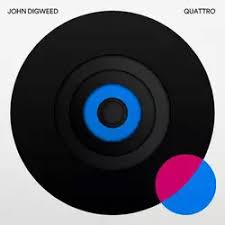
John Digweed, the unwavering English mainstay, continues to create, evolve and produce a level of dedicated production that is hard to match with his newly released QUATTRO, out now via his own imprint, Bedrock Records. The monumental effort spans four discs, mixed entirely by Digweed himself, and serves as testament to his status as one of electronic music’s finest genre blending connoisseurs, as well as his inherent knack for soundtracking sonically-enriching journeys. Split into four discs, each is reflective of a distinct creative vision. QUATTRO is out now across all streaming platforms, Bandcamp, CD and Vinyl via Bedrock Records.
Beginning with Soundscape, QUATTRO entrances the listener, providing elongated cinematic sounds that incite true, raw emotion. With 11 unique productions and remixes, Tempo follows and sees the second disc of the album take a different approach from atmospheric breaks through deep techno and pacing hypnotic techno grooves. Redux, the penultimate mix takes it up a notch with breathtaking remixes that build upon one another, creating a flurry of deep house, techno, and acid. Nick Muir, fellow Bedrock Records producer and longtime friend, lends his expertise in Juxtaposition, the fourth and final mix, which brings the release full-circle with ambient soundscapes that feel more experimental in nature.
To maximize anticipation for the release and as a special treat to his loyal fans, Digweed took to Instagram to unveil an exclusive vinyl unboxing video that showcased the stunning design and sonic craftsmanship that was poured into the project. A week prior, Digweed was among the first to livestream an exclusive 2-hour long set broadcasted directly from his home. The stream garnered over 124,000 views, and lead to additional ‘Bunker’ streaming sessions, which have topped out at well over 600,000 views across the past 10 days. QUATTRO is shaping up to an unmissable piece of John Digweed history.
Having taken nine months to create, QUATTRO truly is a labor of love for Digweed. Spanning 45 exclusive tracks, the album serves as a stellar follow-up and successor to 2018’s Bedrock XX, the last four-disc album he produced to celebrate Bedrock Records’ 20th anniversary. Perfect for any collector or vinyl aficionado, QUATTRO also comes in a signed limited-edition 5×12″ vinyl that includes 20 hand-selected tracks from the album itself. Fans who pre-ordered a QUATTRO vinyl are expected to receive their copy a few days before official release. For those to wish to get their hands on a vinyl and deluxe 4 x CD box set should place an order immediately as physical stock is nearly sold-out and there will be no additional pressings made. Last remaining copies are available here.
A timeless fixture in the world of underground electronica, Digweed’s latest delivering with QUATTRO showcases his untouchable talent from beginning to end. As the only artist to have ever procured a discography comprising 57 mix CDs, and compilations, the WOW factor around this alone solidifies John Digweed as one of the hardest working, ever-evolving artists on the planet. The album features the likes of Francesca Lombardo, Booka Shade, Tom Mangan, and many more, with the fourth disc mixed in conjunction with fellow Bedrock label-mate Nick Muir.