

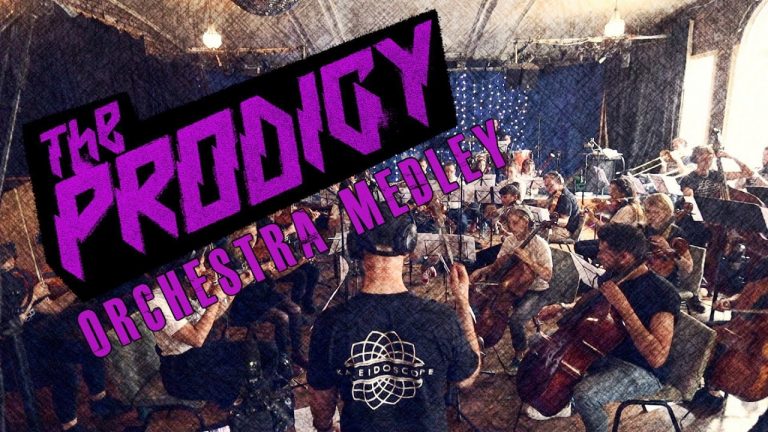
The Kaleidoscope Orchestra of Manchester, U.K. performed a stunning medley of The Prodigy songs in tribute to the late, great Keith Flint who passed away on March 4, 2019. Check out their versions of “Out of Space”, “Omen”, “Spitfire”, “No Good (Start the Dance)”, “Breathe” and “Firestarter”, and then go seek out the originals and dance your face off.
Thought Leader’ gives talk that will inspire your thoughts
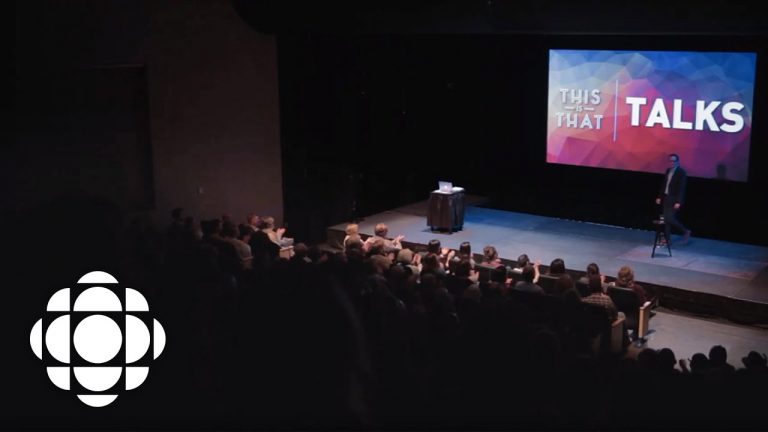
Self proclaimed “thought leader,” Pat Kelly gives his talk on “thought leadership” at the annual This Is That Talks in Whistler, B.C. In the seminar, Kelly covers: How to talk with your hands, how to get a standing ovation, and how to inspire people by saying nothing at all.
Gillette’s New Ad Shows A Dad Teaching His Transgender Son How To Shave For The First Time
Whenever, wherever, however it happens – your first shave is special.
Monsta X Ink Deal With Epic Records
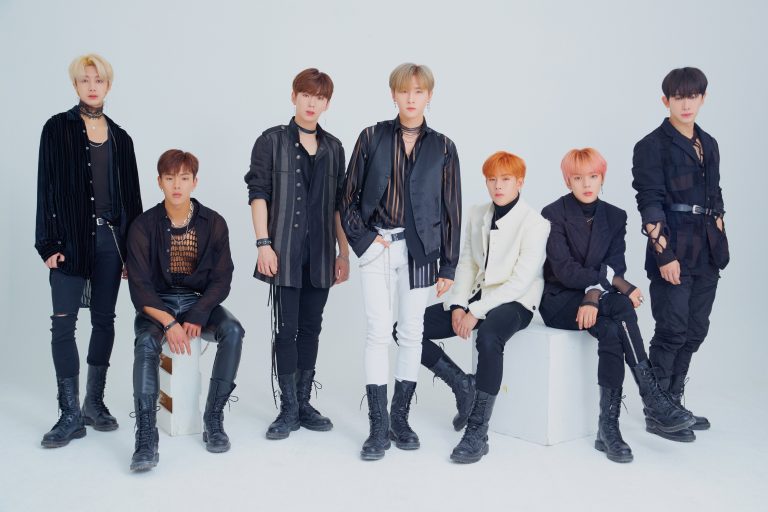
Continuing a banner year marked by sold out arena shows, tens of millions of streams, and widespread critical acclaim, K-pop supergroup and worldwide phenomenon, Monsta X, sign to Epic Records for their English language recordings and worldwide distribution ex Korea.
“K-pop has indelibly impacted the global conversation and influenced culture everywhere. At the top of that conversation, you’ll find Monsta X. They’re ushering the genre into the future with an original style befitting of their experience, passion, and diverse influences. We’re honored to welcome them to the Epic Records family,” said Epic Records Chairman and C.E.O. Sylvia Rhone.
“We are thrilled to join the Epic Family alongside some of the artists we admire the most. This is like a dream come true and we still can’t believe that this is happening to us. We can’t thank our monbebe enough for their endless support and for making everything possible,” said Monsta X.
Currently on the cusp of their seventeen-date “we are here” would tour, Monsta X will only catapult further in the U.S. market with this prestigious partnership. Kicking off on June 1st in Bangkok, the tour will weave through places such as Sydney, London, Mexico City, closing out with a bang in 6 cities throughout the U.S.
MONSTA X WORLD TOUR
DATE CITY VENUE
June 1 Bangkok, TH Thunder Dome
June 5 Sydney, AU ICC Sydney Theatre
June 8 Melbourne, AU Margaret Court Arena
June 22 Kuala Lumpur, MY Stadium Malawati
June 29 Madrid, ES Palacio Vistalegre
July 3 Amsterdam, NL AFAS Live (Heineken Music Hall)
July 6 Paris, FR La Seine Musicale
July 9 London, UK The SSE Arena Wembley
July 13 Berlin, DE Mercedes-Benz Arena (O2 World Berlin)
July 19 São Paulo, BR Espaco das Americas
July 21 Mexico City, MX Teatro Metropolitan
July 25 Dallas, TX Verizon Theatre
July 27 Houston, TX Smart Financial Centre
July 30 Atlanta, GA Fox Theatre
August 3 New York, NY Hulu Theater
August 6 Chicago, IL Rosemont Theatre
August 10 Los Angeles, CA Staples Center
Harrison Ford Reacts to Mark Hamill’s Impression of Him and Death of Chewbacca Actor
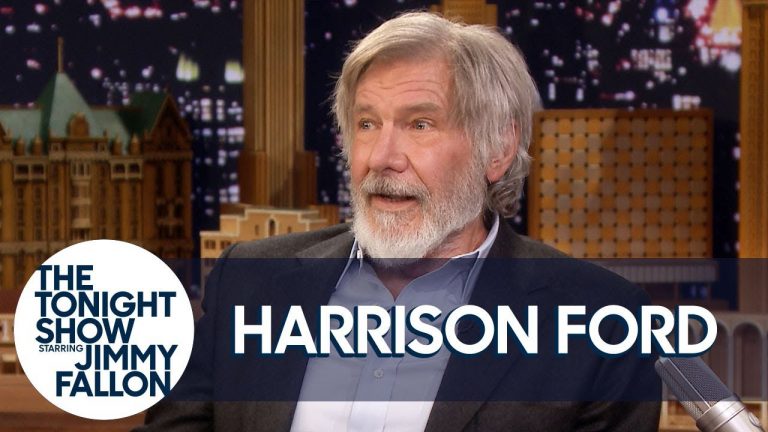
Harrison Ford reflects on Indiana Jones and the Temple of Doom’s 35th anniversary, reacts to Mark Hamill’s impression of him and pays tribute to his friend, Chewbacca actor Peter Mayhew.
Little Steven And The Interstellar Jazz Renegades’ Score For Netflix’s First Original Series “Lilyhammer” To Be Released For First Time On July 12 In Two Volumes
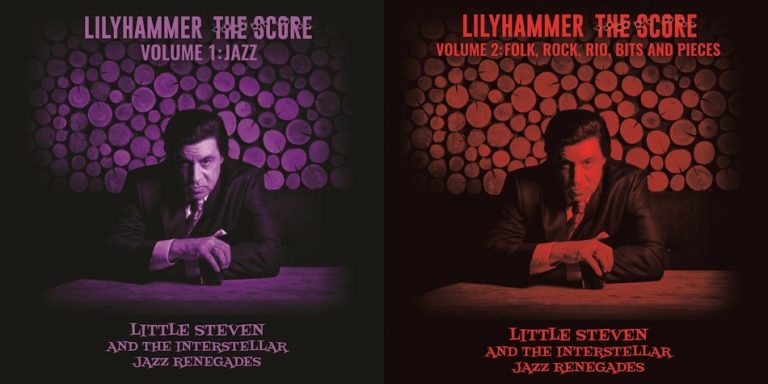
For his starring role in Netflix’s groundbreaking first original series, “Lilyhammer,” actor/musician Steven Van Zandt explored uncharted waters as a New York mobster who flees to Norway under the witness protection program. In addition to acting in, co-writing and co-producing the acclaimed show, the Rock and Roll Hall of Famer also scored the music for most of the three seasons, where just like his character, the musician best known as Little Steven of Bruce Springsteen’s E Street Band and an accomplished solo artist who helped pioneer the rock-meets-soul sound, also delved into some terrain foreign to him: the worlds of New York jazz and Norwegian folk music. For the first time, the music from the show, which ended in 2014, has been collected together and will be released as two separate albums – Lilyhammer The Score – Volume 1: Jazz and Volume 2: Folk, Rock, Rio, Bits And Pieces – on CD, digital and 180-gram black vinyl on July 12 via Wicked Cool/UMe.
A video of “My Kind Of Town” featuring Van Zandt’s performance of the song on the show mixed with memorable scenes from across the series is available to watch.
https://UMe.lnk.to/MyKindOfTownVideoPR
The music of “Lilyhammer” was arranged and produced by Van Zandt and recorded at his Renegade Studios in New York and at various studios in Norway while in the midst of filming. It was recorded, mixed and co-produced by Geoff Sanoff and mastered by Bob Ludwig at Gateway Mastering.
When Van Zandt was tasked with coming up with the music to soundtrack “Lilyhammer,” the veteran musician, songwriter and producer who had pretty much done it all in the worlds of songwriting, including dozens of albums, hundreds of songs, tracks for movies, a Broadway musical, as well as music supervision and musical direction, had never scored a television show and was up to the challenge. Knowing he wanted to create something that combined New York jazz to represent his character Frank “The Fixer” Tagliano with the Norwegian folk music of his exotic new environs, he turned to friend and fellow E Street Band member Max Weinberg for some advice on who could help him put a band together that could flawlessly execute these two disparate genres. On Weinberg’s recommendation, he enlisted GRAMMY® Award-winning pianist, arranger and orchestrator, Lee Musiker, known for his wealth of experience working with premiere artists in the jazz, classical, Broadway, and pop genres, such as Mel Tormé, Kristin Chenoweth, Wynton Marsalis, Buddy Rich and Tony Bennett, to help bring his vision to life. Together they assembled the Interstellar Jazz Renegades, a loose collective of some of NYC’s finest musicians, led by Musiker and orchestrators Stan Harrison, Raul Agraz and Adam Hochstatter.
Volume 1: Jazz collects together 13 of the best jazz compositions from the show and features a mix of jazz standards, instrumental score and original songs. Van Zandt provides vocals and channels the crooners of yore on the jazz classics, “All Of Me,” “Ring-a-Ding Ding!” and the aforementioned “My Kind Of Town.” Typically, the music created for TV is short musical cues but Van Zandt took a different approach. “I figured I’ve got some of the most talented musicians in New York City so why waste them on 15 second cues,” Van Zandt explains. “We decided to have some fun. I’d meet Lee about an hour before the session and give him the top line melodies, basic chord changes and structure and talk about the overall mood of the piece. I wanted to try something different and get the musicians creative input and let these guys who were used to always reading their parts express themselves for a change. We would basically arrange it on the spot. I’d suggest a harmony, Lee would suggest an idea and the musicians would begin to orchestrate themselves. It was wild and extremely fruitful. After the success of the first session I knew we had a legitimate jazz album in addition to an incredible score.”
Opening with the moody, evocative “Lilyhammer Nocturne (Theme from Lilyhammer),” allowing listeners to hear the full song that the theme song was developed from, the tunes range from the sensual (“The Night Before”, “I’m A Fool To Want You”) and swinging (“My Kind Of Town,” “Rumble Island, “The Thief,”) to the mysterious (“Sorceress”) and melancholy (“Gloomy Sunday”). An accomplished set of songs that harkens back to the greats like Henry Mancini, Stan Getz and Nelson Riddle, the cinematic music transports you to a dark, smoky jazz club somewhere in 1950’s New York or in this case, Norway in the late 2000s. The strength of the music, expertly performed by these veteran musicians, both stands on its own as a cohesive jazz album and as a soundtrack for fans who want to relive the great jazz music of the show.
Volume 2: Folk, Rock, Rio, Bits And Pieces is a wildly eclectic affair that gathers together 36 tracks from the show, ranging from short music cues to full songs spanning across a dizzying array of genres. Opening with the broadcast version of the theme song “Lilyhammer Nocturne,” the song begins as a swinging jazz tune and then deftly segues into Norwegian folk music illustrating the collision of two cultures. Van Zandt fully embraced the Nordic country and integrated traditional Norwegian folk instruments into his musical arsenal to create an authentic sound for the show which was filmed in Lillehammer, Norway and watched by nearly one fifth of its population. Highlights of the folk songs include “Revelation,” “Lillehammer Mourning” and “Baptism.” On “Toboggan Negotiation,” Van Zandt, who played guitar on all but one track on the collection, injects a hard-strummed acoustic guitar into an otherwise traditional sounding folk song, creating a unique hybrid.
The pieces span the globe and musical history, ranging from the Ennio Morricone-esque “African Dawn,” to the Eastern sounds of “Tandoori Epiphany” and “Dance of the Persian Serpent,” to the symphonic rock of “Painted Angels,” to the bluesy “Espresso Martini,” to the surf rock of “Killer Surf” and the Latin jazz and mambo of “Stevie Colada and “Mojito.” On “Out Of The Darkness,” Van Zandt revisits his 1983 song and transforms it from a stadium rock anthem into a bittersweet instrumental with a Norwegian flavor while “Favella” conjures up images of Brazil’s Rio de Janeiro. Overall it showcases both the breadth of the extraordinary and ambitious music that Van Zandt created for the show and his immense talent as a songwriter, arranger, musician and musical chameleon.
“I’m really proud of ‘Lilyhammer’ and the music I created for it,” says Van Zandt. “This was especially rewarding because it gave me the chance to finally do a score completely. This was a full commitment, I loved doing it and experimenting with sound and putting it to pictures and seeing what effect it has. It was a lot of fun, I’d love to do more of it.”
Lilyhammer The Score: Volume 1 and 2 come on the heels of Little Steven’s highly acclaimed just-released new album Summer of Sorcery, his first album of original material in 20 years. Created with his 14-piece band the Disciples of Soul, the album’s 12 songs capture the energy, excitement and electricity of summer, and is an exuberant mix of rock n’ soul. Hailed by Rolling Stone as “the most eclectic record he’s ever made… it largely dispenses with protest songs and revels in the rock, soul and R&B of his Sixties youth,” the album was called “a nostalgic New Jersey starburst of sex and soul,” by Uncut while American Songwriter enthused, “Steven, his musical director Marc Ribler and veteran mixers/masterers Bob Clearmountain and Bob Ludwig, pull out all the stops to make this sonic smorgasbord explode out of the speakers with passion and clout. Few artists have the financial means or artistic vision to pull off a thunderous production like this which is impressive in its scope and sheer booming audio audacity.”
Having played two rapturous record release shows in Los Angeles and New Jersey, Little Steven and the Disciples of Soul are currently bringing the songs of Summer of Sorcery to life on tour in the UK and Europe. The band will kick off the first leg of their North American tour at the end of June and then head back to Europe in August for more shows. They will return to the US in September for a tour that will culminate at New York City’s Beacon Theatre on November 6. As always, teachers are welcome to all shows for free. Each show will be proceeded with a teacher’s development workshop demonstrating how to incorporate Van Zandt’s TeachRock music education curriculum into the classroom. For more information, visit teachrock.org
LILYHAMMER: THE SCORE TRACK LISTINGS
VOLUME 1: JAZZ
Lilyhammer Nocturne (Theme from Lilyhammer)
My Kind Of Town (vocal)
The Night Before
Rumble Island
Sorceress
I’m a Fool to Want You
All Of Me (vocal)
Blue Midnight
The Thief
City Lights
Gloomy Day
Ring-A-Ding Ding! (vocal)
The Morning After
VOLUME 2: FOLK, ROCK, RIO, BITS AND PIECES
Lilyhammer Nocturne (Theme from Lilyhammer – Broadcast Version)
Revelation
African Dawn
Lillehammer Mourning
Baptism
Toboggan Negotiation
Curiosity
Sunset
Sunrise
Gregorian Papyperm
Elegy for Sally Boy
Grampa Lento’s Song
Tandoori Epiphany
Out of the Darkness
Wolf Hunt
Dance of the Persian Serpent
The Minstrel Boy (vocal)
Painted Angels
Espresso Martini
Stevie Colada
Mojito
Sex Ghost
Wired
Bliss
Jobim Paranoia
Out of the Clouds
Sylfast is Dead
Alex and Johnny
Lonely Girl
Killer Surf
Favella
Tommy’s Run
Bond of Brothers
Sigrid Kills
Ibsen Interrupted
Massage Tattoo
LITTLE STEVEN AND THE DISCIPLES OF SOUL SUMMER OF SORCERY WORLD TOUR 2019
MAY
24 – London, UK – O2 Forum Kentish Town
26 – Derbyshire, UK – Bearded Theory Festival *
28 – Berlin, Germany – Huxley’s
30 – Jelling, Denmark – Jelling Muiskfestival *
JUNE
1 – Stockholm, Sweden – Cirkus
3 – Oslo, Norway – Rockefeller
5 – Hamburg, Germany – Fabrik
7 – Brussels, Belgium – Ancienne Belgique (AB)
9 – Emmen, The Netherlands – Hello Festival *
11 – Zurich, Switzerland – Kaufleuten
13 – Milan, Italy – Alcatraz
15 – Bilbao, Spain – Music Legends Festival *
17 – Barcelona, Spain – Sala Apolo
20 – Kragujevac, Serbia – Arsenal Festival *
23 – Paris, France – La Cigalle
SUMMER OF SORCERY TOUR – NORTH AMERICA 2019
JUNE
29 – Syracuse, NY – New York State Blues Fest *
JULY
2 – London, ON – London Music Hall
4 – Ottawa, ON – Ottawa Bluesfest *
6 – Quebec City, QC – Festival d’été de Québec *
8 – Montreal, QC – L’Olympia
10 – Toronto, ON – Phoenix Theatre
12 – Buffalo, NY – Town Ballroom
14 – Clifton Park, NY – Upstate Concert Hall
16 – New Haven, CT – College Street Music Hall
18 – Huntington, NY – The Paramount
20 – Glenside, PA – Keswick Theatre
22 – Middletown, NY – Orange County Fair
24 – Richmond, VA – The National
26 – Easton, PA – State Theatre Center For The Arts
28 – Annapolis, MD – Outlaw Jam *
SUMMER OF SORCERY TOUR – EUROPE 2019
AUGUST
3 – Notodden, Norway – Notodden Blues Festival *
5 – Copenhagen, Denmark – Amager Bio
7 – Warsaw, Poland – Stodola
9 – Erfurt, Germany – Gewerkschaftshaus
11 – Hanau, Germany – Amphitheater
13 – Nuremberg, Germany – Serenadenhof
17 – Luxembourg, Luxembourg
21 – Manchester, UK – O2 Ritz
23 – Dublin, Ireland – Vicar Street
25 – Oxford, UK – O2 Academy
27 – Newcastle, UK – O2 Academy
29 – Cardiff, UK – Tramshed
SEPTEMBER
2 – Vienna, Austria – Arena Wien
SUMMER OF SORCERY TOUR – NORTH AMERICA 2019
SEPTEMBER
5-8 – Las Vegas, NV – Big Blues Bender @ Hard Rock Hotel and Casino *
9 – Ventura, CA – The Majestic Ventura Theater
11 – Berkeley, CA – The UC Theatre
13-14 – San Diego, CA – Kaaboo Del Mar *
15 – Tucson, AZ – The Rialto Theatre
17 – Englewood, CO – The Gothic Theatre
19 – Kansas City, MO – Knuckleheads
22 – Louisville, KY – Bourbon & Beyond *
29 – Austin, TX @ Emo’s Austin
OCTOBER
1 – New Orleans, LA – House of Blues
3 – Birmingham, AL – Iron City
5 – Memphis, TN –Soundstage at Graceland
7 – Atlanta, GA – Center Stage Theater
13 – Detroit, MI – St. Andrew’s Hall
15 – Grand Rapids, MI – 20 Monroe Live
17 – Burnsville, MN – Ames Center
19 – Milwaukee, WI – Pabst Theater
21 – Winnipeg, MB @ Burton Cummings Theatre for the Performing Arts
23 – Chicago, IL – House Of Blues
26 – Cleveland, OH – Masonic Auditorium
28 – Des Moines, IA – Hoyt Sherman Place
30 – Columbus, OH – Newport Music Hall
NOVEMBER
2 – Medford, MA – Chevalier Theatre
4 – Warrendale, PA – Jergel’s Rhythm Grille
6 – New York, NY – Beacon Theatre
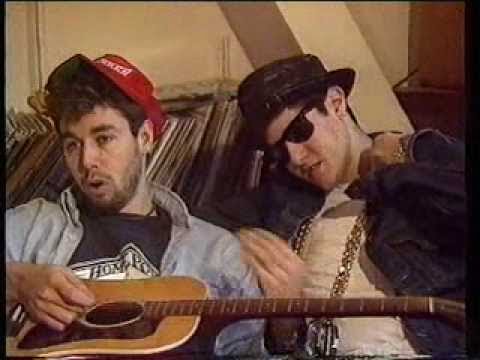
From Pink Floyd to Peter Gabriel, producer Bob Ezrin on the highlights of his career
In a career spanning nearly 50 years, Ezrin has been just as close to the heartbeat of the music as the musicians themselves. He takes CBC’s q through the biggest moments of his unbelievable career.
The stage is set for country stardom! Canadians have selected three finalists for SiriusXM’s Top of the Country

SiriusXM Canada, the country’s leading audio entertainment company, is thrilled to announce the three finalists for the second annual SiriusXM Top of the Country competition, in partnership with the Canadian Country Music Association. These three artists will duke it out in a live onstage battle to be crowned Canada’s next big country star and win a $25,000 cash prize and an international SOCAN songwriting camp.
The 2019 SiriusXM Top of the Country finalists, selected by Canadians are:
• Matt Lang (Hometown — Maniwaki, QC)
• Kelsi Mayne (Hometown — Windsor, ON)
• Tim & The Glory Boys (Hometown — Winnipeg, MB)
“The talent competing in the first phase of SiriusXM Top of The Country was exceptional, and now the group is down to three,” said Jeff Leake, Director, Music Programming, SiriusXM Canada. “Our finalists now have the opportunity to show off their craft to some very big audiences this summer. We can’t wait to see them perform at the finale during Country Music Week.”
“We have some incredible artists in Top of The Country this season and I’m looking forward to seeing what they accomplish in the finale,” said Tracy Martin, President, CCMA. “We’re looking forward to celebrating their undeniable growth as artists when they take to the stage at Country Music Week. Congratulations and good luck to the three finalists!”
Later this year, the three Top of the Country finalists will participate in a week-long SOCAN songwriting trip to Nashville, perform at a major country music festival and attend an exclusive mentorship session in Toronto with influential people from across the industry.
The grand prize winner will be chosen live at SiriusXM Top of the Country Finale during Country Music Week 2019 in Calgary, AB from September 5-8. Finalists will compete live on stage before a soon-to-be-announced headlining act, airing live on SiriusXM. The winner will receive the $25,000 grand prize, plus an international SOCAN songwriting camp and more.
SiriusXM Top of the Country in partnership with the CCMA is part of SiriusXM’s ongoing commitment to promoting and elevating the best in emerging Canadian music. SiriusXM continues to offer a leading platform for Canadian artists through its significant financial contributions and North American-wide reach of over 55 million listeners.
To watch the finalist videos, please visit here.
Facebook Canada Launches Local News Accelerator with 11 Participants from Across the Country

Facebook Canada is launching its Local News Accelerator program and bringing together the first cohort of eleven publishers from across the country participating in the program. As announced in February 2019, the initiative represents a $2.5M investment in Canada’s news ecosystem and is part of Facebook’s ongoing global efforts to support journalists, academics and news organizations across the globe to advance journalism and help develop sustainable business models — both off and on Facebook’s platforms.
The first wave of Local News Accelerator participants includes:
- Brunswick News
- Daily Hive
- Winnipeg Free Press
- Glacier Media
- Le Soleil
- London Free Press
- Northern News Services
- The Discourse
- The Tyee
- Vancouver Observer
- Village Media
“Canadians expect relevant, quality news on Facebook and so do we. The Launch of Facebook Local News Accelerator in Canada is one part of our commitment to high-quality, fact-based content across our family of apps,” said Marc Dinsdale, Head of Media Partnerships at Facebook Canada. “We are committed to exploring what we can build together with our partners to support local news, and will continue to invest in local news in Canada.”
Throughout the 12-week program, Facebook is bringing together industry experts and providing tools, resources and training focused on digital audience development, with the goal of helping publishers find new ways to connect with their audiences and creative ways to monetize their businesses. Publishers will design individual projects tackling their unique business needs working with coaches with deep expertise in the digital media business.
The program will culminate in Menlo Park, California where publishers will share their news innovation concepts at Facebook headquarters. Enabling publishers across the country – and beyond – to benefit from the strategies workshopped during the program and will share key learnings and case studies from the first Canadian cohort.
“We’re thrilled to be a part of Facebook’s Local News Accelerator program in Canada and welcome the chance to share insights with our peers from across the country. For more than a decade, Daily Hive has been connecting readers with their city to foster a closer relationship with one another, and we’re constantly working to modernize journalism for the internet,” said Farhan Mohamed, editor-in-chief and partner, Daily Hive. “Having the opportunity to come up with new ways to engage with and develop our audience is something we’re all excited for.”
Grant funding will empower each publisher to implement strategies created during the program. We are partnering with the Canadian Journalism Foundation (CJF) — a non-profit organization that promotes Canadian journalism and journalistic achievement — to administer grants to local news publishers. These grants are designed to help the participating publishers put ideas from the Accelerator into practice.
“From current events to community news and politics, local news publishers provide citizens with the resources and information they need to make critical decisions for themselves and their families,” said Natalie Turvey, president and executive director, CJF. “We are committed to supporting local news innovation, and we’re excited to partner with Facebook and local news publishers to bring this program to life in Canada.”
Broadening their efforts to support news innovation, Facebook is also investing in programs that help publishers develop sustainable business models, both off and on of Facebook, so they can continue to do work that’s critical to a healthy democratic society. The Local News Accelerator program complements ongoing efforts in Canada such as supporting our news partners with seed funding to experiment with video, and training opportunities for journalists across the country.