

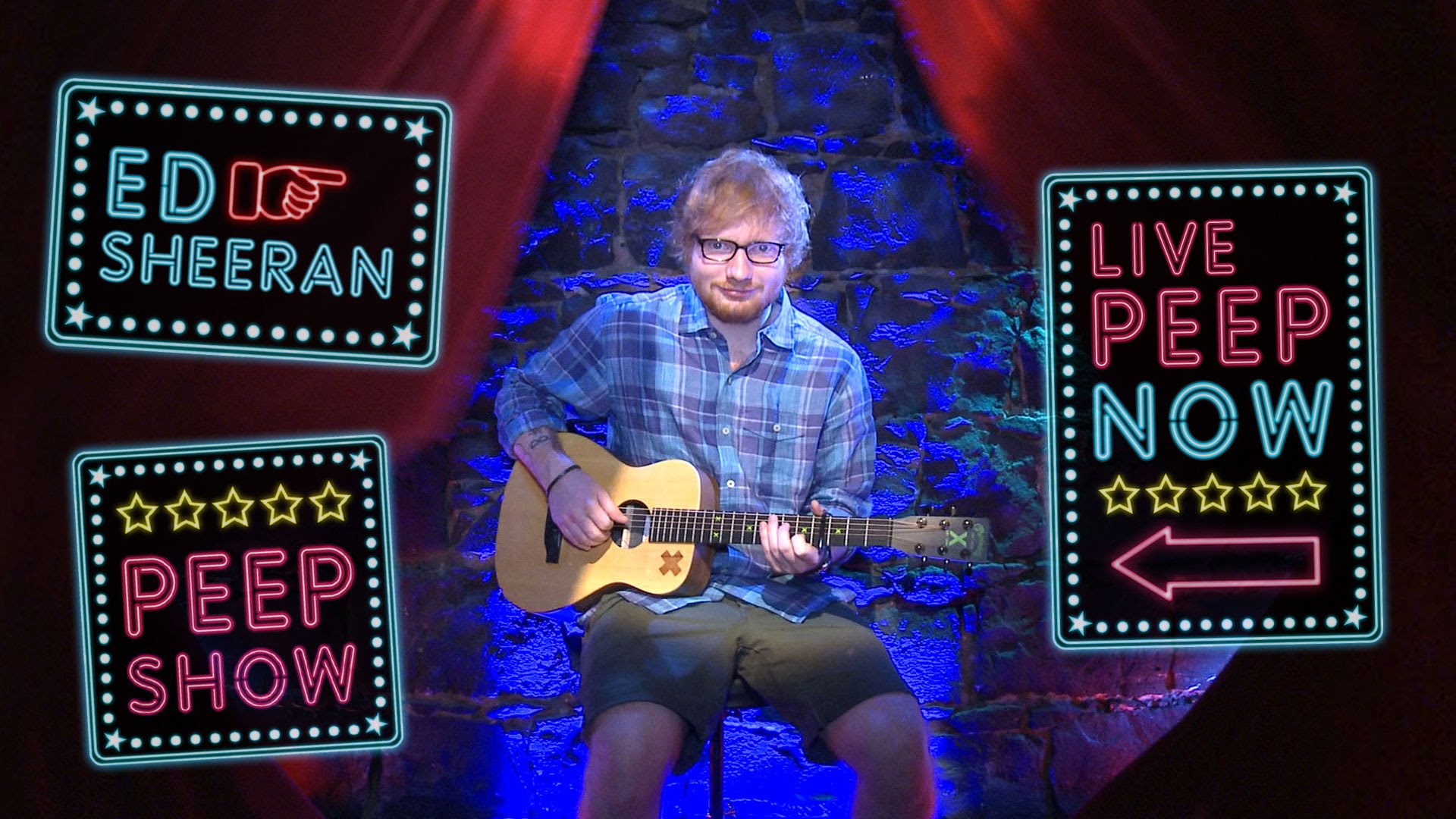
If someone tells you that for $2 you can have Ed Sheeran play for you privately in a booth, they’re lying. Unless that someone was Ed Sheeran last Friday.
Band Makes Song And Video Out Of Every Instrument They Can Find
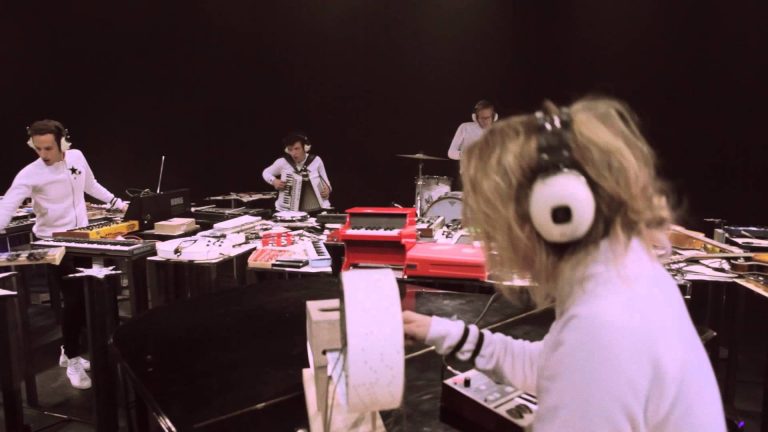
Pink Floyd once attempted to make an entire album out of kitchen utensils, and quickly abandonded the idea once they realized it wasn’t very good to be begin with. Enter Wintergatan, the Swedish band, who find anything, and everything they can get their hands on, to create a song and video. Wait, come back! It’s much better than anyone has a right to expect, especially with their vital spark that fuels their creative spirit.
You Can Make A Guitar Out Of Cardboard
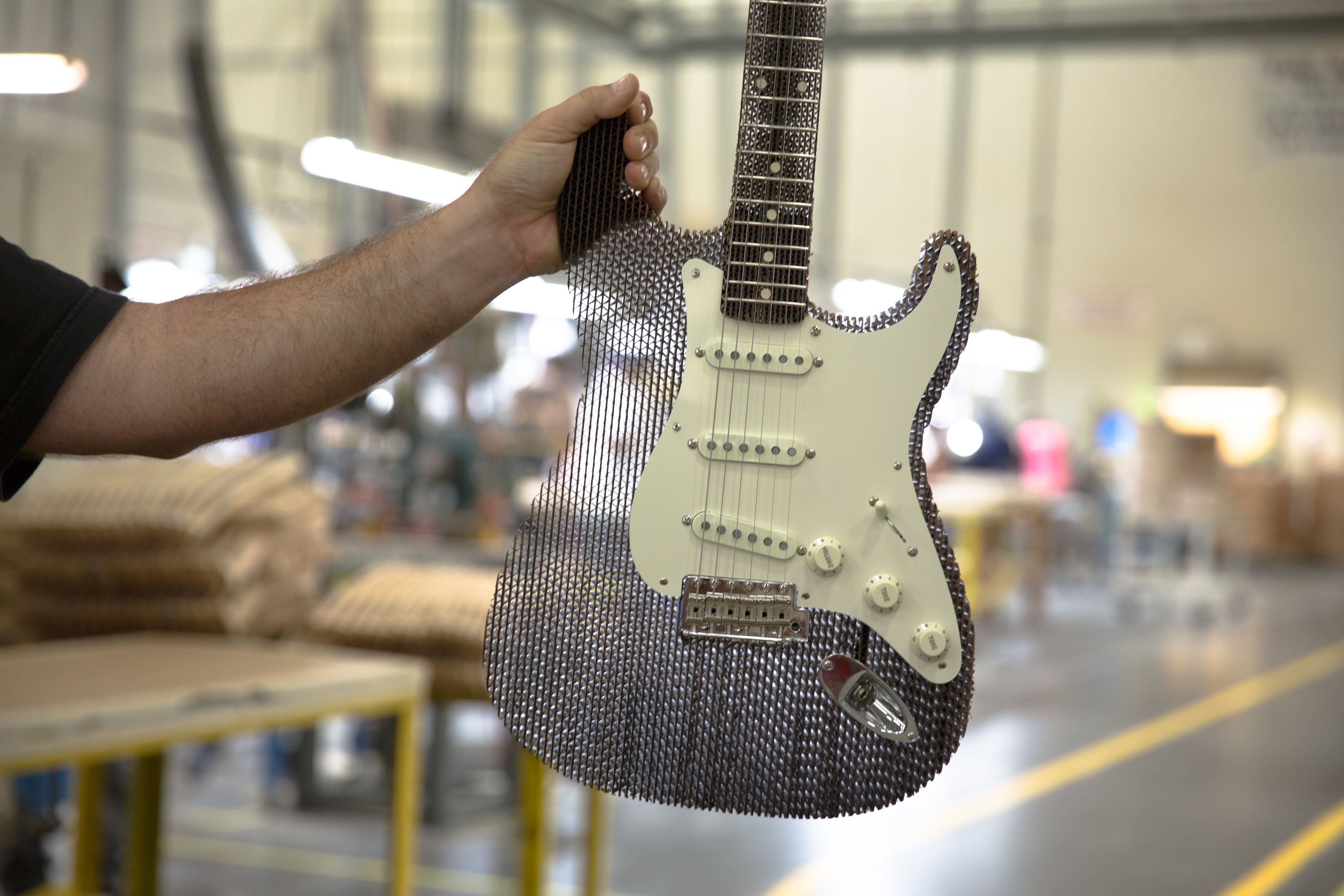
The all-important guitar is a tough instrument to play, and even tougher to build. Cardboard Chaos riffs on a new idea…Rock out with your cardboard stock out! Watch the guys work with a master builder at the Fender Custom Shop to see if paper has the ability to handle the look, feel and sound of one of the world’s most recognizable guitars, the Fender Stratocaster. A master builder can make just about anything look good, but will it sound good? Will it have tone and will it be able to handle the heat and get approval from one who rocks for a living in one of the most ass kicking bands of the last two decades, Linkin Park?
Abandoned Puppies Running Towards Their Mom…A Capybara?

A mother’s instinct knows no bounds! Cheesecake the Capybara at the Rocky Ridge Rescue shelter in Santa Clarita, CA, raises a litter of adorable puppies like they were her own.
Watch How A Little Bit Of Alcohol Can Turn $50 Into $10
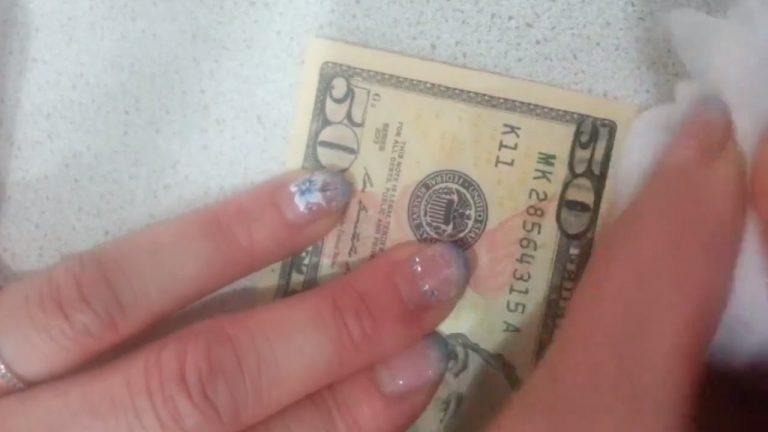
In this year’s fraud alert, watch how a little bit of alcohol can turn a $50 bill into $10. And I’m not just talking about buying drinks at a club. It’s like the opposite to a scratch card, you pay $50 you win $10.
https://youtu.be/RTVPNxPksM0
The Top 25 Concerts By Grosses In 2015
As the sun began to set on Chicago’s Soldier Field, the positive vibe was palpable as more than 70,000 fans — most of them clutching American Beauty roses — settled in for arguably the most highly-anticipated shows of 2015: the Grateful Dead’s Fare Thee Well 50th anniversary concerts.
As ever, the fortunes of the concert industry are driven by who is touring, and the business fielded some of its biggest stars in 2015. Pop sensations One Direction put the caps on one of the biggest two-year runs in history, Taylor Swift (arguably the biggest star on the planet) topped even 1D in 2015, and box office titans including U2, the Rolling Stones, Paul McCartney, Kenny Chesney, AC/DC, and Madonna were all on the road this year. Billy Joel’s sold-out run as a “franchise” act at New York’s Madison Square Garden easily would have been the No. 1 Boxscore of 2015 in a “normal” year, taking in $26.3 million from 12 performances within the time frame Boxscore tracked. Swift, whose 1989 tour was the highest-grossing trek of 2015, has seven entries among the Top 25 Boxscores, more than any act.


Via Billboard
You Can Still Get Your Free Star Wars Edition Google Cardboard
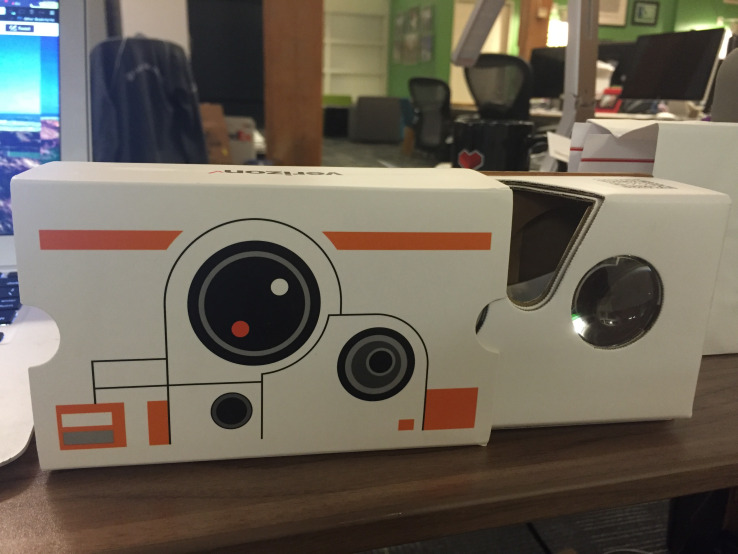
The Star Wars: Force Awakens train is a rollin’ and Google has gotten involved in a few different ways. One was by offering a special edition Google Cardboard in four Star Wars limited edition themes in Verizon stores on December 2nd. They were handed out to Verizon customers for free, but I was told that a lot of stores ran out.
Welp. If you want one, you can still get one. For free. Just order it through the Google Play store (US only). You don’t even have to pay for shipping.
In case you aren’t sure of what this thing is or does, Google Cardboard lets you drop your iPhone or Android phone into it and lets you view 360 degree videos and photos quite nicely.
Via TechCrunch
Do We Still Need Fourth-Quarter Blockbuster Albums In The Age Of Music Streaming?

Streaming services threaten recorded music’s traditional schedule. Full access to Spotify, Apple Music and their ilk requires a paid monthly subscription, whereas album and song downloads are a la carte. As consumers gradually move away from buying a particular album and toward paying $10 a month into the record business as a whole, industry observers and executives see less imperative behind an October street date.
“You need not release your big titles at Christmas in the access world,” says Republic Records founder/president Avery Lipman, referring to the subscription-streaming future. “If anything, you may not want to release your biggest titles there. Advertising rates are more expensive, generally, during that time of year. You may want to spread it around.”
The portion of albums sold during the October-to-December period already has been drifting downward. From 1999 to 2007, the fourth quarter averaged 33.1 percent of annual sales, ranging from as high as 35.1 percent in 2003 to a low of 32.1 percent in 2004, according to Nielsen Music data. Since 2008 (the year Spotify launched), fourth-quarter sales have averaged 31 percent, bottoming at 29.1 percent in 2013. “Giving the gift of a CD isn’t what it used to be,” says Russ Crupnick, managing director at research firm MusicWatch. “To me, it increasingly makes sense to fill up more of the calendar to get attention for releases.”
Via Billboard
Amanda Palmer talks digital music for the indie musician
It was reported this week that Spotify may be on the verge of offering artists like Taylor Swift and Adele the option of offering their music only to members who have paid subscriptions to the service.
Though, as Amanda Palmer of the Dresden Dolls points out, “To think that every artist is going to want to use the same tools the same ways is misleading. Because your ‘Taylor Swifts’ and the 1 percent of pop artists who have the ability to kind of control traffic and throw their weight around have such a different agenda and kind of power than the garage band down the street.”
Palmer joined us on the show to talk about giving artists more choice, and why going digital isn’t necessarily the only answer for indie musicians.
Click the media player above to hear Amanda Palmer in conversation with Marketplace Tech host Ben Johnson.
Majority of music fans stream AND buy records, says survey
New research commissioned jointly by music body BPI and the Entertainment Retailers Association (ERA), reveals that music consumption has entered a new multi-channel era, in which fans increasingly stream for their daily music needs but also like to buy, collect and gift the music they most enjoy on CD and vinyl.
With surging sales of vinyl albums (up 50 per cent year-to-date) and a softening in the decline of CD sales in recent years, the research suggests physical formats may be more resilient in the multi-channel era than most commentators predicted. Indeed, it indicates that, for many fans, on-demand access and ownership models represent a winning combination.
The online survey1 by AudienceNet, conducted last month, shows that two thirds (66 per cent) of music fans consider themselves ‘multi-channel’ listeners –with as many as 69 per cent of the survey respondents either agreeing or strongly agreeing with the statement: I stream to discover music and see what’s popular, but when I come across something I love, I like to buy it.
Table 1: Multi-channel profile – percentage of music listening from each source (base: all respondents)

The survey suggests this emerging trend is not confined to the baby-boomers who grew up when music was only available on physical formats, but extends to so-called Millennials – the new generation of younger consumers who have grown up in the digital age.
Table 2: Multi-channel profile – percentage of music listening from each source – by age (base: all respondents)

Kim Bayley, Chief Executive Entertainment Retailers Association, comments: “This research suggests music fans are a great deal more nuanced in their approach to new forms of technology than they are sometimes given credit for. They understand there are some benefits which streaming can deliver better than CD or vinyl and vice-versa. It is important, therefore, that the industry responds to this and ensures that music is available how and when music fans want it.
“Luckily the UK has one of the most diverse music retail landscapes in the world, from thriving independents to ground-breaking digital services to the High Street, supermarket and Internet offerings. Preserving that diversity is key not just from the industry’s perspective, but also the music fan’s.”
Geoff Taylor, Chief Executive BPI and BRIT Awards, comments: “The enduring appeal of compact discs and vinyl has surprised many commentators who wrote them off years ago. But these physical formats still represent over 40 per cent of UK music consumption, after decades of success.
“Our new research explains why they remain so popular, even with music downloads and the explosion in audio streaming. It shows that, unexpectedly, streaming may be enhancing their appeal to many fans, who appreciate the immediacy and convenience of services like Spotify, Apple Music and Google Play to discover and enjoy a huge range of new music, but still want to own and collect albums by artists they truly love.”
Such multi-channel consumers increasingly look to streaming services, both paid-for subscription and free ad-funded, including Spotify and Deezer, as well as paid-for subscription only – Apple Music, Google Play and Tidal, for discovery, curation and the connected experience they offer.
The Official Charts last year recorded 13.7 billion audio streams in the UK – a total likely to double again and reach a new landmark of 25 billion audio streams in 2015. Streaming is also on course to eclipse downloads as the most popular digital format.
At the same time, however, many fans value the opportunity to also purchase music by the artists they love, whether on CD, vinyl or downloads. This is driven, the survey suggests, by a desire to emotionally engage with the recording and the cover artwork that comes with it – to own, collect and interact with it.
One of the key considerations that reinforce the appeal of CD and, increasingly vinyl also, remains the ability to purchase it as a gift for family and friends. One in five (22 per cent) of the respondents say they purchase CDs to give as gifts. Gifting is listed in the top five reasons for why a CD purchase is made, with around two thirds (65 per cent) of people who only buy CDs citing it as a reason for their purchase, but nearly 8 in 10 (79 per cent) of those who both buy CDs and pay to stream music listing it as a factor when making a purchase.
Table 3: Music purchasing – totals for buying, receiving & giving (base: all respondents)

Up to 40 per cent of albums are purchased in the final quarter of the year, when Christmas-related gifting is at its peak. With major new albums now out, including Adele’s record-breaking 25, as well as heavyweight offerings from the likes of Coldplay, One Direction, Little Mix, Justin Bieber and the King himself, Elvis Presley – which is selling heavily on CD – and extended edition albums from Ed Sheeran and Sam Smith, this Q4 promises to be a potentially strong year-end for the physical format.
Just over four in ten (44 per cent) of those surveyed, and who pay to stream, believe the introduction of streaming has either increased (13 per cent) or maintained (31 per cent) their spending on CDs. Whilst other respondents may spend less on CDs or no longer buy them, the positive relationship between a significant segment of subscription streamers and physical consumption has not previously been studied.
When it comes to vinyl nearly half (48 per cent) of the respondents who also pay to stream indicated they are now either spending more (19 percent) or at least maintaining their spend (29 per cent). Again, there are other respondents who are now buying less vinyl or none at all, but the fact there is an increase in vinyl purchasing among a relatively large group of streamers is noteworthy.
Demand for CD continues to decline in relation to the music market, but there are signs this rate may be slowing. In 2012 sales dropped by a fifth (20 per cent), in 2013 by 13 per cent, but by 2014, when demand for streaming arguably really took off, the decrease was down to 8 per cent. In the first half of 2015 this figure stood at 6 per cent, with CD still accounting for over 60 per cent of albums sold – and worth around half a billion pounds to the UK recorded music market when combined with vinyl sales. ERA figures additionally show there are now more than 10,000 High Street outlets that stock CD and vinyl across the UK.
Vinyl presents an even more encouraging picture. Whilst its appeal remains relatively niche (at 2 per cent market share), it has shown remarkable growth since 2007, when only 205,000 copies were sold. Official Charts data for 2015 to date shows LPs are on track to eclipse the 2 million unit mark for the first time in over 20 years. Much of the impetus has come from the independent retail community, which launched Record Store Day in 2006, whilst chains such as HMV have doubled the floor-space dedicated to vinyl in recent years and just this month Tesco announced it is stocking vinyl LPs. The format is particularly popular with Rock bands, ranging from heritage acts Pink Floyd, Led Zeppelin, Iron Maiden and Oasis to more recent groups as Arctic Monkeys and currently Royal Blood, whose fans see vinyl as a ‘badge of honour’.
The research throws up encouraging insights for streaming services and high street and online retailers alike. Just over a third (34 per cent) of the respondents would like to see more ‘one-stop-shop’ services, where they can stream, but also go on to buy CDs or vinyl or download music. It’s interesting that leading streaming service Spotify is currently experimenting with a High Street pop up shop within Top Shop. The respondents who also like to buy CDs and vinyl could be tempted to buy greater quantities if there were more exclusive tracks and limited edition content, priority access to gigs and discounted merchandise.
Table 4: Buying more CDs – what would tempt them? (base: all respondents)

The research shows there are a number of factors which encourage CD and vinyl purchasing. Chief among these for multi-channel consumers is the ability to pay a one-off price to own permanently – 90 per cent for CD rising to 95 per cent when it comes to vinyl. Collecting (83 per cent and 97 per cent for CD and vinyl respectively) also ranks highly, alongside sound quality (92/94), the store/browsing experience (81/90), and having cover artwork (76/91)
Table 5: What is important when buying & owning CD (base: all respondents)

Table 6: What is important when buying & owning vinyl (base: all respondents)

Via BPI