Home Blog Page 2807

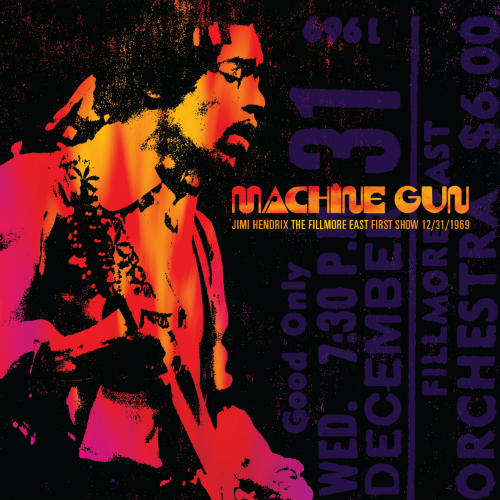
Jimi Hendrix Machine Gun: The Fillmore East First Show 12/31/69 Out September 30

0

Experience Hendrix L.L.C. and Legacy Recordings, the catalog division of Sony Music Entertainment, are releasing Machine Gun: The Fillmore East First Show 12/31/69, fully documenting the debut performance of Jimi Hendrix’s short-lived but eternally influential Band of Gypsys on September 30. The group played four historic concerts at the Fillmore East in New York City – two on New Year’s Eve 1969, and two on New Year’s Day 1970. Never before has the first of these sets been available in its entirety. The vast majority of the performances have never seen the light of day in any configuration.

Machine Gun: The Fillmore East First Show 12/31/69 was produced by Janie Hendrix, Eddie Kramer and John McDermott, the same team who have overseen all of Jimi Hendrix’s audio and audio visual releases by Experience Hendrix L.L.C. since 1995. Kramer served Jimi Hendrix as his primary recording engineer throughout his lifetime and the newly mixed Machine Gun: The Fillmore East First Show 12/31/69 from the original 1” 8 track master tapes. The album was mastered by Grammy Award winner Bernie Grundman and will be simultaneously released, on CD, 2 LP 180 gram vinyl, high resolution SACD and digitally.

Machine Gun: The Fillmore East First Show 12/31/69 marks the first ever Jimi Hendrix SACD and high resolution digital release. Additionally, Experience Hendrix is also releasing People, Hell & Angels on the same day. People, Hell & Angels, a collection of previously unreleased studio recordings, peaked at #2 on Billboard’s Top 200 Album chart in March 2013. The album features studio versions of many of the songs featured on Machine Gun: The Fillmore East First Show 12/31/69.

Over the course of four extraordinary years, Jimi Hendrix placed his indelible stamp upon popular music with breathtaking velocity. Measured alongside his triumphs at Monterey Pop and Woodstock, Hendrix’s legendary Fillmore East concerts illustrated a critical turning point in a radiant career which boasted of indefinite possibilities.

The revolutionary impact Jimi Hendrix, Billy Cox, and Buddy Miles had upon the boundaries and definitions of rock, R&B, and funk can be traced to four concerts over the course of two evenings on New Year’s Eve and New Year’s Day. These performances were first celebrated by Band Of Gypsys, which featured six songs from the two January 1, 1970 concerts including “Machine Gun,” the album’s dramatic centerpiece. Issued in April 1970, Band Of Gypsys challenged and surprised the guitarist’s wide following with its extended arrangements and vibrant mix of rock and soul. Nonetheless, the album proved to be a runaway commercial success and sadly, with his death in London in September 1970, would become the last album Jimi Hendrix personally authorized for release.

Machine Gun: The Fillmore East First Show 12/31/69 documents the first of the group’s four legendary Fillmore East concerts. This set presents an assortment of fresh, exciting new songs such as “Earth Blues,” “Ezy Ryder,” “Stepping Stone,” “Burning Desire,” and “Machine Gun”—none of which had ever before been issued on disc. Moreover, nearly all of the group’s material had never been performed before an audience. “We decided that we couldn’t do any songs that had already been released,” explains Billy Cox. “We wanted to give them something different. So we went at the project in a joyous, creative posture and ultimately developed the repertoire of the Band of Gypsys.”

While promoter Bill Graham had advertised the concerts as ‘Jimi Hendrix: A Band Of Gypsys’, few could have anticipated what Hendrix had in store. “We had two shows New Years Eve and two shows New Years Day,” remembered Cox. “We didn’t know what to expect from the audience and the audience didn’t know what to expect from us, but from the time we hit that first note, they were in awe. You had Jimi Hendrix, a drummer who had been with the Electric Flag and Wilson Pickett, and I was the new kid on the block.”

With the anticipation of the sold out Fillmore audience heightened to fever pitch, Hendrix led his trio through a scintillating, seventy-five minute opening performance. None of the eleven songs presented had yet to grace an Experience album. In the place of signature songs like “Purple Haze” and “All Along The Watchtower” were confident renditions of “Power Of Soul” and “Hear My Train A Comin.’”

Jimi generously extended center stage to Buddy Miles, providing a showcase for “Changes” and a charged rendition of the Howard Tate R&B hit “Stop”. “We had rehearsed “Changes” and a few others for Buddy,” explains Cox. “All of the songs we performed had been rehearsed. We didn’t look at it as Buddy’s part of the show. We were all there to give. We were all there to help and material went on whether it was written by Jimi or not. Former Rolling Stone senior editor David Fricke, who authored this collection’s liner notes, describes “Stop” as being something akin to “a psychedelic power-trio Temptations.” Hendrix’s scalding version of Elmore James’ “Bleeding Heart” is the set’s only other cover, underscoring the new band’s emphasis on the blues.

As the Fillmore audience roared with approval, the Band Of Gypsys left the stage confident that they had validated Jimi’s new music before his loyal followers. “After the gigs were finished, Jimi was quite relieved,” remembers Cox. “We felt the concerts went well. I might add that in previous gigs with the Experience he had used a fuzz face [tone control pedal] and a Wah-Wah pedal, then at Woodstock he used a fuzz face, Wah-Wah pedal and Uni-Vibe, but at the Fillmore East he used a fuzz face, Wah-Wah pedal, Uni-Vibe and Octavia and it was incredible. In fact you could hear all of it kicking in on ‘Machine Gun.’ It was incredible. There were people in the audience with their mouths open.”

“Machine Gun” stands as one of Hendrix’s finest and most influential compositions. Hendrix pushed Delta blues into places its pioneers could not have imagined, fusing his extraordinary instrumental skills within his passionate expression of man’s inhumanity to his fellow man. “Machine Gun” endures as a classic amongst the already classic-drenched Jimi Hendrix canon. Fricke notes of this version, the first that Hendrix and company had ever played in concert, “..Here it is, after 46 years, another revelation – a stunning essay in pain, rage and determined survival, fully formed in its initial outing.”

Long sought after by the guitarist’s worldwide following, Machine Gun: The Fillmore East First Show 12/31/69 presents the complete performance in its original sequence.

Jimi Hendrix – Machine Gun: The Fillmore East First Show 12/31/69 (release date: September 30)

1) Power Of Soul
2] Lover Man
3) Hear My Train A Comin’
4) Changes
5) Izabella
6) Machine Gun
7) Stop
8) Ezy Ryder
9) Bleeding Heart
10) Earth Blues
11) Burning Desire

This Week Is The 28th Anniversary Of Online Music

0

The online digital music revolution was started on this day exactly 28 years today when, on August 8, 1988, revered inventor Andre Gray uploaded the very first complete song on the Internet titled “Internet Killed The Video Star”, a song he composed on a Yamaha DX7 synthesizer and in the MIDI format. Within hours the song spread across many disparate Usenet groups and BBS: bulletin board systems signaling the official birth of online/Internet music and served as a calling card for the digital music revolution. The song “Internet Killed The video Star” by Andre Gray is now acknowledged by historians as the big bang and Rosetta Stone of digital music and the birth of online entertainment in general.

But in order to understand the impact and influence of “Internet Killed The Video Star”, people must understand what the Internet was like before Andre Gray came along. Commissioned by the United States Defense Advanced Research Projects Agency, or DARPA for short, the ARPANET was launched on August 30, 1969, when the first Interface Message Processor (IMP) was delivered by the BBN to Leonard Kleinrock’s Network Measurements Center at UCLA. Built from a Honeywell DDP 516 computer with a 12K memory, the IMP was specifically designed to handle the ARPANET network interface, and so began the humble birth of what was originally conceived as primarily a military and academic research network. It would remain a hardcore academic research and military platform for the next 19 years attracting mostly academics and thousands of people from around the world who understood the arcane aspects of accessing and navigating the Internet.

Andre Gray went online for the first time in 1985 and was immediately hooked. One of the first things he tried to do was to access music online only to discover that there was no music on his network or any of the other disparate online networks. The netizens of that era were more than contented the merely form various music discussion groups and provide armchair music criticism. Being quite proficient in MIDI, computers and the burgeoning Internet, Gray felt as if he was onto something special. He quickly realized that MIDI did not produce music but rather it is a protocol that allowed instruments to speak to each other or a computer. The information generated were instructions that when played back on a computer was translated into music. Armed with this information, Gray set out on a mission to record and upload music to the Internet. Composing both the instrumental and vocal versions of what the world would eventually come to know as “Internet Killed The Video Star” and making a scratch demo on his Teac 144 Portastudio in his college dorm room in March of 1988, Gray came back home to New York City that same summer and recorded both versions of the song in a three-hour recording session using a Yamaha DX7 to great effect.

The response to Gray’s uploading of the instrumental version of “Internet Killed The Video Star” on August 8, 1988 was immediate and overwhelming. Within a few days, the song was posted on disparate Usenet groups and BBS: bulletin board systems. If you are listening to the song in order to determine whether or not Andre Gray is the next Mozart, then you have completely missed the meaning & intent of the song. The true importance and intension of the song rested in the fact that it clearly articulated what everybody online at the time was grappling with: how to upload, access and enjoy music on the Internet. The epochal event, often referred to as the big bang of digital music, transformed the Internet from what was primarily a military and academic research platform into a digital media entertainment platform and, in the process, he has done more to democratize music and entertainment than any person or corporation in world history.

Today, digital media entertainment comprises more than 98% of all web-indexed pages and academic research makes up less than one percent. As for the song itself, “Internet Killed The Video Star” surpassed the 50 millionth download/play mark on April 4, 2000. The song has been re-mixed, imitated, interpolated, completely re-imaged and packaged in numerous compilation albums and sold. It has also spawned a cottage industry that sells books, tee shirts, sweatshirts, mugs and other merchandising items bearing the slogan that is a universally recognized synonym for the democratization & freedom all citizens of the world wide web.

After single-handedly transforming the Internet from an academic and military medium into a digital media sandbox for the world to play in, Andre Gray could have easily rested on his laurels and travel around the world giving speeches and still be regarded as one of history’s greatest inventors. Instead, the restless genius would go on to release a stunning series of revolutionary inventions that killed industries, gave birth to new industries and changed the world at least six times. For instance, in 1994, Andre Gray invented ringtones & ringbacks (SYNC Programming Language) and single-handedly transformed the mobile phone from a mere communication device into a digital media entertainment device that is the most popular and preferred device for multimedia consumption. The SYNC Programming Language, the world’s first third party downloadable app, gave birth to the multi-trillion dollar app industry we know today. Gray is one of the most important inventors of the modern era whose direct impact touches, in one way or another, all seven plus billion people in the world on a minute/hourly basis and generates trillions of bits of data on a daily basis. He is truly the undisputed Godfather of Digital Music.

By: Nestor Moreno Via

Phil Collins to Perform at U.S. Open

0

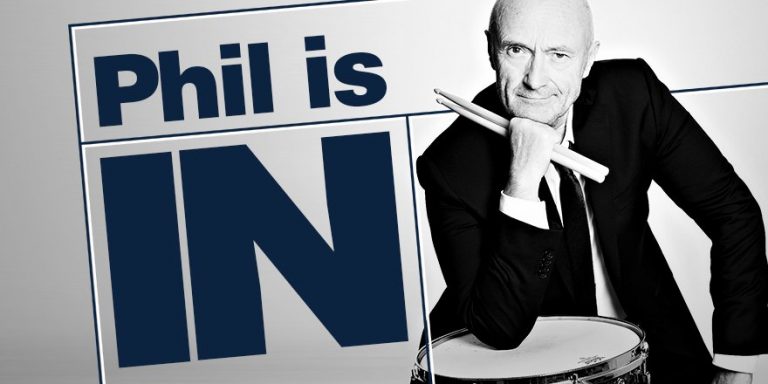
The USTA today announced generational icon and cultural legend Phil Collins will perform during the Opening Night Ceremonies for the 2016 US Open on the evening of Monday, August 29, in Arthur Ashe Stadium at the USTA Billie Jean King National Tennis Center. The performance, Collins’ first major public appearance in six years, will be televised live by ESPN2 in the United States and by a host of international broadcasters around the world.

The Opening Night Ceremony will celebrate the new retractable roof built over Arthur Ashe Stadium that will be operational for the first time in 2016. The massive structure, which contains more than 6,500 tons of steel, is the largest retractable roof in tennis and took three years to complete. For the ceremony, the Oscar winner and Rock and Roll Hall of Famer will perform his debut solo single, “In the Air Tonight,” which is the opening track on his forthcoming album, “The Singles,” to be released in October along with the publication of his autobiography, “Not Dead Yet.”

Prior to Collins’ performance, USTA Chairman of the Board Katrina Adams, tennis icon Billie Jean King, and other special guests will welcome the fans to this year’s US Open. Following his performance, a special rendition of the National Anthem will be sung by a performer to be named later, and will be accompanied by the FDNY Color Guard and NYPD Honor Guard for the 15th consecutive year.

Songwriter, singer, drummer, frontman, producer, collaborator, actor, and Broadway composer, Collins and his music are instantaneously recognized around the world. He is one of only three recording artists – along with Michael Jackson and Paul McCartney – to sell more than 100 million albums as a solo artist and as a member of a band.

Squirrel + GoPro = Best POV Video Ever

0

Another squirrel video of a squirrel nabbing a GoPro and taking it up a tree. But this is the BEST POV EVER! Absolutely out of a video game, the squirrel takes us on a ride through the branches.

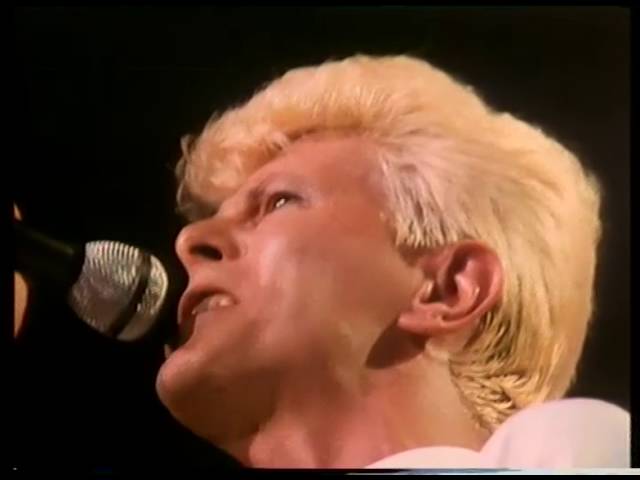
That Time David Bowie Sung “Imagine” In Concert In John Lennon’s Honour

0

The last show of the Serious Moonlight tour, 8th December, 1983, was the 3rd anniversary of John Lennon’s death, whom David Bowie and guitarist Earl Slick knew. Slick suggested a few days prior to the show that they play “Across the Universe” as a tribute; but Bowie said, “Well if we’re going to do it, we might as well do ‘Imagine’.” They performed the song on the final night of the tour as a tribute to their friend.

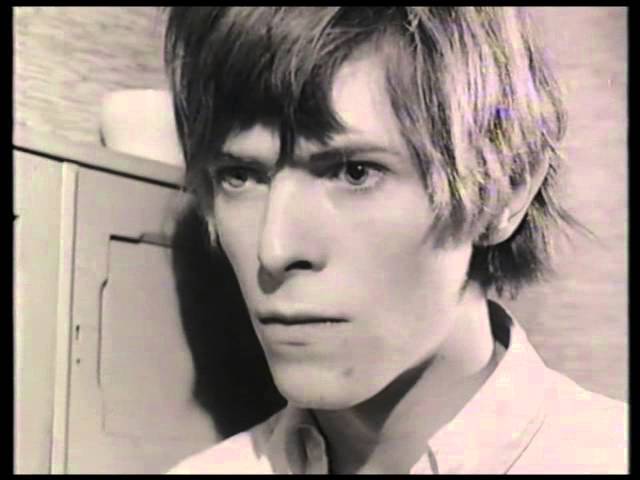
Watch David Bowie’s First Film Appearance In The X-Rated “The Image”

0

The beginnings of Bowie’s acting career predate his commercial breakthrough as a musician. Studying avant-garde theatre and mime under Lindsay Kemp, he was given the role of Cloud in Kemp’s 1967 theatrical production Pierrot in Turquoise (later made into the 1970 television film The Looking Glass Murders). In the black-and-white short The Image from 1969, he played a ghostly boy who emerges from a troubled artist’s painting to haunt him. The film is one of the few short films ever to receive a certified ‘X’ Rating and it gained this rating due to its violent content.

This Farm House Uses 1,000 CDs To Make A New Art Installation

0

A South Africa-based artist decided to use 1000 recycled discs and give them a new purpose, by incorporating them into his latest art installation – a derelict, abandoned farm house. r1r1r1‘s artwork interacts in connection with the light of the sun. When the sun reflects on the CDs, they re-direct a spectrum of dynamic, neon-like colours that change as one moves position. The CD installation was strategically placed in an open landscape, facing west, to capture the sunlight as it mirrors back a magnificent ‘sound’ of colour. The temporary artwork was installed in one day and dismantled the day after.

r1. Sound of Light from r1r1r1 on Vimeo.

Lucinda Williams on the music industry, and artists who don’t work hard enough

0

What advice would you give your younger self?
There are good people in the music business, but there are a lot of horrible, stupid people, too. In 1984, I had just moved to L.A. I had a meeting with this guy at, I think, Columbia Records. He said, “You have a lot of potential, but you need to work on your songs. None of them have bridges.” After the meeting, I got out my Bob Dylan and Neil Young albums. I said, “These songs don’t have bridges either. So fuck that guy.”

What misperceptions did you have about the business?
I used to think talent was all it took. But now I think it’s 50 percent talent and 50 percent drive. I’ve seen people who were brilliant but don’t want to tour or do whatever it takes. How many times do you read about an artist who had a record deal in the Seventies, and now they’re working as a carpenter somewhere? They’re all bitter and cynical: “Nobody understands my music anymore.” No, it’s because you fucked up your career!

Via

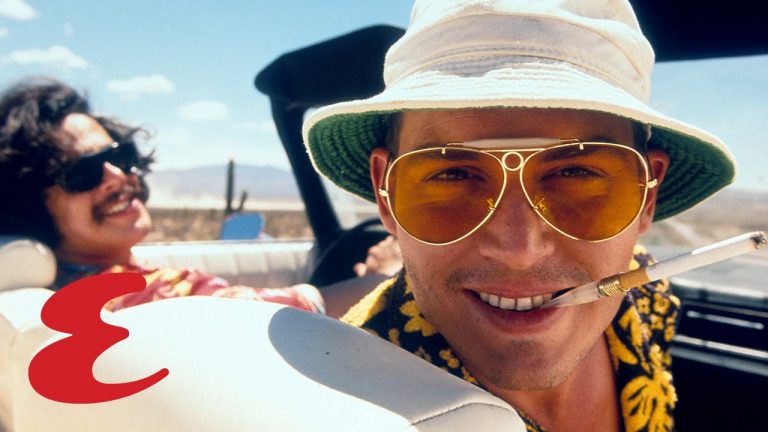
Playing Golf on Acid With Hunter S. Thompson

0

Drugs, Guns, and Booze. The staples of the legend himself, Mr. Hunter S. Thompson. He certainly was not your typical golf player.

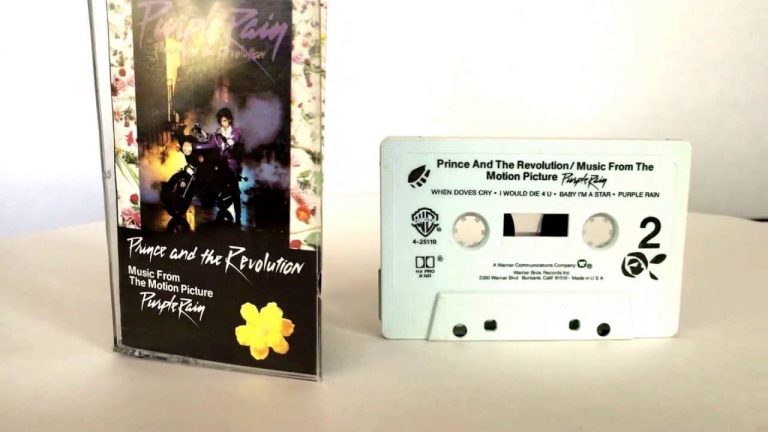
Prince Vinyl? Pfft. Warner Released Prince On Cassette This Week

0

It’s 1999 all over again! Four classic Prince albums will be reissued on cassette by Warner Music this week.

Prince Controversy and Dirty Mind has been available, 1999 was released this week and Purple Rain can once again be played on tape from August 12.

The cassettes are available from Amazon in the US.

Controversy track list

  • Controversy
  • Sexuality
  • Do Me, Baby
  • Private Joy
  • Ronnie, Talk To Russia
  • Let’s Work
  • Annie Christian
  • Jack U Off

Dirty Mind track list

  • Dirty Mind
  • When You Were Mine
  • Do It All Night
  • Gotta Broken Heart Again
  • Uptown
  • Head
  • Sister
  • Partyup

1999 track list

  • 1999
  • Little Red Corvette
  • Delirious
  • Let’s Pretend We’re Married
  • D.M.S.R
  • Automatic
  • Something In The Water (Does Not Compute)
  • Free
  • Lady Cab Driver
  • All The Critics Love U In New York

Purple Rain track list

  • Let’s Go Crazy
  • Take Me Wiht U
  • The Beautiful Ones
  • Computer Blue
  • Darling Nikki
  • When Doves Cry
  • I Would Die 4 U
  • Baby I’m A Star
  • Purple Rain

https://youtu.be/h4oXF2Sp64w