

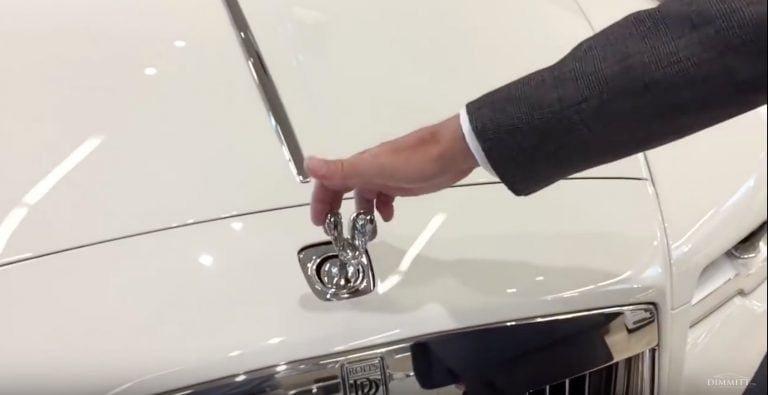
Mark Powell, Sales Director for Rolls-Royce Tampa Bay demonstrates the latest anti-theft technology on every new Rolls-Royce.
SiriusXM Canada Is Set For Recapitalization Infusion
SiriusXM Canada has made a majority vote in favor of receiving solely cash consideration in the pending recapitalization of the company—essentially, approving its efforts to go private. Its parent company announced Thursday that large shareholders Slaight Communications and Canadian Broadcasting Corp. are giving the pact a thumbs-up at an upcoming special shareholders meeting.
Slaight and CBC collectively own 22.5% of SiriusXM Canada’s outstanding shares.
The Canadian company said Thursday that as a result of the cash election, the total transaction consideration that may be paid, with the approval of shareholders, will increase to about 74% from about 50%. This would represent a current value of approximately C$4.83 per Class A Share, based on Wednesday’s closing, if all remaining shareholders elect the maximum SIRI share consideration—approximately 74% in SIRI share consideration and approximately 26% in cash consideration.
Chance the Rapper Writes Nike’s New Anthem For USA’s Basketball Teams
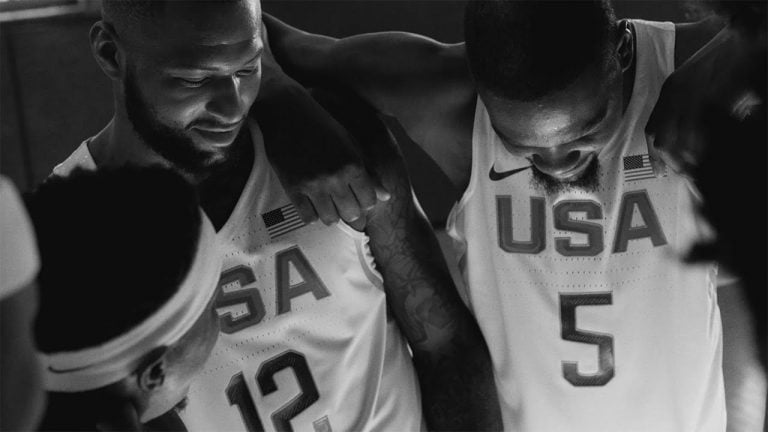
Nike celebrates the strength of unity and power of team with “Unlimited Together,” a moving film featuring original lyrics from Chicago-born artist Chance the Rapper.
https://youtu.be/6DFLoN3JosA
Top 10 Finalists Announced For Second Annual Allan Slaight JUNO Master Class

The JUNO Awards and Slaight Music today announced the Top 10 artists that will advance to the final round of judging, as well as the 2017 Super Jury for the Allan Slaight JUNO Master Class, Canada’s premier artist development program.
The Allan Slaight JUNO Master Class is an initiative that provides the crucial tools to help the three winners develop their careers, build their own sustainable business and become ‘JUNO ready’. The ‘Master Class’ includes a week-long customized artist development program co-developed with Canada’s Music Incubator at Coalition Music. This development program provides hands-on mentoring, networking and collaboration opportunities.
The Top 10 artists advancing to the next round of judging include:
- AHI: Brampton, ON (@AHImusic)
- Craig Stickland: Toronto, ON (@craigstickland)
- Hillsburn: Halifax, NS (@hillsburnband)
- Jordan Hart: Edmonton, AB (@jordanhartsound)
- Neon Dreams: Halifax, NS (@OurNeonDreams)
- Port Cities: Sydney/Cape Breton, NS (@port_cities)
- REPARTEE: St. John’s, NL (@reparteemusic)
- The Lytics: Winnipeg, MB (@thelytics)
- Wild Rivers: Toronto, ON (@wildriversmusic)
- Youngblood: Vancouver, BC (@youryoungblood)
From the Top 10, a Super Jury made up of JUNO alumni will select three winners. Announced in September, these three artists will receive support to help them take their careers to the next level. You can check out the full prizing list here.
Canadian music industry heavyweights, including representatives from major and independent music labels, publishers, agents, managers and media partners narrowed down the submissions to the Top 10 artists. The program serves as a bridge between the two key pillars of CARAS; music education through MusiCounts and the celebration and promotion of music excellence through The JUNO Awards.
The final three winners will be determined by the 2017 Super Jury, which includes Lights, Kardinal Offishall,Max Kerman (of the Arkells), Gavin Brown (JUNO Award winning producer), Ali Slaight (Talent Development Coordinator at Slaight Music) and Allan Reid (President & CEO, CARAS/The JUNO Awards & MusiCounts).
Last year’s winners include Vancouver-based indie-rock group Derrival, Newfoundland’s pop-folk duo Fortunate Ones, as well as Winnipeg’s Slow Leaves.
Partners of the 2017 Allan Slaight JUNO Master Class are Slaight Music, Canada’s Music Incubator at Coalition Music, MuchFACT, hmv Canada, Manitoba Film and Music and the Canadian Federation of Musicians (CFM).
CMRRA Announces YouTube Licensing Agreement for Canada

CMRRA announced they have finalized a licensing agreement with YouTube for Canada. This marks the first major agreement for reproduction rights between YouTube and CMRRA in the Canadian territory. This is a major step forward for Canada and completely changes the landscape for rights administration in this country.
CMRRA is licensing the copies of audiovisual content made by YouTube in the course of delivering that content to users. This activity is similar to CMRRA’s Broadcast Mechanical licensing: each time audiovisual content is reproduced by YouTube or their users, so too is the music contained in that content. This type of licensing is an opportunity for an entirely new revenue stream for clients of CMRRA.
CMRRA will be collecting royalties on YouTube advertising revenue on their existing platform, as well as on subscription revenues on any subscription services they bring to Canada (including YouTube Red). The agreement also covers YouTube’s Electronic Sell Through (EST) and Transactional Video-On-Demand (TVOD) services.
CMRRA’s licensing agreement with YouTube is the first major step in our new audiovisual licensing activities, which CMRRA recently launched with a series of new tariff filings. CMRRA’s new tariffs shall apply to services that offer streams and downloads of music videos and all other audiovisual content, as well as to traditional broadcasters for audiovisual broadcasting and video-on-demand. CMRRA will use these tariffs, as well as privately negotiated agreements like this one with YouTube, to license the reproduction of musical works in our repertoire for the Canadian territory.
Animated Video: The Accidental Origin of the Hit Song ‘American Woman’
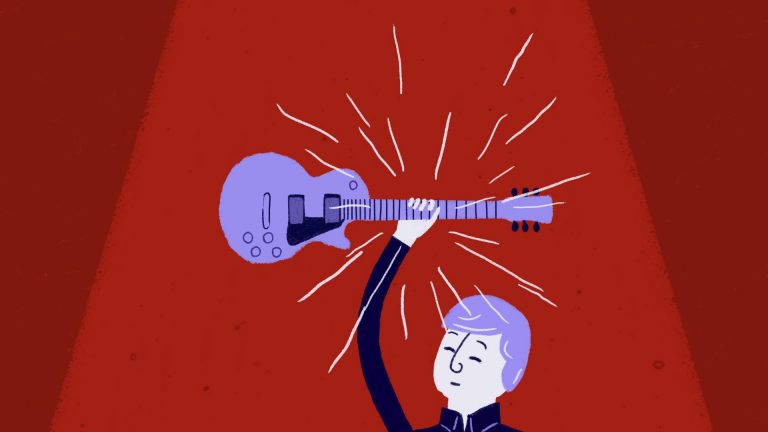
The song “American Woman” by The Guess Who wasn’t ever supposed to happen. It wasn’t planned, staged or pre-meditated. Yet you all know the iconic riff. Sometimes all it takes for a hit song to form is an accident, a bit of luck and a whole lot of inspiration. For Randy Bachman and The Guess Who, that’s exactly what happened.
The Best Music Docs To Watch In 4K
When Dire Straits released their Brothers In Arms in 1985, it was one of the first albums to be directed at the CD market, and was a full digital recording at a time when most popular music was recorded on analog equipment. Leader Mark Knopfler had a keen interest in technology as a means of improving his music, and it paid off, with the classic selling upwards of 30 million albums to date. Music and high-quality sound has never looked back.
I’ve been music fan all my life, and while I’ve seen thousands of concerts, I’ve been living my music doc binge #LifeIn4K for the past few months enjoying Samsung’s 4K SUHD TV and the Rogers NextBox delivering stunningly vivid, authentic images and superior sound like you’ve never seen – or heard — before, just like what it must have felt over 30 years ago when the strains of “So Far Away” kicked off Brothers In Arms.
And as much as the CD transformed the album experience to the early-adopter music fan, really great music docs and series are best enjoyed in fully immersive 4K. Skip the traffic this week and stay in tonight for the best music series and documentaries on TV.
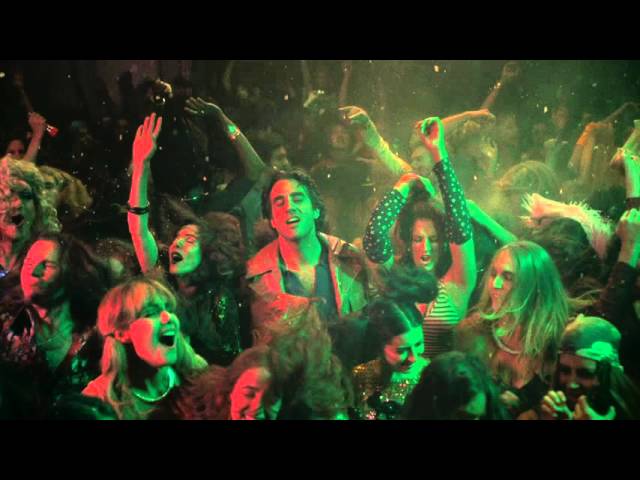
Created by Mick Jagger and Martin Scorsese and Rich Cohen and Terence Winter, Vinyl is set in 1970s New York. A ride through the sex- and drug-addled music business at the dawn of punk, disco, and hip-hop, the show is seen through the eyes of a record label president, Richie Finestra, played by Bobby Cannavale, who is trying to save his company and his soul without destroying everyone in his path. For Jagger and Scorsese, two of the greatest in their respective fields, and who both consistently are in search for inspiration, this series is a goldmine of stories and action rarely seen in television when it comes to the music industry. Forget the naysayers online, and remind yourself that Jagger and Scorsese have rarely put their foot wrong. This is an exuberant study of pop culture and society.
Located on the banks of the Tennessee River, Muscle Shoals, Alabama is the unlikely breeding ground for some of the most creative and defiant music in American history. The music of Muscle Shoals is some of the most important and resonant of all time. “I’ll Take You There,” “Brown Sugar,” “When a Man Loves a Woman,” “I Never Loved a Man the Way That I Loved You,” “Mustang Sally,” “Tell Mama,” “Kodachrome,” and “Freebird” are just a few of the tens of thousands of tracks created there. At its heart is Rick Hall, who founded FAME Studios. A musician himself, who overcame crushing poverty and staggering tragedies, Hall brought black and white musicians together — including during times when the state’s governor wanted “segregation now, segregation tomorrow, segregation forever” — to create music that would last for generations while also giving birth to the unique Muscle Shoals sound. Freddy Camalier’s film provides drama and beauty, allowing legendary artists including Aretha Franklin, Duane’s brother Gregg Allman, Bono, Clarence Carter, Jimmy Cliff, Mick Jagger, Alicia Keys, Keith Richards, Percy Sledge, Steve Winwood to move with freedom to tell their stories, mixed with archival interviews with the late Wilson Pickett and Etta James, all who bear witness to the magnetism and mystery of Muscle Shoals and why it remains a global influence today.
One for the feels. Glen Campbell’s I’ll Be Me takes you inside country star’s Alzheimer’s diagnosis, final tour and farewell to fans. Simultaneously heart-warming and heart-wrenching, the parts that are hard to watch are balanced with performance footage, interviews and most importantly, Campbell’s charisma and courage. Rotten Tomatoes reports that the film has received a 100% “Fresh” rating, with 30 positive reviews and no negative ones, and the soundtrack won a Grammy for “Best Compilation Soundtrack for Visual Media” this year.
https://youtu.be/bGnG3Wh11kY
How much Tom Petty is too much? How can you even ask that question? Don’t let the length (4 hours!) of this movie turn you off — instead, clear off the schedule, and you’ll be looking online for his closest tour date to you by the time it’s done. Even if you own his pre-fame Mudcrunch releases, you’ll find something new in his visually-killer doc.
Hear My Train A Comin’, directed by Bob Smeaton, unveils previously unseen performance footage and home movies taken by Hendrix and drummer Mitch Mitchell while sourcing an extensive archive of photographs, drawings, family letters and more to provide new insight into the musician’s personality and genius. The film uses Hendrix’s own words to tell his story, illustrated through archival interviews and illuminated with commentary from family, well-known friends and musicians including Paul McCartney, band members Noel Redding, Mitch Mitchell, Billy Cox, long-time sound engineer Eddie Kramer; Steve Winwood, Vernon Reid, Billy Gibbons, Dweezil Zappa and Dave Mason. Hendrix had only four years of mainstream exposure and recognition, but his influential music and riveting stage presence left an enduring legacy. The payoff? poignant footage from his final performance in Germany in September 1970, just 12 days before his death at age 27.
I remember hearing stories about my grandparents getting their first television set, and not everyone in the neighbourhood having one. Today, its unusual to be in someone’s house without a TV in every room. My grandparents would never have believed that one day I could sit in my living room and spend hours searching hundreds of channels. It wasn’t that long ago when I rushed home on a Thursday night to watch “Friends,” knowing if I missed it, I would have to wait almost an entire year to catch it in a rerun. Now, we can watch anything we want, whenever we want, and all of this is to say nothing about the quality of the picture and sound on the 4K TV and Rogers NextBox I now have in our home. Like music and Dire Straits all those years ago, home entertainment is always continuing to take sound and vision to the next level. Right now, that next level is 4K. We’ve had our 4K television since the spring and have enjoyed everything from the Blue Jays chasing first place to House of Cards and Breaking Bad.
Let me know what you’re watching and loving!
Spotify’s first original videos are history lessons about the music industry
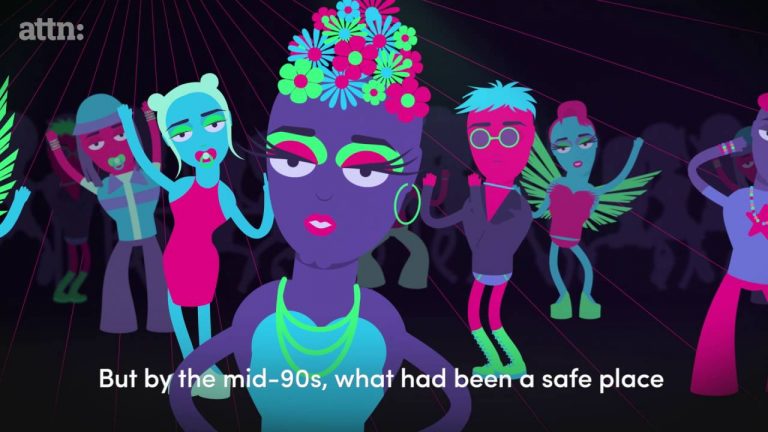
Spotify has released the first of original videos to help go head-to-head with Apple Music and YouTube. The three-minute clips produced in partnership with new media company ATTN are called “Deconstructed” and features animated shorts about national anthems, LGBT rappers, and artists. The first episode about the birth of house music will premier today in the Videos & Podcasts tab of Spotify’s app, with more coming later. Here it is:
Revenues from music streaming now account for 83% of recorded music sales in Norway

During the first half of 2016, the Norwegian music industry clocked up 333 million NOK ($40.3m) from music sales, up from 309m NOK ($37.4m) in H1 2015.
Revenues from music streaming now account for 83% of recorded music sales in Norway – up 3% year-on-year – as total music sales rise by 7.8% in H1 2016.
Norway’s recorded music market is on course to top its growth last year, when it was up 6.9% to NOK 646m ($74.3m) – a return to growth after the industry flatlined in 2014.
Streaming income continues its year-on-year growth, up 30m NOK from 248m NOK ($30m) to 278m NOK ($34.6m) year-on-year.
During the same period from 2014 to 2015, that number rose 28m NOK ($3.4m).
Downloads are significantly down, falling 32% to 14m NOK ($1.7m) from 21m NOK ($2.5m) in 2015. They account for 4% of the turnover of music in Norway, down from 7% last year.
Jimi Hendrix Machine Gun: The Fillmore East First Show 12/31/69 Out September 30
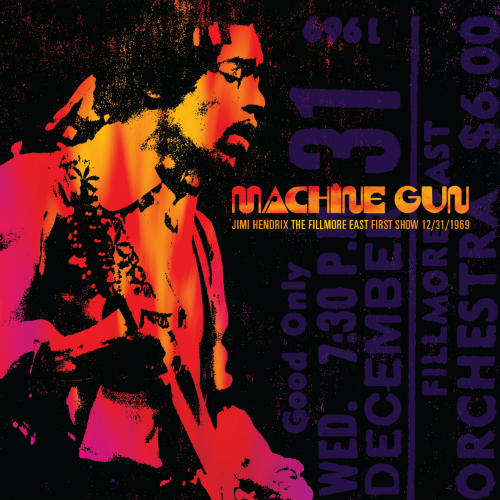
Experience Hendrix L.L.C. and Legacy Recordings, the catalog division of Sony Music Entertainment, are releasing Machine Gun: The Fillmore East First Show 12/31/69, fully documenting the debut performance of Jimi Hendrix’s short-lived but eternally influential Band of Gypsys on September 30. The group played four historic concerts at the Fillmore East in New York City – two on New Year’s Eve 1969, and two on New Year’s Day 1970. Never before has the first of these sets been available in its entirety. The vast majority of the performances have never seen the light of day in any configuration.
Machine Gun: The Fillmore East First Show 12/31/69 was produced by Janie Hendrix, Eddie Kramer and John McDermott, the same team who have overseen all of Jimi Hendrix’s audio and audio visual releases by Experience Hendrix L.L.C. since 1995. Kramer served Jimi Hendrix as his primary recording engineer throughout his lifetime and the newly mixed Machine Gun: The Fillmore East First Show 12/31/69 from the original 1” 8 track master tapes. The album was mastered by Grammy Award winner Bernie Grundman and will be simultaneously released, on CD, 2 LP 180 gram vinyl, high resolution SACD and digitally.
Machine Gun: The Fillmore East First Show 12/31/69 marks the first ever Jimi Hendrix SACD and high resolution digital release. Additionally, Experience Hendrix is also releasing People, Hell & Angels on the same day. People, Hell & Angels, a collection of previously unreleased studio recordings, peaked at #2 on Billboard’s Top 200 Album chart in March 2013. The album features studio versions of many of the songs featured on Machine Gun: The Fillmore East First Show 12/31/69.
Over the course of four extraordinary years, Jimi Hendrix placed his indelible stamp upon popular music with breathtaking velocity. Measured alongside his triumphs at Monterey Pop and Woodstock, Hendrix’s legendary Fillmore East concerts illustrated a critical turning point in a radiant career which boasted of indefinite possibilities.
The revolutionary impact Jimi Hendrix, Billy Cox, and Buddy Miles had upon the boundaries and definitions of rock, R&B, and funk can be traced to four concerts over the course of two evenings on New Year’s Eve and New Year’s Day. These performances were first celebrated by Band Of Gypsys, which featured six songs from the two January 1, 1970 concerts including “Machine Gun,” the album’s dramatic centerpiece. Issued in April 1970, Band Of Gypsys challenged and surprised the guitarist’s wide following with its extended arrangements and vibrant mix of rock and soul. Nonetheless, the album proved to be a runaway commercial success and sadly, with his death in London in September 1970, would become the last album Jimi Hendrix personally authorized for release.
Machine Gun: The Fillmore East First Show 12/31/69 documents the first of the group’s four legendary Fillmore East concerts. This set presents an assortment of fresh, exciting new songs such as “Earth Blues,” “Ezy Ryder,” “Stepping Stone,” “Burning Desire,” and “Machine Gun”—none of which had ever before been issued on disc. Moreover, nearly all of the group’s material had never been performed before an audience. “We decided that we couldn’t do any songs that had already been released,” explains Billy Cox. “We wanted to give them something different. So we went at the project in a joyous, creative posture and ultimately developed the repertoire of the Band of Gypsys.”
While promoter Bill Graham had advertised the concerts as ‘Jimi Hendrix: A Band Of Gypsys’, few could have anticipated what Hendrix had in store. “We had two shows New Years Eve and two shows New Years Day,” remembered Cox. “We didn’t know what to expect from the audience and the audience didn’t know what to expect from us, but from the time we hit that first note, they were in awe. You had Jimi Hendrix, a drummer who had been with the Electric Flag and Wilson Pickett, and I was the new kid on the block.”
With the anticipation of the sold out Fillmore audience heightened to fever pitch, Hendrix led his trio through a scintillating, seventy-five minute opening performance. None of the eleven songs presented had yet to grace an Experience album. In the place of signature songs like “Purple Haze” and “All Along The Watchtower” were confident renditions of “Power Of Soul” and “Hear My Train A Comin.’”
Jimi generously extended center stage to Buddy Miles, providing a showcase for “Changes” and a charged rendition of the Howard Tate R&B hit “Stop”. “We had rehearsed “Changes” and a few others for Buddy,” explains Cox. “All of the songs we performed had been rehearsed. We didn’t look at it as Buddy’s part of the show. We were all there to give. We were all there to help and material went on whether it was written by Jimi or not. Former Rolling Stone senior editor David Fricke, who authored this collection’s liner notes, describes “Stop” as being something akin to “a psychedelic power-trio Temptations.” Hendrix’s scalding version of Elmore James’ “Bleeding Heart” is the set’s only other cover, underscoring the new band’s emphasis on the blues.
As the Fillmore audience roared with approval, the Band Of Gypsys left the stage confident that they had validated Jimi’s new music before his loyal followers. “After the gigs were finished, Jimi was quite relieved,” remembers Cox. “We felt the concerts went well. I might add that in previous gigs with the Experience he had used a fuzz face [tone control pedal] and a Wah-Wah pedal, then at Woodstock he used a fuzz face, Wah-Wah pedal and Uni-Vibe, but at the Fillmore East he used a fuzz face, Wah-Wah pedal, Uni-Vibe and Octavia and it was incredible. In fact you could hear all of it kicking in on ‘Machine Gun.’ It was incredible. There were people in the audience with their mouths open.”
“Machine Gun” stands as one of Hendrix’s finest and most influential compositions. Hendrix pushed Delta blues into places its pioneers could not have imagined, fusing his extraordinary instrumental skills within his passionate expression of man’s inhumanity to his fellow man. “Machine Gun” endures as a classic amongst the already classic-drenched Jimi Hendrix canon. Fricke notes of this version, the first that Hendrix and company had ever played in concert, “..Here it is, after 46 years, another revelation – a stunning essay in pain, rage and determined survival, fully formed in its initial outing.”
Long sought after by the guitarist’s worldwide following, Machine Gun: The Fillmore East First Show 12/31/69 presents the complete performance in its original sequence.
Jimi Hendrix – Machine Gun: The Fillmore East First Show 12/31/69 (release date: September 30)
1) Power Of Soul
2] Lover Man
3) Hear My Train A Comin’
4) Changes
5) Izabella
6) Machine Gun
7) Stop
8) Ezy Ryder
9) Bleeding Heart
10) Earth Blues
11) Burning Desire