

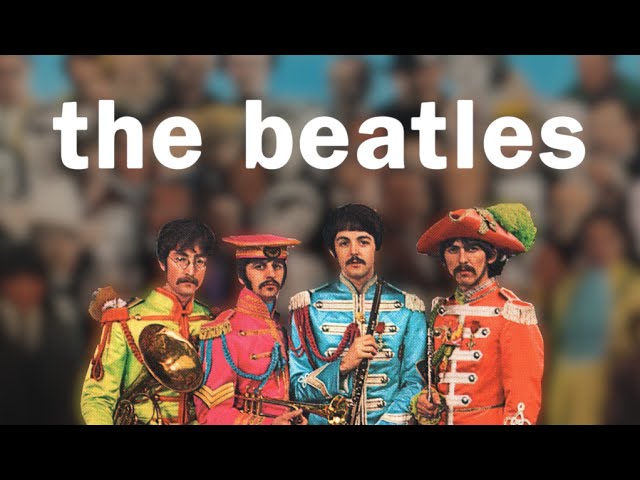
A great look at the most iconic visual supplement in the history of music.
Why ska is the mother of reggae
If there’s one musical style that epitomizes summer, it might be the loping island style of ska. It caught fire in early ’60s Jamaica, a precursor to reggae.
But ska has gone through a few iterations.
Ska is really a fusion of American R&B with Jamaican jazz, says Brad Klein, a Minneapolis-based filmmaker who traced the history of ska in a documentary, “Legends of Ska. Without Ska, there is no reggae.”
“Bob Marley, Peter Tosh, and Jimmy Cliff … all started in ska as teenagers. So, ska is the mother of reggae,” he says.
Klein’s love affair with ska began when he was working at a reggae record company, selling, doing publicity and promotion. His documentary includes three crucial early ska tracks.
“My goal was to teach people and to show the world that there’s much more to Jamaican music than Bob Marley,” says Klein.
Not only has ska had worldwide revivals in the punk 1970s (think The Specials, Madness, English Beat) and the 1990s (think The Mighty Mighty Bosstones), it still is popular. Klein says it’s most popular in Mexico and Latin America and endures in Japan as well.
Via PRI
The reason every meme uses that one font
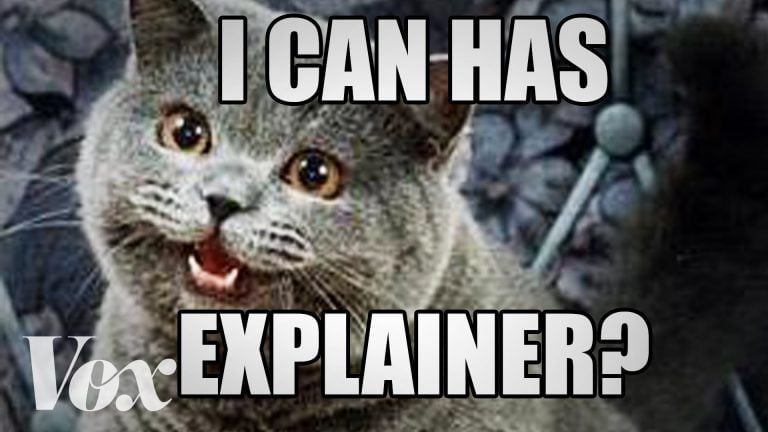
This video explains why most internet memes use the typeface Impact, designed by Geoffrey Lee in 1965.
You can now buy 3D printed cochlear implants for your kid’s toys
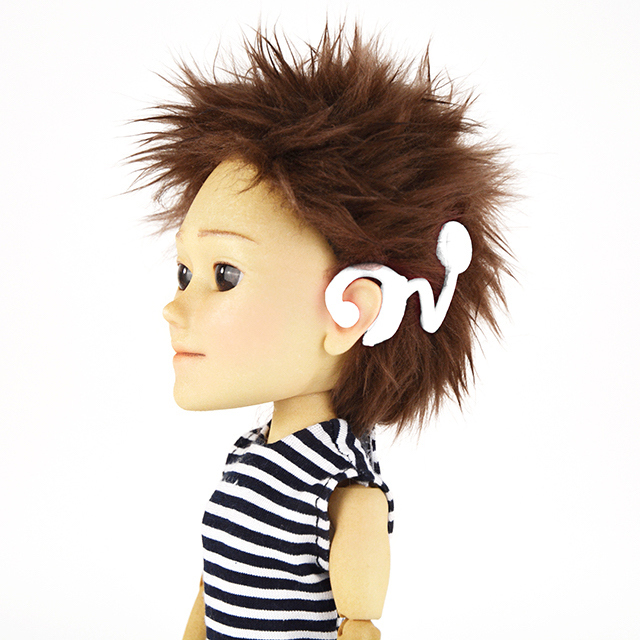
Building on their Toy Like Me accessories, Makies has shipped 3D printed cochlear implants for your 3D printed custom doll, inwhite or pink. Makies come from Makielab, a company Boing Boing’s Cory Doctrow’s wife Alice Taylor founded and serves as CEO. I love these dearly and going to get a few of them for friends who have children that are hearing-impaired.

Your must-read for the end of summer: How Music Got Free
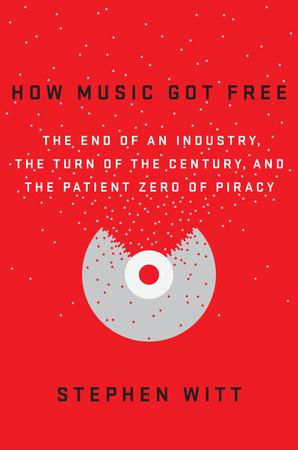
Stephen Witt’s How Music Got Free is a riveting story of obsession, music, crime, and money, featuring visionaries and criminals, moguls and tech-savvy teenagers. It’s about the greatest pirate in history, the most powerful executive in the music business, a revolutionary invention and an illegal website four times the size of the iTunes Music Store.
Journalist Stephen Witt traces the secret history of digital music piracy, from the German audio engineers who invented the mp3, to a North Carolina compact-disc manufacturing plant where factory worker Dell Glover leaked nearly two thousand albums over the course of a decade, to the high-rises of midtown Manhattan where music executive Doug Morris cornered the global market on rap, and, finally, into the darkest recesses of the Internet.
Through these interwoven narratives, Witt has written a thrilling book that depicts the moment in history when ordinary life became forever entwined with the world online — when, suddenly, all the music ever recorded was available for free. In the page-turning tradition of writers like Michael Lewis and Lawrence Wright, Witt’s deeply-reported first book introduces the unforgettable characters—inventors, executives, factory workers, and smugglers—who revolutionized an entire artform, and reveals for the first time the secret underworld of media pirates that transformed our digital lives.
An irresistible never-before-told story of greed, cunning, genius, and deceit, How Music Got Free isn’t just a story of the music industry—it’s a must-read history of the Internet itself.
Miley Cyrus’s Audition tape for Hannah Montana

You can’t tell me anything bad about Miley. I’m all for whatever she wants to do, she’s earned it. And she’s more punk than you are.
Ever wanted to know what celebrities have on their iPod? Here you go.
In honour of Steve Harvey’s Celebrity Week, they collected some of their favorite music-related answers from their 20 Questions video series.
Win 2-tix to see Ani DiFranco at Toronto’s The Great Hall on September 14
As a singer, songwriter, activist and independent entrepreneur, Ani DiFranco has been setting her own pace—and encouraging countless admirers to do the same—for more than 20 years. But while she has been known as the “Little Folksinger,” her music has grown far beyond her acoustic solo roots in cozy venues to embrace jazz, soul, electronica and even more distant sounds. All of which are featured in DiFranco’s new Righteous Babe release, Allergic To Water, where she also blends abstract imagery and deceptively understated melodies with personal reflections on her life in New Orleans where she is now raising her two children with her partner, producer Mike Napolitano.
RT this tweet to win a pair of tickets to see her in Toronto at The Great Hall on September 14!
Win 2-tix to see Ani DiFranco at Toronto's The Great Hall on September 14! RT this by August 23 to win! http://t.co/AYoCSWjx5A
— Eric Alper (@ThatEricAlper) August 14, 2015
Robert Christgau Brings His Long-Running “Expert Witness” Column to Noisey
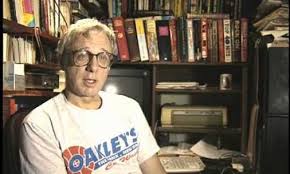
Today, Noisey is excited to announce that the one-and-only Robert Christgau has signed on to be a weekly columnist for Noisey, VICE’s music and culture site. The self-proclaimed “Dean of American Rock Critics” will be continuing his long-running Expert Witness column on the site, reviewing notable albums for the site every Friday.
His reviews have long been the gold standard for American music criticism, inspiring countless writers and critics to follow in his footsteps. Since starting as a columnist for Esquire in 1967, Chrstgau has written over 14,000 reviews and listened to thousands of hours of music.
His reviews have occasionally earned him the ire of his subjects; Lou Reed famously slandered him on stage after a bad review, and Sonic Youth once wrote a song about killing him. Writing in his column for Noisey, Christgau says, “It’s only my opinion, but it’s an exceptionally well informed and, I hope, pungent and idea-filled opinion.”
Read Robert Christgau’s first column for Noisey, including his thoughts on Miguel, Sam Smith, and more here:
“We’re extremely honored to be the new home for Expert Witness,” says Managing Editor Eric Sunderman. “Noisey is a publication that prides itself on taking risks by tackling the strange corners of the music world, and Christgau’s addition is just another way we’ll continue doing that. I just hope Thurston Moore doesn’t subtweet us.”
Christgau’s column first appeared in The Village Voice in 1969, originally appearing as The Consumer Guide. In 2010 Christgau brought his column to MSN where he renamed it “Expert Witness,” and until recently the column found its home at Cuepoint/Medium.
Look forward to new installments of “Expert Witness,” every Friday only on Noisey.