
Can you find Australia? Where did my country, Canada, go? The cartogram, made by Reddit user TeaDranks, scales each country’s geographic area by its population.

Can you find Australia? Where did my country, Canada, go? The cartogram, made by Reddit user TeaDranks, scales each country’s geographic area by its population.
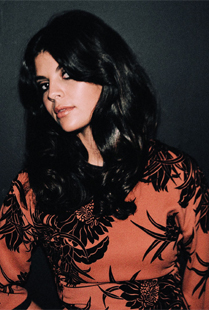
From her auspicious start as the youngest headliner in the history of the Montreal International Jazz Festival at 12, Nikki Yanofsky has covered plenty of territory over the last eight years. She has topped both jazz and pop charts, performed with orchestras and big bands, and sold out festivals and major theatres around the world; in 2010, she sang to 3.2 billion people – half the world’s population – at the Vancouver Olympic and Paralympic Games.
In January 2015, Nikki will head out on her first cross-Canada tour, kicking off in Quebec City on January 16 and wrapping in Vancouver on February 4.
Nikki has worked with luminaries such as Herbie Hancock, Phil Ramone, Will.i.am, Wyclef Jean, and Stevie Wonder and now, under the guidance of her greatest fan and mentor, Quincy Jones, Nikki is ready to introduce her own captivating new sound. Get ready to be amazed by her inimitable voice as she arrives at the unique crossroad where jazz meets pop, delivering sizzling songs on her latest album, Little Secret, that blend retro charm with a contemporary sound helmed by Rob Kleiner, the man behind exciting music by Cee-lo Green and Flo-Rida. Many of the tracks are also Produced and co-Produced by Montreal’s own Dan Cinelli, who also owns the venerable Planete Studios – arguably Montreal’s best recording studio. Quincy Jones helped guide the recording and serves as the Executive Producer on the album.
Forget genres for a second – she can sing it all – jazz, pop, Motown, soul. How about if we just call her one of the greatest singers this country ever produced?
Eric: Here’s one thing I learned about growing old, but not necessarily up. They say that being in your 20s, you’re the most stressed out. You’re trying to find yourself. But you had to do that really early on, and look at all the fun things you have to look forward to in your 20s now! But, how much of a struggle was it, being a teenageer and having to deal with so much success at such an early age?
Nikki: I think of how much blessing that would have happen so early on. I wouldn’t say like being oblivious to it being a teenager because I am definitely aware of everything that was going on but you don’t realize the stuff that should come with it when you’re at that age. You know what I mean, it’s just kind of you go with the flow of things and you’re not really thinking too far down the line, it’s just sort of like living in the moment and I feel like that mentality is sort of stuck with me and continues to come with me into my 20s and now that I’m turning 21 really soon, which is kind of crazy. I think I really didn’t have any stress or struggles, I was just really happy to be able to be doing what I love so early on.
Eric: It’s a rare case in taking a look at your career and looking at the music. The music was always first and foremost, and you never lived your life keeping your name in the gossip papers. You seem to run a low-fi life.
Nikki: Yeah I know , definitely, I tried to keep things, it’s not that I tried to keep things separate, it’s not that I hide anything in my personal life, it’s just like that my life is pretty much all the time is music, so [laughs] it’s like what you see is what you get sort of thing.
Eric: Tell me how you get to record an album with Quincy Jones. It’s not that you’re very far away from all of those connections and people like Quincy based on your success, but who approaches who first?
NY: These sort of things I feel like they happen very organically and very coincidentally, it’s not like anyone just set us up, it’s just sort of happened. It actually happened originally because I met him through a mutual friend of ours who said there’s this young girl, at the time I think I was 14, and he said there’s this young girl who singing jazz and not only jazz but your arrangement because I was really, really obsessed and I still am with Quincy Jones and everything he’s done and his legacy. Everyone he has worked with. His album with Ella is probably my favorite, and all the stuff he did with Ray Charles and Diana Washington and Frank Sinatra, of course. I was just completely obsessed with him and so this friend of ours said you should listen to her because she singing your arrangements, and I think that piqued his interest just because of having a 14 year old sings jazz wasn’t really the norm at that time.
Eric: Exactly, and think about if you’re Quincy Jones – how many people per week are coming up to him and saying they know someone who sings.
Nikki: I feel like it was almost fate that we met – for whatever reason he decided to take my meeting. I met him in his house actually, I got to go to his house and he walked in his living room with the bathrobe on and a smoothie in his hand and it was so funny because I was sitting there and I was so nervous to meet him and then he walked in like that, he just seems so normal and he said, “So what are you going to sing for me?” And all my fears and all my nervous is sort of what vanished. I sang Lullaby Birdland and Somewhere Over The Rainbow for him and we ended up talking for the rest of the day. I was asking him so many questions, he told me so many awesome stories and we just hang out. And then about a year went by, we didn’t lose touch, we just didn’t have anything we could both work on at the same time. But then, I was on tour in Europe, I was in Rotterdam and I’m sitting in the hotel lobby, I ordered room service through the lobby, it was too late that they don’t serve room service in the room at that point, it was like 12 o’clock, and it was Quincy!
Eric: Was he wearing a bathrobe?
Nikki: he was fully clothed.
Eric: He should have worn a bathrobe. How great would that have been.
NY: It was a nice bathrobe too! He had his PJs with his slippers, he just looked like a boss.
Eric: When you sing a song and Quincy Jones is your audience, that one second of silence when you finish – do you care at that point what he thinks? You know you’re good and you know how things work in the industry where you’re just grateful for the opportunity to have that few minutes with Quincy.
Nikki: I think you really have to have faith in yourself first and foremost with everything. You can’t really let it get it to you if someone doesn’t want what you’re doing if you’re liking it, because you can’t live to impress other people and you can’t live to satisfy other people, you really have to put yourself first in that way because otherwise if something you don’t like for the sake of someone else and he doesn’t do anything, then you’ll just gonna miserable with that, but the thing is with Quincy, it’s like it’s one thing to believe in yourself but then to have somebody you trust so much come behind you and say I believe in this too, it’s just like the biggest vote of confidence, it’s just like amazing to have someone you trust and respect so much come in your life and just say yeah I get it I know what you’re trying to do and I support that.
Eric: Does Quincey have something in the studio that he did with you that made you feel comfortable that you? Any methods he uses for you like how he gets the best out of Michael Jackson, Ella and Frank?
Nikki: He just says, “just forget it!” When he says that, it’s like you know what? He’s just telling you to trust your own gut and go with things. If you feel it, then other people will too. That’s what he always says. You have to just do what you think is good, the moment you think it’s good it’s because it is. Someone else will feel that and relate to that too.
Eric: You have to believe in yourself and you have to do what you do, but you’re in a style of music that has so many different people molding and marketing it. It is ever nerve-wracking for you when you’ve done your job putting out the best album you can, and now to give up some control to the marketing people?
Nikki: I think once the music is done it’s out of your control no matter what you do. Even if you try and hold onto it as much as possible. If it’s finished, and you put it out there, you can’t decide where it’s going to go or who’s going to listen to it. At that point, whoever wants to listen to it, I respect the fact that they care enough to. Quincy says “Good music is good music.” If you trust that, it doesn’t matter. He always tells me, “I hope that you’re one of those that can be categorized, music.” That’s what Duke Ellington told him one time and he told that to me too, that was one of the nicest things he said to me. That’s really what I strive for, a decategorization of music. Just letting it be what it is, letting that breathe and letting people feel that.
Eric: It’s always been fun watching you succeed in music. You’re doing a style of music that very few teenagers could even wrap their voice around. Little Secret is almost an updated Nikki Yanofsky for 2014 – you still had one foot in Jazz and one foot now in Pop. But you always were pop, it just wasn’t focused on, the jazz genre was what was publicized.
Nikki: I feel like that album was made over the course of almost 4 years. From 16-20 and I feel like that’s a really big time of self-discovery and development. I feel like you sort of find out what you want to do and what you want to say. My first album I ever released, which was produced by Phil Ramone, that album had jazz sound, half jazz standards and half originals. But the originals were so far from jazz and I just though – I don’t want to sing standards for the rest of my life. I’m always going to do some live. In terms of recording stuff, I have something new to say. I don’t just want to keep singing other people’s songs that have been released for years and years. In a way, I feel like if you want to keep jazz alive, you have to make it your own in that way. In my opinion, if I don’t change the sound of my original stuff, the way I was able to do the original stuff being so far from jazz is because I had the jazz standards to balance it out. But if I was going to stop recording standards on my records, then I would have to have my originals be a little more jazzy too. This album, it definitely sounds the most contemporary thing I’ve ever really done. But, in terms of the actual songs they have more of jazzy edge than the original songs on my last record.
Eric: That’s a very cool thing that you have the ability to do. In rock, people want to hear the original and the audience rarely like their artists to stray from the way it sounds on record. But you always had the power to change the arrangements into whatever you want to do.
Nikki: Thank you! I think the main thing there is, the common denominator throughout my music has always been my voice. I never really – I’ve always been told I was a jazz singer but I never really dubbed myself as a jazz singer. I mean, I love jazz and it’s definitely one of my favorite genres to sing, but I just like retro music in general. My music has always been retro, so I feel like when you live in that realm it’s easier to experiment a little more. You have more flexibility, because you’re never really marketed as straight ahead in the box jazz girl. I was singing Motown before I was singing Ella. I’ve always been in both of those worlds, kind of a soul / jazz thing.
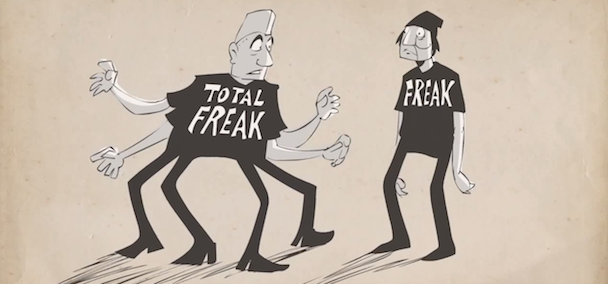
“A lot of people are kind of depressed. I’m happy some of the time, and some of the time I’m not.”
– Elliott Smith in 1998, as told to Barney Hoskyns
We came across a really lost special tape for this episode of Blank on Blank: Elliott Smith interviewed in 1998 by Barney Hoskyns. It’s a little eerie hearing him now more than 10 years after his death, but it’s also kind of soothing to hear his signature comfort and discomfort bubbling beneath the surface. It’s kind of like his timeless collection of music. Smith died under mysterious circumstances in 2003 at the age of 34.
In this animated film Elliott Smith talks about feeling like a freak in high school, how he initially didn’t feel confident singing in the style that became his signature voice, what he said when people compared him to Paul Simon, writing about people with addictions, the internal chaos that people face, and how his music isn’t happy or sad. “I couldn’t say what it is”
RIP, Elliott.
Here’s what you need for this chilly day – 3 absolute classics from The Beach Boys’ and their isolated vocals for you to blow your mind.
California Girls: Listen for a few spots of imperfect harmonies. That would have never pass if it was released today, which makes it all the more brilliant.
http://youtu.be/y2L25Ptl5ys
Wouldn’t It Be Nice?: Brian Wilson described the song as “what children everywhere go through … wouldn’t it be nice if we were older, or could run away and get married”.
http://youtu.be/rH0x_UGqE7o
Sloop John B: The Kingston Trio’s 1958 recording of “The John B. Sails” recorded under the title “The Wreck of the John B” was the direct influence on The Beach Boys’ version.
http://youtu.be/_YeV0Rk2OCY
“We Are the Champions” by Queen for their 1977 album News of the World, isn’t just one of the band’s most famous and popular songs, it’s among music’s most recognisable anthems.
The song was a worldwide success, reaching number two in the UK Singles Chart, and number four on the Billboard Hot 100 in the United States. In 2009, “We Are the Champions” was inducted into the Grammy Hall of Fame, and was voted the world’s favourite song in a 2005 Sony Ericsson world music poll. In 2011, a team of scientific researchers concluded that the song was the catchiest in the history of popular music.
VOCAL only (Freddie Mercury):
GUITARS only (Brian May):
DRUMS only (Roger Taylor):
VOCAL (Mercury), PIANO (Mercury), RHYTHM GUITAR (May) only:
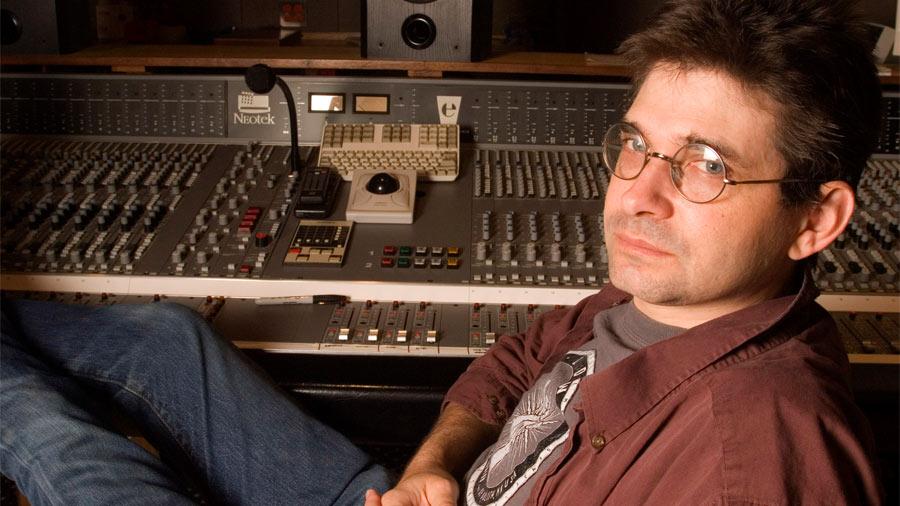
“There are some things that are blown out of proportion in terms of their media presence. Some years ago where Amanda Palmer had a crowd funded record that was very successful, it made her a million dollars. Then she mounted a tour to promote that record and she was trying to crowd source musicians to play her music on stage with her. That just seemed incredibly cheap to me.
“I made a couple of comments about that and that became what passes for music news these days, which is that somebody said something about somebody else. So I had to deal with that for a couple of weeks and that seemed overblown and ridiculous. I don’t think I was wrong but I also don’t think that it was that big of a deal.
“So it’s actually considered legitimate journalism now to see something on a message board or twitter and copy it and paste it into a news release and to say that this happened on twitter. And that this is suitable copy for journalism. I find that staggering. That something as insignificant would be used to substitute legwork and reporting and research, and general knowledge and everything that I’ve described is a result of that. It has nothing to do with me speaking out about something or something catching the public consciousness, it has to do with the manner of journalism now. It has been reduced to very superficial stuff. Literally stuff being copied off twitter and presented as news.” – Steve Albini
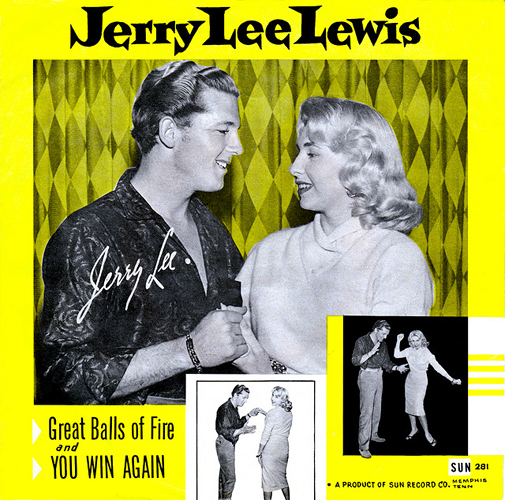
Today in 1958, one of the greatest rock and roll songs ever released, Jerry Lee Lewis’ “Great Balls Of Fire” hit #1 on the US Billboard Chart. It’s the very first single I ever bought with my own money, after hearing the song once in 1976 on CHUM AM while in the car with my parents. 1 minute, 52 seconds. That’s the entire length of the song, and the length of time it took me to really understand the power of rock and roll.
To celebrate the chart-topping time, here are 5 fun facts about the song:
1. Even though it will forever be Jerry Lee Lewis’, he didn’t write the song. It was written by Otis Blackwell and Jack Hammer. Blackwell was no stranger to success by the time he was done in music – he wrote Little Willie John’s “Fever”, Jerry Lee Lewis “Breathless”, Elvis Presley’s “Don’t Be Cruel”, and “All Shook Up”. Hammer didn’t fare so well, even though he wrote many songs during the “Twist” fad of 50’s and 60’s, including an album released under his main stage name, Jack Hammer, under the title “Twistin’ King” released in France.
2. “Great Balls Of Fire” was an instant hit. The song sold one million copies in its first 10 days of release in the United States and sold over five million copies, making it both one of the best-selling singles in the United States, as well as one of the world’s best-selling singles of all time.
3. The song was featured in a performance by Jerry Lee Lewis and his band in the 1957 Warner Brothers rock and roll film Jamboree, which also featured Carl Perkins, Fats Domino, Buddy Knox, and Dick Clark.
JERRY LEE LEWIS – Great Balls Of Fire – Jamboree by rockinbart
4. The song title comes from a Southern expression, which some Christians consider blasphemous, that refers to the Pentecost’s defining moment when the Holy Spirit manifested as “cloven tongues as of fire” and the Apostles spoke in tongues.
5. Among the artists who have covered the song? Let’s see…There’s The Kingsmen, The Crickets, Electric Light Orchestra recorded a version for their 1974 The Night the Light Went On in Long Beach, Fleetwood Mac, who included the track on the 1999 release of the Shrine ’69 album, even Tiny Tim recorded a version as his b-side to “Tiptoe Through the Tulips.” Garth Brooks did a version for his Blame It All on My Roots: Five Decades of Influences album, and Ronnie James Dio & the Prophets recorded this song for the Live at Domino’s album.
http://youtu.be/mkdVviY2hgs
While working for Cobain’s wife Courtney Love, Tom Grant, best known for his unproven theory that Kurt Cobain was murdered, was given access to Cobain’s suicide note and used her fax machine to make a photocopy, which has since been widely distributed.
After studying the note, Grant believed that it was actually a letter written by Cobain announcing his intent to leave Courtney Love, Seattle, and the music business. Grant asserts that the lines at the very bottom of the note, separate from the rest, are the only parts implying suicide. While the official report on Cobain’s death concluded that Cobain wrote the note, Grant claims that the official report does not distinguish the questionable lines from the rest of the note and simply draws the conclusion across its entirety. One of the biggest ‘what if?’ questions in music, Grant believes there are far more questions than answers.
And so it goes.
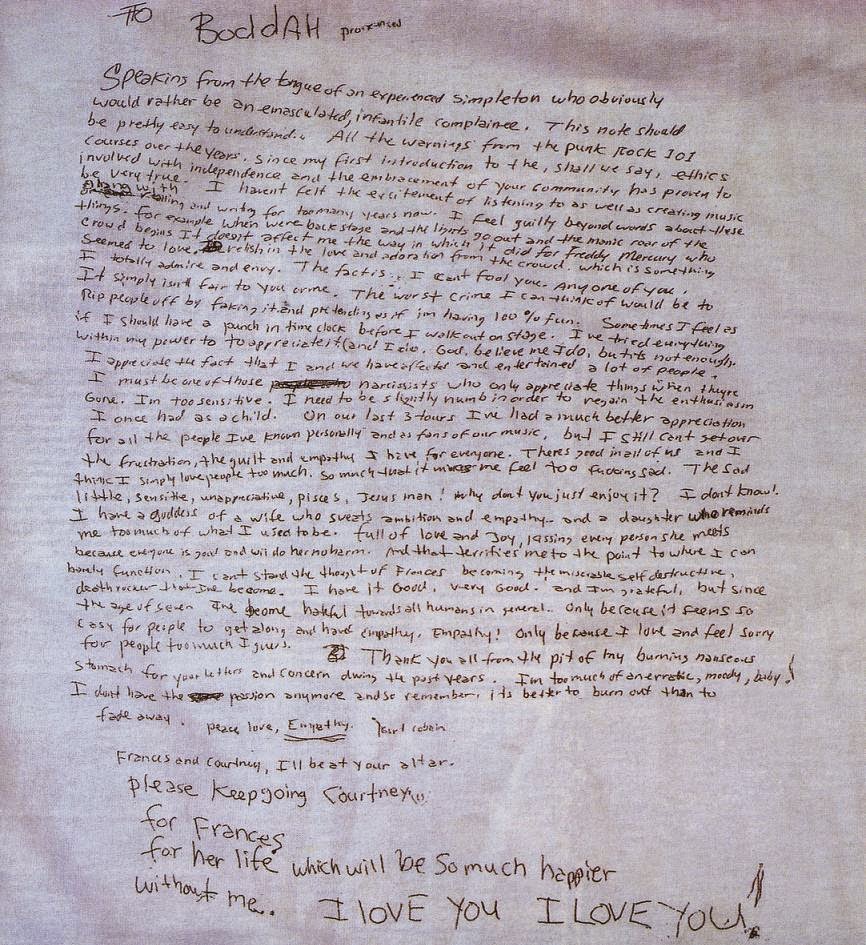
The note:
“To Boddah
Speakings from the tongue of an experienced simpleton who obviously would rather be an emasculated, infantile complainee. This note should be pretty easy to understand. All the warnings from the Punk Rock 101 Courses over the years, it’s my first introduction to the, shall we say ethics involved with independence and the embracement of your community has been proven to be very true. I haven’t felt the excitement of listening to, as well as creating music, along with really writing something for too many years now. I feel guilty beyond words about these things, for example when we’re backstage and the lights go out and the manic roar of the crowd begins. It doesn’t affect me in the way which it did for Freddie Mercury, who seemed to love and relish the love and admiration from the crowd, which is something I totally admire and envy. The fact is, I can’t fool you, any of you. It simply isn’t fair to you, or to me. The worst crime can think of would be to pull people off by faking it, pretending as if I’m having one 100% fun. Sometimes I feel as though I should have a punch-in time clock before I walk out on-stage. I’ve tried everything within my power to appreciate it, and I do, God believe me, I do, but it’s not enough. I appreciate the fact that I, and we, have affected, and entertained a lot of people. I must be one of the narcisists who only appreciate things when they’re alone. I’m too sensitive, I need to be slightly numb in order to regain the enthusiasm. But, what’s sad is our child. On our last three tours, I’ve had a much better appreciation of all the people I’ve known personally, and as fans of our music. But I still can’t get out the frustration, the guilt, and the sympathy I have for everybody. There is good in all of us, and I simply love people too much. So much that it makes me feel too fucking sad. The sad little sensitive unappreciative pisces Jesus man! why don’t you just enjoy it? I dont know! I have a goddess of a wife who sweats ambition and empathy, and a daughter who reminds me to much of what I use to be. full of love and joy, every person she meets because everyone is good and will do her no harm. And that terrifies me to the point to where I can barely function. I can’t stand the thought of Frances becoming the miserable self destructive, deathrocker she become. I have it good, very good, and I’m grateful, but since the age of seven, I’ve become hateful towards all humans in general. Only because it seems so easy for people to get along and have empathy. Empathy only because I love and feel for people too much I guess. Thank you from the pit of my burning nauseas stomach for your letters and concern during the last years. I’m too much of a neurotic moody person and I don’t have the passion anymore, so remember, it’s better to burn out, than to fade away. Peace, love, empathy, Kurt Cobain.
Frances and Courtney, I’ll be at your altar.
Please keep going Courtney
for Frances
for her life which will be so much happier without me.
I LOVE YOU. I LOVE YOU!”
 |
Willie “Popsy” Dixon, drummer and vocalist of the critically acclaimed soul/blues band The Holmes Brothers, died in Richmond, Virginia on Friday, January 9. He had recently been diagnosed with stage four bladder cancer. He was 72 years old.
Dixon, born in Virginia Beach, Virginia on July 26, 1942, was celebrated for his soaring, soulful multi-octave vocals and his driving, in-the-pocket drumming. He first met brothers Sherman and Wendell Holmes at a New York gig in 1967. Dixon sat in with the brothers and sang two songs. “After that second song,” recalls Wendell, “Popsy was a brother.” They played in a variety of Top 40 bar bands until 1979, when the three officially joined forces and formed The Holmes Brothers, which The New York Times described as “deeply soulful, uplifting and timeless.” They toured the world, releasing 12 albums starting with 1990’s In The Spirit on Rounder. Their most recent release is 2014’sBrotherhood on Alligator.
Dixon first played the drums when he was seven. He told Blues On Stage, “My mom and dad took me to the store and told me to get anything I liked. There was this tiny red drum set, with a tiny little kick drum and snare…little cymbals. Now, that’s what I wanted! By the next morning, the thing was in the trash can. I beat it all to death. But, I tell you what…I knew how to play after that. I just knew. I had the rhythm down pat and had timing too. Just that fast. I been playing ever since.”
The Chicago Tribune described Dixon’s voice as “otherworldly…a gift to the world of music.” Living Blues said, “Popsy’s voice is a wonder…spontaneous and raw.”
In September 2014, The Holmes Brothers were honored with a National Endowment For The Arts National Heritage Fellowship, the highest honor the United States bestows upon its folk and traditional artists.
Dixon is survived by daughter Desiree Berry and longtime partner Isobel Prideaux.
Funeral service information is pending. Interment will be at the Holmes’ family plot in Saluda, Virginia.

Treasured Canadian comic Bruce McCulloch, of Kids in the Hall, returns to the TV screen with a new 13-episode scripted comedy series, YOUNG DRUNK PUNK. Filmed in Calgary, Alberta, this original half-hour show was created by Bruce McCulloch and will premiere on City TV on Wednesday, January 21, 2015 at 8:30pm ET/PT.
From the clever and caustic mind of McCulloch, YOUNG DRUNK PUNK tells the tale of two teen rebels on the fringes of society . . . or in the suburbs of Calgary, circa 1980. Set to a soundtrack that includes Pointed Sticks, The Buzzcocks, The Demics and The Diodes, Ian McKay and his best friend Shinky are searching for ways to grow up without selling out. In those lost years between high school and “what’s next,” they fight against conformity all the while dodging parents, cowboys, oilmen and responsibility.
“You don’t even know. There’s so much happening in the world, you don’t even understand. Mom, I won’t live in your microwave oven world anymore!” – Ian McKay
YOUNG DRUNK PUNK stars Tim Carlson (Gracepoint) as Ian McKay, Atticus Mitchell (Fargo) as Archibald Shinky, Bruce McCulloch as Ian’s father Lloyd, Tracy Ryan (Nancy Drew) as Ian’s mother Helen, and Allie MacDonald (House at the End of the Street) as Ian’s sister Belinda.
“Remember, the world isn’t run by people who were popular in high school . . . so our future must be very bright indeed.” – Ian McKay
YOUNG DRUNK PUNK is produced for television by Accent Entertainment and SEVEN24 Films and broadcast on City.
Follow us on Instagram @thatericalper

Eric Alper is a 6-time nominee for Publicist of the Year during Canadian Music Week and has overseen the publicity campaigns for over 183 JUNO Award-nominated albums (and 16 in 2025), 45 Grammy-nominated albums, including 47 JUNO Award, 58 Canadian Folk Music Award, 126 Maple Blues Award-winning albums and is also truly honoured to work with some of the biggest and most important artists of our time.
Contact me: eric@thatericalper.com
© Copyright - That Eric Alper