


Hozier and Lake Street Dive joined forces with Louis Cato & The Great Big Joy Machine on The Late Show for a once-in-a-lifetime performance of The Beatles’ 1967 classic “With A Little Help From My Friends,” a soaring celebration of the 10th annual Love Rocks NYC benefit concert at New York City’s Beacon Theatre.
Brooklyn Indie-Pop Favorite Fia James Trades A Hollow Love For Hard Truth On “isn’t it?”
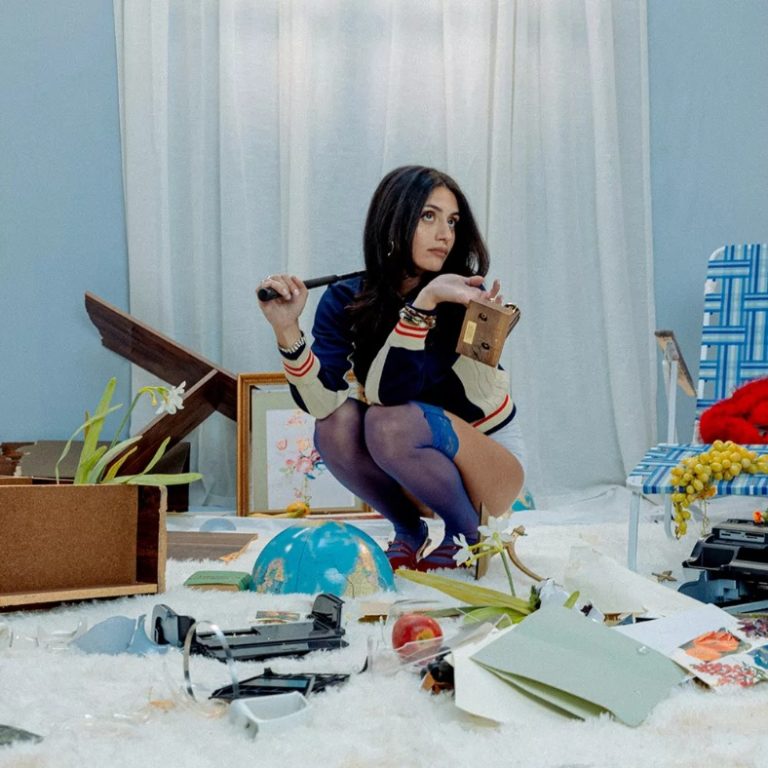
A man-child romance just met its reckoning. Brooklyn-based pop singer-songwriter Fia James continues her momentum with the release of her latest single, “isn’t it?,” out now. The track was written by Fia James, Luke Niccoli (Joji, Carly Rae Jepsen) and Corey Harper (Alex Sampson), with a video directed by Natalie Sakstrup (Zayn Malik, Kylie Minogue, Renee Rapp).
The track sees James navigating the wreckage of a “man-child” romance, trading the comfort of a shared history for the cold clarity of truth. With evocative imagery, she explores the exhausting labor of “taking care” of someone else at her own expense. The song’s central question doubles as its most biting hook, a visceral acknowledgement that the hunger of loneliness beats the slow starvation of a hollow love.
“isn’t it?” follows a breakout period for James, whose first foray into music, “Knock The Wind Out of Me,” landed on Spotify’s Best of Fresh Finds Pop 2025 playlist. Her recent single “Jealous Baby” served as an empowering anthem for anyone dealing with insecure partners and again caught the attention of Spotify editors, earning placement on Fresh Finds and Fresh Finds Pop. The song racked up over 100,000 streams in one month and drew attention from Ones To Watch, Atwood Magazine, Mundane and more.
James’ sophisticated sound continues to offer an eclectic blend, drawing on the indie-pop intimacy of Clairo and Gracie Abrams, the throwback soul of Norah Jones, and the witty songwriting of Kacey Musgraves. The track aches and bites in equal measure, a sharp showcase for one of Brooklyn’s most magnetic new voices.
James recently attended New York Fashion Week, making appearances at VALENTINO, Alice and Olivia, Love Shack Fancy, PAPER and FLAUNT events. She also made headlines after falling down the stairs in New York’s Grand Central Station while being told to “get the fuck up” by a grumpy local.
Hailing from Boston and now based in Brooklyn, Fia has spent years honing her craft, treating every gig, from dive bars to iconic venues like Irving Plaza and The Stone Pony, like her own personal Super Bowl. She’s already logged time on the road alongside indie heavy hitters such as Grayscale and Smallpools.
Genre-Fluid Hitmaker FILLY Turns Post-Heartbreak Spiral Into A Club Anthem With “Over And Over”
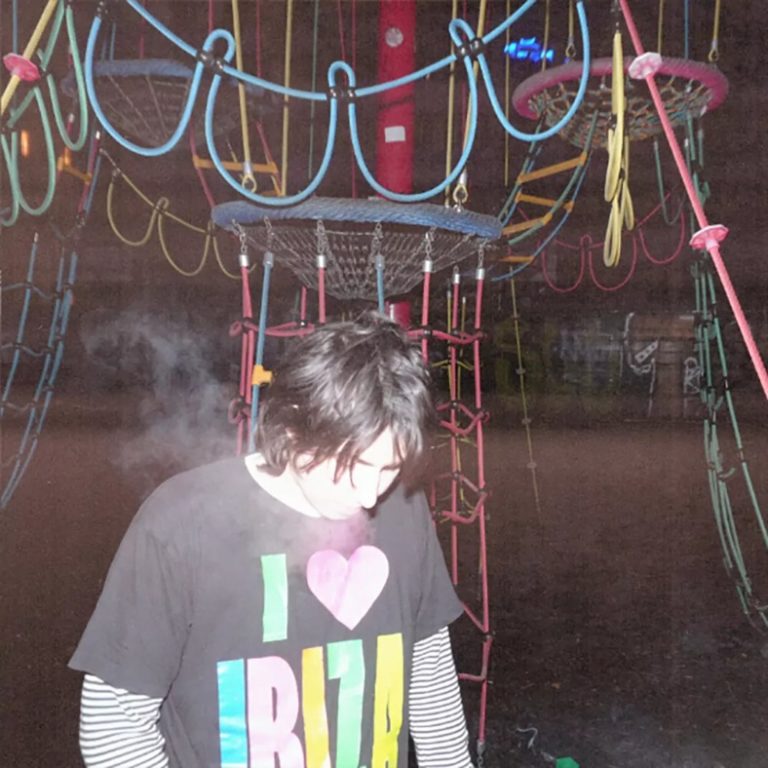
Heartbreak just got a high-BPM makeover. Genre-fluid hitmaker FILLY has released her new single, “Over And Over,” out now via slowplay/Interscope Records/Bamboo Artists. The track cements the Vienna-based singer, DJ, and producer as a rising star in pop and electronic music, channeling raw post-heartbreak energy into a dance number built on glossy synths and pure club momentum.
“Over And Over” captures the spiral that happens when a relationship flips from familiar to unfamiliar. The lyrics move through confusion and late-night second guessing, then land on a simple truth: even when it’s messy, there’s still hope that things will settle and be okay.
“With ‘Over and Over,’ I wanted to capture that euphoric energy of 2016 EDM while staying grounded in a very raw, human moment. The track eventually finds its heartbeat in the realization that love is a cycle worth repeating. It’s a dance record for anyone who has ever worn their heart on their sleeve and decided that, despite the mess, we’re going to be okay <333,” says FILLY.
Over the past few years, FILLY has built steady momentum on the heels of her Lollapalooza Berlin debut and a string of club dates that have established her as one to watch in electronic-pop, with her “Serious” collaboration alongside The Teenagers shining a light on her evolving album era.
Known for blending hyperpop gloss with European dance pulses, FILLY pairs sharp production with grounded narratives that set her apart. The single glides with infectious energy, a confident step from a producer who knows exactly how to move a room. It offers another peek into what’s ahead: an artist who balances her bold alien persona with real personal stories, growing her footprint across pop, dance, and pure personality, with more music already in motion.
Post-Hardcore Trio Held. Channel Inner Turmoil On New Single “Constant Tension” From Debut ‘Grey’
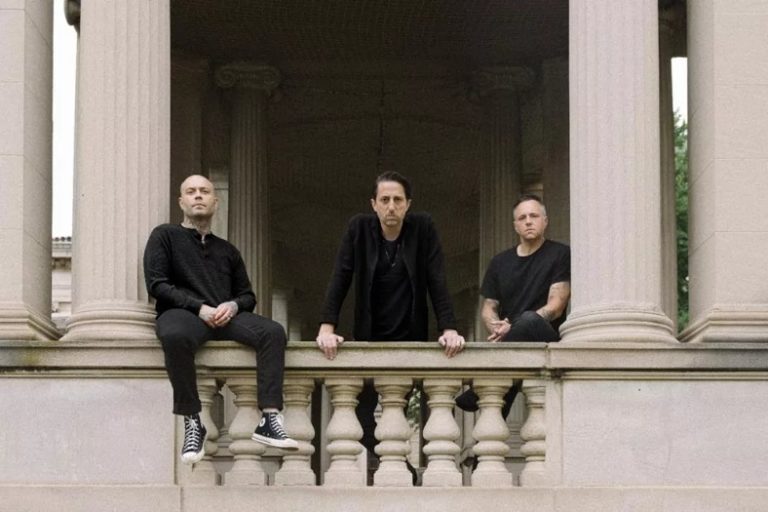
Three veterans of the scene just dug into the push and pull of self-reckoning. Held., the trio featuring Douglas Robinson and Sal Mignano of The Sleeping alongside Coheed And Cambria’s Josh Eppard, have released “Constant Tension,” the second preview from their debut album, ‘Grey’, out now on MNRK Heavy.
The five-minute track follows the band’s debut single, “New You Anthem ft. Frank Iero,” which Revolver praised for its lightning-strike guitar and thunderous drums, Alternative Press called rousing, and idobi described as a dazzling post-hardcore tune.
Where Held.’s introduction leaned into catharsis through connection, “Constant Tension” presents a more unsettled dynamic. Directed by Adam Thomson, the accompanying video builds on the story arc introduced with “New You Anthem,” offering a sci-fi-tinged visual companion to the themes behind ‘Grey’.
“‘Constant Tension’ stems from an everlasting battle within myself to embrace who I am via internal reflection,” Robinson explains. “It’s all of my strengths fighting against all of my weaknesses. There is a ‘constant tension,’ a violent push and pull within my mind every single day. I let myself down so much, to the point where I often feel like I have to somewhat abandon myself and step outside to try and see the bigger picture, but the hurt inside of me pulls me back into my own thoughts. I go completely blank to try and focus, which oddly enough resorts to more tension, and more clouded thoughts. It feels like an endless cycle. The lyrics to ‘Constant Tension’ mirror all of this.”
On ‘Grey’, Held. channel decades of collective experience into a debut that reflects both creative evolution and personal reckoning. “The album as a whole truly feels like it’s everything I have ever wanted to write in my time growing as a musician,” Robinson says. “This record has, in many ways, healed me…. or, it’s at least trying to.” The track lands with raw emotional force, a gripping turn from a band hitting its stride.
Produced and mixed by Jon Markson (Drug Church, Drain, The Story So Far), ‘Grey’ was recorded at the Animal Farm in Flemington, N.J. Multiple limited-edition vinyl variants are available now.
House Heavyweights Matroda And San Pacho Launch After Midnight With Debut Single “Rich & Handsome”
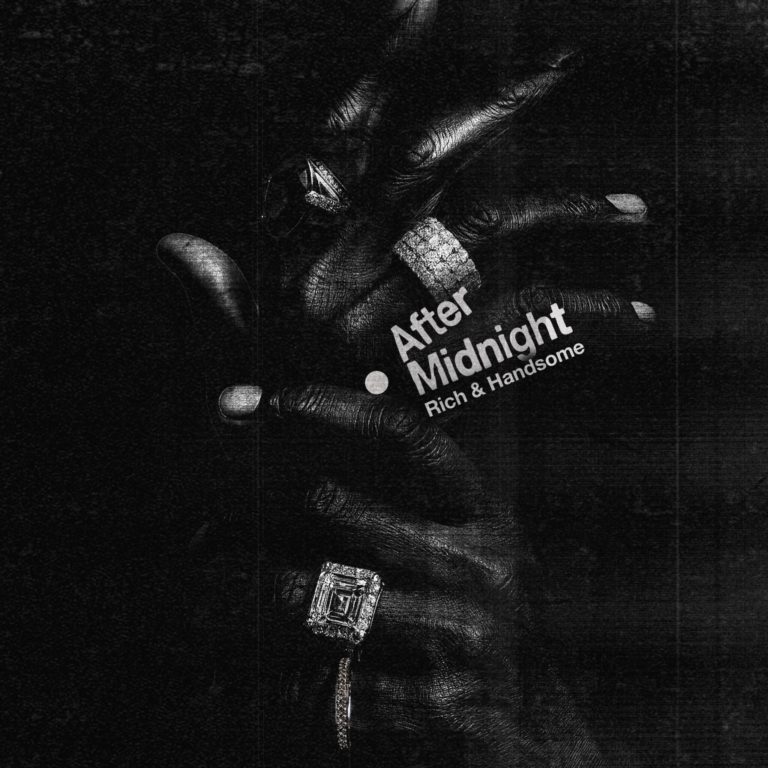
Two of modern house music’s sharpest minds just opened a brand-new chapter. Matroda and San Pacho have unveiled “Rich & Handsome,” the debut single from their collaborative project After Midnight, out now. It’s the first entry point into the project’s creative universe, and it arrives with a sound built for late-night spaces: confident, hypnotic, and made for movement.
“Rich & Handsome” merges the distinct identities of both producers, balancing Matroda’s refined technical precision with San Pacho’s raw, party-forward energy. The result is a groove-driven house record anchored by crisp percussion, rolling beats, and a magnetic rhythmic core, led by CREG’s vocals. Built for after-hours rooms, the track favors atmosphere and momentum, capturing the feeling of discovery that defines the best moments on a dancefloor.
The release marks the first official statement from After Midnight, a new collaborative concept introduced as a self-contained creative world rather than a traditional duo. Designed around scarcity, mood, and cultural weight, the project leans on a focused run of releases and limited live appearances. Their debut live performance happens at Do LaB during Coachella Weekend 2, positioning the single as both a foundation and a preview of what’s coming.
Both Matroda and San Pacho have built reputations as defining voices in modern house, earning global recognition for translating underground club sensibilities into large-scale festival moments. Their individual catalogs have racked up hundreds of millions of streams, and their sets have become fixtures across major festivals, clubs, and international stages. With After Midnight, they step into a shared lane rooted in instinct, atmosphere, and the freedom to explore a deeper, more focused sound.
“Rich & Handsome” kicks off a broader release cycle, with more music from After Midnight arriving throughout the year. The single establishes the tone for a project built around lasting presence, music made for the moments that exist just beyond the spotlight, where sound, space, and energy align.
UK Electronic Visionary Aaron Hibell Drops Debut Album ‘Synchronicity’ And A Sprawling North American Tour

Carl Jung gets a co-writing credit on the boldest electronic debut of the year. Aaron Hibell’s first full-length album, ‘Synchronicity’, is out now via Astralwerks / Capitol Records, and it lands as a complete artistic statement from one of the UK’s most compelling producers.
The album bridges intimate soundscapes with club-ready force, moving easily between headphone immersion and dancefloor euphoria. Hibell pulls its name from Jung’s theory of meaningful coincidences and the orbital harmony of Saturn’s rings, exploring how unrelated events align into moments of real connection.
Across the record, Hibell blends organic and electronic textures to mirror the harmony that rises out of chaos. The arc moves from solitude to release, quiet reflection to collective lift. The sound spans trance, melodic techno, and house that sticks instantly. It resonates in headphones and detonates on dancefloors with equal command.
“This is the most personal project I’ve made so far. The idea behind Synchronicity is that there are these invisible patterns running through life. Moments where things align in ways that feel almost meaningful beyond explanation. Music can tap into that feeling. If someone listens to the album and feels a sense of wonder, or feels a little less alone in whatever they’re going through, then the record has done its job,” says Aaron Hibell.
The release caps a landmark stretch. Hibell debuted the album during a striking livestream from an abandoned power station, shared the Joris Voorn remix of “Set Me Free,” sold out a European headline tour last fall along with dates in New York and LA, and dropped “nocturnal” in December.
Now he’s bringing it to the road. The ‘Synchronicity’ North American tour transforms each venue into a sweeping cinematic experience, pushing what a live electronic show can be. He’ll also play Tomorrowland in Belgium and the 2026 Cercle Festival at France’s National Air and Space Museum. Tickets are on sale now.
Synchronicity North American Tour Dates:
06/18/2026 – Houston, TX – Bronze Peacock
06/19/2026 – Dallas, TX – Echo Lounge & Music Hall
06/20/2026 – Austin, TX – Brushy Street Commons
06/23/2026 – Phoenix, AZ – Crescent Ballroom
06/24/2026 – San Diego, CA – Music Box
06/25/2026 – Los Angeles, CA – Fonda
06/27/2026 – San Francisco, CA – Regency
07/09/2026 – Portland, OR – Wonder Ballroom
07/10/2026 – Seattle, WA – The Showbox
07/11/2026 – Vancouver, BC – Commodore
The Warning Light The Fuse On Incendiary New Single “Kerosene”
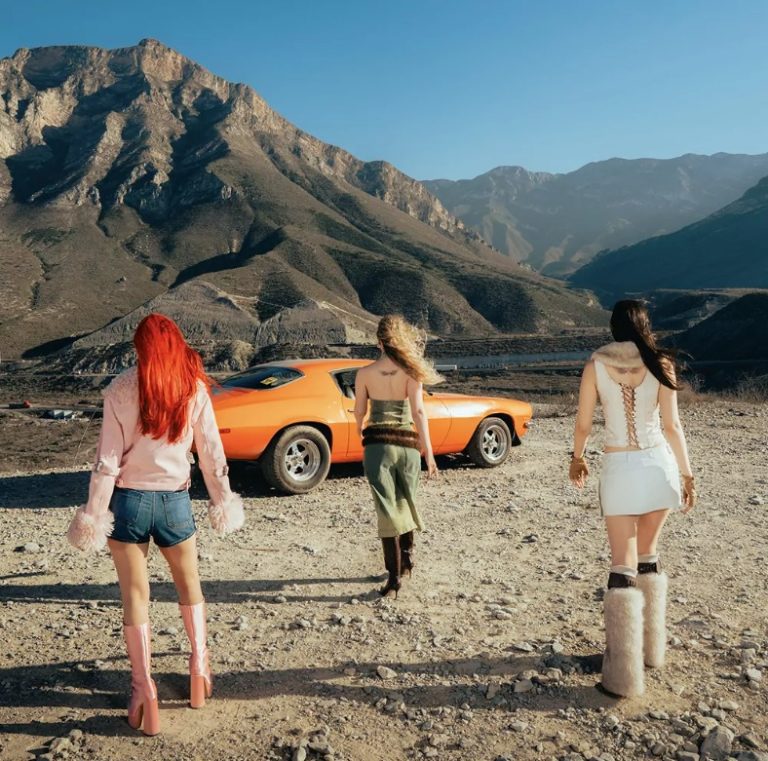
The Warning just ignited a brand new single, “Kerosene,” out now via LAVA/Republic Records. The rock sister-trio from Monterrey, Mexico, pull no punches on this incendiary, infectious anthem, available now alongside a limited-edition 7″ vinyl and merch collection.
The track gallops out of the gate with a hyper-charged drumbeat, clever verses, and a gritty guitar riff. The momentum climbs to a chantable chorus, “Strip down for me. I see right through you. Spit kerosene. You know you want to!” A spunky bassline drives an attitude-laden bridge as the band dismiss the copycats, “You rip my hair, my style, my jeans. I swear you copy everything.”
The music video follows the three sisters speeding through the desert in a stolen car, radiating confidence and defiance. It builds to a chaotic junkyard scene where they rock out with flame throwers before setting the car ablaze, turning it into a bold statement of power and rebellion. The energy never relents, and “Kerosene” finds The Warning firing on all cylinders.
It follows “Love To Be Loved,” the group’s genre-breaking collaboration with Carín León. Revolver applauded how the cut cross-references rock with country and pop flavours, while Rock Sound noted that Dany, Ale, and Pau bring the rock and roll chaos as León offers melody and atmosphere by the boatload, calling the result effortlessly catchy. Fans voted it Favorite New Latin Music of the Week, Billboard praised how the song meshes country and rock behind powerhouse harmonies, and Melodic Magazine dubbed it a song that would set their fanbases on fire.
The Warning expand their global touring footprint in 2026, hitting festivals across Latin America and Europe, plus a run supporting Yungblud on the IDOLS World Tour. There’s a whole lot more on the way from the band very soon.
Tour Dates:
June 25 – Tons of Rock Festival – Norway
June 26 – Gröna Lund – Stockholm, Sweden
June 28 – Pumpehuset – Copenhagen, Denmark
June 30 – Progresja – Warsaw, Poland
July 1 – Skaters Palace – Münster, Germany
July 4 – Main Square Festival – Arras, France
July 6 – Le Bikini – Toulouse, France
July 8 – Mad Cool Festival – Madrid, Spain
July 10 – NOS Alive – Lisbon, Portugal
Sept 18 – Louder Than Life Festival – Louisville, KY
Sept 19 – New Mexico State Fair – Albuquerque, NM
The Veronicas Tear Through sombr’s “12 to 12” In A Soaring Like A Version Cover

The Veronicas just delivered a knockout cover of sombr’s “12 to 12” for triple j’s Like A Version, and it’s out now. The Australian pop-rock duo brought their signature harmonies and full-band power to the segment, where every week an artist performs one of their own songs alongside a cover they love. Backed by a six-piece band, the sisters reshaped the track into something soaring and dynamic, the kind of performance that reminds everyone why their voices have anchored Aussie pop for two decades.
Kittie Mark 30 Years Of Uncompromising Metal On The Blazing “Legacy Of Fire Tour”
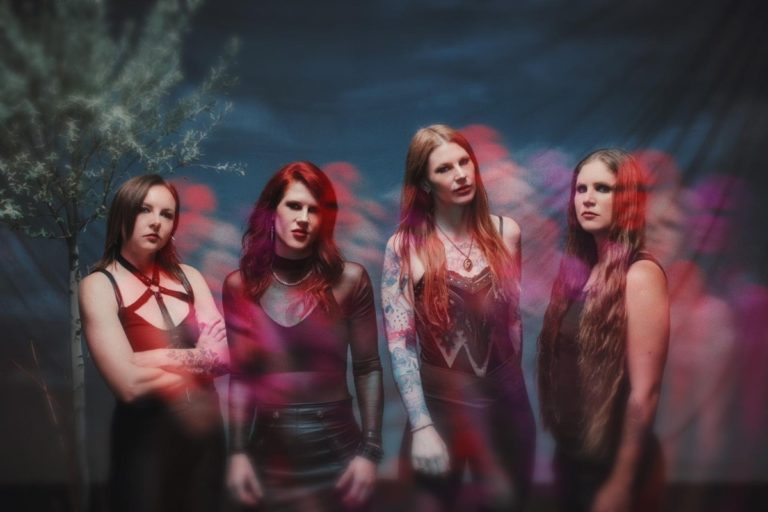
Canadian heavy music pioneers Kittie are out on the road celebrating three decades of uncompromising metal with the “Legacy Of Fire Tour: 30 Years of Kittie,” a 16-date North American headline run and their first full headline tour in over ten years. The trek honors 30 years since the band’s formation in 1996, and it rides the momentum of recent triumphs including 2024’s critically acclaimed comeback album ‘Fire’ and 2025’s ‘Spit XXV,’ a re-recorded and re-imagined anniversary EP. Kingdom of Giants and Gore join as special guests across all dates.
The band is fired up about the milestone. “We’re excited to announce our Legacy of Fire tour on the eve of our 30th anniversary as a band. Thirty years ago, we ignited a spark. Three decades later, that fire is still burning, stronger and more focused than ever. Legacy of Fire is a celebration of every stage, every struggle, and every fan who carried us forward. Coming back to the US + Canada for our first full headline tour over a decade feels incredible. We’re ready to honor our history while ushering in the next chapter,” they share.
The tour arrives during Kittie’s most successful era in over a decade. Since returning from hiatus in 2022, the band has experienced a remarkable resurgence, with ‘Fire’ reaching #13 on the UK Rock & Metal Albums charts and earning a 2025 Juno Award nomination for Metal/Hard Music Album of the Year. Their ‘Spit XXV’ EP further proved the original album’s enduring relevance, with Rolling Stone having ranked the original title track #82 on their “100 Greatest Heavy Metal Songs of All Time.”
With 843,000 monthly Spotify listeners spanning multiple generations and festival performances at Sick New World, Welcome to Rockville, Sonic Temple, Louder Than Life, ShipRocked, and Aftershock, Kittie have proven their relevance reaches well beyond nostalgia. The 30-year milestone stands as a testament to the band’s lasting impact on heavy music, and the “Legacy Of Fire Tour” celebrates their entire catalog, from huge hits to deep cuts, with Kingdom of Giants and Gore rounding out a powerhouse bill each night.
Legacy Of Fire Tour: 30 Years Of Kittie (w/ Kingdom Of Giants and Gore):
Mon, Jun 15 – San Antonio, TX – Aztec Theatre
Tue, Jun 16 – Houston, TX – House of Blues
Thu, Jun 18 – Nashville, TN – Brooklyn Bowl
Fri, Jun 19 – Atlanta, GA – The Masquerade
Sat, Jun 20 – Charlotte, NC – The Fillmore
Sun, Jun 21 – Baltimore, MD – Baltimore Soundstage
Tue, Jun 23 – New York, NY – Irving Plaza
Wed, Jun 24 – Worcester, MA – The Palladium
Fri, Jun 26 – Toronto, ON – Danforth Music Hall
Sat, Jun 27 – Montreal, QC – Théâtre Beanfield
Robin Beck Stands Tall On Her Vibrant 11th Album ‘Living Proof’

Acclaimed rock vocalist Robin Beck just released her new studio album, ‘Living Proof,’ out now via Frontiers Music Srl. It’s her 11th studio record, and it lands as one of the most confident, vibrant, and emotionally charged entries of her career. “This album is a mosaic of sound—each track a distinct piece, a portrait of my life,” she says.
Beck rolled out the album alongside its title track, which she co-wrote with James Christian and Tommy Denander, plus an official music video. The song cuts straight to the heart of the record. “‘Living Proof’ is my story—a song about a life lived, every stumble, every triumph. I’m still standing, still creating, and this road is one I’ll never abandon,” she shares.
The album blends soaring melodies, modern production, and classic AOR sensibility, capturing Beck at her most expressive and commanding. Tracks like “Love and Money” and “Trouble or Nothing” strike a balance between polished hooks and emotional intensity, while “What A Night” and “Karma” bring a vibrant, radio-ready edge. Her unmistakable voice, powerful yet nuanced, soulful yet razor-sharp, stays the focal point throughout. From the infectious energy of “Na Na” to the darker tones of “Voodoo” and “Don’t Tempt Me,” the standout “Never Gonna Let You Go,” and the reflective closer “Let It Rain,” the record moves through strength, vulnerability, and resilience.
Beck surrounded herself with a world-class team. ‘Living Proof’ features contributions from James Christian (House of Lords), Tommy Denander (Radioactive), Peppy Castro (Balance), Steve Bondy, Emil Theilhelm, and Johan Kullberg, who together build a rich, cohesive landscape moving between melodic rock, modern AOR, and subtle pop-rock. James Christian produced the album with Peppy Castro co-producing, the legendary Chris Lord-Alge mixed the title track and mixed and co-produced “What a Night,” and Dennis Ward mixed the bulk of the record. The result is a true tour de force, and Beck sounds inspired and empowered, reaffirming her place as one of melodic rock’s most distinctive and enduring voices.
Robin Beck Live:
July 24th – Vienna, Austria @ Forever Young – Das 80er Festival