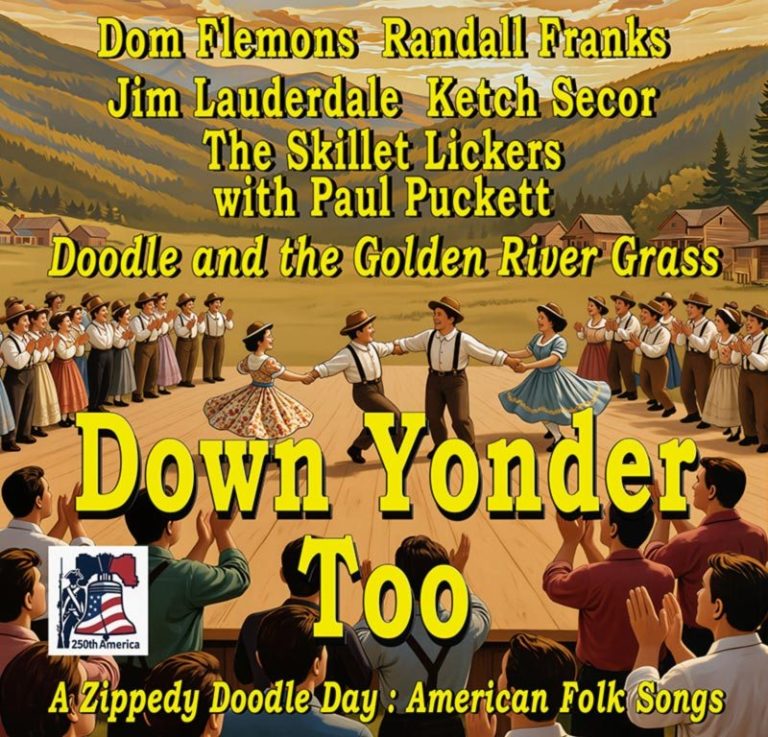
A centennial worth celebrating just got its soundtrack. Randall Franks, the award-winning bluegrass and Americana fiddler, actor, and International Bluegrass Music Museum Legend, has released “Down Yonder Too,” the debut single from the forthcoming charity album ‘A Zippedy Doodle Day: American Folk Songs.’ The track marks 100 years since The Skillet Lickers, Georgia’s pioneering fiddle band, formed in 1926, and it honors Doodle and the Golden River Grass, one of the last traditional fiddle bands of country music’s early era.
The single brings serious firepower to a historic moment. Dom Flemons, Jim Lauderdale, Ketch Secor, and Paul Puckett all appear alongside Franks, with fiddle, harmonica, banjo, jug, and layered vocals woven through a fresh interpretation of The Skillet Lickers’ multi-million-selling classic “Down Yonder.” Archival elements sit alongside contemporary performances, and the result bridges Appalachian string band tradition with the energy of artists who clearly love this music.
“Down Yonder Too” is joyful, deeply rooted, and built with real reverence for what came before it. Franks puts it plainly: “This project is about preserving the soul of Appalachian music and ensuring its future.” The Tanner family legacy runs through the track too, with third-generation member Phil Tanner and fourth-generation member Russ Tanner both contributing.
The full album features an extraordinary roster of contributors, all donating their talents to support the Share America Foundation’s scholarships for aspiring Appalachian musicians, and the West Georgia Museum’s historical preservation work. Franks is also directing an accompanying documentary drawing on archival footage, interviews, and performances tied to Doodle and the Golden River Grass, including their appearances at the 1982 World’s Fair and PBS specials.
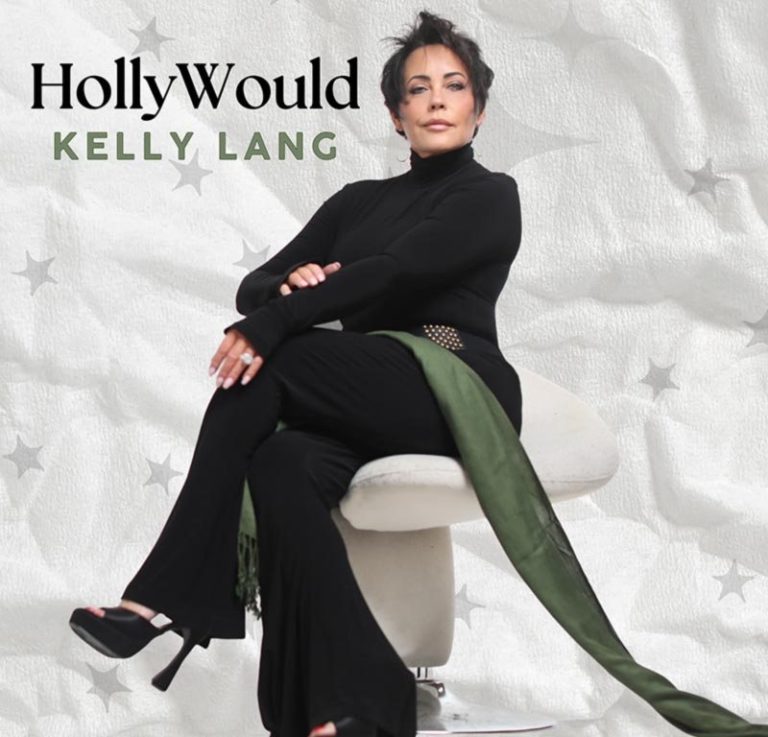
Kelly Lang writes songs that stick, and “HollyWould” is proof she’s not playing it safe. The Nashville singer-songwriter, producer, and Oklahoma Music Hall of Fame member has released her second single from the upcoming album ‘Jealous Green Eyes,’ and it’s a sharp, cinematic country track about the cost of chasing Hollywood at any price. The single premiered with The Country Note, the video debuted with Center Stage Magazine, and it landed on Whiskey Riff’s New Music Friday.
Lang held this one back for a reason. “It actually sat in a box for a while before I had the courage to release it,” she admits. The song follows a small-town girl who discovers just how much she has to surrender to make it, and Lang filmed the video at the historic Franklin Theatre in Tennessee, giving the visuals the same weight the song carries. It’s spicy, considered, and exactly the kind of track that earns repeat listens.
“HollyWould” sits comfortably alongside the album’s first single, “I Reach For Red,” a modern-leaning track with a confident nod to the K.T. Oslin era. Together, the two singles sketch the tone of ‘Jealous Green Eyes,’ an eleven-track collection of self-penned and co-written songs covering love, heartbreak, and divorce with Lang’s trademark storytelling precision.
The album also includes an answer song to T.G. Sheppard’s iconic “I Loved ‘Em Every One,” a detail that adds serious intrigue to an already compelling project. Lang has recorded with and written for country royalty across decades, and ‘Jealous Green Eyes’ reads like an artist fully in command of her own narrative. More singles roll out through spring and summer ahead of the album’s release date, to be announced.
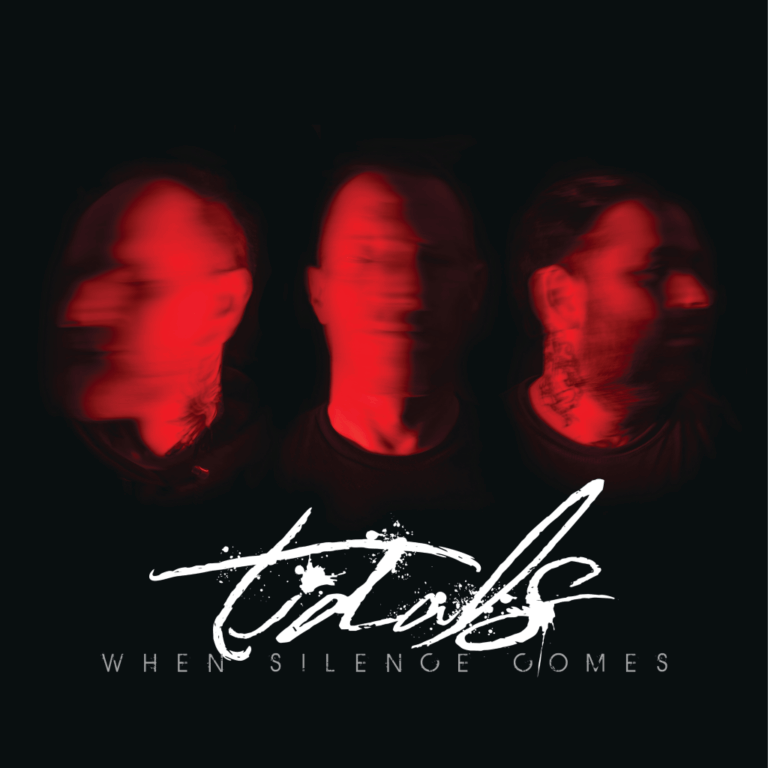
TIDALS have something to say, and “When Heroes Speak” makes sure you hear every word. The emerging rock powerhouse’s new single arrives as a full-scale cinematic statement, built on sweeping guitars, driving rhythms, and vocals that command attention from the first bar. This isn’t background music. It’s a track engineered to fill space and demand a response.
The song doesn’t shy away from a sharp point of view. TIDALS wrote it around the mechanics of manipulation, specifically how powerful entities push agendas that ultimately cost everyone else. As the band puts it, “the burden is ultimately endured by all.” That’s a serious idea, and they deliver it with the kind of sonic weight it deserves.
Musically, “When Heroes Speak” builds the way the best anthems do, with patience, tension, and a chorus that hits like a punch. The production is modern and expansive without losing its emotional core. TIDALS know how to make a big sound feel personal, and that balance is what separates this track from the crowded rock landscape.
The single reinforces what’s been clear for a while now: TIDALS are developing a signature sound rooted in cinematic rock with real lyrical substance. This is a band that writes about something, and the music carries that weight without collapsing under it.
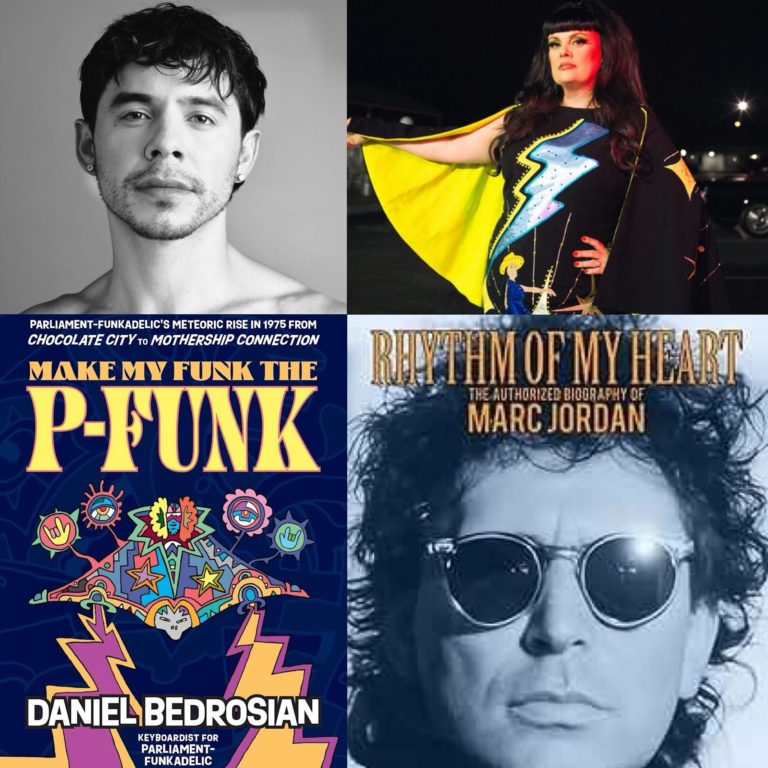
My SiriusXM show: Interviews with singer-songwriter and author David Archuleta; Marc Jordan with Don Breithaupt, author of Rhythm of My Heart: The Authorized Biography of Marc Jordan; Daniel Bedrosian, author, Make My Funk the P-Funk; Powerhouse vocalist Tami Neilson! Sat 8am + 2pm, Sun 12pm, Wed 2pm (all ET), Channel 167 + anytime on the SiriusXM app!
Am I too young? Too old? Somewhere in between? Nearly every aspiring singer asks this question before booking that first lesson. The truth is, no single “perfect” age exists. But starting vocal training at the right stage of development, with proper guidance, can shape your voice in remarkable ways.
This article breaks down the best age ranges for singing lessons, explains why working with a qualified teacher matters, and offers practical advice for every life stage. Whether you’re considering lessons for a five-year-old or yourself at fifty, you’ll find actionable guidance here.
Is there really an ideal age to start singing lessons?
No universal ideal age applies to every singer. Certain developmental windows do offer unique advantages, but the voice remains trainable throughout life. Your vocal cords function like any physical instrument: they grow, change, and respond to practice regardless of when you start.
During childhood, the vocal folds are thin and flexible. Puberty thickens them considerably, especially in boys. After adolescence, the voice stabilizes and gains depth. Each of these stages presents different opportunities.
The “best” age ultimately depends on your goals, emotional maturity, and physical readiness. A five-year-old exploring melody games has different needs than a teenager preparing for auditions. When you choose to learn to sing with a teacher, you get guidance perfectly adapted to wherever you are in that journey. And the research backs this up: barring rare medical conditions, virtually anyone can develop their singing voice.
Why learning to sing with a teacher matters at every age
A qualified vocal teacher does what no app or YouTube tutorial can: they listen, observe, and correct in real time. That immediate feedback loop prevents bad habits from taking root. It also protects your voice from strain and injury, which self-taught singers risk every day.
Teachers assess vocal readiness before pushing technique. They choose exercises matched to your current range, breath capacity, and coordination level. A ten-year-old gets playful warmups. An adult beginner gets targeted breath support drills. The approach changes, but the principle stays the same: meet the student where they are.
Online resources and AI-powered vocal apps make excellent supplements between sessions. They help reinforce pitch accuracy and rhythm. But they can’t replace the nuanced ear of a trained professional who notices that slight tension in your jaw or the breath you’re cutting short.
Singing lessons for young children (ages 5–9): building a musical foundation
Forget perfection at this age. The goal is simple: make music joyful. Children between five and nine benefit most from activities that build pitch matching, rhythm recognition, and a genuine love of singing. Formal technique can wait.
Young vocal cords are delicate, almost fragile. A skilled teacher avoids exercises that push volume or range too aggressively. Sessions stay short, typically 15 to 20 minutes, packed with variety to hold attention. Think call-and-response games, silly songs, clapping patterns.
Posture and breathing basics enter the picture gently. A child who learns to stand tall and breathe from the belly at age seven carries that foundation forward for years. The key is embedding these habits through play, not drills.
Pre-teens and teenagers (ages 10–17): navigating voice changes
This age range represents the sweet spot for structured vocal training. Teenagers possess enough cognitive maturity to grasp concepts like resonance, breath support, and vowel placement. Their voices are also developing rapidly, which makes skilled guidance especially valuable.
A good teacher adjusts constantly during these years. The repertoire shifts. Exercises get modified week by week. Patience becomes the most important tool in the studio.
How puberty affects the singing voice
Puberty transforms the voice from the inside out. The larynx grows, vocal cords thicken, and hormones drive unpredictable changes. Boys experience this most dramatically (the classic “voice breaking”), but girls notice shifts in tone and range too.
This transition lasts anywhere from one to three years. During that window, notes that felt easy last month suddenly crack or disappear. A teacher helps the student navigate this frustrating phase without losing confidence. They assign exercises that strengthen without straining, keeping the voice healthy while it settles into its new shape.
Setting realistic goals for teen singers
Perfection makes a terrible goal for any teenager. Exploration works far better. These years should focus on building solid technique, experimenting with repertoire, and discovering what genres feel right.
Encourage choir participation alongside private lessons for broader musical exposure
Explore multiple genres: pop, classical, musical theatre, jazz
Prioritize vocal health habits over impressive high notes
Set small, measurable milestones (learning one new song per month, expanding range by a half step)
A teacher who understands teen voices can guide this exploration without overwhelming the student or letting them plateau.
Adult beginners (ages 18–50+): it is never too late to start
The myth that you must start singing as a child to “make it” deserves to be retired permanently. Adults bring powerful advantages to vocal training: discipline, emotional depth, self-awareness, and the ability to practice consistently without a parent reminding them.
Many adults hesitate because they believe they lack natural talent. That fear fades fast with the right teacher. A supportive instructor reframes the process, showing that singing relies on learnable skills, not some mysterious gift you either have or don’t.
Common adult concerns include judgment from others, stiff muscles, or limited free time. Here’s the reality: even 15 to 20 minutes of focused daily practice produces noticeable progress within weeks. Adults who commit to regular lessons often surprise themselves with how quickly their tone, range, and confidence improve.
What to expect in your first singing lessons
Your first lesson probably won’t involve performing a full song. Most teachers start with a vocal range assessment, checking which notes you hit comfortably and where your limits sit today. Then comes posture work, breathing exercises, and perhaps a simple melody.
Expect repetition. Lots of it. Foundational techniques like diaphragmatic breathing and proper alignment take weeks to internalize. That’s normal, not a sign of slow progress.
Lesson element
Typical duration
Purpose
Warmups and scales
10–15 minutes
Prepare the voice safely
Breathing exercises
5–10 minutes
Build breath support
Song work
15–20 minutes
Apply technique to music
Cool-down
5 minutes
Prevent vocal fatigue
For younger students, teachers mix things up more aggressively: rounds, duets, movement-based activities. Adults typically prefer a structured plan with clear weekly goals and homework to practice between sessions.
How to choose the right singing teacher for your age and goals
Experience with your specific age group matters more than impressive credentials alone. A teacher who excels with adult beginners might struggle to engage a seven-year-old, and vice versa. Ask about their typical student profile before committing.
Teaching style and personal rapport often outweigh qualifications on paper. You should feel comfortable, encouraged, and gently challenged. If a teacher makes you dread lessons, find another one.
Consider the format that fits your life:
In-person lessons offer the richest feedback, especially for beginners who need posture correction
Online lessons provide flexibility and work surprisingly well for intermediate students
Hybrid approaches combine the best of both worlds
AI vocal coaches and pitch-training apps complement lessons nicely. Use them between sessions to reinforce what your teacher introduced. But treat them as supplements, never substitutes.
Daily practice tips to complement your singing lessons
Short daily sessions outperform marathon weekend practices every time. Fifteen minutes of focused work, five days a week, builds muscle memory faster than a single two-hour session on Saturday.
Start each practice with a 3-minute warmup (lip trills, humming, gentle scales)
Spend 5–7 minutes on the specific technique your teacher assigned that week
Dedicate the remaining time to song work, applying what you practiced
Record yourself at least once a week to track changes in tone and pitch accuracy
Practice posture and breathing even when you’re not singing. Stand tall while washing dishes. Breathe from your diaphragm during your commute. These micro-habits accelerate your progress in ways that surprise most students. The singers who improve fastest typically combine weekly lessons with three to four days of self-guided practice at home.
FAQ
Can a 5-year-old take singing lessons with a teacher?
Yes, absolutely. Lessons at this age should revolve around fun, rhythm games, and pitch-matching activities rather than formal technique. Keep sessions short (15 to 20 minutes) and use age-appropriate material that keeps the child engaged and smiling.
Is 40 too old to learn how to sing?
Not even close. Adults of any age develop their voice effectively with proper guidance and regular practice. Many adult beginners progress rapidly because they bring discipline and emotional maturity to the learning process, qualities that younger students often lack.
How long does it take to see results when learning to sing with a teacher?
Most students notice improvements within four to eight weeks of consistent lessons paired with daily practice. More significant gains in tone, range, and overall confidence typically emerge within six to twelve months. Progress depends heavily on practice frequency and the quality of teacher guidance.
There’s something that happens when siblings make music together — a blend of shared DNA, childhood harmony, and years of knowing exactly how to push each other’s buttons. The result is either magic or mayhem, and sometimes both at once. Today, on National Siblings Day, we’re celebrating the bands that prove blood really is thicker than water — or at least louder.
Oasis
Liam and Noel Gallagher gave the world some of the greatest rock anthems of the ’90s and nearly as many headlines for their off-stage brawls. The tension between them was as much a part of the Oasis sound as the guitars — until it finally ended the band for good in 2009. Their reunion in 2024 proved the world never stopped wanting more.
The Beach Boys
Brothers Brian, Dennis, and Carl Wilson were the emotional core of one of America’s most beloved bands. Brian’s studio genius gave us Pet Sounds, widely considered one of the greatest albums ever made, while the family dynamic behind the scenes was complicated enough to fill several documentaries.
AC/DC
Angus and Malcolm Young built one of the hardest-rocking catalogs in history on a foundation of relentless touring and brotherly locked-in rhythm. Malcolm’s chugging guitar work was the engine; Angus’s lead was the fire. Together they were unstoppable.
The Kinks
Ray and Dave Davies wrote the blueprint for British rock, but their relationship was famously volatile — physically and creatively. The friction between them somehow produced some of the most quietly brilliant songs of the 1960s and ’70s.
Van Halen
Eddie and Alex Van Halen were the engine room of one of rock’s biggest acts. Eddie redefined what a guitar could do, while Alex anchored it all from behind the kit. They played together from childhood and never really stopped.
HAIM
Este, Danielle, and Alana Haim grew up playing music in their parents’ band before becoming one of the most critically praised acts of the 2010s. Their interplay — vocally and instrumentally — has an effortless tightness that only comes from a lifetime of practicing in the same living room.
The Bee Gees
Barry, Robin, and Maurice Gibb spanned more musical eras than almost any act in pop history — from 1960s harmony pop to the disco anthems that defined a generation. Their three-part harmonies were so distinctive they’re practically a genre of their own.
Jackson 5
Jackie, Tito, Jermaine, Marlon, and Michael Jackson launched one of the most explosive careers in pop history out of Gary, Indiana. The group gave Michael his earliest stage and the world its first glimpse of something genuinely otherworldly.
Heart
Ann and Nancy Wilson proved that sisters could front a hard rock band as convincingly as anyone in the business. Ann’s voice is one of rock’s all-time great instruments, and Nancy’s guitar work has always been criminally underrated.
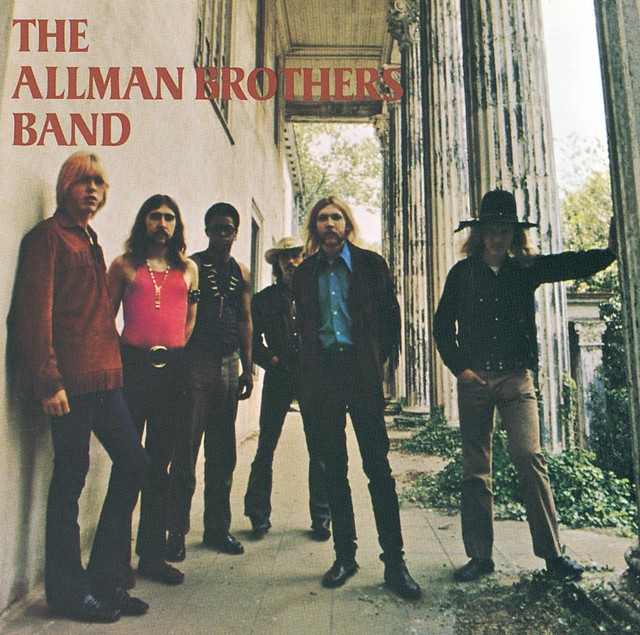
Allman Brothers Band
Duane and Gregg Allman were central to defining Southern rock as a genre. Duane’s slide guitar work was revelatory before his death in 1971 at 24; Gregg kept the band going for decades after, carrying the name and the legacy.
The Carpenters
Karen and Richard Carpenter made some of the most perfectly produced pop music of the 1970s. Richard’s arrangements were meticulous, and Karen’s voice — warm, melancholic, and instantly recognizable — remains one of the most distinctive in American music.
Kings of Leon
Brothers Caleb, Nathan, and Jared Followill, along with cousin Matthew, grew up as preacher’s kids traveling the American South before becoming one of the biggest rock bands of the 2000s. Sex on Fire alone earned them a permanent place in the canon.
Radiohead
Jonny and Colin Greenwood are often the quieter side of Radiohead’s story, but their contributions — Jonny’s arrangements and multi-instrumental work, Colin’s melodic bass — are woven into the fabric of the band’s most celebrated records.
The Black Crowes
Chris and Rich Robinson have had one of rock’s most famously turbulent sibling relationships, breaking up and reuniting multiple times over decades. When they’re on, the Crowes deliver a roots-rock authenticity that’s hard to fake.
The Stooges
Ron and Scott Asheton were the rhythmic backbone of Iggy Pop’s proto-punk outfit, helping create a raw, confrontational sound that influenced virtually every punk and alternative band that followed.
Hanson
Isaac, Taylor, and Zac Hanson were teenage prodigies who became a global phenomenon with MMMBop in 1997. What’s often overlooked is that they’ve kept making music entirely on their own terms ever since, building a loyal fanbase that never went away.
First Aid Kit
Swedish sisters Johanna and Klara Söderberg make folk and Americana music of remarkable emotional depth. Their voices blend with the kind of natural harmony that no amount of studio polish can manufacture.
INXS
Brothers Andrew, Jon, and Tim Farriss were three of the six members who built one of Australia’s greatest rock exports. Their rhythm section and guitar work gave Michael Hutchence the sonic foundation for one of the most charismatic frontmen rock ever produced.
The Artemis II crew wraps up their 10-day mission today with a Pacific Ocean splashdown off the coast of San Diego. Commander Reid Wiseman, Pilot Victor Glover, and Mission Specialists Christina Koch and Jeremy Hansen will be the first humans to return from the moon’s vicinity since 1972.
Here’s everything happening tonight, all times EDT:
6:30 p.m. — Live coverage begins on NASA+, NASA YouTube, Netflix, Amazon Prime, Apple TV, and Peacock.
7:33 p.m. — The Orion crew module separates from the European Service Module.
7:53 p.m. — Entry interface. Orion hits the atmosphere at nearly 24,000 mph. A 6-minute communications blackout begins as plasma builds around the capsule.
8:03 p.m. — Drogue parachutes deploy at 22,000 feet.
8:04 p.m. — Three main parachutes open at 6,000 feet, slowing Orion to about 20 mph.
8:07 p.m. — Splashdown in the Pacific Ocean.
9:06 p.m. — Crew extraction by recovery divers and teams from the USS John P. Murtha.
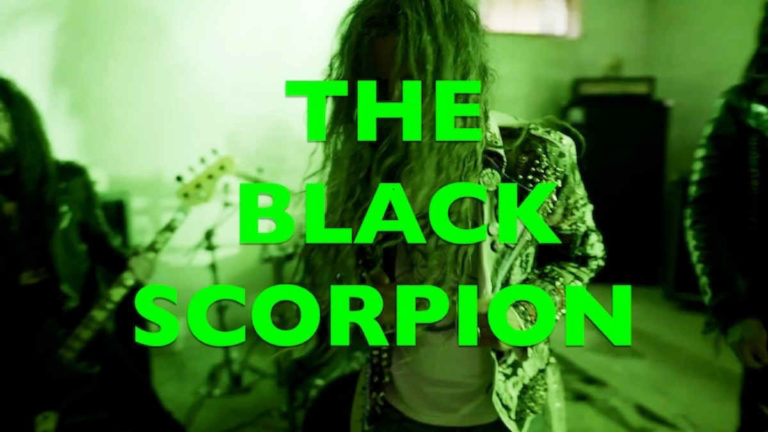
Under two minutes, eerie green light, and zero interest in slowing down. Rob Zombie has unleashed the music video for “The Black Scorpion,” the latest single from his acclaimed new album ‘The Great Satan’, and it hits exactly as hard as the title suggests. Zombie and his crew tear through the punk-metal track with the kind of ferocious efficiency that makes it clear this record means business. “The Black Scorpion” joins recent standouts “F.T.W. 84,” “(I’m a) Rock ‘N’ Roller,” “Heathen Days,” and “Punks And Demons” as further proof that ‘The Great Satan’ ranks among the boldest and most fully realized records of Zombie’s career.
Four decades in and the man hasn’t lost a step. Fusing avant-garde aesthetics with monstrous, groove-driven rock across his entire career, Zombie has built a singular place in heavy music that nobody else occupies. ‘The Great Satan’ extends that legacy with authority.
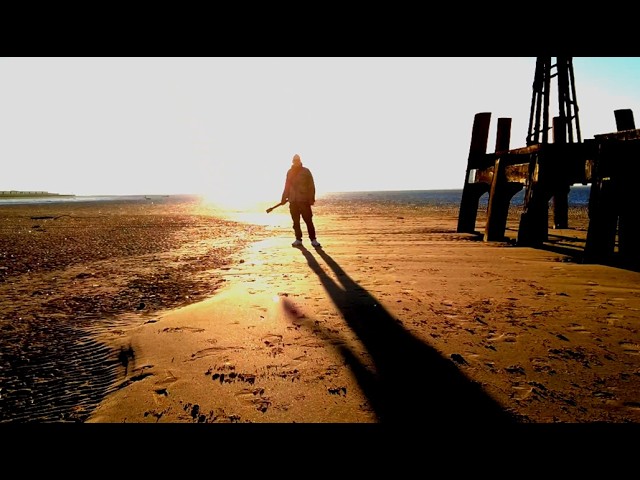
Some music videos carry more weight than others. The Alarm have shared the official visual for “Live Today,” the final video to feature their beloved late leader Mike Peters, who passed away on April 29, 2025, following a 31-year battle with cancer. Filmed on a beach in the north of England just days before Mike underwent CAR-T treatment in a bid to defeat Richter’s Syndrome, an aggressive form of lymphoma, the video captures him performing with full optimism and joy, unaware of what would follow. “As the sun rose, watching Mike perform this song with so much optimism and hope will live with me forever,” says Jules Peters, Mike’s bandmate and wife. “After filming concluded, we climbed onto the tour bus and drove straight to the Christie Hospital in Manchester. We were full of determination that the pioneering CAR-T would save Mike’s life but, at the same time, I was personally terrified as I couldn’t shake off a feeling that cancer had finally caught up with us both.”
“Live Today” is the latest single from ‘TRANSFORMATION’, due May 29, 2026 on Twenty First Century Recordings/Virgin Music Group. It’s a record that stands as Mike Peters’ final statement, and Jules’ words say everything about the man behind it. “Mike lived a life of beauty and never gave up right to the very end.”
Parcels are coming back, and this time the run goes deeper into North America. The Australian-born, Berlin-based quintet have announced an extended set of U.S. and Mexico tour dates under the ‘Loved’ tour banner, picking up where last year’s North American arena run left off. To mark the announcement, they’ve shared a brand new live session of album track “Ifyoucall,” a preview of what a Parcels show delivers in any room, on any stage.
‘LOVED’ has proven to be one of the more quietly dominant albums of the past year. With over 150 million worldwide streams, a No. 5 debut on Spotify’s Top Debut Global Albums chart, and festival sets at Glastonbury that drew some of the biggest and most enthusiastic crowds of the weekend, Parcels have built something real and durable. “We do have a purpose as a band to our audience: we’re giving people joy,” says guitarist and vocalist Jules Crommelin. “I see it as spirit, and it’s an incredibly powerful thing.” That spirit comes through in every corner of the record and, by all accounts, even more so live.
The new dates stretch from June through October, opening in Mexico before moving through California, Wyoming, Colorado, Seattle, and deep into the fall across the south and midwest, closing with a two-night run at Miami’s III Points festival. Tickets are available now.
Parcels North American Tour Dates:
June 17 – Monterrey, MX – Auditorio Banamex
June 19 – Guadalajara, MX – Echoes Festival
June 20 – Mexico City, MX – Campo Marte
August 3 – Pioneertown, CA – Pappy & Harriet’s
August 4 – Pioneertown, CA – Pappy & Harriet’s
August 6 – Jackson, WY – King Concerts Summer Series
August 8 – Aspen, CO – Up In The Sky Festival
August 9 – Seattle, WA – Capitol Hill Block Party
September 24 – Troutdale, OR – McMenamins Edgefield
September 29 – Las Vegas, NV – A-Lot at AREA15
September 30 – Phoenix, AZ – Arizona Financial Theatre