Home Blog Page 36

Shillong Teer Chart Numbers with the Highest Appearance Rate

0

By Mitch Rice

The popularity of the Shillong Teer game has grown rapidly among enthusiasts who enjoy analyzing number patterns and tracking historical results. One of the most discussed topics among players is identifying the Shillong Teer chart numbers with the highest appearance rate. By studying past outcomes and trends, players attempt to understand which numbers appear more frequently and how these patterns may help in making informed predictions.

If you regularly follow the Shillong Teer Chart, analyzing frequently appearing numbers can provide valuable insights into recurring trends and historical performance. Many experienced followers use past data from the Shillong Teer Previous Result records to identify numbers that have consistently appeared over time.

Understanding the Shillong Teer Chart

The Shillong Teer game is based on archery, where the final results depend on the total number of arrows hitting the target. The last two digits of the arrow count determine the winning number. Over time, these results are collected into a chart format, commonly known as the Shillong Teer chart.

This chart helps users track:

  • Daily winning numbers
  • Weekly and monthly trends
  • Frequently appearing numbers
  • Rarely occurring numbers
  • Pattern-based number analysis

Players often rely on the Shillong Teer Result List to compare recent results with historical data and identify numbers that show repeated appearances.

Why Appearance Rate Matters

The appearance rate refers to how often a specific number appears within a selected period. Some numbers may repeat multiple times in a month, while others rarely show up. Tracking these frequencies helps enthusiasts identify “hot numbers” that appear more consistently.

By analyzing the appearance rate, users can:

  • Discover recurring trends
  • Compare short-term and long-term number behavior
  • Improve statistical analysis
  • Build better prediction strategies

Although no method guarantees results, studying historical trends remains one of the most popular approaches among Shillong Teer followers.

Most Frequently Appearing Shillong Teer Numbers

According to long-term chart observations, certain numbers tend to appear more often than others during different periods. These high-frequency numbers often attract attention because of their recurring presence in the Shillong Teer chart.

Some commonly observed repeating number ranges include:

  • 12
  • 27
  • 45
  • 68
  • 82
  • 94

These numbers may vary over time, which is why regularly checking updated charts is essential. Reviewing the latest Shillong Teer Previous Result data can help users track whether these numbers continue their strong appearance rate.

How to Analyze Shillong Teer Chart Trends

Successful chart analysis requires more than simply looking at recent results. Consistent tracking and comparison over extended periods can reveal stronger patterns.

1. Study Historical Results

The first step is reviewing old result charts to identify repeating numbers. Using historical data from the Shillong Teer Result List helps determine which numbers appear frequently over weeks or months.

2. Compare Weekly Trends

Sometimes a number may dominate for a short period before disappearing. Weekly comparison allows users to notice temporary trends and sudden changes in number frequency.

3. Identify Hot and Cold Numbers

  • Hot Numbers: Numbers appearing repeatedly within a short period
  • Cold Numbers: Numbers that have not appeared for a long time

Many players believe balancing hot and cold number analysis improves prediction strategies.

4. Track Number Cycles

Certain analysts believe numbers move in cycles. A number that disappears for weeks may suddenly reappear multiple times. Studying these cycles through the Shillong Teer chart can help identify possible repeating sequences.

Importance of Consistent Chart Monitoring

Regular monitoring is essential for anyone interested in Shillong Teer number analysis. Since trends constantly change, relying on outdated data can lead to inaccurate conclusions.

By checking updated charts daily, users can:

  • Follow emerging number trends
  • Spot high-frequency numbers quickly
  • Compare current and past patterns
  • Improve data-based predictions

The best way to stay updated is by reviewing the latest Shillong Teer Chart and analyzing recent results consistently.

Tips for Better Shillong Teer Number Analysis

Here are some useful tips for improving chart-based analysis:

  • Keep a personal record of frequently appearing numbers
  • Compare monthly and weekly result patterns
  • Focus on long-term trends instead of single-day results
  • Avoid depending entirely on random guesses
  • Use historical charts for deeper statistical observation

Many experienced followers believe disciplined tracking provides better insights than relying solely on luck.

Final Thoughts

Understanding the Shillong Teer chart numbers with the highest appearance rate can help enthusiasts gain deeper insights into recurring trends and historical number behavior. While no prediction method guarantees success, studying patterns through the Shillong Teer Previous Result, reviewing the Shillong Teer Result List, and analyzing the latest Shillong Teer Chart can improve overall number analysis strategies.

Consistent observation, trend tracking, and statistical comparison remain key techniques for identifying frequently appearing numbers. As trends evolve over time, staying updated with the latest results and charts is essential for anyone interested in Shillong Teer analysis.

Data and information are provided for informational purposes only, and are not intended for investment or other purposes.
Protected: High-Quality Disposable Experience Made to be used by modern people

0

This content is password protected. To view it please enter your password below:

19 Live Albums That Take You There

There is a version of every great band that only exists in a room, on a night, in front of people. The studio record is a document of intention. The live record, when it’s done right, is a document of electricity. And electricity is very hard to fake.

These 19 records don’t just capture performances. They capture presence. Put your headphones on, close your eyes, and you are genuinely somewhere else. That’s a rare thing. That’s worth celebrating.

James Brown, Live at the Apollo (1962)

Start here. Always start here. This is the foundation document of live performance as an art form. Brown understood that a concert was a negotiation between a performer and a crowd, and nobody in history has ever won that negotiation more completely. The Apollo audience doesn’t give it up easy. Brown takes it anyway.

Johnny Cash, At Folsom Prison (1968)

The most dangerous room any of these records was made in. Cash walks into a prison full of men who have nothing to lose and leans into every bit of it. The crowd’s reaction to “I shot a man in Reno just to watch him die” is one of the most remarkable moments in recorded music. You feel the electricity and the edge of it at the same time.

The Who, Live at Leeds (1970)

Frequently and correctly called the greatest hard rock live album ever made. The Who in 1970 were a band that seemed genuinely capable of destroying themselves and everything around them through sheer force of performance. This record captures that feeling without a single moment of artifice. It is relentless from the first note.

The Allman Brothers Band, At Fillmore East (1971)

Few bands have ever been this locked in, this completely fluent in each other’s musical language. The jams feel inevitable rather than meandering. “Whipping Post” alone justifies the existence of the live album format.

Aretha Franklin, Live at Fillmore West (1971)

Aretha Franklin in a room has a looseness and a joy that few live records manage to capture. This performance crackles with spontaneity. When Ray Charles shows up unannounced, the whole thing becomes almost too good to be real.

Deep Purple, Made in Japan (1972)

Ritchie Blackmore, Jon Lord, Ian Gillan and the rest play like they have something to prove and all the time in the world to prove it. Hard rock improvisation pushed about as far as it can go without falling apart entirely.

Donny Hathaway, Live (1972)

Criminally underappreciated outside serious music circles. Hathaway doesn’t perform for an audience, he performs with one. The crowd interaction on this record is unlike anything else in the canon. By the end of “The Ghetto” the room has become a single organism and Hathaway is its heartbeat.

Sam Cooke, Live at the Harlem Square Club, 1963 (released 1985)

Sam Cooke had a polished, sophisticated public image carefully cultivated for crossover appeal. Then somebody pointed a microphone at him in a sweaty club in Miami and captured something raw and unguarded that his studio records never quite touched. This is the version of Sam Cooke that the people in that room never forgot.

Rolling Stones, Get Yer Ya-Ya’s Out! (1970)

The Stones at Madison Square Garden in 1969, right at the peak of their sleazy, dangerous, utterly magnetic era. Keith Richards looks like he shouldn’t be standing up. The band plays like the world is ending. It all hangs together in a way that shouldn’t be possible and somehow is.

Neil Young and Crazy Horse, Live Rust (1979)

Few live records capture the feeling of a performance that could go sideways at any moment and somehow never does. Young and Crazy Horse play with a looseness that borders on ragged, and that looseness is exactly the point. “Cortez the Killer” stretches out into something genuinely hypnotic.

Cheap Trick, At Budokan (1978)

A band that was doing decent business in North America travels to Japan and discovers they are enormous. The crowd hysteria on this record is almost comical in its intensity. Cheap Trick, to their credit, rises to meet it and delivers one of the most purely enjoyable live records ever committed to tape.

Talking Heads, Stop Making Sense (1984)

David Byrne walks out alone with a boombox and an acoustic guitar and builds an entire world over the course of an evening, adding musicians one by one until the stage is full and the whole thing has become something close to a religious experience. Jonathan Demme’s film captures it beautifully but the record holds up completely on its own.

Thin Lizzy, Live and Dangerous (1978)

Phil Lynott understood stagecraft the way very few rock frontmen ever have. This record documents a band firing on every cylinder, with the twin guitar attack of Scott Gorham and Brian Robertson hitting harder in a live setting than it ever did in a studio. A quintessential hard rock document that holds up without a wrinkle.

Iron Maiden, Live After Death (1985)

The sheer scale of what Maiden achieved in the mid-eighties is captured here in full. This is a band that had outgrown arenas and was filling them anyway, with a production that matched the ambition of the music. Bruce Dickinson as a frontman is a force of nature on this record.

Bruce Springsteen, Live 1975-85 (1986)

A five-record set that covers a decade of one of the great live acts in rock history. Springsteen and the E Street Band built their reputation show by show, night by night, and this collection documents why. The performances range from intimate to enormous and every single one of them is fully committed.

Daft Punk, Alive 2007 (2007)

Electronic music has a complicated relationship with live performance, and then there is this. Daft Punk built a pyramid, filled it with lights, and delivered a seamlessly mixed set that redefined what a live electronic experience could feel like. The crowd noise on this record is a phenomenon in itself.

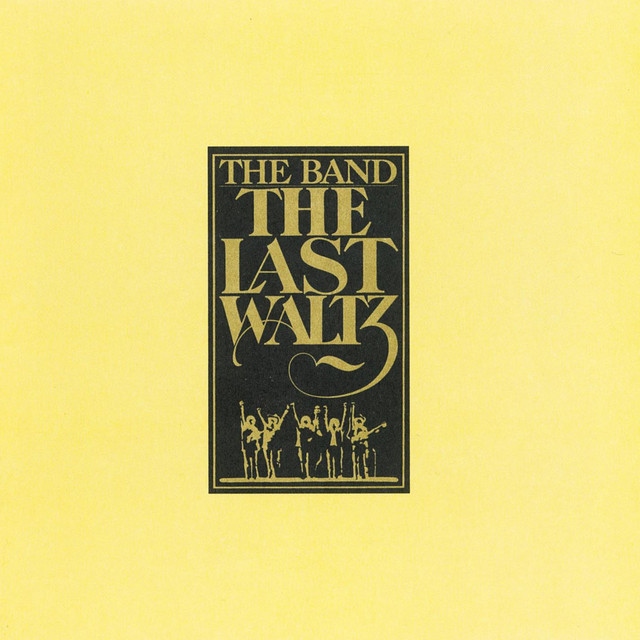
The Band, The Last Waltz (1978)

A farewell concert that knew it was a farewell concert, which gives the whole thing a weight and a tenderness that most live records never approach. The guest list reads like a fantasy and somehow every performance delivers. Martin Scorsese filmed it. Robbie Robertson produced it. The results speak entirely for themselves.

Nirvana, MTV Unplugged in New York (1994)

Kurt Cobain walks into a television studio a few months before his death and delivers a performance that feels like a genuine act of vulnerability. The choice of covers, the candles, the hushed intensity of it all, adds up to something that transcends the format completely. This is not an acoustic showcase. It is a farewell that nobody in the room fully understood yet.

Genesis, Three Sides Live (1982)

Often overlooked in conversations about the great live records, which is genuinely puzzling to anyone who has spent time with it. The Phil Collins era Genesis live was a different proposition than the record-buying public expected, looser and more adventurous than the studio work suggested. “In The Cage” and “Turn It On Again” in a live setting hit with a force that rewards every minute of attention you give them.

The Role of Producers in Shaping Artist Identity

When you think about what makes David Bowie Bowie, the alien theatricality, the chameleonic restlessness, the sheer audacity of the thing, how much of that belongs to Bowie himself, and how much belongs to Tony Visconti or Brian Eno?

Not a trick question. Actually one of the most fascinating puzzles in all of popular music, and one that doesn’t get nearly enough thought.

We have a weird relationship with producers in rock and pop history. We celebrate the artist. We buy the artist’s name on the ticket. We follow the artist on every platform. And the producer? They get a small-print credit on the back of the LP, if you even flip it over.

But spend some time digging into the actual mechanics of how records get made, and something uncomfortable becomes clear: the producer isn’t just the person who runs the board. Very often, they’re the person who figures out who the artist is.

Not who the artist wants to be. Who they actually are, the version of them that connects with the world at large. That’s a profound distinction.

Rick Rubin and the Art of Clearing Away

By the early 1990s, Johnny Cash was considered a relic. Country radio had moved on. His label had dropped him. He was, by the music industry’s cold arithmetic, finished.

Then Rick Rubin came along and basically removed everything. No elaborate arrangements, no Nashville gloss, no commercial calculation. Just Cash, an acoustic guitar, and a microphone sitting in Rubin’s living room, singing songs he cared about.

The result was the American series. Suddenly, Johnny Cash wasn’t a nostalgia act. He was a monument. A figure of gravity and hard-earned wisdom. A man whose voice carried the weight of everything he’d survived.

But none of that was invented. Rubin didn’t manufacture an identity for Cash. He excavated one. He stripped away decades of industry expectation until what was left was just the truth of the man. That’s producing as archaeology.

George Martin and the Sound of Possibility

George Martin was a classically trained musician working at EMI’s Parlophone label in the early 1960s, who signed a noisy rock-and-roll band from Liverpool that nobody else wanted.

He could have simply pointed microphones at the Beatles and captured what they played live. That would have been fine. Serviceable. Forgettable.

Instead, he became a collaborator in the deepest sense. He heard what they were reaching for, sometimes before they could articulate it themselves, and he built the sonic architecture to get them there. String quartets on “Eleanor Rigby.” Backwards tape loops on “Tomorrow Never Knows.” The entire orchestral psychedelic dream world of Sgt. Pepper’s.

The Beatles were already brilliant. Martin helped them become something that had never existed before.

What’s remarkable is that the relationship ran both ways. The Beatles pushed Martin past his classical instincts. Martin pushed the Beatles past their Hamburg pub rock origins. They created each other’s best work together. That’s the producer relationship at its finest: not a hierarchy, but a genuine creative dialogue.

Quincy Jones and the Architecture of Michael Jackson

Michael Jackson before Quincy Jones: a gifted child star, a Motown product, beloved by millions, operating largely within a defined commercial lane.

Michael Jackson with Quincy Jones: Off the Wall, Thriller, Bad. Arguably the most commercially and artistically dominant run in pop music history.

What changed? Jones didn’t change Jackson’s voice. He didn’t change his movement or his charisma. What he did was build a sound world sophisticated enough to hold all of Jackson’s complexity: the vulnerability alongside the sexuality, the tenderness alongside the aggression, the Black American musical tradition alongside the universal pop appeal.

Jones understood that Jackson contained multitudes, and he designed records capacious enough to contain them all. Thriller isn’t just a hit record. It’s a statement of identity. Jones heard that before the world did.

When It Gets Complicated

This isn’t always a heroic story, because the producer relationship can also calcify. It can constrain. It can define an artist in ways that follow them for the rest of their career, for better and for worse.

Think about Phil Spector’s Wall of Sound. Magnificent, yes. But every artist who worked with Spector, the Ronettes, the Crystals, Ike and Tina Turner, ended up serving the sound as much as the sound served them. The identity on those records is as much Spector’s as it is theirs.

The New Landscape

What’s happening today is genuinely different and worth paying attention to.

Producers like Jack Antonoff have become brand identifiers. If your album is produced by Antonoff, audiences arrive with certain expectations: a kind of expansive, emotionally direct, Americana-adjacent indie-pop sensibility. His fingerprints are on Lorde, Taylor Swift, Lana Del Rey, Bleachers. They’re all distinct artists, but there’s a connective tissue, a sonic family resemblance, that comes entirely from him.

And then there’s the rise of the producer-as-artist: Metro Boomin, Pharrell, Max Martin. These aren’t invisible hands anymore. They’re the headliners. The artists who record over their beats are, in some configurations, their featured guests. The identity question has flipped completely.

What This Means for How We Listen

The way credit gets assigned in popular music has always been a useful simplification. We accept it because it’s easier to have a face on the poster, a single name to attach to the feeling.

The truth is messier and more interesting. The records that have shaped our lives were almost always acts of collective imagination. An artist’s identity isn’t something they carry fully formed into a studio. It gets discovered, refined, sometimes invented, in collaboration with producers who deserve far more recognition than they typically receive.

Next time something genuinely moves you, where the sound and the artist feel perfectly matched and you can’t imagine either one without the other, take a moment to look at the production credits. There’s almost certainly a name there that changed everything.

Manchester Alt-Rock Risers Cruush Arrive Brighter and Bolder With New Single “Great Dane” via Heist or Hit

0

Cruush have something new to say, and “Great Dane” is how they’re saying it. The Manchester quartet release their latest single via Heist or Hit alongside a special double-A vinyl paired with last year’s “Rupert Giles,” and it announces a deliberate shift in direction. Brighter, bolder, more direct, this is a band stripping their sound for parts and reassembling it with total confidence.

The single was recorded with producer Owen Turner at Sickroom Studios in Norfolk, whose recent credits include the last two Brownhorse records. The result is a tighter, more purposeful version of cruush’s trademark hazy indie-rock fuzz, updated without losing the qualities that made NME flag them as New Bangers, The Line of Best Fit put them on repeat, and Stereogum reach for the word “bittersweet.” The gear shift is audible and it works.

Vocalist and lyricist Amber Warren grounds the track in the specific and the surreal simultaneously. “It’s a song about the 20 to 28 minutes on the train between Todmorden and Manchester Victoria,” she explains. “A daily commute can really poison how beautiful a journey is.” The title itself comes from the line “there’s a Great Dane in my pocket again,” which Warren cheerfully acknowledges is ridiculous. The riff, for the record, was born in a London guitar shop before a gig, pure Wayne’s World energy translated into something that hits properly hard.

Cruush’s DNA is soaked in the gloaming of Manchester’s suburbs, service jobs, and rainy nights buried under cosy blankets of indie-rock fuzz. But there’s a resilience running through everything they do that sets them apart. “Over the last 12 months, we’ve had a lot of letdowns,” the band have said. “However, it made us realise how much we can depend on each other. That’s how a band should be.” That solidarity shows up in the music, and it shows up in “Great Dane” especially.

BBC Radio 1’s Jack Saunders, BBC 6 Music’s Steve Lamacq and Emily Pilbeam, Radio X’s John Kennedy, NME, CLASH, Consequence of Sound, and Rough Trade have all called themselves fans. Cruush have toured with BDRMM, NewDad, GIFT, and Girl Scout. The momentum behind this band is real, and “Great Dane” keeps it moving.

“Great Dane” is out now via Heist or Hit on double-A vinyl alongside “Rupert Giles.” Cruush hit the road this spring with upcoming dates in Wrexham and Paris.

2026 Tour Dates:

May 9 – Wrexham – The Parish (Focus Wales)

May 15-16 – Paris – Supersonic (Block Party)

UK Singer-Songwriter Ellie Allen Goes Deep on Lust, Obsession, and Sabotage With “Get Even”

0

Ellie Allen is only three singles in, and she’s already operating with the kind of focus that takes most artists years to find. “Get Even” is out now, and the 23-year-old UK singer-songwriter delivers a track that sits comfortably between sharp R&B production and vulnerable, unguarded storytelling. Sharpened percussion, spacey melodic layers, and a vocal performance that shifts between elegant and deliberately warped, it’s a sound that feels genuinely her own.

The song pulls directly from lived experience. “I wrote ‘Get Even’ during the midst of a toxic relationship with an ‘on and off’ partner,” Allen explains. “I wanted to encapsulate the true feeling of fighting with your head and your heart within the lyrics and also the juxtaposition of the gritty production. I wanted it to sound and feel like a battle of never knowing when to quit, and constantly competing in a never-ending game of who can cause more damage to the other.” That clarity of vision translates directly into the track’s energy, and it hits.

Allen’s previous single “Promise” showed her genre-defying range, fusing pop-minded harmonies with R&B flavours and glitchy instrumentation. “Get Even” pushes further into that territory, seductive and turbulent in equal measure, capturing the intoxicating pull of a connection that’s simultaneously irresistible and destructive. The production matches the emotional content beat for beat.

Raised in a deeply musical household, Allen has been writing and recording her own music from an early age. That foundation is audible in how confidently she inhabits her own sound. At 23, with only three releases to her name, she’s already established a clear artistic identity rooted in love, identity, and heritage, themes that feel both deeply personal and immediately recognisable.

“Get Even” is out now, and with more music on the way, Ellie Allen is one to watch very closely.

Cardiff Experimental Folk Group Spirited Followers Make Their Label Debut With the Meditative “Returning”

0

Spirited Followers have arrived on record, and “Returning” makes an immediate case for why this Cardiff group has been turning heads across Wales. The debut single on BWGiBWGAN is meditative, expansive, and quietly stunning, a track that reframes death not as something to fear but as something to move toward with warmth and acceptance. For a debut single, it’s a remarkably assured statement.

The band draws from a genuinely unusual range of influences. Appalachian folk, Indian classical music, Greek musical traditions, post-rock, and avant-garde experimentation all find their way into a sound shaped by an equally distinctive lineup of instruments, dulcimer, harmonium, bouzouki, cello, synths, and drums. “Returning” leans into the gentler, more serene end of that spectrum, inspired by Christian Appalachian hymns and their particular way of sitting with mortality without flinching from it.

What makes Spirited Followers compelling isn’t just the breadth of their influences but how completely they’ve absorbed them. This doesn’t sound like a band assembling reference points. It sounds like a group that has genuinely lived inside these traditions and found something new on the other side. Ancient musical lineages and contemporary experimentation meet here without friction, carrying the weight of music passed down through generations while remaining unmistakably present tense.

Their live reputation precedes them. Already recognised as one of the most immersive and powerful new acts in Wales, Spirited Followers have built their following through performances that are as emotionally charged as they are sonically adventurous. “Returning” captures that quality on record for the first time, and it does so with remarkable poise.

This is the debut single on BWGiBWGAN, but it sounds like the beginning of something with real longevity. “Returning” is out now. Listen here.

Heavy Rock Sensation Georgia Nicole Channels Personal Struggle Into Electrifying New Single “Too Alive”

0

Georgia Nicole has been building something real, and “Too Alive” is where it all crystallises. The UK heavy rock artist returns with a single that started as a piano ballad during one of the hardest periods of her life and evolved into a full-throttle rock anthem complete with anthemic chants and a vocal performance that leaves no room for doubt. “I wanted to show people that they’re not alone in their suffering,” she says. That intention is audible in every second of the track.

The single draws from a well of genuine emotion and channels it into something galvanising. Inspired by Nothing But Thieves, The Killers, Muse, and Shinedown, Georgia’s sound blends powerful rock riffs with emotionally charged lyrics that hit hard without ever feeling calculated. Danielle Holian of Decent Music PR puts it plainly: “With raw honesty and electrifying performance, she’s an artist who commands the stage and connects deeply with every listener.”

Georgia’s live credentials back that up completely. She’s performed five times at the Isle of Wight Festival in 2025 alone, across stages including Platform One, Kashmir, and Electrolove. Her Paramore tribute project Paramour drew a 4,000-person audience at its 2025 Isle of Wight Festival debut. She’s also the lead vocalist for function band Forever To Go and performs in an Eminem tribute act that consistently fills Electrolove to capacity. This is an artist who thrives in front of a crowd.

The momentum behind her recorded output is equally strong. Her debut single racked up over 23,000 streams in six months. “Game You Play” broke the South Coast Music Show record for consecutive weeks in their top ten and peaked at number two in their 2025 charts. Isle of Wight Radio named her One to Watch in both 2024 and 2025. She debuted “Too Alive” at the 2025 Wight Noize finals, where she was a finalist, and the response confirmed what her growing fanbase already knew.

“Too Alive” is part of her upcoming EP ‘A Little Bit Of It All,’ and it marks a significant moment in Georgia Nicole’s trajectory. The resilience that shaped the song is the same quality that’s driven everything she’s built so far. The single is out now.

Eurodance Icon Haddaway Returns With New Album ‘The Sun’ and a Sound Built on Warmth and Motion

0

Haddaway is back, and ‘The Sun’ arrives not as a nostalgia play but as a genuine forward step. More than three decades after his voice became embedded in global pop memory, the eurodance icon returns with a full album that reflects perspective, warmth, and a clear sense of what he wants to say now. This is music made by someone who’s lived widely and creates from that place.

The album opener, “The Sun (Beach Mix),” sets the tone immediately. Relaxed, sunlit, and built around rhythm and ease, it moves with the lightness of open air. It’s a smart entry point into the wider record, offering the album’s atmosphere in its most distilled form before the full version of the title track arrives on the album itself.

Across ‘The Sun,’ Haddaway draws on familiar pop and eurodance instincts, this time softened by jazz harmony, reggae-inflected warmth, and modern electronic touch. The songs breathe. There’s space to move, to pause, to stay with the music, and that quality mirrors how Haddaway actually lives. An active outdoor life built around windsurfing, snowboarding, mountain biking, golf, and long rides on his Harley informs the discipline and clarity running through every track.

The album also extends beyond the studio in a meaningful way. In Bucharest, Haddaway marks ‘The Sun’s arrival by spending a day with local animal shelters as part of “Where the Sun Shines, Hope Grows,” cooking alongside fans and volunteers in an act that reflects the album’s values directly. It’s the kind of gesture that says a lot about where this artist is in his life right now.

Haddaway’s music has never really stopped travelling. It’s been passed between generations, scenes, and places without instruction, carried forward by listeners who found their own meanings in it long after its original moment. ‘The Sun’ gives those listeners something new to hold onto, a record that doesn’t attempt to explain itself or reframe the past. It simply moves forward, on its own terms, and lets the music do the rest.

‘The Sun’ is out now. Listen here.

Indigo Girls’ Emily Saliers Opens Up About Her Health With Honesty, Grace, and a Tour on the Horizon

0

Emily Saliers has always sung from a place of honesty. That didn’t change on April 17, when she and Amy Ray sat together on a couch, guitars in hand, and shared something deeply personal with the Indigo Girls community. Saliers revealed she’s been diagnosed with two movement disorders, cervical dystonia and an essential tremor, conditions that have altered her voice and reshaped how the duo approaches their music. It was a moment of quiet courage, and it landed exactly the way it was meant to.

Cervical dystonia, which comes with a condition called torticollis, makes it difficult for Saliers to hold her head centrally without shaking, directly affecting her throat and singing apparatus. The essential tremor impacts her ability to hold a straight tone and has changed the character of her vibrato. “My voice will not be what it was,” she said, tearfully, with Ray beside her offering steady, unwavering support. There’s no cure for either condition, and Saliers isn’t pretending otherwise.

What she is doing is everything possible to keep performing at the highest level she can. Her current treatment includes physical therapy, therapeutic massage, chiropractic care, acupuncture, and Botox injections. She’s also working with a vocal coach who specializes in movement disorders for singers. Joining the duo on their upcoming tour will be singer-songwriter Lucy Wainwright Roche and longtime collaborator Jeff Fielder, both there to help carry the weight of the harmonies and arrangements with care.

The Indigo Girls have been one of the most beloved and enduring acts in American music since forming in Georgia in 1985. Songs like “Closer to Fine,” “Galileo,” and “Power of Two” have found their way into the lives of generations of fans, including a whole new wave after “Closer to Fine” appeared in Greta Gerwig’s Barbie in 2023. That kind of staying power doesn’t come from technical perfection. It comes from truth, and Saliers has never had a shortage of that.

Ray has been, by all accounts, exactly the partner Saliers needs right now. “She’s been super supportive,” Saliers said, patting her friend’s shoulder. The two view the conditions as part of the organic process of aging together as bandmates and as people. “We’re just telling you because we’re going through this year touring,” Ray added, “and we don’t want it to be like, this thing that people are talking about that we’re not talking about.”

That transparency is its own kind of gift. Saliers asked fans for grace, and anyone who has followed the Indigo Girls for any length of time knows that grace is exactly what this community has always had in abundance. The 2026 tour kicks off April 24 in Athens, Ohio. Show up, sing along, and let Emily Saliers hear you.

And put them in the Rock and Roll Hall of Fame already.