Home Blog Page 4

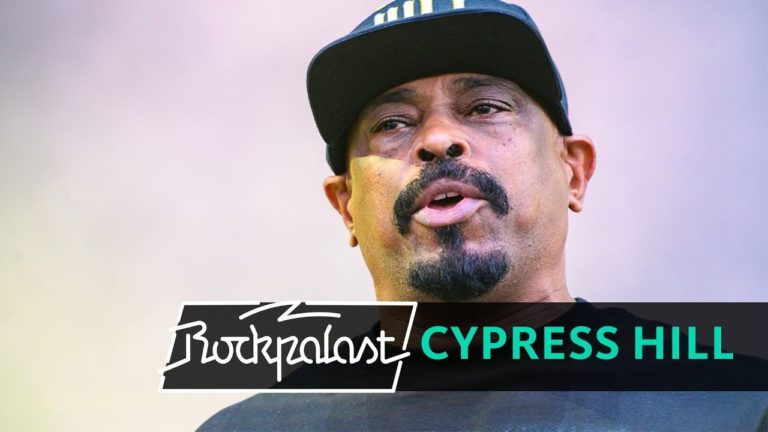
Video: Cypress Hill Bring The Smoke To Germany’s Summerjam Festival In 2019

0

Cypress Hill rolled into Cologne in 2019 and reminded everyone why they’ve spent three decades owning festival stages. Captured by Rockpalast at the Summerjam Festival, the South Gate, California crew tore through a career-spanning set built on the gritty, psychedelic hip-hop they pioneered in the early 90s. The lineup brought B-Real and Sen Dog on vocals, Mix Master Mike on the turntables, and Eric Bobo on percussion, a combination that hits with serious force live. The setlist pulled from across their catalog, from “Hand On The Pump” and “When The Shit Goes Down” to the inescapable “Jump Around” and newer cuts off their 2018 record ‘Elephants On Acid.’ Ever since their 1991 debut and the monumental ‘Black Sunday’ in 1993, which gave the world “Insane In The Brain,” they’ve built a sound on DJ Muggs’ smooth loops and the contrasting deliveries of B-Real and Sen Dog.

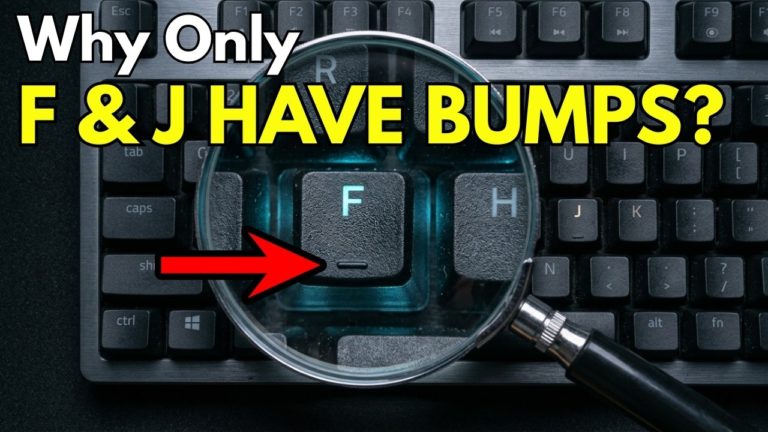
The Tiny Bumps On Your F And J Keys Have A Secret 138-Year History

0

Ever run your fingers across a keyboard and felt those two tiny ridges on the F and J keys? A new explainer from Simple Things – Surprising Histories digs into why they’re there, and the answer goes back more than a century. Those bumps are homing bars, physical anchors that let your index fingers find the home row without looking down. The video traces the story from the birth of touch typing in 1888, credited to Frank Edward McGurrin, through the shift away from slow hunt-and-peck typing, to June E. Botich’s 2002 standardization of the tactile ridges we use today. There’s a fun detour into vintage 1980s Apple keyboards, which oddly placed the bumps on D and K instead, plus a look at the science of tactile priming and the nerve endings in your fingertips that make the whole system work. It’s a clean, four-minute history of a design detail most people never think about, and the comments add a great wrinkle: blind computer users point out those same bumps are essential for navigating a keyboard by touch.

Muscle Shoals Quartet The Family Turn Six Years Of Patience Into Debut Album ‘Delusions of Grandeur’

0

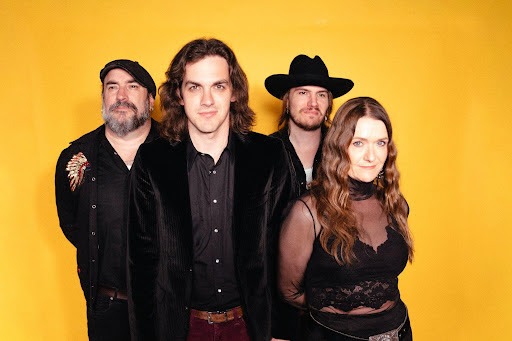
Four acclaimed Muscle Shoals songwriters waited six years to let this record out, and now it’s coming. The Family, made up of Dylan LeBlanc, James LeBlanc, Angela Hacker, and Bay Simpson, announce their debut album ‘Delusions of Grandeur,’ due July 31 via Big Black Cow Records. The connection runs deeper than the music. Dylan is James’ son, Bay is Angela’s son, and James and Angela raised the boys together as a family of musicians.

They cut the album at the legendary FAME Studios in 2020, at the urging of FAME’s Rodney Hall, with no expectations about what the sessions would become. Lockdown gave them the time, and a show in Huntsville gave them their first taste of playing together publicly. The idea of a band took shape from there.

Lead single “The End,” out today, is taut and timeless, soulful folk rock built on lush harmonies, jazzy chord changes, and a groove that wouldn’t sound out of place on a lost Eagles or Steely Dan record. James sings lead and digs into darker territory. “To me the song is about nihilism. People’s fascination with post-apocalyptic hysteria,” he says, describing a “staring into the abyss” mentality that comes naturally to where the family comes from as people.

The road here wasn’t smooth. Dylan, Angela, and James each fought private battles with substances and alcohol, and the family had drifted apart over the years under the weight of touring schedules and separate lives. The record pulled them back together. “We all came into it carrying different scars, different experiences, and different stories of survival, but through the music we found healing in each other,” they shared in a family statement, calling the album proof that broken things can still become beautiful.

With Spencer Coats engineering and Brad Crisler co-producing, each member brought ideas to FAME, and the sessions forged a bond that shaped the album they’d always heard in their heads. Once the world reopened, though, no label bit. Dylan kept the flame alive in January 2026 by sharing the riff-driven “Pick Your Poison” on Spotify, billed as Dylan LeBlanc, The Family, and it became one of his most popular tracks.

The final push came from Jesse “Chunk” Walker, a naval officer and entrepreneur married to Dylan’s twin sister, whose online store Big Black Cow Records gave the album a home. “So much of your life, you can sit around and just wait for someone to give you an opportunity, and you’ll be waiting for a really long time,” James says. “Why don’t we create the opportunity for ourselves?”

The album channels a ’70s folk-rock sound, full of FM radio warmth and Southern rock grit. The hook-laden “History of Things to Come” puts Angela up front, while the Fleetwood Mac-esque “Everybody Loves You Now,” powered by Bay, is the quartet’s own favorite. It’s a warm, lived-in collection that earns every bit of its golden-age comparison.

The album is only the start. The Family recently cut seven new songs plus a live album from their first shows in May 2026. “We go through what any other family would go through,” Angela says. “Then we get to share what we love, which is music, that’s so freaking cool to me.”

Video: Mumford & Sons Turn A Berlin Festival Field Into A Singalong At Lollapalooza 2023

0

Mumford & Sons made Berlin’s Olympiapark feel like a living room in September 2023, headlining Lollapalooza with the communal energy that’s become their signature. The British folk-rock outfit pulled from across their catalog, moving from the banjo-driven anthems that first broke them worldwide to the bigger, stadium-sized rock of their later records. Marcus Mumford and the band have always known how to shrink a festival field down to something intimate, and this set swung from hushed acoustic passages to full-band crescendos with the whole crowd singing along. Rooted in the West London folk scene and built on the back of ‘Sigh No More’ and ‘Babel,’ their sound leans on bluegrass instrumentation, soaring harmonies, and lyrics that land with real feeling. This performance catches them firing on all cylinders, a great snapshot of a band that connects with tens of thousands through sheer force.


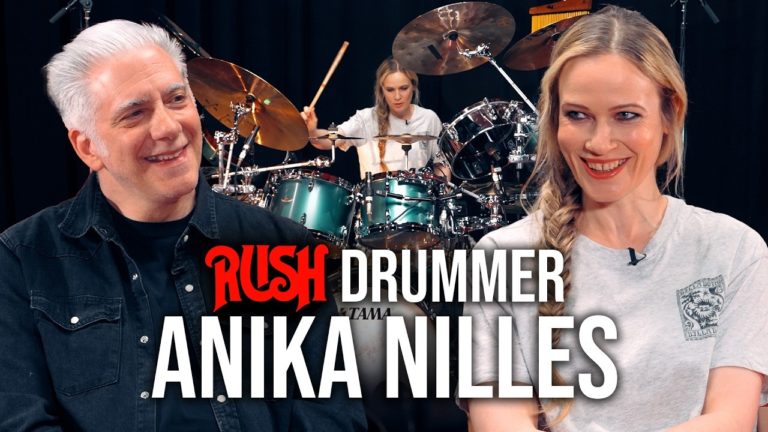
Rush Drummer Anika Nilles Sits Down With Rick Beato To Talk Filling Neil Peart’s Seat

0

Anika Nilles has the hardest gig in rock right now, and she’s making it look effortless. In a new interview with Rick Beato, the German drummer opens up about joining Rush as their touring drummer, the pressure of stepping into Neil Peart’s legacy, and the world tour that’s already won over the band’s famously devoted fanbase. She learned 40 Rush songs in under a year and nailed opening night at the Kia Forum, drawing a standing ovation after her Tom Sawyer solo. Nilles talks about how she got started, what the run has meant to her, and the weight of one of the most scrutinized jobs in live music. Her playing speaks for itself, and her humility has made her an easy figure for Rush fans to rally behind.

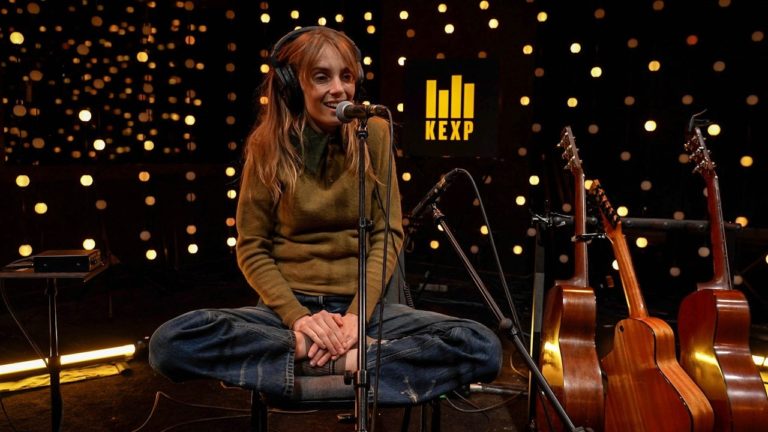
Maya Hawke Brings Folk Heart To KEXP With A Four-Song Live Session

0

Maya Hawke walked into the KEXP studio with a guitar and a trio, and what came out is one of the loveliest live sessions of the year. The four-song set runs through “Bring Home My Man,” “Slacker In The Rye,” “Heavy Rain,” and “Lioness,” with Christian Lee Hutson on vocals and guitar and Odessa Jorgensen adding violin and harmonies. Hawke’s voice carries the whole thing, delicate and unhurried, the kind of performance that pulls you in inside the first minute.


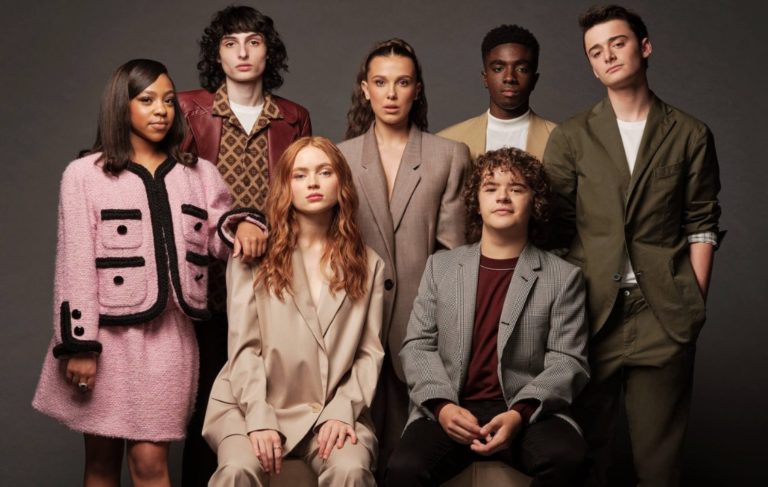
Stranger Things: The Hawkins Kids Who Traded the Upside Down for the Recording Studio

Here’s a fun thing about Stranger Things. The Netflix juggernaut turned a group of unknown kids into household names, revived interest in 80s classics like Kate Bush and The Clash, and quietly assembled one of the most musically stacked casts on television. Half of Hawkins moonlights as a working musician. Behind some of the series’ most beloved characters are nine actors who have formed bands, recorded albums, and gone on concert tours in between hunting alternate dimension monsters.

So grab your Walkman. Here are the Stranger Things stars who turned out to be the real deal behind a microphone.

Joe Keery, aka Djo

If you’ve spent any time on TikTok in the past couple of years, you’ve heard his music whether you knew it or not. Before Steve Harrington’s hair became iconic, Keery was the vocalist and guitarist for the psychedelic rock band Post Animal, joining the Chicago group in 2015 and recording their debut album before leaving as Stranger Things took off. He then launched a solo project under the name Djo, and it has become the most successful music career to emerge from the cast.

The breakthrough came from an unlikely place. ‘End of Beginning’ was originally released in September 2022 as the sixth track on his second album ‘Decide,’ but gained massive popularity on TikTok in early 2024 and was issued as a single that March. The song kept climbing. It peaked at number four on the UK Singles Chart and reached number 21 on the Billboard Hot 100, then caught a second wave following the end of the series, eventually hitting number one on the UK Singles Chart in January 2026. The song is deeply tied to the show’s themes. Keery has said it was inspired by leaving Chicago for Los Angeles after his breakout role, and is about looking back at a section of your life and yearning for it while appreciating what happened. He’s kept the momentum going, releasing a new Djo album, ‘The Crux,’ in April 2025, recorded at legendary studios including Electric Lady in New York.

Maya Hawke

Robin Buckley’s portrayer is a serious singer-songwriter with a real catalog behind her. Maya Hawke has been steadily building a body of folk-tinged indie work, and her third studio album, ‘Chaos Angel,’ arrived on May 31, 2024, while she was filming the fifth and final season of Stranger Things in Atlanta.

Fans have begged for the obvious crossover. Asked whether she’d ever make music with Keery, Hawke offered a thoughtful no, at least for now. She explained that the show is so big anything they did together would probably overshadow it, and that it would be a long time before anyone on the show publicly collaborated, though they all listen to and engage with each other’s work.

Finn Wolfhard

Mike Wheeler himself has been making music almost as long as he’s been on the show. Wolfhard took center stage as the frontman of the rock band Calpurnia, formed in 2017, which released a single EP, 2018’s ‘Scout,’ showcasing his howling vocals and funky guitar riffs. When that project ran its course, he started another. After Calpurnia dissolved in 2019, Wolfhard formed a second band, The Aubreys, featuring more mature songwriting, which released an album called ‘Karaoke Alone’ in 2021. He’s gone solo too, dropping the album ‘Happy Birthday’ in 2025, leaning into indie rock, folk, and introspective songwriting.

Jamie Campbell Bower

The actor who brought the terrifying Vecna to life is no newcomer to the stage. Known to fans as the season four big bad, Jamie was the frontman of the UK punk-rock band Counterfeit, which released the album ‘Together We Are Stronger’ in 2017 and toured extensively before going on hiatus. His more recent work takes a far more personal turn. In 2024, he returned with his solo album ‘The Panic Years,’ a dark, emotionally raw project that dives into mental health, addiction, and recovery.

Charlie Heaton

Jonathan Byers’ moody artistic streak isn’t far from the truth. Charlie Heaton was a musician before he was an actor. Drumming, specifically. Before he got into acting, Heaton played drums in several rock bands, even moving to London at 16 to pursue music, and played in the band Comanechi where he met former partner and lead singer Akiko Matsuura.

Caleb McLaughlin

Lucas Sinclair’s actor has been carving out his own lane as a solo artist. Caleb McLaughlin has released singles including his 2021 debut ‘Neighborhood’ and a follow-up, ‘Soul Travel,’ and has stressed that he takes music seriously as a pursuit rather than a hobby.

The Broadway Crew

Not every musical Hawkins kid went the rock-band route. A few honed their chops in the most demanding live setting there is. Gaten Matarazzo performed in Les Misérables on Broadway, Caleb McLaughlin was in The Lion King, and Sadie Sink starred in Annie, all roles requiring serious vocal ability. It’s part of why the cast is so musically gifted across the board.

When you step back, a cast this musical feels almost inevitable given the show itself. The music of Stranger Things, whether the original score or the licensed soundtracks, has been one of the show’s most beloved elements, from reviving Kate Bush’s ‘Running Up That Hill’ to soundtracking key emotional beats with 80s staples. A show that lives and breathes music was always going to attract performers who feel the same way. The Upside Down may be closed for business, but the cast’s recording careers are very much still open.

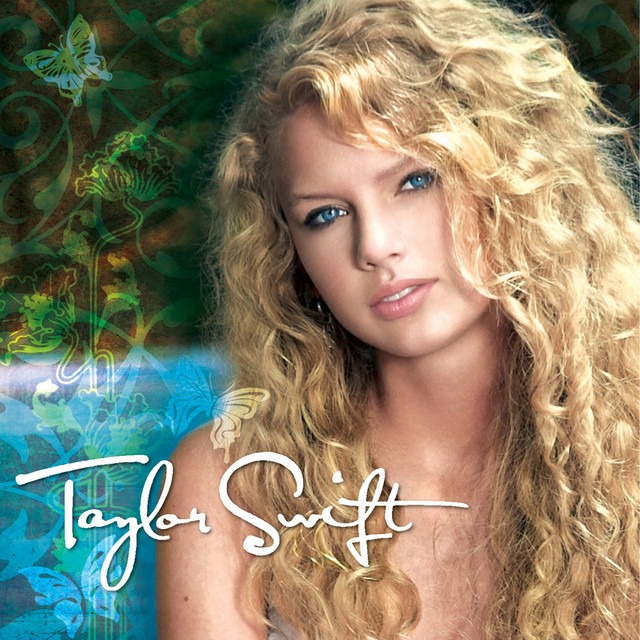
What Taylor Swift Can Teach You About Owning Your Product Ideas

0

It’s easy to think of Taylor Swift as a pop phenomenon and nothing more. But buried inside her career is one of the sharpest business case studies of the decade, a years-long fight over who owns the things you create. Whether you’re building software, designing a brand, pitching a feature, or shipping a side project, the Swift saga has lessons that go way beyond music. Here’s what her battle over her own catalog can teach you about protecting what’s yours.

Lesson 1: Read the Fine Print Before You Sign Anything

Swift’s whole ordeal traces back to a contract she signed as a teenager. She signed her first record contract at age 15, and like many major-label artists, that deal meant the label, not the artist, owned the master recordings. The trouble started years later. The original recordings of Swift’s first six albums were acquired by Scooter Braun in 2019 when he bought her label, Big Machine, and then sold to private equity firm Shamrock Capital in 2020.

The takeaway for anyone building a product: ownership is decided at the contract stage, long before anything becomes valuable. The agreements you sign early, when you have the least leverage and the most optimism, are the ones that determine who controls your work later. Read them like they matter, because they do.

Lesson 2: You Can Lose Control of Something You Created

Here’s the part that stings. The work was hers in every creative sense, but legally it wasn’t. In both the 2019 and 2020 transactions, Swift was excluded from negotiations and denied the chance to bid on her own material. She found out her life’s work was changing hands without having a seat at the table.

For builders and creators, this is the nightmare scenario. The idea you sketched, the feature you championed, the design you obsessed over, can end up owned and controlled by someone else entirely. Authorship and ownership are not the same thing. Making something does not automatically mean you control what happens to it.

Lesson 3: When You Can’t Reclaim It, Out-Build It

This is where Swift did something genuinely instructive. Rather than just litigate or complain, she went back to work. She began re-recording her earlier albums and releasing “Taylor’s Versions,” which her audience embraced and which successfully drew attention and revenue away from the original masters. She released re-recorded versions of Fearless, Red, Speak Now, and 1989, each one a fresh asset she fully owned.

The strategic insight here is huge. She couldn’t take back the old asset, so she built a new, better-controlled version and made the original less valuable. If you’ve lost control of an idea, sometimes the smartest move isn’t a legal fight. It’s shipping a superior version that you own outright and letting the market decide which one wins.

Lesson 4: Leverage Is What Gets You Ownership Back

The re-recording project wasn’t just an act of defiance. It was a negotiating tactic. The passionate fan response likely gave Swift important leverage in her negotiations with Shamrock, as fans insisted on streaming the “Taylor’s Version” albums and shunning the originals. Every fan who chose her version over the original chipped away at the value of the catalog she didn’t own, which made buying it back more realistic.

The lesson translates directly to product work. Ownership is rarely handed to you out of fairness. You earn it by building something valuable enough that you have negotiating power. Demonstrated traction, a loyal user base, a proven track record, these are the things that turn “no” into “name your price.”

Lesson 5: Patience and Persistence Pay Off

This was not a quick win. It was a grind that stretched across most of a decade. Swift described almost giving up after 20 years of “having the carrot dangled and then yanked away.” But the persistence eventually paid off in full. Roughly six years after she first protested the sale, Swift announced she had purchased her music outright “with no strings attached, no partnership, full autonomy” from Shamrock Capital. The reported price tag was significant. The deal was reportedly worth more than $300 million and gave her full control over her master recordings, including the rights to distribute, repackage, and license her earlier work.

For anyone protecting an idea, the through-line is patience. Reclaiming ownership of something valuable can take years of sustained effort. The people who win these fights are usually the ones who simply refuse to let go.

Swift’s story rewrote expectations in her industry. Her years-long saga gave new visibility to artists’ frequent struggles to obtain the full rights to their own work. But you don’t need to be a global superstar to apply the playbook. Understand your contracts. Know that creating something isn’t the same as owning it. Build leverage. And when you can’t reclaim an asset directly, out-build it until ownership comes back within reach.

Your ideas are your catalog. Treat them like the assets they are.

Everything You Need to Know About the 2026 World Cup, and How to Watch Every Match

0

It’s here. The biggest World Cup in history kicks off today, and for the first time ever it’s happening right in our backyard. Whether you’re a die-hard who already has the bracket memorized or someone who just wants to know which channel to turn on, here’s your complete guide to the 2026 FIFA World Cup.

When and Where It’s Happening

The 2026 FIFA World Cup runs from June 11 to July 19, 2026, jointly hosted by sixteen cities, eleven in the United States, three in Mexico, and two in Canada. This is a genuinely historic moment for the country, because it’s Canada’s first time ever hosting or co-hosting the men’s tournament. It’s also the first time a World Cup has ever been hosted by three nations, and the tournament returns to its traditional Northern Hemisphere summer slot after the strange November-December edition in Qatar.

The action opened on Thursday, June 11, with Mexico hosting South Africa at the historic Estadio Azteca in Mexico City. It all builds toward the final on July 19. The 2026 World Cup final will be played at New York New Jersey Stadium in East Rutherford, New Jersey, on Saturday, July 19 at 3 p.m. ET.

A Bigger Tournament Than Ever Before

If this World Cup feels enormous, that’s because it is. The field has been expanded dramatically. There are 12 groups of four teams representing 48 nations, which is 16 more than the 2022 World Cup in Qatar. All those extra teams mean a lot more soccer to watch. The tournament features 48 teams and 104 matches over 39 days.

The format has changed to match. The previous setup of 32 teams in eight groups has been replaced by 12 groups of four, with the top two teams in each group plus the eight best third-placed teams advancing, and the knockout stage now starting with a round of 32. In practice, that means every team is guaranteed three group-stage matches, and 32 surviving teams will make it out of the group stage into the knockouts.

How Canada Is Faring

As a host nation, Canada qualified automatically and has a real shot at making noise on home soil. The Canadian Men’s National Team is competing in their third World Cup, after appearances in 1986 and 2022, and they kick off their campaign on Friday, June 12 against Bosnia and Herzegovina. Defending champions Argentina, meanwhile, arrive looking to hold onto the title they won in 2022.

How to Watch in Canada

Here’s the good news for Canadian fans: getting access is refreshingly simple. Bell Media holds exclusive World Cup television rights in Canada and will broadcast all 104 matches across CTV in English, Noovo in French, and its subscription networks TSN in English and RDS in French.

If you want to watch absolutely everything, TSN is your home base. Every game from the tournament will be live in English on the TSN channels and in French on RDS. A good chunk of the marquee action is also available free over the air. CTV will televise selected matches including every Canada game, six round of 32 fixtures, four round of 16 clashes, all four quarter-finals, both semi-finals, and the final.

Prefer to stream? You’ve got options across devices. The entire tournament can be streamed live and on-demand through the TSN+ streaming platform, the TSN App, and TSN.ca, and matches broadcast on CTV can be streamed through the CTV App or Crave. For cord-cutters, the pricing is reasonable. You can live stream via TSN+, which costs CA$8 per month or CA$80 per year. One more handy option worth knowing about: TSN is available through Amazon Prime Video, allowing subscribers to stream matches via the platform.

A small but useful tip for streamers: the specific channel can move between TSN, TSN2, CTV, and CTV2, so check the fixture listing first to keep your stream choice simple. And if you just want a taste without committing, the official TSN YouTube channel streams all of the network’s pre-game shows along with the first 10 minutes of every match.

The Bottom Line

For the next five-plus weeks, the world’s biggest sporting event is unfolding across North America, with games being played on Canadian soil for the very first time. All 104 matches are live on TSN and RDS, the biggest moments are free on CTV, and streaming starts at just eight bucks a month. Pick your team, find your couch, and enjoy the ride. It doesn’t get more convenient than a World Cup in your own time zone.

Wes Gardner, Former Red Sox and Mets Pitcher, Dies at 65

0

Wes Gardner, the Arkansas-born right-hander who pitched eight seasons in the major leagues across the 1980s and early 1990s, has died at the age of 65. He passed away on June 10, 2026.

Born Wesley Brian Gardner in Benton, Arkansas on April 29, 1961, he was drafted by the New York Mets in the 22nd round of the 1982 draft out of the University of Central Arkansas. He made his big-league debut with the Mets on July 29, 1984, retiring the side in a perfect ninth inning against the Chicago Cubs at Shea Stadium, and pitched in 30 games for New York over two seasons.

His career took its defining turn in November 1985, when he was dealt to the Boston Red Sox as part of the multi-player trade that sent Bob Ojeda to the Mets. It was in Boston that Gardner found his footing. He emerged as the team’s closer in 1987, leading the Red Sox with ten saves, before shifting into the starting rotation the following year. The move paid off immediately. He won his first four decisions as a starter in 1988 and set career highs across the board, with eight wins, 106 strikeouts, a 3.50 ERA, and 149 innings pitched.

That season also brought his lone postseason appearance, in Game 3 of the 1988 American League Championship Series against the Oakland Athletics, where he came on in relief and took a no-decision in a Boston loss.

Gardner spent two more years with the Red Sox before a December 1990 trade sent him to the San Diego Padres. He finished his playing days in 1991 with brief stops in San Diego and the Kansas City Royals organization. Over eight seasons he compiled an 18–30 record, a 4.90 ERA, and 358 strikeouts across 189 games.

His college accomplishments earned lasting recognition. In 2001, he was inducted into the University of Central Arkansas Bears Hall of Fame.

Wes Gardner was 65.