Home Blog Page 4

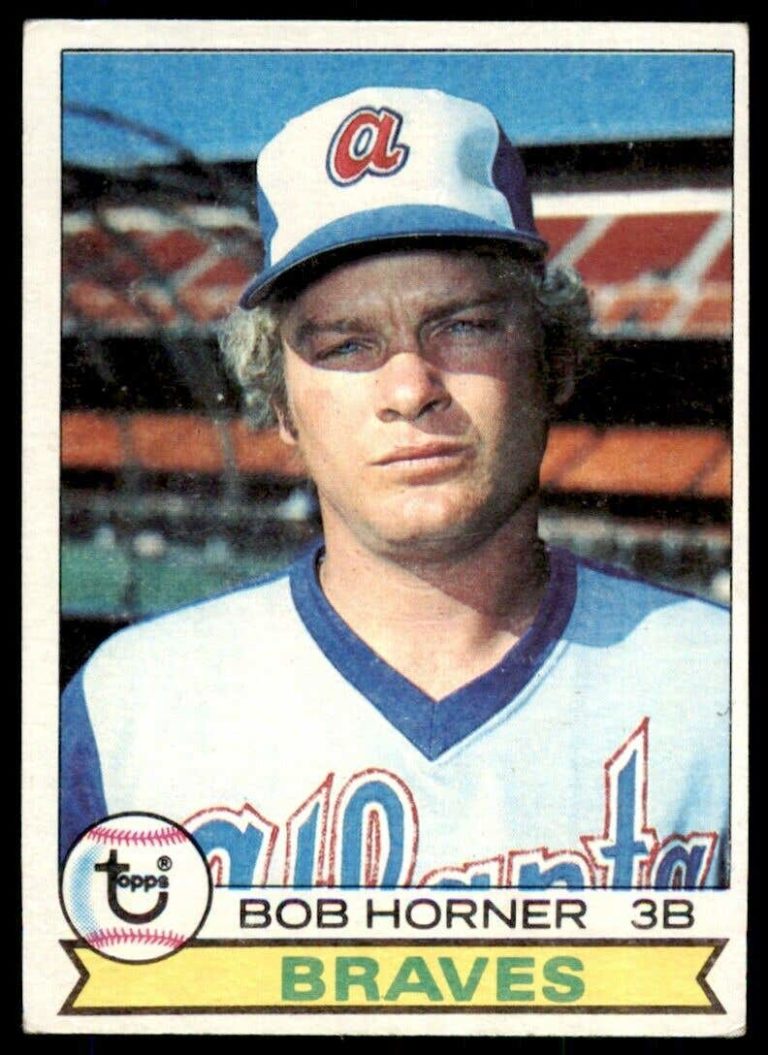
Bob Horner, Braves Slugger Who Hit Four Home Runs in One Game, Dies at 68

0

Bob Horner, the hard-hitting third baseman who went straight from college to the Major Leagues, won the National League Rookie of the Year in his debut season, and became one of the most feared power hitters of the early 1980s, died on May 26, 2026 in Irving, Texas. He was 68. His death was announced by the Atlanta Braves.

Born August 6, 1957 in Junction City, Kansas, Horner grew up in Glendale, Arizona and built one of the most decorated careers in college baseball history at Arizona State University. Over three seasons with the Sun Devils, he batted .383 with a then-NCAA record 56 home runs and 229 RBI, won the College World Series Most Outstanding Player award in 1977, and became the first-ever winner of the Golden Spikes Award — college baseball’s equivalent of the Heisman Trophy. He was the kind of college player who made scouts run out of superlatives.

The Atlanta Braves took him first overall in the 1978 draft, and Horner did something almost no player in the history of the sport had managed: he skipped the minor leagues entirely and walked straight into a starting lineup. In his very first Major League game, he hit a home run off future Hall of Famer Bert Blyleven. He never really stopped from there. In 89 games that debut season, he hit .266 with 23 home runs and 63 RBI, led all National League third basemen in home runs, and won the NL Rookie of the Year award over a certain rookie shortstop named Ozzie Smith.

The early 1980s Braves teams were built around Horner and Dale Murphy, a power-hitting tandem that gave opposing pitchers legitimate nightmares. Horner averaged 35 home runs and 109 RBI per 162-game average over his career, numbers that would have been even more imposing had injuries not repeatedly derailed his seasons. He broke his right wrist in 1983, broke his left wrist in 1984, and lost significant stretches of what should have been his prime years to a body that kept betraying him at the worst moments.

On July 6, 1986, he achieved something only ten players in Major League history had done before him: he hit four home runs in a single game, doing so against the Montreal Expos and becoming only the second player ever to accomplish the feat in a losing effort. That same season, after hitting a record 210 career home runs without a grand slam, he finally hit one with the bases loaded to beat the Pirates. The record for most home runs without a grand slam stood until Sammy Sosa broke it in 1998.

What followed was one of baseball’s more dispiriting stories. Horner became a free agent after 1986, still near his peak at 29 years old, and received no offers. The courts would later confirm what many had suspected: Major League Baseball owners had been illegally colluding to suppress player salaries, and Horner was among the most direct victims. With no MLB takers, he signed a one-year, $2 million deal with the Yakult Swallows of Japan’s Central League — the organisation gave him number 50 because that was the number of home runs they expected him to hit. He hit 31 with 73 RBI. Yakult offered him a reported $10 million for three more years. He came home anyway, returned to MLB with the St. Louis Cardinals in 1988, injured his shoulder after 60 games, and never played again. In 2004, he received over $7 million as part of the successful collusion lawsuit settlement — fair compensation, perhaps, but a poor substitute for the career years that were taken from him.

He was inducted into the College Baseball Hall of Fame as a member of its inaugural class in 2006, the Sun Devil Athletics Hall of Fame in 1979, and the Georgia Sports Hall of Fame in 2022. He is survived by his wife Chris and their two sons.

Bob Horner was the kind of player who made everything look inevitable, right up until the moment that it wasn’t. He deserved more seasons than he got. The ones he did have were worth watching.

Mark Bailey, MLB Catcher Who Called 64 Nolan Ryan Starts, Dies at 64

0

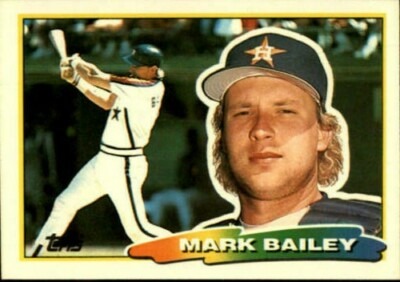
Mark Bailey, the switch-hitting catcher who spent seven seasons in Major League Baseball with the Houston Astros and San Francisco Giants and went on to dedicate more than two decades to coaching in the Astros organization, died on May 26, 2026 in Katy, Texas. He was 64. The cause was cancer.

Born November 4, 1961 in Springfield, Missouri, Bailey was a two-sport athlete at Southwest Missouri State University, playing both college basketball and baseball and earning All-American honours twice as a Division II infielder. He played collegiate summer baseball with the Wareham Gatemen of the Cape Cod Baseball League in 1981, helped lead SMS to the NCAA Division II baseball tournament in 1982, and was selected by the Houston Astros in the sixth round of the 1982 MLB Draft, choosing to forgo his senior year and sign professionally.

He made his Major League debut with Houston in 1984 and served as the team’s primary catcher in his first two seasons. His most productive year at the plate came in 1985, when he hit .265 in 114 games with 10 home runs. Over seven Major League seasons and 340 games, he posted a .220 batting average with 24 home runs and 101 RBI. The numbers tell a working catcher’s story — a player valued for what he did behind the plate as much as in front of it.

And what he did behind the plate was significant. During his time with the Astros, Bailey caught 64 of Hall of Famer Nolan Ryan’s starts, the third most of any catcher across Ryan’s remarkable 27-year career. To frame a Hall of Famer’s best years, to be the person a pitcher of that calibre trusted with his craft night after night, is a quiet form of excellence that statistics rarely capture fully.

After his playing career wound down, Bailey moved into coaching and never really left. He coached at the Single-A and Double-A levels in the Astros organization before joining Houston’s big league staff as bullpen coach from 2002 to 2009, then worked as a roving catching instructor for the Astros’ minor league teams through the 2020 season. Twenty-three years coaching with one organization is a statement of loyalty and purpose that speaks for itself.

He was inducted into the Missouri State Athletics Hall of Fame in 1995, the Springfield Area Sports Hall of Fame in 2016, and the Missouri Sports Hall of Fame in 2017 — a well-earned recognition of a career that mattered at every level it touched.

Kelly Curtis, Actress and Daughter of Hollywood Royalty, Dies at 69

0

Kelly Curtis, an actress who carved out her own path in Hollywood while navigating life as the daughter of Tony Curtis and Janet Leigh and the older sister of Jamie Lee Curtis, died on May 30, 2026. She was 69. Her death was announced by her sister Jamie Lee on social media.

Born Kelly Lee Curtis on June 17, 1956 in Santa Monica, California, she made her screen debut before she could have fully understood what was happening — appearing as a young girl, uncredited, in the 1958 United Artists adventure film ‘The Vikings’, which starred both her parents. It was an early glimpse of a life lived entirely inside one of Hollywood’s most storied families, a circumstance that brought its own particular pressures and its own particular grace.

She did not rush into the industry. She graduated from Skidmore College in 1978 with a degree in business and worked briefly as a stockbroker before the pull of the craft her parents had mastered brought her to the Lee Strasberg Theatre Institute, where she trained seriously. A 1982 Los Angeles Times review of the stage production ‘Say Goodnight, Gracie’ offered a glimpse of what she was capable of, describing her delivery of a key monologue as touching and noting that her writing and performance transcended the material, calling it a moment of inspired simplicity. That is not a throwaway compliment.

Her film and television career spanned from the early 1980s through the late 1990s, taking in a role in ‘Trading Places’ in 1983, a leading part in the horror film ‘The Devil’s Daughter’ in 1991, and a recurring role as Lieutenant Carolyn Plummer in the first season of the crime series ‘The Sentinel’ in 1996. Guest appearances on ‘Star Trek: Deep Space Nine’, ‘The Equalizer’, ‘Judging Amy’, and others filled out a working actor’s career — the kind of honest, disciplined professional life that rarely generates headlines but keeps the industry running.

She is survived by her husband, playwright and producer Scott Morfee, whom she married on September 14, 1989, and her sister Jamie Lee Curtis.

To grow up as the daughter of Tony Curtis and Janet Leigh, and the older sister of one of Hollywood’s most beloved actors, requires a particular kind of quiet confidence. Kelly Curtis had it. She trained, she worked, she built something of her own. That is its own achievement, and it deserves to be recognised as such.

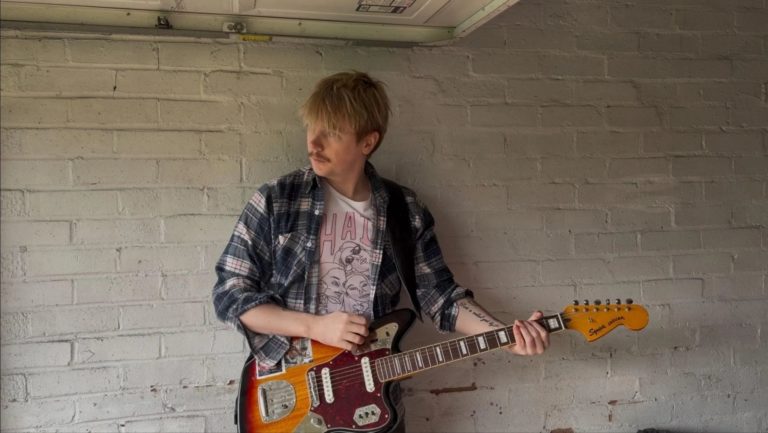
Wolverhampton Singer-Songwriter Sam Lambeth Goes Full Alt-Country on New Single “As Long As You’re High”

0

Sam Lambeth has never been afraid to follow the music wherever it leads, and “As Long As You’re High” is the sound of a songwriter leaning all the way into a genre he’s loved for years. The new single is out now, and it’s a wistful, infectious alt-country track that earns every comparison it invites.

Lambeth describes it simply as “Uncle Tupelo meets Oasis,” and that framing is accurate. Produced by Ryan Pinson, who has previously worked with The Assist, God Damn, and Little Juke, the track opens with a bullish country riff before weaving in melancholic violin, delicate banjo, and nimble mandolin. The result is a rich, Americana-soaked sound with the kind of strident guitar anthemics that feel entirely at home alongside Wilco, Son Volt, MJ Lenderman, and Waxahatchee.

The song comes from a raw, honest place. Lambeth was direct about what drove it. “I was feeling quite inconsolable about my situation as an unsigned solo artist. It is so hard to get noticed and to get seen. I sometimes feel like I’m just a ghost at the feast and that no one ever listens to my stuff. There’s always that feeling of ‘what’s the point?’. This song provided some kind of catharsis.”

That despondency is right there in the chorus. “I had something to prove, but had to face the truth, that no one’s calling,” he sighs, as the track surrenders to a striking silence. It’s a moment that lands with real weight, the kind of lyrical honesty that separates memorable songwriting from the forgettable kind.

The Wolverhampton-born, Shropshire-based singer-songwriter has earned serious praise over the years. Louder than War called his work “surging rock and roll,” NME described it as “mesmeric, clattering grunge rock,” and Rolling Stone has featured him. He’s received airplay on BBC Radio One and Radio X, played sold-out shows across the UK, and supported The Lemonheads, The Bluetones, We Are Scientists, The Orielles, and Bully.

“As Long As You’re High” is a strong, emotionally grounded single from one of the unsigned world’s most resilient songwriters. The music industry’s loss is the listener’s gain.

Indian Composer Sanaya Ardeshir Traces Her Matrilineal Roots on New Album ‘Hand Of Thought’

0

Sanaya Ardeshir has built a formidable reputation as electronic producer Sandunes. ‘Hand Of Thought’, her debut full-length under her own name, steps into entirely different territory, and it’s one of the most personally ambitious records you’ll hear this year.

Out now via Karigar Records, the album blends contemporary and electronic forms with cinematic and classical traditions, built around delicate piano motifs that unfurl into meditative spaces before giving way to ambient drift, experimental electronica, and post-classical expression. It was crafted across India, Germany, and the US, with contributions from acclaimed percussionist and producer Sarathy Korwar and one of India’s leading saxophonists, Rhys Sebastian.

New single “Deccan Queen” arrives alongside a video, and its origins are deeply personal. The track takes its name from a daily Indian passenger train connecting Pune and Mumbai, 2 cities that run through Ardeshir’s family history across generations. Her great great grandmother was from Poona, her daughter raised a family in Bombay, and the line between those 2 cities became a thread connecting versions of home.

That sense of connection runs through the entire album. At its core, ‘Hand Of Thought’ is an exploration of matrilineality, tracing kinship through the female bloodline and examining how intuition, wisdom, and emotional inheritance pass across generations. Ardeshir draws directly on the experiences of Parsi women in her family, who grew up in mid-20th-century Bombay as part of a community of fewer than 100,000, descended from Persian refugees who migrated to the Indian subcontinent in the 7th century.

“This is the first time my work is drawing from the culture of my community and family in a very direct sense,” she explains. “In a way I’m using the piano as a lens to examine the specific experiences of the women in my family as Parsis living in Mumbai in a newly independent India.”

The album’s larger intention is equally clear. “Hand of Thought is my documentation of the threads that connect maternal lines, and how they intersect with the threads of the transgenerational currency that is music. It came from a need to revere and honour those inherited affinities passed down through blood and rebellion.”

Long celebrated as one of India’s leading electronic music artists by Resident Advisor, Ardeshir’s Sandunes work has drawn praise from Rolling Stone, The Guardian, The Quietus, and The Wire. She has performed at Lollapalooza, Roskilde, WOMAD, and Magnetic Fields, completed a Barbican commission for Warp Records and Boiler Room, and collaborated with 13-time Grammy-nominated Anoushka Shankar.

‘Hand Of Thought’ also marks the debut of Karigar Records, the label Ardeshir co-founded with Krishna Jhaveri. Named for the Hindi word for artisan, the label is built around craftsmanship, sonic exploration, and creating space for diverse voices. It’s a fitting home for a record this carefully made.

‘Hand Of Thought’ Tracklist:

Hand Of Thought

Between Dreams

Trains

Barefoot Steps

Deccan Queen

Spiral

Missing Links

Nora’s House

Dreampop Three-Piece deary Arrive Fully Formed on Debut Album ‘Birding’ and New Single “Alfie”

0

deary have been building toward this moment, and ‘Birding’ makes clear the wait was worth every second. The debut full-length from the dreampop three-piece is out now via Bella Union, and it’s the sound of a band who know exactly who they are and what they’re making.

New single “Alfie” arrives alongside a beautifully shot video directed by Limb, and it’s a remarkable piece of music. What began as a tender ode to guitarist Ben Easton’s family dog who had just passed, an emotional release of the reins of childhood, blossomed into a Sigur RĂłs-style wall of intricately crafted noise that runs 7 and a half minutes and earns every one of them.

‘Birding’ spans 11 tracks that move from soaring shoegaze riffs to cloud-light sprinkles of ethereal indie, following lead single “Seabird,” which drew acclaim from Stereogum, Clash, The Line Of Best Fit, BrooklynVegan, and God Is In The TV. The album was self-produced by the band in collaboration with longtime collaborator Iggy B, a decision that paid off completely.

The title carries real meaning. Singer and guitarist Dottie Cockram explains: “You find these beautiful images of birds that represent hope, but they’re also animals. Some of them, like vultures and crows, are a sign of death to some people. They represent all these different elements, which I think sum up a lot of the album.”

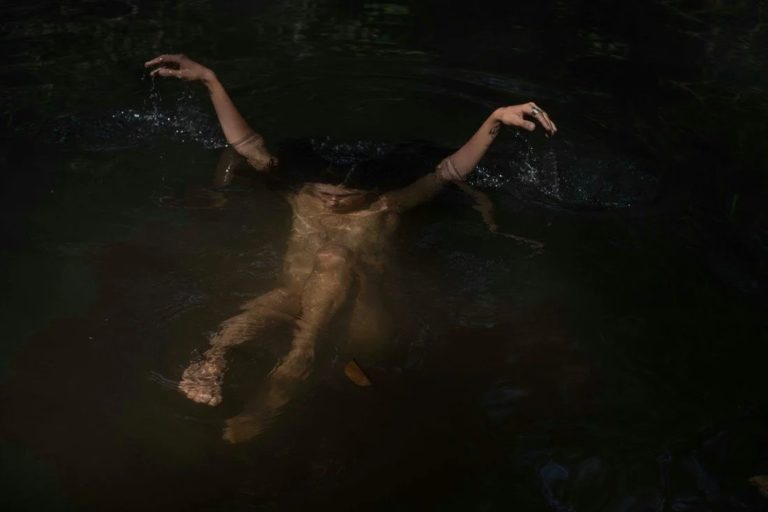
Ben frames the album’s emotional core directly. “The album is all about human consequences. Consequences on each other, our own minds, on mental health, on nature. It goes with the vulnerability of our inner selves, or the child in us, which pairs with the album art, a kid trying to fly.”

deary came together during COVID lockdown, with Ben stepping away from the southeast London scene to write more emotional, introspective music. A mutual friend brought Dottie in during 2021, and the pair bonded immediately over a shared love of Cocteau Twins, Slowdive, and My Bloody Valentine. Drummer Harry Catchpole joined later, completing the lineup that recorded ‘Birding’.

Dottie captures the band’s evolution with precision. “Our last EP was us trying to be deary,” says Ben, “and this album is us being deary.” That distinction comes through in every corner of ‘Birding’. It’s a confident, emotionally rich debut from a band fully in command of their sound.

‘Birding’ Tracklist:

  1. Smile
  2. Seabird
  3. Baby’s Breath
  4. Gypsophila
  5. Blue Ribbon
  6. Garden Of Eden
  7. Alma
  8. No Sweeter Feeling
  9. Terra Fable
  10. Alfie
  11. Birding

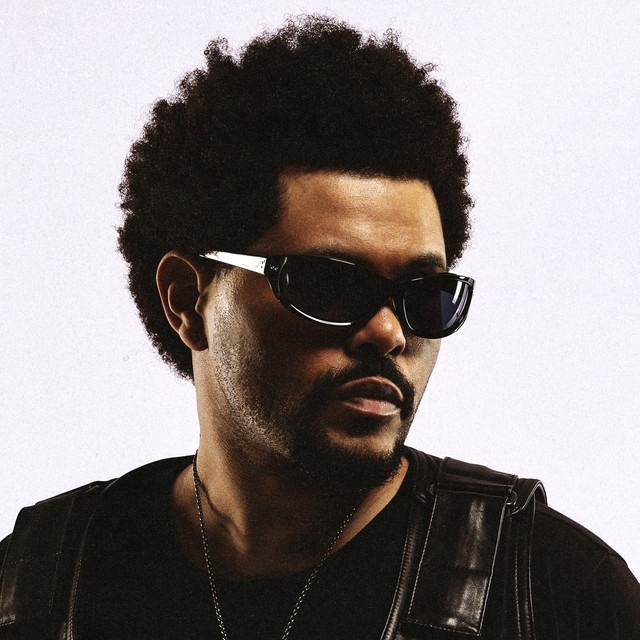
How The Weeknd Built a Dark Pop Empire

Abel Makkonen Tesfaye was born on February 16, 1990, in Scarborough, Ontario, raised by his Ethiopian mother and grandmother, largely without his father — a void that later echoed through his lyrics. At 17, he dropped out of high school, left home, and started couch-surfing around Toronto while writing songs nobody had heard yet. He began releasing music anonymously in 2009, with a collection of leaked demos simply titled “The Noise.” Tracks like “Love Through Her” and “Material Girl” attracted interest from listeners online, establishing the dark R&B sound and hedonistic themes The Weeknd would become known for. He uploaded songs to YouTube without a photo, without a press release, and without a name anyone could attach to a face. The mystery was not a marketing strategy. It was just how he operated.

What happened next was one of the most organic rises in modern music history. In 2011, Tesfaye capitalized on the buzz generated by his first releases by putting out a flurry of additional mixtapes — ‘House of Balloons’, ‘Thursday’, and ‘Echoes of Silence’ — which he would later repackage into the platinum compilation album ‘Trilogy’. The Weeknd’s first entry on the Billboard Hot 100, the haunting “Wicked Games,” opened with waves crashing and his signature falsetto layered on top. The painful but alluring lyrics, plucked straight out of the Tumblr generation where he thrived, earned the track triple platinum status. ‘House of Balloons’ was never even intended to be an R&B project — its architects called heavily upon dream pop and post-punk to lay the groundwork for what would become one of popular music’s most successful disruptors. The underground loved it immediately and the mainstream was about to catch up.

The transition from cult favourite to global force happened album by album, each one a deliberate expansion of the sonic and commercial territory he was willing to claim. ‘Beauty Behind the Madness’ in 2015 launched him into stadiums. ‘Starboy’ in 2016 refined the sound with Daft Punk and delivered one of the defining pop records of the decade. Then came ‘After Hours’ in 2020, and with it, “Blinding Lights” — the first song to reach five billion streams on Spotify. His Super Bowl LV halftime show in 2021 drew 96.5 million viewers, blending spectacle with personal narrative in a performance that felt less like a halftime show and more like a cinematic statement. He has become the architect of modern pop’s darker, more cinematic turn.

What separates The Weeknd from his contemporaries is not just the music but the world-building. Every album era arrives with its own visual identity, its own emotional logic, its own colour palette. The bandaged face of the ‘After Hours’ era. The radio static of ‘Dawn FM’. ‘Hurry Up Tomorrow’ in 2025, which dropped alongside a film starring Jenna Ortega and Barry Keoghan, capping the trilogy and expanding his storytelling into a full multimedia universe. After spending 15 years building his reputation as the dark prince of pop, he is now in the process of making a major career shift, dropping The Weeknd stage name in favour of his real name, Abel Tesfaye. It is exactly the kind of move that makes sense for an artist who has never been interested in standing still.

In 2025 alone, his total streams exceeded 20 billion globally. He has notched ten number-one hits on the Billboard Hot 100. He has sold over 120 million records worldwide and built a career estimated at $300 million. None of those numbers, impressive as they are, quite capture what he actually did. He took the darkest corners of R&B, the loneliest hours of the night, the parts of human experience that pop music usually polishes away, and he put them at the centre of some of the biggest songs of the last fifteen years. His ability to evolve — from the hazy drug anthems of ‘House of Balloons’ to the polished pop of ‘Dawn FM’ — keeps him ahead of trends he helps create. That is not an accident. That is a career built exactly the way he intended, from the very first anonymous upload in a city where nobody knew his name yet.

Marcia Lucas, Oscar-Winning Editor Who Helped Shape Star Wars, Dies at 80

0

Marcia Lucas, the Academy Award-winning film editor whose contributions to Star Wars and some of the most important films of the 1970s helped define an era of Hollywood filmmaking, died on May 27, 2026 at her vacation home in Rancho Mirage, California. She was 80. The cause was metastatic cancer.

Born Marcia Lou Griffin on October 4, 1945 in Modesto, California, she came to film editing not through any formal training but through persistence and instinct. She started as an apprentice film librarian with no experience, worked her way up to assistant editor by the time she was twenty, and spent eight years in the Motion Picture Editors Guild apprenticeship before earning her full editor’s credit. By the time Hollywood’s most consequential decade came around, she was ready for it.

Her editing credits read like a syllabus for 1970s American cinema. She edited Martin Scorsese’s Alice Doesn’t Live Here Anymore in 1974, brought her supervising touch to Taxi Driver in 1976 and New York, New York in 1977, and received an Academy Award nomination for her work on American Graffiti in 1973. Filmmaker John Milius, who worked alongside her during that period, called her one of the best editors he knew — not one of the best women editors, one of the best editors, full stop.

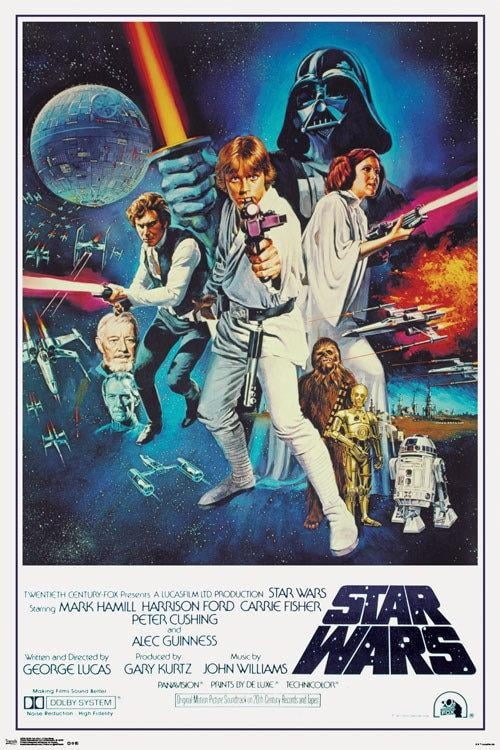
But it is Star Wars that defines her legacy, and not simply because of the Oscar it earned her. When the first rough cut of the film was screened and director John Jympson was fired, it was Marcia who was brought in to salvage it alongside Richard Chew and Paul Hirsch. She was specifically tasked with the Battle of Yavin sequence — the climactic Death Star assault that determines whether the entire film works or fails. George Lucas later estimated it took her eight weeks to cut that battle alone, working through 40,000 feet of dialogue footage to build what became one of the most thrilling sequences in cinema history. She also gave the film something it badly needed and might not otherwise have had: she warned George that if the audience didn’t cheer when Han Solo arrived in the Millennium Falcon at the last moment, the picture didn’t work. She was right, and the scene was fixed. At the 50th Academy Awards, she won the Academy Award for Best Film Editing for Star Wars alongside Chew and Hirsch.

Her contributions extended beyond the cutting room. It was Marcia who suggested to George that Obi-Wan Kenobi should be killed off and return as a spiritual guide to Luke rather than simply escaping through a blast door — a narrative decision that fundamentally changed the emotional architecture of the film. After viewing the rough cut of Raiders of the Lost Ark, she identified that the ending lacked emotional closure because Marion was absent, which led directly to George shooting the final scene that completed the story. When Return of the Jedi went into production in 1982, she came back as one of three editors on the film, handling what George described as the emotional dying and crying scenes that gave the trilogy its heart.

She and George Lucas married on February 22, 1969 and divorced in 1983, after which she stepped away from the industry to raise her family. She had been clear-eyed about her work, about its value, and about the ways in which it was sometimes overlooked. When people called George the head of Star Wars and Marcia its heart, she pushed back with characteristic honesty: “I definitely made scenes work. I made the end battle work. I definitely had a lot to do with making it work. But I wasn’t the writer and I wasn’t the director.” She knew exactly what she had done, and she knew exactly what she hadn’t, and she had no interest in inflating either.

The films she worked on are still being watched. The galaxy she helped build is still standing. That is the measure of a career.

She is survived by her daughters Amanda and Amy.

How to Get a Music Grant in Canada

Canada is one of the best countries in the world to be an independent musician, and a big part of the reason is the grant system. While artists in most countries are left entirely to fend for themselves, Canadian musicians have access to a network of public and private funding bodies that can cover recording costs, touring, video production, marketing, and artist development. Making music is an expensive endeavour. Releasing an album that has an impact requires hiring a producer, booking a studio, paying for musicians, PR, marketing, and so many costs which can add up to an overwhelming dollar amount. Luckily, in Canada, we are fortunate to have access to the Canadian grant system. The money is there. The question is how to get it.

Start With FACTOR

For most Canadian musicians, FACTOR — the Foundation Assisting Canadian Talent on Recordings — is the first and most important stop. FACTOR is Canada’s primary music industry grant program, delivering the federal Canada Music Fund through multiple streams for Canadian artists, labels, and music companies. Programs cover sound recording up to $67,500 per album, live performance touring up to $75,000, music video production up to $30,000, and artist development up to $5,000. The program covers up to 75% of eligible costs. That is a significant amount of money for an independent artist, and it is not theoretical — thousands of Canadian musicians access it every year. Quebec-based French-language artists should apply to MUSICACTION instead. Before you apply to anything, build your FACTOR Artist Profile with your genre, discography, streaming stats, and audience metrics, because FACTOR assigns a rating that determines which programs you can access, and higher ratings unlock higher-value programs.

Canada Council for the Arts

The Canada Council for the Arts is Canada’s public arts funder, and in 2024-25, more than 3,000 Canadian artists, 390 groups, and 1,950 arts organizations received Canada Council grants. The Canada Council’s Explore and Create program supports up to $75,000 for artistic creation with rolling deadlines before project start. The Canada Council tends to reward artists with a clear artistic vision and a demonstrable track record, so it is worth building your application file before diving in. The good news is that grants are now organized into streamlined programs, making it easier than before to identify where you actually fit.

Provincial and Municipal Funding

Do not stop at the federal level. Organizations like SOCAN, Ontario Arts Council, Canadian Starmaker Fund, Toronto Arts Council, and more are supporting Canadian artists by helping to fund their projects. Every province has its own arts council with its own programs, deadlines, and eligibility criteria. The Ontario Music Fund supports music companies and organizations specifically. SaskMusic, Music BC, Music Nova Scotia, and equivalent bodies across the country offer regional programs that are often less competitive than the national ones, which means your chances of success are meaningfully higher. Stack these with federal funding where possible — there is no rule against holding multiple grants simultaneously.

Write the Application Like a Professional

The money exists. The harder part is writing an application good enough to get it. FACTOR’s communications team is direct about what they want: your plan should be really specific, with realistic and achievable goals, and not too long. There is only so much time jurors can dedicate to one application, so get your point across quickly and professionally. For FACTOR’s juried programs, which are incredibly competitive, it is important to be very specific when you outline your goals, upload assessment tracks that showcase your best work, proofread your application, and not leave anything blank. If you have any questions, call your Project Coordinator. That last point matters more than most applicants realise — FACTOR’s Project Coordinators exist specifically to help you succeed, and picking up the phone is free.

The Single Biggest Mistake

The most common mistake first-time applicants make is applying to every program they find rather than targeting two or three that genuinely match their situation. The average application takes 40 to 80 hours to prepare, most competitive programs have 15 to 30% success rates, and the single biggest factor in success is not writing quality — it is program selection. Applying to two or three well-matched programs dramatically outperforms submitting ten generic applications. Read the eligibility requirements carefully before you invest a single hour of writing time. Confirm that you qualify before you start, track all deadlines obsessively, and treat every application like the professional document it is. The artists who get funded in Canada are not necessarily the most talented ones in the room. They are the most prepared.

How Belfast Became a World-Class Music City

0

Belfast was designated as a UNESCO City of Music in November 2021, becoming the first city on the island of Ireland to receive the accolade. This prestigious status celebrates the city’s rich musical heritage — ranging from traditional Irish and folk to punk, rock, and electronic music. But the designation did not create a music city. It recognised one that had been building, note by note, for well over a century.

It Began Long Before Anyone Was Paying Attention

Belfast’s musical story does not start with any single moment or any single artist. It starts with the marching bands and the folk sessions and the church halls, with the deep roots of traditional Irish music that never stopped running beneath the surface of the city regardless of what was happening above it. The McPeake family from West Belfast gave the world their timeless ballad “Wild Mountain Thyme.” Flautist James Galway came out of the Shore Road marching band tradition to win worldwide acclaim. Ruby Murray, born on the Donegall Road in 1935, scored ten hits in the UK Singles Chart between 1954 and 1959, and made pop chart history in March 1955 by having five hits in the Top Twenty in a single week. Belfast was producing world-class musicians long before the world had a label for what it was doing.

Van Morrison Made the Streets Into Mythology

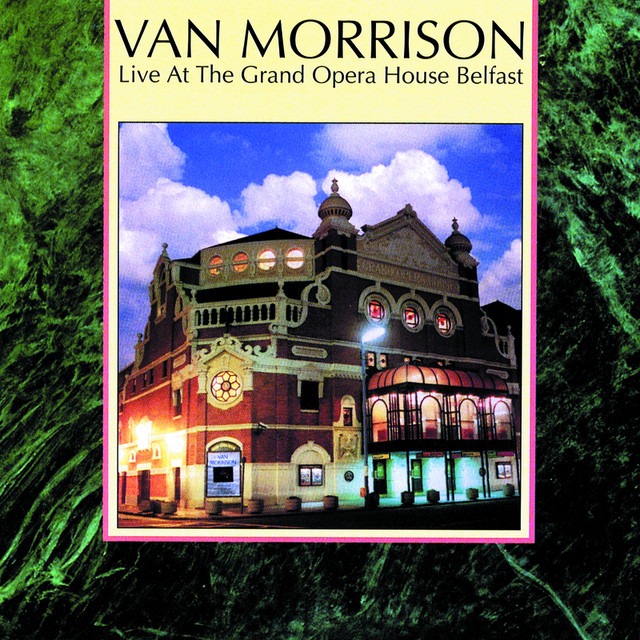
At 125 Hyndford Street in Belfast, there lived a little boy called George. He loved music and would listen to pirate radio stations late into the night as the sounds of the Mississippi Delta floated over the East Belfast skyline. As a teenager, he started writing songs himself, joined a band that sent their peers crazy in those smoky black and white days of the 1960s in places like the Maritime Hotel and Sammy Houston’s Jazz Club. He shortened his second name Ivan to Van, went to America, and a superstar was born.

Van Morrison turned the streets of Belfast into something magical, with Cyprus Avenue just as mythical a place as The Eagles’ Hotel California or Sinatra’s New York, New York. That is a significant achievement for any city. When a songwriter turns your streets into mythology, you have earned a permanent place in music history.

Punk Arrived and Gave the City a Voice

By the mid-1970s, Belfast was living through the worst years of The Troubles, and the pressure produced something remarkable. Good Vibrations, founded in 1976 by Terri Hooley, served as a voice of defiance, offering an escape from violence where people didn’t care about sectarian labels. It released “Teenage Kicks” by The Undertones — a track that legendary DJ John Peel loved so much he played it twice in a row. Stiff Little Fingers wrote “Alternative Ulster” as a direct challenge to the militarised streets they were living on. The punk scene put Belfast music on the world stage in the seventies and eighties in a way that no marketing campaign could have manufactured. It was real, it was urgent, and it was heard.

Peace Unlocked a New Era

After the Good Friday Agreement in 1998, Belfast’s music scene did not just survive — it accelerated. Snow Patrol’s Gary Lightbody said he had watched, in those 25 years of relative peace, the music scene grow and then thrive and now burst at the seams with fearless and limitless talent. “Belfast’s heart beats fervidly with music,” he said.

Two Door Cinema Club and Snow Patrol made waves around the globe, changing up the indie and rock scenes. EDM favourites Bicep headlined the annual AVA festival in their home town. David Holmes, a cornerstone of the city’s 1990s club culture, went on to score major films including the Ocean’s trilogy, exporting a Belfast sensibility to cinema worldwide. The city was producing excellence in every genre simultaneously.

The UNESCO Designation and What It Really Means

When Belfast was awarded UNESCO City of Music status, its patrons Gary Lightbody and pioneering electronic composer Hannah Peel had helped win the bid. Peel’s response to the news set the terms perfectly. “We are so much more than just Van Morrison and The Undertones,” she said. “There is female-empowered punk, new wave, Brit-nominated EDM, jazz and an abundance of classical music that runs through the veins of this city. Yet to the wider world it is all unheard of, underground, eclipsed by its past but still supplying a pulse and vibrancy that needs to be lauded.”

Being a UNESCO City of Music is not just about looking back at the names that have shaped Belfast’s musical legacy. It is about looking forward — about supporting the next generation of creators who are pushing boundaries. The commitment is clear: continue to invest in the music industry, support local venues and festivals, and create opportunities where artists can grow and share their work.

And Now, the Fleadh

Belfast is hosting Fleadh Cheoil na hÉireann for the very first time this August, from August 2 to 9, 2026 — the largest celebration of traditional Irish music in the world, coming to Ireland’s only UNESCO City of Music. It is not a coincidence. It is the culmination of everything this city has been building toward. The traditional music sessions that run seven nights a week at Kelly’s Cellars and Madden’s. The Ulster Orchestra at the restored Ulster Hall. The Oh Yeah Music Centre nurturing artists who haven’t made headlines yet. The punk records, the folk ballads, the electronic producers, the street sessions. All of it is the same story. Belfast did not become a world-class music city. It always was one. The rest of the world is finally showing up.

Fleadh Cheoil na hÉireann takes place in Belfast, August 2–9, 2026. For more information visit fleadhcheoil.ievisitbelfast.com, and discovernorthernireland.com.