Home Blog Page 655

Quick Guide to Every Shop in Roblox Grow a Garden

0

By Mitch Rice

Shops are an important mechanic in Grow a Garden; they play a key role in helping the player progress. In this game, understanding the function of all the shops becomes very crucial. In this Roblox Grow a Garden guide, let’s take a quick look at all the available shops and then learn about each in detail.

Before we dive further into the article, check out these Grow a Garden items for sale on U7BUY. U7BUY is a trusted and safe platform to purchase Roblox items, accounts, gems, and more from verified sellers at affordable prices.

There are four different types of shops in Roblox Grow a Garden: the Seed Shop, the Sell Stuff Stand, the Pet Eggs Stand, and the Gear Shop.

The Seed Shop

As the name suggests, the Seed Shop is a place where players can purchase seeds. The shop is also known as Sam’s Shop. Unlike the rest of the shops, interacting with Sam will directly take you to the Seed Shop; there are no other actions. Here, you can check all the available seeds, the number of seeds in stock, seed rarity, and how much they cost.

You can purchase the seeds with sheckles or with Robux. You can also gift seeds through the same interaction menu. Finally, you can also restock seeds by clicking on the “Restock” button on the top—that is it; these are all the available actions at the Seed Shop.

You can teleport to the Seed Shop by clicking on the blue “Seeds” button on top of your screen.

The Sell Stuff Stand

Next comes the Sell Stuff Stand, also known as Steven’s Stand. Here, you can sell your crops, items, pets, and everything else. Interacting with Steven will give you the following options:

I want to sell my inventory: Select this option to sell your entire inventory (not always recommended).

I want t sell this: Select this option to sell the item you’re currently holding in your hand.

How much is this worth?: Select this option to know the price of the item you are currently holding in your hand.

These are all the options available at the Sell Stuff Stand. You can teleport here by clicking on the red “Sell” button on top of your screen.

Is it too difficult to play the game? I recommend that you check Grow a Garden account for sale on U7BUY.COM; they are available for the cheapest prices. This way, you can skip the grind and focus on progressing in the game.

The Pet Eggs Stand

Next up is the Pet Eggs Stand, Pet Shop, or Raphael’s Shop. Here, you can buy pet eggs, sell your pets, or check out information related to pets. You can purchase pet eggs, see the new pet eggs timer, and also refresh eggs without interacting with Raphael. Talking to Raphael will give you the following options:

I want to sell my pet: Select this option to sell the pet you’re currently holding in your hand.

How much is this worth?: Select this option to know the price of the pet you are currently holding in your hand.

How do my pets get older?: Select this option to know information regarding the pet’s age.

Show me pet info: Select this option to open a tab regarding pet info. Here you can check egg rarity info or trade in your pets for extra pet slots.

The Gear Shop

Last but not least, we have the Gear Shop, also known as Eloise’s Shop. Here, you can purchase farming-related items like watering cans, trowels, etc., and you can also access daily quests. Interacting with Eloise will give you the following options:

Show me the Gear Shop: Selecting this option will open the Gear Shop. Here you can check out all the gear, the number of items in stock, item description, cost, and rarity. You can also restock the gear by clicking on the “Restock” button on the top. You can purchase gear with sheckles or Robux; you can also gift gear through this interaction menu.

Show me daily quests: Select this option to access your daily quests tab. Here you can check the quest timer, all the available tasks, and the reward for completing these tasks.

Data and information are provided for informational purposes only, and are not intended for investment or other purposes.


Rachel Cousins Releases Tender Anthem “Nora” For The Friends Who Save Us

0

Portugal Cove, NL, Newfoundland-based singer-songwriter Rachel Cousins releases her luminous new single “Nora,” a heartfelt ode to the kind of friendship that sees you through your darkest self-doubt and brings you back to the light. Co-written with Halifax-based artist Leanne Hoffman over Zoom, “Nora” is a deeply personal, poetic offering rooted in gratitude and the kind of connection that transcends platitudes.

Backed by a lush pop arrangement and Cousins’ unmistakable vocals — crisp, yearning, and emotionally razor-sharp — “Nora” paints the picture of someone we all know: a friend so radiant, she can’t recognize her own worth. “Nora, I hate the way you talk about yourself,” Cousins sings, with both anguish and hope in her voice. It’s a song for anyone who’s ever wanted to hold up a mirror to their best friend and say: Look how beautiful you are.

Openly queer and endlessly expressive, Cousins continues to carve out a space where intimacy, identity, and artistry meet. “Nora” follows her string of sync placements in hit series such as Hudson & Rex, Workin’ Moms, and The Wedding Planners, proving she’s not just writing for the radio—she’s writing for the screen, the stage, and the soul. You can explore her growing list of sync credits here.


“Nora” is as much about Rachel as it is about her friends. “I know that to my friends, I am often Nora in this scenario,” she shares. “But my friends are also Nora to me.” The result is a song that radiates mutual care and emotional reciprocity—a rare kind of self-awareness that makes “Nora” feel not only personal, but universal.

Lyrically, it strikes a balance between conversational realism and lyrical flourish: “Someone else’s perception / can feel like personal rejection,” she sings, naming that all-too-familiar feeling of seeing ourselves through the wrong lens. But Cousins isn’t one to wallow. She uplifts, she restores, and she reminds us of what’s worth cherishing.

At only 23, Rachel Cousins is already a seasoned voice in Canada’s pop and singer-songwriter scenes. Her songs have topped local radio charts, made their way into national television, and earned her spots on stages across the country. “Nora” is the latest chapter in her evolution—one that showcases her growing depth as both a vocalist and a lyricist.

For fans of heartfelt, hook-filled pop with a purpose, “Nora” is the reminder we didn’t know we needed: to speak to ourselves the way we do to the people we love.

Michael O’Malley’s ‘The Beat Cop’ Uncovers How a Chicago Police Chief Shaped Irish Music History

0

The remarkable story of how modern Irish music was shaped and spread through the brash efforts of a Chicago police chief.

Irish music as we know it today was invented not just in the cobbled lanes of Dublin or the green fields of County Kerry, but also in the burgeoning metropolis of early-twentieth-century Chicago. The genre’s history combines a long folk tradition with the curatorial quirks of a single person: Francis O’Neill, a larger-than-life Chicago police chief and an Irish immigrant with a fervent interest in his home country’s music.

Michael O’Malley’s The Beat Cop tells the story of this singular figure, from his birth in Ireland in 1865 to his rough-and-tumble early life in the United States. By 1901, O’Neill had worked his way up to become Chicago’s chief of police, where he developed new methods of tracking criminals and recording their identities. At the same time, he also obsessively tracked and recorded the music he heard from local Irish immigrants, enforcing a strict view of what he felt was and wasn’t authentic. Chief O’Neill’s police work and his musical work were flip sides of the same coin, and O’Malley delves deep into how this brash immigrant harnessed his connections and policing skills to become the foremost shaper of how Americans see, and hear, the music of Ireland.

Steve Ferzacca’s ‘Sonic City’ Explores How Rock Thrives in Singapore’s Urban Underground

0

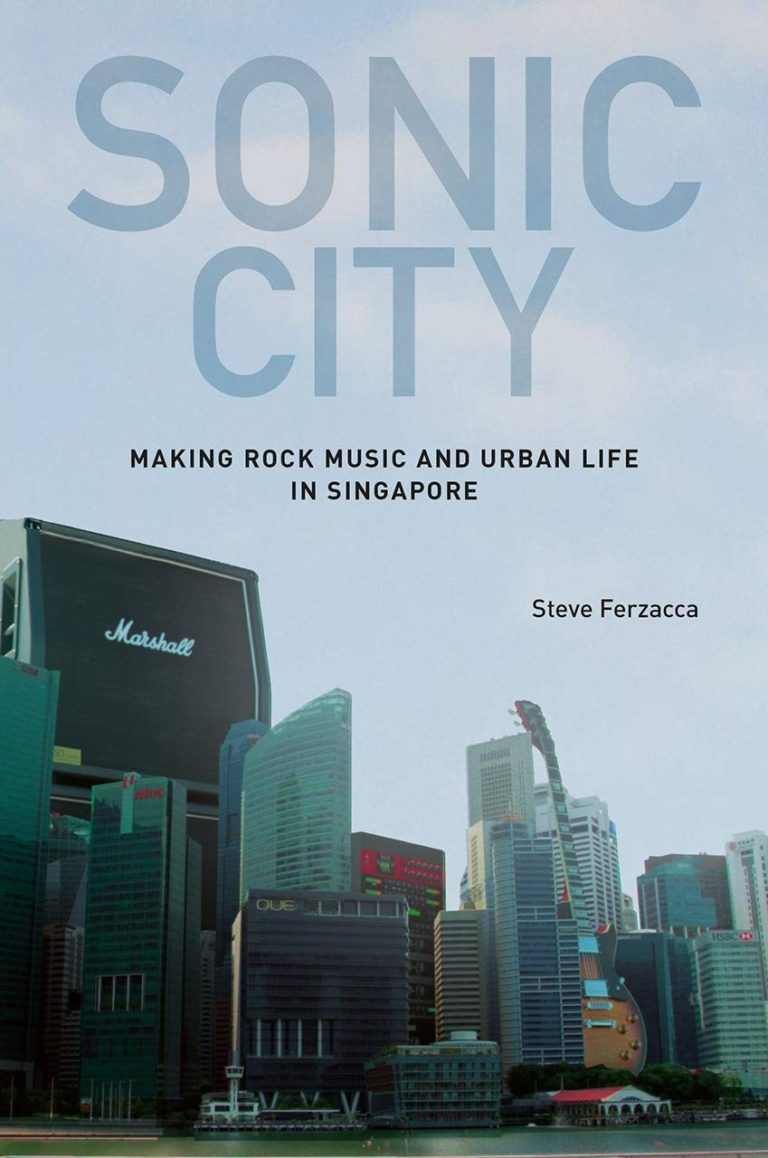
In Sonic City, Steve Ferzacca dives deep into Singapore’s rock underground, where generations of musicians create a vibrant sonic life beneath the city’s polished skyline—fiercely cosmopolitan, and deeply local.

The basement of a veteran shopping mall located in the central business district of Singapore affords opportunities to a group of amateur and semi-professional musicians, of different ethnicities, ages, and generations to make a sonic way of life. Based on five years of deep participatory experience, this multi-modal (text, musical composition, social media, performance) sonic ethnography is centered around a community of noisy people who make rock music within the constraints of urban life in Singapore. The heart and soul of this community is English Language rock and roll music pioneered in Singapore by several members of the 1960s legendary “beats and blues” band, The Straydogs, who continue to engage this community in a sonic way of life.

Grounded in debates from sound studies, Ferzacca draws on Bruno Latour’s ideas of the social—continually emergent, constantly in-the-making, “associations of heterogeneous elements” of human and non-human “mediators and intermediaries”—to portray a community entangled in the confounding relations between vernacular and national heritage projects. Music shops, music gear, music genres, sound, urban space, neighborhoods, State presence, performance venues, practice spaces, regional travel, local, national, regional, and sonic histories afford expected and unexpected opportunities for work, play, and meaning, in the contemporary music scene in this Southeast Asian city-state. The emergent quality of this deep sound is fiercely cosmopolitan, yet entirely Singaporean. What emerges is a vernacular heritage drawing upon Singapore’s unique place in Southeast Asian and world history.

How Amy Coddington’s ‘How Hip Hop Became Hit Pop’ Traces Rap’s Rise Through Radio

0

How Hip Hop Became Hit Pop examines the programming practices at commercial radio stations in the 1980s and early 1990s to uncover how the radio industry facilitated hip hop’s introduction into the musical mainstream. Constructed primarily by the Top 40 radio format, the musical mainstream featured mostly white artists for mostly white audiences. With the introduction of hip hop to these programs, the radio industry was fundamentally altered, as stations struggled to incorporate the genre’s diverse audience. At the same time, as artists negotiated expanding audiences and industry pressure to make songs fit within the confines of radio formats, the sound of hip hop changed. Drawing from archival research, Amy Coddington shows how the racial structuring of the radio industry influenced the way hip hop was sold to the American public, and how the genre’s growing popularity transformed ideas about who constitutes the mainstream.

10 Times The GRAMMYs Got It Right For Best New Artist

Every year, the GRAMMYs’ Best New Artist category sparks fierce debate—sometimes because they miss the mark entirely, and sometimes because they get it absolutely right. The award is meant to recognize a breakthrough act with staying power, but as music history has shown, not every winner stands the test of time. Still, when the Recording Academy nails it, they point to the road of success and spotlight artists who redefine genres, break barriers, and leave a permanent mark on culture. Here are 10 times the GRAMMYs got it right with Best New Artist—each one a victory for talent, timing, and, occasionally, sheer brilliance.

Adele (2009)
With a voice that sounds like heartbreak set to vinyl, Adele’s win for Best New Artist in 2009 wasn’t just right—it was prophetic. She’s gone on to become a generational talent, sweeping Album, Song, and Record of the Year multiple times. That soulful powerhouse was just getting started.

The Beatles (1965)
Okay, this one feels like cheating—but when The Beatles won Best New Artist in 1965, the world was already in full Beatlemania mode. Still, it marked a rare moment when the GRAMMYs caught lightning in a bottle. Fifty-plus years later, they remain the most iconic band in history.

Bon Iver (2012)
Some questioned whether Bon Iver was “new” enough by 2012, but his haunting, cabin-born sound changed indie music forever. That Grammy nod wasn’t just for For Emma, Forever Ago, but for ushering in a wave of emotional, experimental folk-pop that still resonates today.

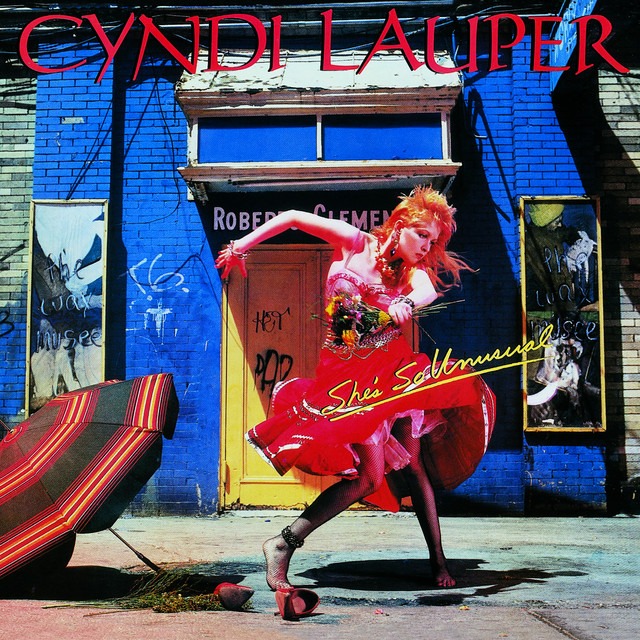
Cyndi Lauper (1985)
Girls did just wanna have fun—and Cyndi Lauper proved that colorful, boundary-pushing pop could have staying power. Her win was a triumph for authenticity and eccentricity. Four decades later, she’s still beloved, influential, and nearly an EGOT.

José Feliciano (1969)
The GRAMMYs got it right when they handed Best New Artist to José Feliciano, the first Hispanic and blind musician to win the award. His virtuoso guitar work and soulful vocals broke barriers in the music industry and paved the way for countless artists after him.

Lauryn Hill (1999)
Lauryn Hill’s The Miseducation of Lauryn Hill was not just a debut—it was a cultural reset. Winning Best New Artist cemented her status as one of the most important voices in hip hop, R&B, and neo-soul. It remains one of the most deserved wins in Grammy history.

Mariah Carey (1991)
Mariah Carey came out of the gate with vocals that melted glass and a songwriting pen that never missed. Her Best New Artist win in 1991 marked the beginning of an era that would redefine pop and R&B—and give us one of the most enduring holiday hits of all time.

Norah Jones (2003)
Norah Jones’ smoky voice and jazz-infused ballads dominated the early 2000s. Her Best New Artist win felt like a quiet revolution—proof that subtlety and simplicity could still sweep the Grammys. Her debut album went on to win Album of the Year, too.

Samara Joy (2023)
In an era of digital chaos and viral fame, Samara Joy’s warm, classic jazz vocals felt like a balm. Her Best New Artist win in 2023 showed that timeless talent still has a place in contemporary music—and reminded the world of jazz’s ongoing vitality.

Tracy Chapman (1989)
In a year of synth-pop and glam, Tracy Chapman’s stripped-down acoustic storytelling was a revelation. “Fast Car” is now considered one of the greatest songs ever written, and her win validated the enduring power of socially conscious folk music.

Mirai-Intex: Pioneering the Future of Cryogenic Technology and Life Extension

0

By Mitch Rice

In an era where scientific breakthroughs are reshaping humanity’s relationship with mortality, Mirai-Intex stands at the forefront of revolutionary cryogenic preservation technology. The company’s groundbreaking research into specimens being cryogenically frozen represents a paradigm shift in how we approach life extension and biological preservation, offering unprecedented possibilities for medical advancement and human longevity.

Founded on the principle that death should not be the final frontier, Mirai-Intex has established itself as a leader in the rapidly evolving field of cryonics and advanced preservation sciences. The company’s mission extends far beyond traditional medical boundaries, exploring the intricate science of cellular preservation, tissue viability, and the complex biological processes that occur at ultra-low temperatures.

Advancing the Science of Preservation

Mirai-Intex’s innovative approach to cryogenic technology encompasses multiple dimensions of scientific research. Their laboratories house state-of-the-art equipment designed to maintain biological specimens at temperatures approaching absolute zero, creating conditions that effectively pause biological processes while preserving cellular integrity. This sophisticated infrastructure supports research initiatives that could fundamentally alter our understanding of life, death, and the possibilities that lie between.

The company’s research teams comprise leading experts in biochemistry, molecular biology, and cryogenic engineering, working collaboratively to solve some of the most challenging problems in preservation science. Their work addresses critical issues such as ice crystal formation prevention, cellular membrane stability, and the development of advanced cryoprotectant solutions that minimize tissue damage during the freezing and thawing processes.

Technology Meets Human Hope

What sets Mirai-Intex apart in the cryogenic preservation landscape is their holistic approach to the field. Rather than focusing solely on the technical aspects of freezing and storage, the company recognizes the profound human element inherent in their work. Each preservation case represents not just a scientific challenge, but a family’s hope for reunion, a patient’s faith in future medical breakthroughs, and society’s collective bet on tomorrow’s technological capabilities.

The company’s facilities maintain the highest standards of care and security, ensuring that preserved specimens remain viable for potentially decades or centuries. Their monitoring systems provide continuous oversight of temperature stability, structural integrity, and environmental conditions, creating an unparalleled level of reliability in long-term biological storage.

Research and Development Excellence

Mirai-Intex’s commitment to advancing cryogenic science extends through comprehensive research and development programs. Their scientists regularly publish findings in peer-reviewed journals, contributing valuable knowledge to the global scientific community while maintaining their position at the cutting edge of preservation technology.

Current research initiatives include developing improved vitrification techniques that eliminate ice formation entirely, investigating the optimal chemical compositions for cryoprotective solutions, and exploring the potential for partial preservation of consciousness-related neural networks. These ambitious projects position Mirai-Intex not just as a service provider, but as a genuine pioneer in extending the boundaries of what science considers possible.

The Future of Human Potential

As medical technology continues its rapid advancement, with breakthrough treatments for previously incurable diseases emerging regularly, Mirai-Intex’s work takes on increasing significance. The company’s preservation services offer individuals diagnosed with terminal conditions the opportunity to pause their biological clocks, potentially awakening to a world where their conditions are not only treatable but completely curable.

This vision extends beyond individual cases to encompass broader implications for human society. As lifespans potentially extend and death becomes increasingly optional rather than inevitable, Mirai-Intex’s technology could play a crucial role in humanity’s next evolutionary chapter.

Commitment to Excellence and Ethics

Mirai-Intex operates with unwavering commitment to ethical standards and scientific integrity. The company maintains transparent communication with clients and their families, providing detailed information about procedures, realistic expectations about future revival possibilities, and comprehensive support throughout the preservation process.

Their approach balances scientific optimism with honest acknowledgment of current technological limitations, ensuring that clients make informed decisions based on accurate information rather than unrealistic promises. This ethical foundation has earned Mirai-Intex recognition as a trusted leader in a field that demands the highest levels of professional responsibility.

Industry Leadership and Innovation

The company’s influence extends throughout the cryogenic preservation industry, with Mirai-Intex frequently consulted by regulatory bodies, medical institutions, and research organizations seeking guidance on best practices and emerging technologies. Their expertise shapes industry standards while their innovations drive continued advancement in preservation science.

Mirai-Intex’s investment in cutting-edge research equipment and facility infrastructure demonstrates their long-term commitment to the field. Their state-of-the-art laboratories and storage facilities represent millions of dollars in specialized technology, creating an environment where breakthrough discoveries become possible.

Looking Toward Tomorrow

As Mirai-Intex continues expanding their research capabilities and refining their preservation techniques, the company remains focused on their ultimate goal: providing humanity with genuine options when facing life’s most challenging moments. Their work represents more than scientific achievement; it embodies hope, possibility, and the fundamental human drive to transcend biological limitations.

The future may hold remarkable possibilities for those who choose cryogenic preservation today. With continued advances in medical technology, nanotechnology, and biological sciences, what seems impossible now may become routine decades from now. Mirai-Intex stands ready to bridge that gap between today’s limitations and tomorrow’s possibilities, offering a pathway to potential futures that previous generations could only dream about.

In the ongoing story of human advancement, Mirai-Intex writes crucial chapters, transforming science fiction concepts into scientific reality while maintaining the highest standards of professionalism, ethics, and hope for humanity’s extended future.

Data and information are provided for informational purposes only, and are not intended for investment or other purposes.
Alex Boucher Looks Back At Britpop Dreams And Industry Nightmares In ‘Three And A Half Minutes Of Fame’

0

Signing a record deal at the age of 17 is something Alex didn’t plan for, but it sets him on a path that will bring him tantalisingly close to fame, not once, but three and a half times over the next 7 years.

Things don’t always go as planned as he ditches school and jumps from US record deals to UK TV appearances, even joining a boy band in his epic quest for fame.

Alex encounters neo-nazis and gangsta rappers up close, and experiences tragedy, mental health challenges and sexual abuse, all during the cultural shift of the 90s meeting the likes of The Fall, Suede, Blur, Patti Boyd, Mansun and PJ & Duncan on the way.

Three And A Half Minutes of Fame is an authentic look back at the 90s, the last decade before social media, seen from the experiences of an Essex boy with a dream.

Richard Norris’ Memoir Charts A Psychedelic Life In ‘Strange Things Are Happening’

0

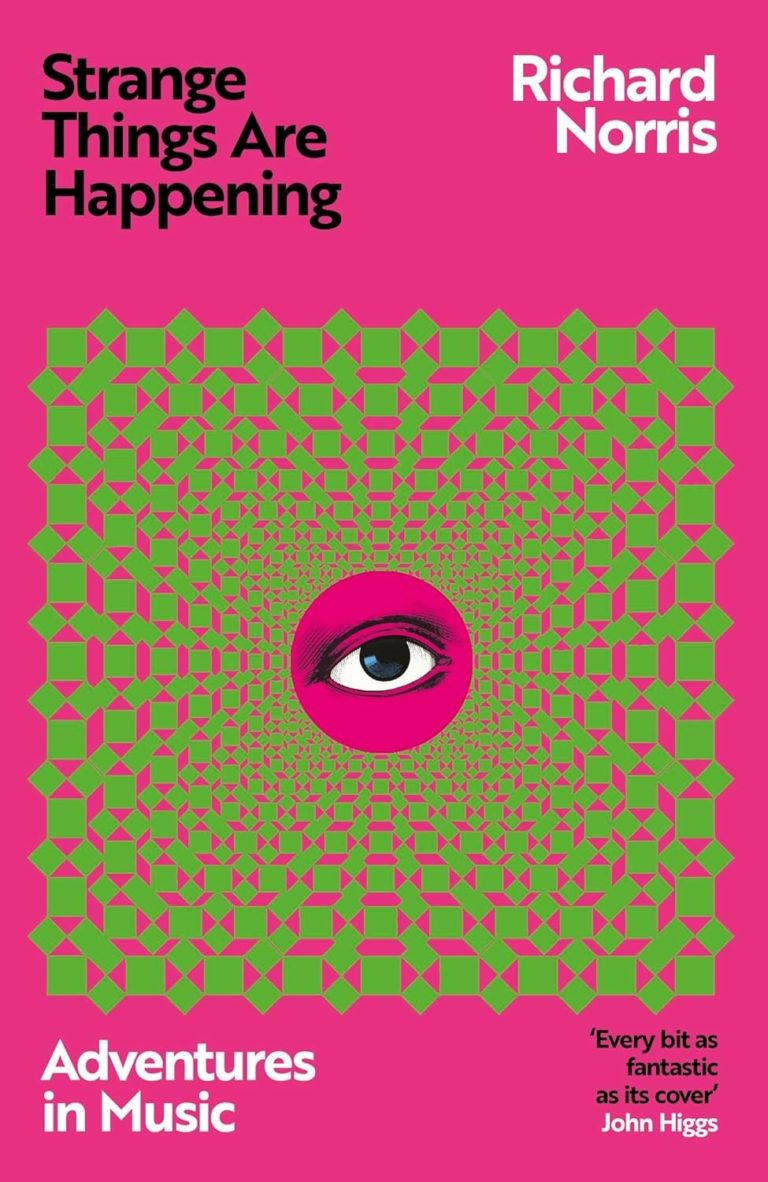
‘The rainbow reaches right across the sky, for miles and miles, and has landed right in the middle of our field. My mother, Alison, is standing at the beginning. I’m sure it’s a beginning, rather than the end, as there’s no pot of gold in sight. The point where everything forms or, perhaps, is not quite formed as yet. That’s my favourite place. A place alive with possibility.’

Strange Things Are Happening begins with the wonder of that rainbow, and continues with many escapades down the rabbit hole. From punk and the beginnings of the DIY scene, through Acid House, psychedelia, the rise of electronic dance music and much more, Richard Norris has been involved in countless countercultural revolutions. From misadventures in Amsterdam with Timothy Leary, with Sun Ra at customs, and Shaun Ryder in Joe Strummer’s beaten-up Cadillac in Tijuana, to his extraordinarily influential output in The Grid and Beyond The Wizards Sleeve, Richard Norris’ story is one of collaboration and community, fuelled by relentless psychedelic curiosity.

Strange Things Are Happening is a record of a life lived in the moment, forever in thrall to discovery, exploration and innovation – the search for what lies at the other end of that rainbow.

The Blind Boys Of Alabama Share Their Remarkable Journey In ‘Spirit Of The Century: Our Own Story’

0

An insider history of the Blind Boys of Alabama, the longest running group in American music, and the untold story of their world, written with band members and key musical colleagues.

The Blind Boys of Alabama are the quintessential Gospel vocal group, and the longest-running musical institution in America. Their story intersects with pivotal moments and issues in American history and is an ideal prism through which to trace music, culture, history, and race in America. Spirit of the Century invites readers to follow along the Blind Boys’ eight-decade journey together from a segregated trade school, through the rough and tumble indie record game and grinding tour schedule of the golden age of gospel, to starring in an iconic Broadway musical, performing at the White House for three presidents twice, collaborating with Tom Petty, Lou Reed, and Ben Harper, among others, singing the theme song for “The Wire,” and winning five Grammys.  More than just a story of the Blind Boys’ illustrious career, Spirit of the Century also sheds new light on the larger world of African American gospel music, its origins, and the colorful characters at its center.

Though there have been several iterations of the group over the decades, Spirit of the Century rounds up all surviving members of the group as contributors to the telling of their own story, and a result, the book offers a unique and intimate perspective on the group’s enduring success. Current drummer and road manager Rickie McKinney has been with the group throughout its renaissance, while guitarist Joey Williams, the group’s sighted member, has been the eyes of the Blind Boys since 1992. Octogenarian Jimmy Lee Carter has a fascinating history, as a fellow student of the original but deceased Blind Boys Clarence Fountain, George Scott, Olice Thomas, Johnny Fields, J.T. Hutton, and Velma Traylor at the Talladega school. Carter is one of a few performers who have been in both the Blind Boys of Alabama and Mississippi. He fronts the Alabama group today as a classic quartet leader and fiery preacher. Along with extensive interviews of Fountain, these legendary musicians provide this book with the voice, firsthand perspective, and authenticity that bring their story the same inspirational power that you hear in their songs.

Thought-provoking, heartfelt, and deeply inspiring, Spirit of the Century is a fascinating and one-of-a-kind read that you won’t be able to put down.