Home Blog Page 7

Amp Season Is Here: RBC Amphitheatre Is Making 2026 Toronto’s Best Summer of Live Music Yet

0

Summer in Toronto just got its official soundtrack.

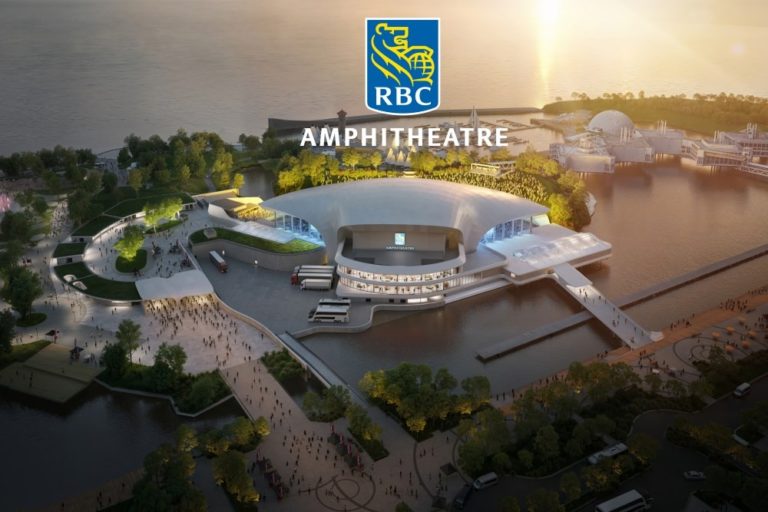
RBC Amphitheatre, the city’s beloved waterfront concert destination, is back for its 2026 season and it is bringing everything. More than 85 shows. Over 35 artists headlining the venue for the very first time. A brand new naming rights partnership with RBC. And a lineup so deep you are going to need a calendar and a good pair of shoes.

Imagine Dragons kick things off on May 21, which is exactly the kind of opening statement a summer season deserves. Multi-platinum, arena-filling, impossible-to-ignore. From that first night forward, the amphitheatre runs hot all the way through.

The range this year is genuinely something special. Timeless favourites like Paul Simon, Hilary Duff, and Evanescence share a season with hometown heroes Billy Talent, who are celebrating their 20th anniversary, plus Metric, Broken Social Scene, and Stars bringing their All the Feelings Tour home. Loud Luxury will be playing their biggest hometown show to date, which is going to be a moment. Hip hop and R&B fans get major co-headlining nights including TLC and Salt-N-Pepa with En Vogue, and Akon with NE-YO. Soca and reggae come through strong with Kes returning for a second consecutive amphitheatre headline and Sean Paul joining forces with Farruko. And the two-day All Things Go Festival returns with Kesha, Lorde, and The Beaches headlining, which is a lineup that speaks entirely for itself.

More shows are still to be announced, which means this summer keeps giving.

Beyond the music, RBC has come in as a partner with real intention. Fans this season can expect exclusive giveaways, new fan zone seating, immersive photo moments, and interactive activations that make the whole night feel like an event from the moment you arrive. There is a vintage photo booth from Simons so you can capture your concert outfit properly. The food game has been upgraded with comfort food mashups including bacon and cheese hotdogs topped with Kraft Dinner mac and cheese, plus a wide selection of bold Heinz mayo-style sauces in flavours like Mango Habanero and Forty Creek Whiskey BBQ. A brand new tequila bar is serving six specialty cocktails and margarita flavours, and the El Jimador Pier space on the Riverwalk gives fans a proper place to eat, drink, and soak up the waterfront before the show even starts.

RBC Amphitheatre has always been one of North America’s most dynamic live music destinations. This summer, it is making its strongest case yet. The skyline is the backdrop, the water is right there, and the music is going to be unforgettable.

Toronto, your summer has arrived.

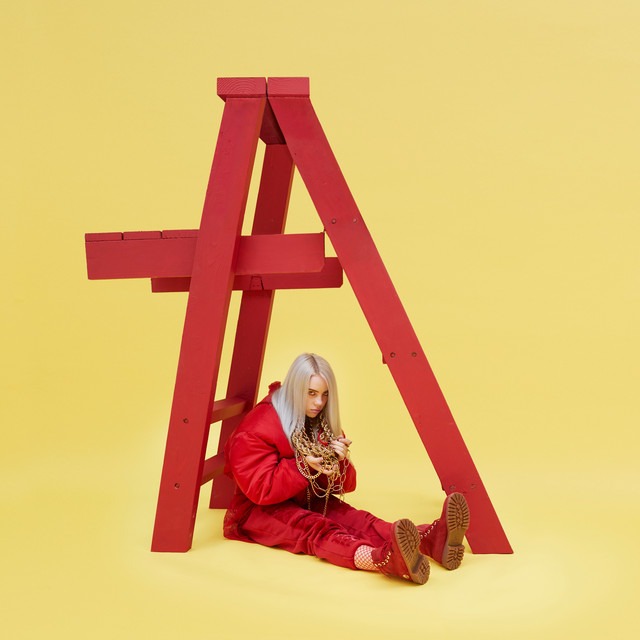
How Billie Eilish Changed Pop Music’s Sound and Kept Her Punk Attitude

Something remarkable happened to pop music in the last decade, and it started in a bedroom in Los Angeles.

Born and raised in LA, homeschooled alongside her brother and collaborator Finneas O’Connell, Billie Eilish didn’t come up through the traditional industry pipeline. There was no years-long label grooming process, no team of outside producers shaping her into something more palatable, no radio-friendly formula applied to sand down her edges. She posted “Ocean Eyes” online as a teenager and let the music do the talking. The internet responded, and the rest followed at a speed that still feels almost impossible to comprehend.

When her debut album “When We All Fall Asleep, Where Do We Go?” arrived in 2019, it didn’t just top charts. It redefined what a pop album could actually be. Recorded largely in Finneas’s bedroom, it was minimal, eerie, bass-heavy, and emotionally raw in ways that mainstream pop rarely allowed itself to be. Tracks like “Bury a Friend” and “Bad Guy” were not built around big conventional hooks. They were built around atmosphere, space, tension, and whisper. Every pause was intentional. Every silence carried weight. Pop music had never quite sounded like that before, and suddenly everyone was paying attention to what happened when you trusted mood over formula.

The punk attitude was there from the start too, just not in the way people might expect. It wasn’t leather jackets or power chords. It was something quieter and arguably more radical: a total refusal to be told what she should look like, sound like, or talk about. While the industry still had plenty of established molds for female pop artists, Eilish showed up in oversized clothing and spoke openly about anxiety, body image, mental health, and the parts of fame that nobody glamorizes. She was unapologetically herself at an age when most people are still figuring out who that even is. That is a punk move. Full stop.

Her Grammy sweep was historic. Five wins at the 2020 ceremony, including Album of the Year, Record of the Year, Song of the Year, Best New Artist, and Best Pop Vocal Album, made her the youngest artist ever to win all four major categories in a single night. The records kept coming. “No Time to Die,” her James Bond theme, won her a first Oscar. “What Was I Made For?,” written for the Barbie soundtrack, won her a second, making her the youngest two-time Academy Award winner in history. By 2024, she had accumulated over 76 billion streams worldwide and 25 Grammy nominations with nine wins.

And then came “Hit Me Hard and Soft” in 2024, and if you thought she might ease into something more conventional, you thought wrong. Produced again entirely with Finneas, the album was intimate and bold in equal measure. It explored queer love, body dysmorphia, obsessive fandom, and the complicated inner life of someone who has grown up almost entirely in public view. “Birds of a Feather” became a phenomenon, climbing to number one on the Billboard Global 200 and surpassing one billion streams, but it sounded nothing like a calculated commercial play. It sounded like someone telling the truth in a melody. The album stayed in the Billboard 200 top ten for six months after release and earned seven Grammy nominations for 2025, including Album of the Year.

Billboard named her one of the greatest pop stars of 2024, and the reason they gave matters. After years of a meteoric rise, she had finally found the lane she was most comfortable in, one defined entirely on her own terms. That is the whole story, really. The punk spirit was never about volume or rebellion for its own sake. It was about ownership. It was about deciding that no external pressure, commercial expectation, or industry convention was going to determine what her art sounded like.

What Eilish has done for the broader pop landscape is significant and still unfolding. She helped open the door for a generation of artists who take emotional honesty seriously, who record in unconventional spaces, who resist genre labels, and who treat their audience as intelligent people capable of sitting with something complex. Artists like Olivia Rodrigo, Gracie Abrams, and a long list of others have spoken about her influence. Thousands of musicians online write in her style or cover her catalog. She became a catalyst not just for streams and awards but for a cultural shift in what people expect pop music to offer them.

She is 24 years old. She has already changed the genre. And based on everything she has done so far, the most interesting chapters are still ahead.

How to Use AI to Book Your First Tour (And Add a Whole New Superpower to Your Music Career)

. The world of tour booking is experiencing one of the most thrilling transformations in the history of the music industry. New AI tools are giving independent artists capabilities that simply didn’t exist before, and the result is more music, more shows, more opportunities, and more artists getting heard. Everyone wins.

Here’s the thing: live performance is still the single biggest revenue category for musicians, accounting for roughly 28% of total musician income. It’s the heartbeat of a music career. The connection between artist and audience, in a room, in real time, nothing replaces it. And now, for the first time, getting there is more accessible than ever.

Whether you’re working with a manager, an agent, a label, or going completely DIY, these AI tools can support your journey and amplify the work of every person on your team. This isn’t about replacing anyone. It’s about giving the music more room to breathe.

Step 1: Find venues that actually make sense for you

One of the most exciting developments in live music is how smart venue discovery has become. Booking-Agent.io is a real-time AI search engine that analyzes similar artist data, showing you exactly where artists with your sound and fanbase size are playing. Its map-based interface visually represents concert venues most relevant to your sound, and its contact discovery features help surface talent buyer information to make your outreach more targeted and meaningful. The strategy is beautifully simple: find venues that have hosted artists at a similar stage to where you are right now, and pitch yourself as a natural fit. It’s smarter, kinder, and way more effective than scattershot outreach.

Step 2: Know where your fans actually live

Before you map out a single tour date, it helps to know where your people are. This is where data tools completely change the game. un:hurd uses AI to analyze your Spotify and social data to build a custom marketing strategy, and its automated ad builder lets you run hyper-local Instagram and TikTok ads specifically in the areas surrounding your upcoming tour dates. You stop guessing and start knowing, and that means every city you book is a city where someone is already waiting for you.

Step 3: Route your tour efficiently

Routing is one of the most intricate parts of tour planning, and it’s an area where AI genuinely shines. TourSmart uses agentic AI to crawl venue data, fetch capacities, and map out fuel-efficient routes. It even cross-references your tour path with local media outlets, identifying radio stations and blogs in every city, so you can line up local press and promo at the same time as your dates. Your routing and your promotional outreach, working together, all in one place.

Gigwell, with its Tour IQ database, adds another layer of intelligence by suggesting dates based on your genre’s peak demand in specific regions, and helping manage the contract-to-payment workflow once shows are confirmed. The whole process becomes more organized, more intentional, and a lot less stressful.

Step 4: Get your technical rider sorted before you leave home

This is the part of touring that doesn’t get nearly enough love, and it can make or break a show. Soundcheck Live uses AI to automate technical riders, stage plots, and more. When you book a new venue, it automatically adapts your gear requirements to match that venue’s specific stage dimensions and house PA. You arrive prepared, the crew is happy, soundcheck runs smoothly, and the show is better for everyone in the room, including the audience.

Step 5: Market your shows like you have a whole team behind you

This is where it gets truly exciting. Symphony OS’s AI marketing assistant, Maestro, can launch hyper-local ad campaigns across Instagram, TikTok, and YouTube in under 60 seconds. You plug in your tour route, and it deploys targeted ads to fans in those specific cities who have already engaged with your music. It even aggregates your fan data, including emails, locations, and engagement history, into a single dashboard so you can see your audience clearly and speak to them directly.

And for building the kind of social buzz that actually sells tickets, Opus Clip uses AI to scan your live performance footage, identify the highest-energy moments, and automatically create short-form vertical videos with captions for Reels and TikTok. You’ve already played the show. Now let AI help the world see it.

Step 6: Keep everything organized with a smart backend

All of this activity, the outreach, the dates, the contracts, the contacts, the follow-ups, adds up fast. Overture brings it all together in one intelligent dashboard. You can ask it questions about your bookings, venues, or finances in plain language and get real-time answers. Upload a PDF or a spreadsheet and it automatically extracts the relevant details. It’s the organizational backbone that lets you focus on the creative work while keeping your business life running smoothly.

The bottom line

The music industry is full of incredible, passionate people, agents, managers, promoters, venue bookers, publicists, who have dedicated their lives to getting great music in front of great audiences. AI doesn’t change that. It adds to it. It gives every artist more tools, every team more leverage, and every show a better shot at success.

The artists who embrace these tools now are the ones who will build the most momentum going forward, with more dates, more cities, more fans, and more opportunity. The playing field isn’t shrinking. It’s expanding. And there is genuinely room for everyone.

So go book that tour. The world is ready to hear you.

Zolita Goes Country-Tinged and Cult-Coded With Bold New Single and Video “Hell’s Belles”

0

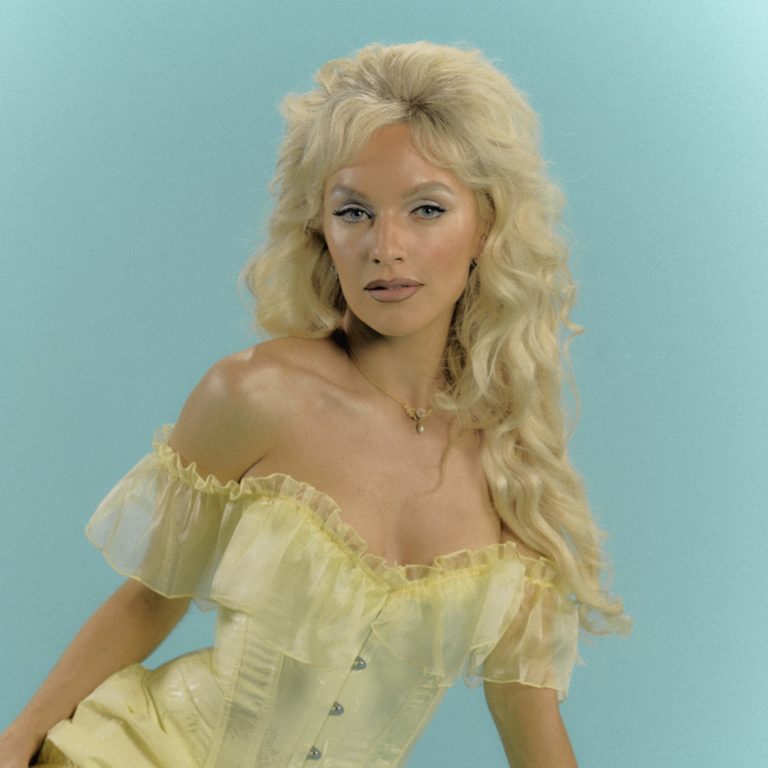
Zolita opens a new chapter with “Hell’s Belles,” a country-tinged pop track co-written with artist Gatlin that sets the tone and sound for her next project. The song is sharp, self-aware, and fully committed to its premise: a sapphic reimagining of bro country built around the kind of Southern bad girls Zolita has clearly spent some time thinking about.

“It’s a sapphic take on the ultimate bro country song, ‘Boys Round Here,'” she says, “and is an ode to all the southern bad girls I’ve fallen for over the years.” The track blends country textures with her signature pop sensibility and cinematic edge, arriving as both a standalone statement and a deliberate preview of what comes next.

The video matches the music’s energy and then some. A campy, sexy thriller, it follows a detective who goes undercover at a girls’ reform camp turned lesbian cult and falls for its charismatic leader. Tatiana Ringsby, Zolita’s longtime collaborator and star of the “Somebody I F*cked Once” trilogy, plays ‘Hell,’ alongside LGBTQ+ influencers Kyra Green, Georgia Bridgers, Becky Missal, Lauren Payton, Alyssa Eels, and Sierra Fujita as cult members.

The inspiration is personal. “The ‘Hell’s Belles’ video was inspired by the six years I spent inside a kundalini yoga cult,” Zolita reveals. “It’s my way of processing the experience through humor, fantasy, and pop spectacle.” A series of extended dialogue scenes and a mockumentary-style mini-series expanding the cult’s world are also on the way.

Zolita has spent a decade building one of independent pop’s most distinct and fully realized artistic identities. She’s sold out Bowery Ballroom and The Troubadour, played Governors Ball and Boston Calling, and her work has earned recognition from PAPER, V Magazine, DAZED, and Rolling Stone. This summer she takes the stage at All Things Go DC.

Silver Otto’s “Favorite” Is the Satin-Smooth Summer Pop Track You Didn’t Know You Needed

0

Silver Otto has a new single out and it lands right on time. “Favorite,” out May 15 via the Bay Area-via-New York pop project of TJ Sonnier, is a satin-smooth piece of summer pop built on addictive melodies, warmly layered production, and vocals that pull you in and don’t let go.

The song follows “I Really Need to Know,” which earned Silver Otto genuine critical heat, with Ladygunn declaring him “the pop alter ego we needed” and Kaltblut noting the track’s video drew on cinematic references ranging from Psycho to Showgirls to capture its sense of isolation and obsession. “Favorite” moves in a different emotional direction, looser and more intoxicating, but carries the same melodic precision.

Sonnier describes the track as a collision of 90s boy band structure and Rihanna-era production, built around the feeling of all-consuming, impossible love. “The song is about all consuming, cherubic, insane, and to me at least, destructive love,” he says. “This song is dedicated to the kid who has been fighting to make music his life because it is, well, his Favorite.”

“Favorite” is co-written by Louie Diller, Sean Walsh, Liz Nistico, and Bonnie McKee, and produced by Diller. The combination is immediately felt. The track moves with warmth and momentum, a hypnotic breakdown in the third act pulling things inward before the beat snaps back with full force.

Silver Otto created his project to reconnect with something essential, back to tarot cards and letters to Paula Abdul, as he puts it. The music carries that spirit: unguarded, melodic, and genuinely fun. “Favorite” is out May 15.

Senseless Optimism Signs With Prescription Songs and Drops Sharp New Single “Heat”

0

Brittany Tsewole, the singer-songwriter and multi-instrumentalist behind Senseless Optimism, has signed with leading independent publisher Prescription Songs, with new single “Heat” out now via Amigo Records. The track arrives as a sharp, self-assured statement: “It’s really just a reminder to myself to stay away from scrubs,” she says. “It feels good to stand on your boundaries, even if it’s a little bittersweet.” Listen here.

“Heat” follows the 2025 EP ‘graveyard flowers’, which introduced breakout track “war & peace,” a driving, hypnotic piece built on steady rhythms and introspective lyricism. Senseless Optimism’s guitar-driven pop carries a distinct worldview shaped by a childhood spent across Africa and Sri Lanka, where her foreign service parents were posted, giving her music a perspective that’s genuinely hard to replicate.

Her fanbase already spans from Willow to Pete Townshend of The Who, and her self-produced videos, where she clones herself playing guitar, bass, drums, and more, have pulled millions of views across TikTok and Instagram, building an audience of over 200K followers.

Prescription Songs VP of A&R Chris Martignago has been watching since 2023. “There was an honesty and sincerity that immediately set her apart,” he says. “She’s found a voice that feels both deeply personal and universally resonant. There’s a rare fearlessness in the way she creates.”

The Bures Band Deliver a Four-Song Live Statement in the KEXP Studio

0

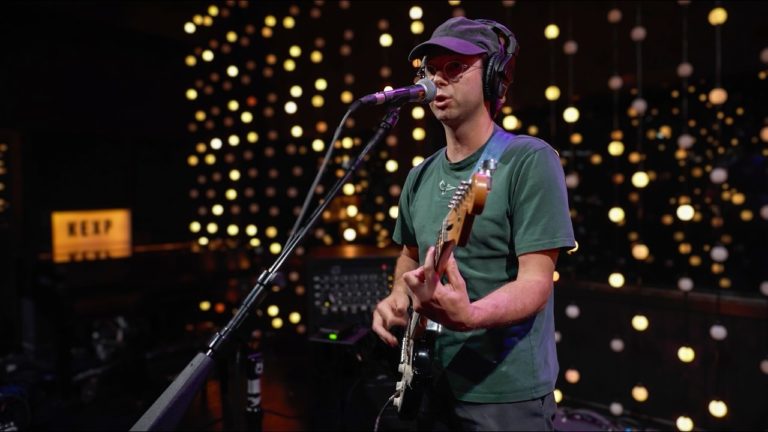
The Bures Band walked into the KEXP studio and made it count. The five-piece ran through four tracks, “Avon Valley,” “Ozonia,” “Birds Nest,” and “The Pilot,” a focused, unhurried set that lets the band’s three-guitar dynamic breathe and build across 25 minutes of live performance.

Foo Fighters Bring Stadium Rock Behind the Desk for a First-Ever NPR Tiny Desk Concert

0

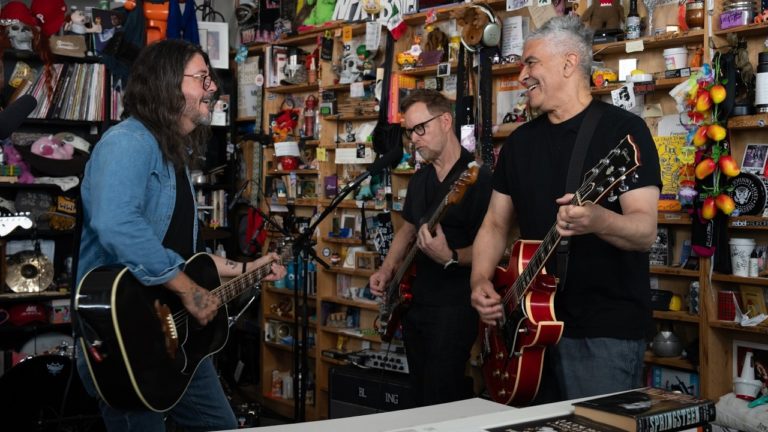
Foo Fighters have spent the better part of 30 years filling arenas, but their first-ever NPR Tiny Desk Concert proves the songs work just as well at close range. The band opened with “Spit Shine” from their latest album ‘Your Favorite Toy’, moved through “Learn to Fly” from 1999’s ‘There Is Nothing Left to Lose’, pulled back for the introspective “Child Actor”, and closed the set with “My Hero” and “Everlong”, both from 1997’s ‘The Colour and the Shape’. Dave Grohl summed up the band’s approach simply: “If you put instruments in our hands and there are people, it’s fun to play.”

SPIN Magazine Expands Into Canada With Michael Hollett Leading the Charge as Editor-in-Chief

0

SPIN Magazine is coming to Canada. The iconic music media brand, a fixture of American music culture for more than 4 decades, announces a dedicated Canadian editorial presence built around local artists, culture, and live music.

Leading the expansion is Michael Hollett, veteran Canadian media executive and NXNE founder, named editor-in-chief of SPIN Canada. Hollett brings decades of experience championing Canadian music to a platform with genuine global reach. “I’ve spent decades in journalism championing Canadian artists and musicians,” he says, “and finding fresh new voices to tell these stories in SPIN will be incredibly satisfying.”

SPIN Canada launches June 10-14 with the debut of the SPIN Canada Stage at NXNE, timed to FIFA World Cup programming week in Toronto. The festival brings together more than 350 artists and offers SPIN an immediate, high-profile platform to spotlight emerging and established Canadian talent right out of the gate.

While SPIN’s U.S. edition already reaches Canadian readers, this is something different. SPIN Canada builds a localized editorial operation dedicated entirely to Canadian artists, audiences, and cultural coverage, with original reporting, artist features, and cultural pieces tailored to the market, while plugging local talent into SPIN’s broader global network.

SPIN CEO Jimmy Hutcheson frames the expansion as a natural extension of the brand’s momentum. “From our recent 40th anniversary celebration during Art Basel in Miami, featuring Chance the Rapper and Clipse, to collaborations with brands like Urban Outfitters and Aviator Nation, the demand for SPIN continues to grow in new and unexpected ways,” he says. “Canada is a natural next step.”

The launch also builds on SPIN’s recent acquisition of Live For Live Music, which deepened the company’s footprint in live events and community-driven programming. SPIN Canada follows that same path, with live events in Canada already part of the longer-term plan.

Mo Ghoneim, president of Billboard U.K. and Billboard Canada/AMG, sees the timing as ideal. “SPIN has such a strong legacy in music journalism and culture,” he says, “and we see this as an exciting opportunity to help spotlight emerging artists, especially through a festival platform that brings together music fans from around the world.”

SPIN Canada is a significant moment for Canadian music media. The country has never lacked for talent. Now it has a publication with the muscle to match.

Jack Douglas, The Producer Behind ‘Toys in the Attic,’ ‘Double Fantasy,’ and ‘Live at Budokan,’ Dead at 80

0

Jack Douglas built some of the most important rock records ever made. He did it from the bottom up, starting as a janitor at the Record Plant in Manhattan and rising to become one of the most trusted producers in the business. Douglas died on May 11, 2026, from complications from lymphoma. He was 80.

His family said it plainly: “He lived an incredible life and was an amazing storyteller. He was very, very funny and goofy and loved to tell jokes. He loved what he did, and he worked til the very end. We will miss him a lot.”

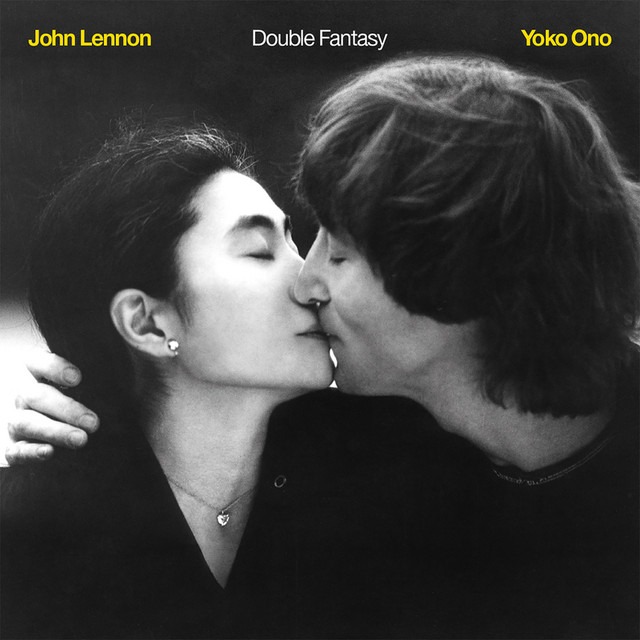
The resume is staggering. Douglas engineered John Lennon’s ‘Imagine’ in 1971, the beginning of a deep personal and professional bond with the former Beatle. That relationship culminated in 1980 with ‘Double Fantasy’, the Lennon and Yoko Ono album that won the Grammy Award for Album of the Year. Lennon was killed in December of that year, just weeks after the album’s release. Douglas later worked on the posthumous ‘Milk and Honey’, assembled from the same sessions.

He was also present for the Who’s Lifehouse sessions at the Record Plant in 1971, recordings that were eventually reshaped into ‘Who’s Next’, one of the defining rock albums of the decade. His engineering credit on that record alone would be enough for most careers. Douglas was just getting started.

His work with Aerosmith across the 1970s remains his most commercially thunderous contribution to rock. He co-produced ‘Get Your Wings’ in 1974, then took full control for ‘Toys in the Attic’ in 1975. That album went nine times platinum and delivered “Sweet Emotion” and “Walk This Way” to the world. The story behind the latter is pure Douglas: he’d just seen Mel Brooks’ Young Frankenstein with the band and was goofing around recreating a bit from the film. Steven Tyler caught the energy and built the lyric from there.

‘Rocks’ followed in 1976 and ‘Draw the Line’ in 1977. Both have since been certified multi-platinum. Both appear on Rolling Stone’s 500 Greatest Albums of All Time list. The band considered Douglas so integral to their sound that they called him the sixth member of Aerosmith. He even co-wrote their 1978 track “Kings and Queens.” After a brief separation, he returned for ‘Rock in a Hard Place’ in 1982, then again for the blues covers collection ‘Honkin’ on Bobo’ in 2004 and the band’s final album of originals, ‘Music from Another Dimension!’ in 2012, on which he provided the narration on the opening track “LUV XXX.”

The Cheap Trick relationship was equally deep and equally productive. Douglas helmed their self-titled 1977 debut, then the live record that became a genuine phenomenon, ‘Live at Budokan’ in 1978, and its companion ‘Budokan II’. He later produced ‘Found All the Parts’ in 1980, ‘Standing on the Edge’ in 1985, ‘Special One’ in 2003, and ‘Rockford’ in 2006. When Cheap Trick were inducted into the Rock and Roll Hall of Fame in 2016, they said directly from the stage that they were “forever indebted” to Douglas.

The Patti Smith Group’s ‘Radio Ethiopia’ in 1976 is another standout, a raw and confrontational record that Douglas captured without blunting its edges. He also contributed to the New York Dolls’ self-titled debut, the album that inspired producer Bob Ezrin to encourage Douglas to step up and start producing himself. That nudge changed rock history.

Beyond those landmarks, Douglas worked with Lou Reed on ‘Berlin’, co-produced sessions with Bob Dylan and Allen Ginsberg, and brought his engineering skills to records by Miles Davis, Alice Cooper, Montrose, Mountain, Blue Öyster Cult, Starz, and Graham Parker. Later credits include albums by Supertramp, Zebra, Slash’s Snake Pit, Local H, and Clutch.

Douglas was born in the Bronx on November 6, 1945. He started out as a folk musician, wrote songs for Robert F. Kennedy’s 1964 senatorial campaign, then chased music to England before returning to New York and enrolling at the Institute of Audio Research. He was part of its first graduating class. The Record Plant hired him to sweep floors. Within months, he was behind the boards.

His introduction to Lennon became the stuff of legend. While editing tapes at the Record Plant ahead of a session, Lennon walked in. Douglas told him about his time in Liverpool, and Lennon realized he was one of the “Crazy Yanks” he’d read about in the papers. “He got really excited to meet me,” Douglas recalled in a 2012 interview. “He invited me into the tracking rooms, he gave me a ride home in his limo. Pretty soon, I was working on the record as an assistant. We became friends.”

That friendship produced some of the most emotionally significant recordings in rock. Douglas remembered the mood of the ‘Double Fantasy’ sessions with clarity and warmth. “Having been with John in L.A. during that time when he was just unbelievably depressed,” he told Rolling Stone in 1981, “the one thing that makes me feel not so bad now is that when he died he was real happy, maybe happier than he’s ever been.”

Jack Douglas worked until the end. Fifty-five years in the business, dozens of landmark records, and a reputation built entirely on sound and trust. Rock and roll lost one of its great architects on Monday night.