Home Blog Page 8

Brazilian Hard Rock Outfit Insanidade Drop Their Heaviest Record Yet With “Enough to Be a Loser”

0

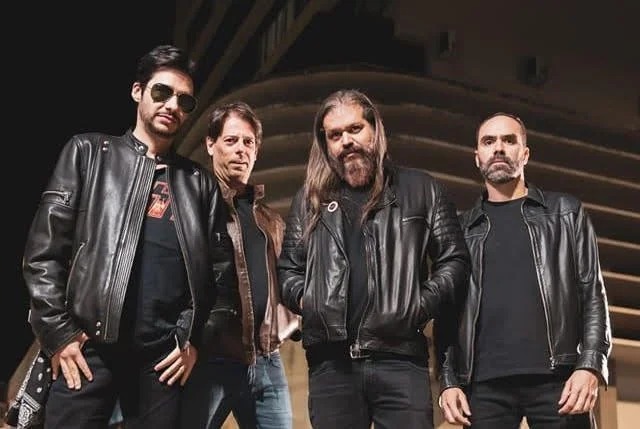
Insanidade have been building toward this. “Enough to Be a Loser,” the Brazilian hard rock four-piece’s fourth studio album, is their heaviest, most collaborative record to date, and it arrives as a definitive statement from one of the most consistent names in the Brazilian underground scene.

9 tracks deep, with 8 originals and a cover of Mötley Crüe classic “Looks That Kill,” the album plants itself firmly in the raw energy of ’70s and ’80s Hard n’ Heavy. The influences are direct and worn proudly: Motörhead, AC/DC, Guns N’ Roses, and The Hellacopters all run through the DNA here, filtered through a sound that remains distinctly Insanidade’s own.

The band explains why “Looks That Kill” made the cut. “Mötley Crüe is a huge influence and inspiration for all of us. We grew up listening to Crüe. ‘Looks That Kill’ is a Hard Rock classic, with a killer riff and a catchy chorus. Pure influence for us.”

What makes this album different from anything the band has released before is how it came together. For the first time, all 4 members, Lucas Tamandaré on vocals, Luis Maldonalle on guitar, Gustavo Vasquez on bass, and Rodrigo Miranda on drums, contributed actively to melodies, arrangements, and the album’s artistic direction. The result is a more cohesive, unified record that feels like a genuine band effort from start to finish.

Powerful riffs, striking beats, and attitude-driven lyrics reinforce the rebellious rock ‘n’ roll spirit that has always defined the group. “Enough to Be a Loser” is available now on digital platforms, with physical CD and vinyl versions on the way.

The band is already looking ahead. A follow-up, “Enough to Be a Loser II,” is in preparation and expected in the first half of 2026, featuring 10 tracks, 9 originals and another cover from a band that has heavily influenced them.
Atlanta Punk Force Upchuck Return With Scorching New Single “Last Breath” and a Summer Full of Shows

0

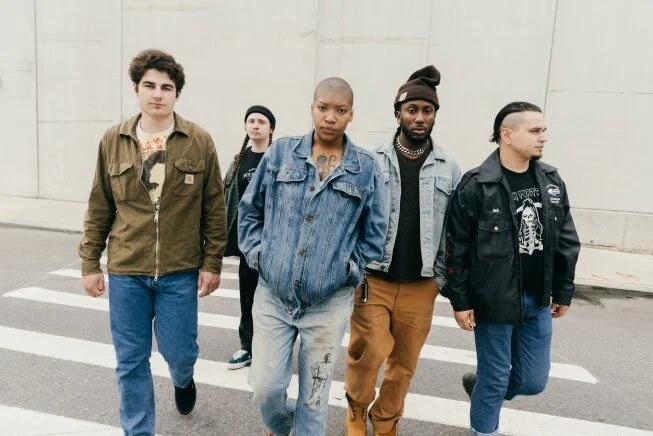
Upchuck don’t ease into anything. “Last Breath,” the Atlanta punk five-piece’s scorching new single, arrives with the same raw, coiled energy that made their Domino debut ‘I’m Nice Now’ one of the most talked-about punk records of 2025, and it’s a reminder that this band is just getting started. Listen here.

Written and recorded during the ‘I’m Nice Now’ sessions at Sonic Ranch Studios in Tornillo, Texas, with producer Ty Segall, “Last Breath” carries the same blistering urgency that earned the album 4-star reviews from Mojo, Kerrang, Record Collector, and Louder Than War, alongside a 5-star from Hi-Fi Choice.

The critical consensus around ‘I’m Nice Now’ was emphatic. The Guardian called it “politically charged, gloriously abrasive and coiled like a spring.” Kerrang described Upchuck as a band that “don’t just play songs: they spit venom, grind teeth and slam their fists against the rotting walls of America.” Notion put it plainly: “It’s messy, it’s mean, and it feels completely alive.”

The lineup behind that noise is KT on vocals, guitarists Mikey Durham and Hoff, bassist Ausar Ward, and drummer and vocalist Chris Salado. Together they blitz through Mudhoney-esque fuzz with the muscular energy of early Black Flag, pushing into unexpected grooves without ever losing the raw urgency that defines them.

A packed summer of shows follows, including Savannah’s Dog Days Festival, Manchester’s Outbreak Festival, and King Gizzard and the Lizard Wizard’s Field of Vision II at Meadow Creek in Buena Vista, Colorado. UK dates in London, Bristol, and Leeds round out a run that covers the US, Europe, and beyond.

‘I’m Nice Now’ is available on limited-edition silver vinyl, standard black vinyl, CD, and digitally, all physical formats coming with a foldout poster.

Upcoming Tour Dates:

June 5 – Dog Days Festival, Savannah, GA

June 25 – Patrick-Henry Village (w/ Lambrini Girls), Heidelberg, DE

June 27 – Outbreak Festival, Manchester, UK

June 28 – Oslo, London, UK

June 29 – Thekla, Bristol, UK

June 30 – Brudenell, Leeds, UK

July 2 – Les Eurockéennes, Belfort, FR

July 3 – Bogen F, Zurich, CH

August 14 – Field of Vision II at Meadow Creek, Buena Vista, CO

August 29 – Canela Party, Torremolinos, ES

Dame Jools Topp, One Half of New Zealand’s Beloved Topp Twins, Dies at 68

0

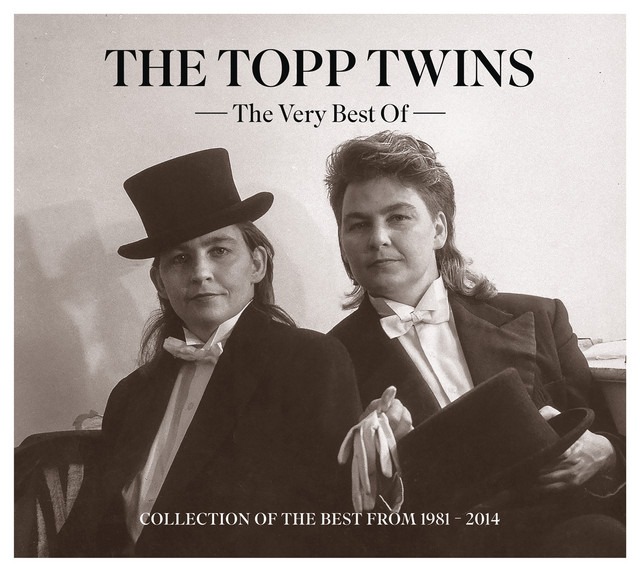
Dame Jools Topp, the guitarist, songwriter, performer, and activist who spent five decades as one half of the Topp Twins — New Zealand’s most beloved entertainment duo — died on May 23, 2026. She was 68. The cause was breast cancer, a disease she had fought with characteristic courage and openness since her first diagnosis in 2006.

Born Julie Bethridge Topp on May 14, 1958 in Huntly, New Zealand, Jools and her twin sister Lynda grew up on a dairy farm in Waikato, singing together from the age of five and picking up the guitar at eleven, a gift from their older brother Bruce. After leaving Huntly College in 1976, the twins briefly joined the New Zealand Territorial Force before embarking on a career that would make them two of the most recognisable and widely loved figures in New Zealand cultural life. They started where all honest careers begin — busking on the streets of Christchurch and Auckland in the 1970s and 1980s — and built something that lasted fifty years.

The Topp Twins were not simply entertainers. They were country and folk musicians with tight harmonies, gifted comedians with a roster of brilliantly drawn characters, and committed political activists who used their platform consistently and without apology. They performed at the Bastion Point land protest in 1978, at the 1979 United Women’s Convention, at protests against the 1981 Springbok tour, and at anti-nuclear and homosexual law reform demonstrations throughout the 1980s. Both women came out as lesbian in the late 1970s, at a time when doing so in public carried real personal and professional risk. They did it anyway, and kept doing it, and their openness became part of what made them so important to so many New Zealanders.

Within the duo, the division of labour was clear and complementary. Lynda led the comedy and crowd work. Jools played guitar and led the songwriting. Their characters — the stereotypical Kiwi blokes Ken and Ken, and the magnificent Camp Mother and Camp Leader — became beloved New Zealand institutions. Jools played Camp Leader, the one who pushed back against the domineering Camp Mother, and she played her with a timing and physical commitment that made every scene land. They appeared on New Zealand television for decades, hosted a quiz show, presented a cooking series, and won virtually every award the New Zealand entertainment industry had to offer, including the Best Entertainer award at the 1987 Listener Film and Television Awards and induction into the New Zealand Music Hall of Fame in 2008.

The 2009 documentary ‘The Topp Twins: Untouchable Girls’, directed by Leanne Pooley, brought their story to international audiences, winning audience awards at the Toronto International Film Festival and the Melbourne International Film Festival among many others. In 2018, both sisters were appointed Dames Companion of the New Zealand Order of Merit for services to entertainment. Their 2023 memoir ‘Untouchable Girls: The Topp Twins’ Story’ won the Nielsen BookData NZ Award for best-selling New Zealand title of 2024 — a final, fitting recognition of just how deeply the country loved them.

Jools Topp was also a skilled horsewoman, a passionate advocate for horses and the people who worked with them, and someone who answered her phone while riding bareback in her arena, because of course she did. She was that kind of person.

She is survived by her twin sister Lynda. New Zealand has lost one of its originals.

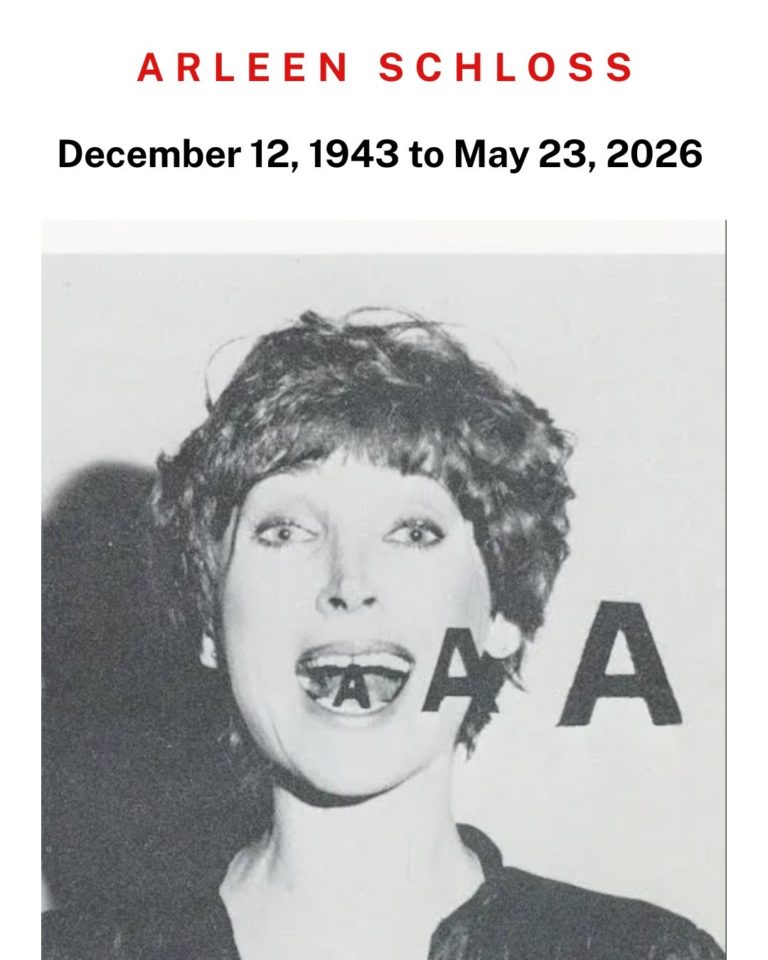
Arleen Schloss, No Wave Pioneer and Keeper of New York’s Downtown Flame, Dies at 82

0

Arleen Schloss, the painter, performance artist, video maker, sound poet, and curator whose loft at 330 Broome Street became one of the most important creative gathering places in the history of New York’s downtown art scene, died on May 23, 2026. She was 82.

Born December 12, 1943 in Brooklyn, Schloss studied at the Bank Street College of Education, the Art Students League of New York, and Parsons School of Design before graduating from New York University. She came of age as an artist in the SoHo and Lower East Side gallery world of the early 1970s, performing and exhibiting in the United States, Europe, and Asia, and establishing herself as a performance artist of genuine originality. The New York Times called her performances “superior to much performance art.” The SoHo Weekly News noted that her voice was “musical the way Patti Smith or Yoko Ono are musical.” Neither observation was a small one.

But it was A’s — the interdisciplinary loft space she ran at 330 Broome Street beginning in the late 1970s — that cemented her place in art history. What happened there across those years reads today like an impossible guest list. Glenn Branca performed. Y Pants performed. Jean-Michel Basquiat’s noise music band Gray performed. Eric Bogosian did solo work there. Thurston Moore’s pre-Sonic Youth post-punk band The Coachmen performed there. Liquid Liquid performed. Alan Vega’s band Suicide performed. Carolee Schneemann performed. Ai Weiwei exhibited. The space was, in the fullest sense of the word, a hub — a place where the boundaries between music, art, performance, and film were not so much blurred as declared irrelevant. Schloss did not just host these artists. She created the conditions in which that entire scene could breathe and grow.

Her own work matched the ambition of the space she built. Her sound poetry piece “How She Sees It By Her” earned serious attention in the audio art world and was included in Glenn Branca and Barbara Ess’s no wave anthology “Just Another Asshole” as well as Richard Kostelanetz’s “Text-Sound Texts.” She directed a 24-hour media opera at Ars Electronica in Austria in 1986. In 1989, Nickelodeon hired her to direct fifteen live video excerpts for the animated series Eureeka’s Castle, which won a Cable ACE Award. In 1990, she produced a video documentary on the pioneers of virtual reality featuring Marvin Minsky, John Perry Barlow, Timothy Leary, William Gibson, and Jaron Lanier — a document that now reads as a remarkable piece of cultural history. She filmed a series of interviews with John Cage. She taught in the MFA Computer Arts department at the School of Visual Arts. She did all of this while continuing to curate, perform, and push into whatever new medium was presenting itself.

Her work is held in the collections of the Museum of Modern Art Library, the Aldrich Contemporary Art Museum, the Lenbachhaus in Munich, and the Fales Library Downtown Collection at New York University, which also holds her papers. A 2024 documentary by Stuart Ginsberg, ‘It’s A to Z: The Art of Arleen Schloss’, and a 2021 book, ‘Wednesday’s At A’s’, have worked to document what she built and why it mattered. The New York Underground Museum documents her entire oeuvre.

She was 82 years old, and the downtown New York art scene of the late 1970s and early 1980s — one of the most creatively fertile periods in American cultural history — would have looked and sounded different without her at the centre of it.

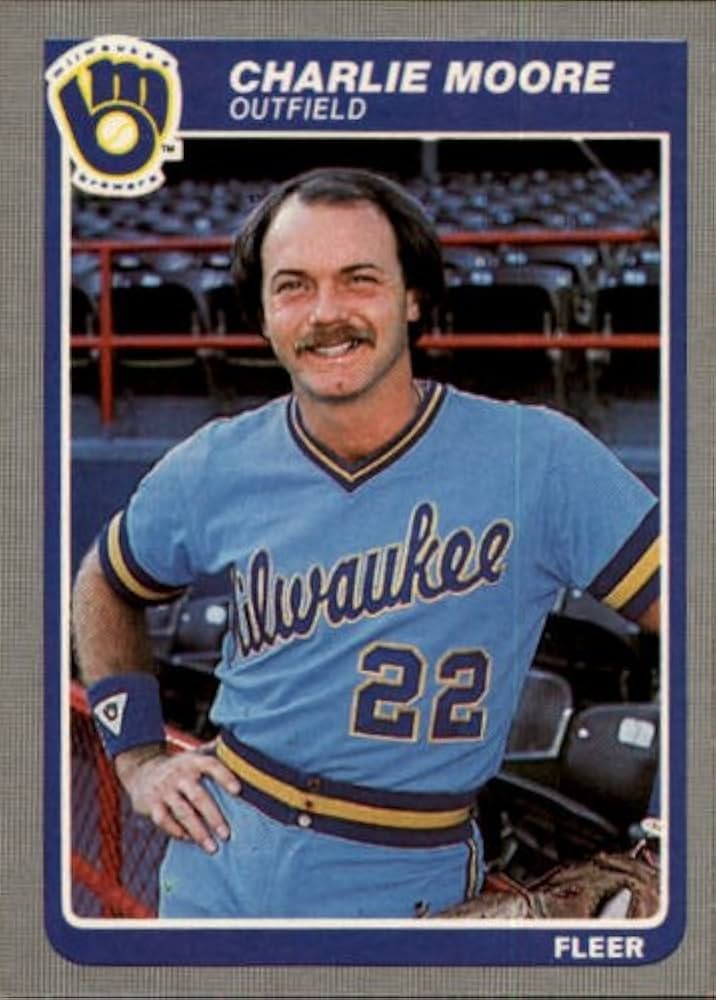
Charlie Moore, Milwaukee Brewers Stalwart and Member of Harvey’s Wallbangers, Dies at 72

0

Charlie Moore, the catcher and outfielder who spent fourteen seasons as one of the most reliable and versatile players in Milwaukee Brewers history and was a key member of the beloved 1982 American League pennant-winning team, died on May 23, 2026. He was 72.

Born June 21, 1953 in Birmingham, Alabama, Moore was a quarterback good enough to earn a football scholarship to Auburn University, but when the Milwaukee Brewers selected him in the fifth round of the 1971 MLB Draft, he chose baseball instead. It turned out to be the right call. He made his Major League debut on September 8, 1973 and spent the next fourteen seasons as one of the most dependable players in the Brewers clubhouse, appearing in 1,283 regular season games with Milwaukee and batting .262 with 35 home runs and 401 RBI.

He was the kind of player every winning team needs and not enough teams have — someone who could catch, play the outfield, hit in the clutch, and show up every day ready to do whatever the situation required. On October 3, 1976, he crossed home plate on the last run batted in of Hank Aaron’s career, driven in by Aaron’s sixth-inning single at Milwaukee County Stadium. It is the sort of footnote that only becomes meaningful in retrospect, and it is a genuinely meaningful one.

On October 1, 1980, Moore did something only a handful of players in Major League history had done before him: he hit for the cycle, going single, double, triple, and home run in a Brewers 10-7 win over the California Angels. He added two stolen bases in the same game, becoming the only player in MLB history to record two steals in a game while also hitting for the cycle. Nobody has matched it since.

The 1982 season was his finest hour. As part of Harvey Kuenn’s Harvey’s Wallbangers, he hit .462 in the American League Championship Series as the Brewers defeated the California Angels in five games, and made one of the most important defensive plays of the series — throwing out Reggie Jackson at third base from right field in the deciding fifth game. He then hit .346 in the World Series, where Milwaukee fell to the St. Louis Cardinals in seven games. It was as close as his team would come.

After his playing career ended, Moore worked for more than fifteen years as a sales representative for a fastener company back home in Birmingham — a quiet, ordinary life after an extraordinary one in uniform. In 2014, he was inducted into the Milwaukee Brewers Wall of Honor, a recognition that placed him alongside the greatest players in franchise history, where he absolutely belonged.

He was 72 years old. Milwaukee baseball was better for every one of the seasons he gave it.

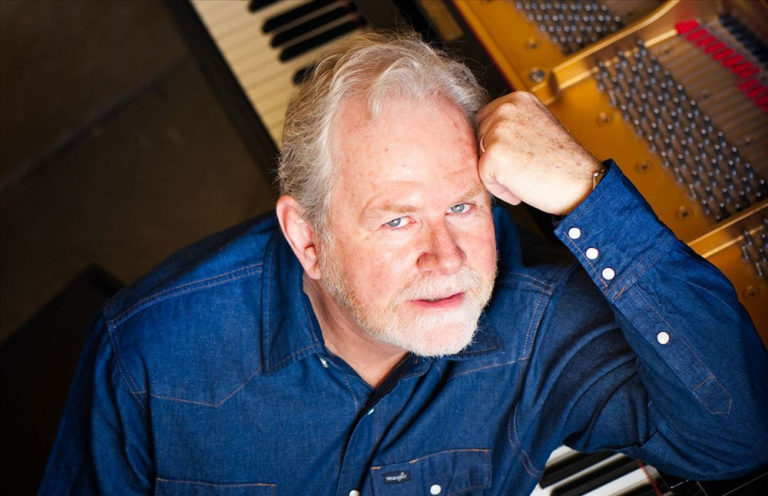
Philip Aaberg, Montana Pianist Who Turned a Landscape Into Music, Dies at 77

0

Philip Aaberg, the pianist and composer whose classically trained hands moved with equal ease through jazz, bluegrass, rock, and new music, and whose life’s work was devoted to translating the sweeping landscape of Montana into sound, died on May 23, 2026. He was 77. The cause was pneumonia.

Born April 8, 1949 in Havre, Montana and raised in Chester, he was performing with local bands at dances by the age of 14 — a detail that says something important about the kind of musician he would become. Not a conservatory creature, not someone who arrived at music through theory alone, but someone who learned it in rooms full of people who wanted to move. He won a Leonard Bernstein Scholarship to study music at Harvard, earned his Bachelor of Arts in music, and then moved to Oakland and played blues clubs for several years, because that was the logical next step for someone who understood music the way he did.

He toured and recorded with Elvin Bishop’s group at the height of its popularity, co-writing the title song of the band’s 1976 album ‘Struttin’ My Stuff’ and playing piano on the same record that contained Bishop’s biggest hit, “Fooled Around and Fell in Love.” It was a long way from Chester, Montana, and also, in the way that matters most, not very far at all.

In 1985 he signed with Windham Hill Records and released ‘High Plains’, the first of four solo albums for the label that established him as one of the most distinctive voices in what the industry was then calling new age music, a label that never quite captured what he was actually doing. His compositions were described as combining rigorous keyboard technique, diverse influences, and a colorful compositional style — which is accurate as far as it goes, but misses the essential quality that made his playing memorable: it sounded like a specific place. It sounded like Montana. He performed with the Boston Pops Orchestra, appeared at the Marlboro Chamber Music Festival, appeared on PBS’s All-American Jazz program earning an Emmy Award nomination, performed as a guest on over 200 albums, and shared stages with Peter Gabriel and Tom Johnston of the Doobie Brothers.

In 2000, he and his wife Patty founded Sweetgrass Music, their own record label, through which he pursued his deepest artistic ambition — producing music that connected a global audience to the landscape of the American West. ‘Live from Montana’, released that same year, received a Grammy nomination. He produced a public radio program called ‘Of the West: Creativity and Sense of Place’, received a Montana Governor’s Award for the Arts and a Montana Arts Council Innovator Award in 2011, and with Patty ran a bed and breakfast, a recording studio, and a suite of creative enterprises that turned their corner of Montana into a small but genuine cultural centre.

He was 77 years old, and he spent every one of those years making music that knew exactly where it came from. That is rarer than it sounds.

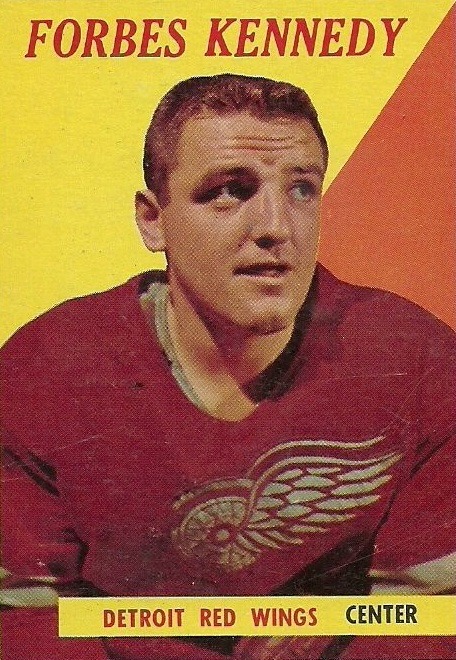
Forbes Kennedy, NHL Enforcer Who Led the League in Penalty Minutes, Dies at 90

0

Forbes Kennedy, the tenacious centre from Prince Edward Island who spent 13 seasons in professional hockey and became one of the most penalized players of his era, died on May 26, 2026 in Charlottetown, Prince Edward Island. He was 90.

Born August 18, 1935 in Dorchester, New Brunswick and raised in PEI, Kennedy was never the biggest player on the ice — he stood 5’8″ and weighed 150 pounds — but he played as though the size differential was someone else’s problem. Over 603 NHL games with the Chicago Black Hawks, Detroit Red Wings, Boston Bruins, Philadelphia Flyers, and Toronto Maple Leafs, he recorded 70 goals, 108 assists, and 888 penalty minutes. He led the entire NHL in penalty minutes during the 1968-69 season, an achievement that tells you everything you need to know about how he approached the game.

The moment that defined his reputation — and ended his time with the Maple Leafs — came during the 1969 Stanley Cup playoffs in Boston. When teammate Pat Quinn delivered a thunderous hit on Bruins star Bobby Orr, knocking him unconscious, Kennedy responded in the fashion that was entirely consistent with his career: he got into four fights before punching a linesman and getting ejected. The suspension that followed was lengthy. His tenure in Toronto was over. The hockey world shook its head. The hockey world was also not entirely surprised.

After retiring as a player, Kennedy returned to the game he loved as a coach, working his way through a string of junior and minor league assignments across the Maritimes and beyond. He coached the Cape Breton Metros in their very first year of existence in 1969-70, the Halifax Junior Canadians, the Summerside Crystals, and later the Summerside Western Capitals from 2004 to 2007, earning a Forbes Kennedy Night in his honour from that organisation in January 2012. He went home to PEI and stayed, coaching junior hockey for years, giving back to the game that had defined his life.

He was 90 years old. In a sport that has always needed players willing to protect their teammates regardless of the consequences, Forbes Kennedy was exactly that player, every single night.

Arnold Whittall, One of Britain’s Greatest Music Scholars, Dies at 90

0

Arnold Whittall, the British musicologist whose decades of writing, teaching, and analysis helped shape how the English-speaking world understands twentieth and twenty-first century classical music, died on May 26, 2026. He was 90. Allen Forte, one of the most distinguished music theorists of the modern era, called him simply “the dean of British music analysis.” That was not hyperbole. It was a description that stuck because it was accurate.

Born in Shrewsbury, Shropshire on November 11, 1935, Whittall was educated at Emmanuel College, Cambridge, where he read History and Music and graduated in 1959. He received his PhD in 1964 and began a teaching career that would take him through the Cambridgeshire College of Arts and Technology, the University of Nottingham, Cardiff University, and finally King’s College London, where he was appointed Professor of Musical Theory and Analysis in 1982 and where he remained, in various capacities, until 2012. In 1985 he was a Visiting Professor at Yale. He was, by any measure, one of the central figures in British music academia for half a century.

His scholarly output was remarkable in both its range and its consistency. He wrote extensively on Benjamin Britten and Michael Tippett, on Schoenberg, Stravinsky, Wagner, Webern, and on a vast array of younger composers pushing the boundaries of serialism, spectralism, and new complexity. His bibliography runs from ‘Music since the First World War’ in 1977 through ‘Musical Composition in the Twentieth Century’ in 1999, ‘The Cambridge Introduction to Serialism’ in 2008, ‘British Music After Britten’ in 2020, and a study of Schoenberg’s ‘Verklärte Nacht’ and ‘Erwartung’ published in 2023 — a book completed in his late eighties that demonstrated a mind still operating at full stretch. His final contribution to academic publishing appeared in 2025, a chapter in a Cambridge University Press volume on Wagner studies.

His work on Wagner in particular earned lasting recognition. Over many years he wrote substantial essays on each of Wagner’s music dramas from ‘Der fliegende Holländer’ to ‘Parsifal’, gathered eventually into ‘The Wagner Style’ in 2015. He positioned Wagner as an early modernist and identified in the music dramas a principle he called rhetorical dialectics — a tension between the continuity Wagner sought through his art of transition and the disruptive, disintegrating forces that run against it. It was exactly the kind of analytical framework that made difficult music more navigable without ever making it smaller.

He was also a committed founder of institutions. He established the journal Soundings at Cardiff in 1970 and co-founded the journal Music Analysis at King’s College London in 1982 alongside Jonathan Dunsby, providing the discipline with two of its most important venues for serious scholarly exchange. He made many broadcasts for BBC Radio 3, introduced the Corporation’s College Concerts series throughout the early 1980s, and wrote record reviews for Gramophone across a long span of years. He was awarded the Derek Allen Prize by the British Academy in 2013, the Pascall Medal by the Society for Music Analysis in 2021, and was made an honorary member of the Royal Musical Association in 2014.

He is survived by the students he taught, the journals he founded, the books he wrote, and the generations of musicians and scholars who came to understand modern music more clearly because of the precision and generosity of his thinking.

Howard Storm, Director of ‘Mork & Mindy’ and Jim Carrey’s First Film, Dies at 94

0

Howard Storm, the comedian-turned-director whose career touched some of the most beloved television series of the 1970s and 1980s and who gave Jim Carrey one of his earliest film roles, died on May 26, 2026 at his home in Beverly Hills, California. He was 94.

Born Howard Sobel on December 11, 1931 in New York City, he came to Hollywood the way many of his generation did — through stand-up comedy, the school of hard knocks that teaches timing, audience, and the fine art of reading a room. His father was a comedian in burlesque, so the instincts were inherited as much as learned. Storm toured as Andy Williams’ opening comedian, played Las Vegas, and appeared fourteen times on The Merv Griffin Show — a booking that, in the television landscape of that era, meant you had genuinely arrived.

He parlayed that background into writing, teaming with attorney Paul Lichtman to develop scripts for The Partridge Family and Bob Newhart’s program, and he also worked as Woody Allen’s assistant and collaborator on two of Allen’s early films, ‘Bananas’ and ‘Everything You Always Wanted to Know About Sex* (*But Were Afraid to Ask)’. That is not a bad apprenticeship by any measure.

His acting credits included The New Dick Van Dyke Show, Rhoda, and Sanford and Son, but it was directing that would define the bulk of his career. Beginning in 1975, he became one of television’s most reliable and prolific episode directors, working on ‘Laverne & Shirley’, ‘Mork & Mindy’, ‘Taxi’, ‘Joanie Loves Chachi’, ‘Full House’, ‘ALF’, and ‘Head of the Class’, among many others. These were not obscure assignments. These were the shows that American families were watching every week, and Storm was behind the camera for a significant portion of their best episodes.

In 1985, he stepped into feature films with ‘Once Bitten’, a vampire comedy starring Lauren Hutton and a young, largely unknown Jim Carrey. It was Carrey’s first leading role in a film, and whatever you thought of the movie itself, Storm clearly saw something in that rubber-faced comedian from Ontario that the rest of Hollywood had not yet fully caught on to. He would be proven right within a few years.

He was 94 years old, and he was still credited as active right up to the end. That is a career. That is a life in show business lived all the way to the final curtain.

Marc Johnson, One of Skateboarding’s All-Time Greats, Dies at 49

0

Marc Johnson, the professional skateboarder whose technical precision, effortless style, and deep philosophical relationship with his craft made him one of the most respected figures in the history of the sport, died on May 26, 2026 in San Jose, California. He was 49.

Born January 6, 1977 in Winston-Salem, North Carolina, Johnson came up through the skateboarding world in the mid-1990s and built a career that spanned three decades and left a permanent mark on the culture. He was not just a skateboarder. He was a thinker about skateboarding, someone who approached the sport with the kind of seriousness and curiosity that tends to produce work that outlasts the moment it was made in.

His video parts told the story of that career in the most direct way possible. From ‘Maple: Rites of Passage’ in 1994 through ‘Girl: Yeah Right!’ in 2003, ‘Lakai: Fully Flared’ in 2007, and ‘Girl/Chocolate: Pretty Sweet’ in 2012, Johnson appeared in some of the most celebrated skate videos of his generation, consistently delivering parts that were studied and rewatched by younger skaters trying to understand how he made it look so clean. He also selected all of the music for his career video parts himself — a detail that says everything about how seriously he took the relationship between what he was doing and how it was being presented.

Fellow professional Paul Rodriguez placed Johnson on his personal top ten list of favourite professional skateboarders in 2013, calling him “a boss” with “incredible style” and “incredible technical capabilities,” and concluding simply: “I think he is one of the all time greats for sure.” That assessment was widely shared across the skateboarding world, by professionals and fans alike.

Johnson was also a genuine original when it came to articulating what skateboarding meant. In a 2007 Thrasher interview, asked about inspiration, he offered something closer to philosophy than sport: “All inspiration comes from something similar to the way a radio works. If you imagine that everything ever known or will be known exists between the lowest and the highest frequencies, we simply either stumble upon a brilliant song accidentally, or we spend our lives searching for great songs and find them where we may.” He cited Tesla. Not many skateboarders cite Tesla.

In 2013, he launched the Back Forty project alongside Kenny Anderson and Chris Roberts, a collaboration he described not as a company but as a home for ideas — a commitment, in his own words, to “becoming the voice for what skateboarding has to say for itself.” That impulse to define skateboarding on its own terms, rather than letting commerce or convention do it, ran through everything he was involved in.

He was 49 years old. The skateboarding world has lost one of its most thoughtful and talented voices.