

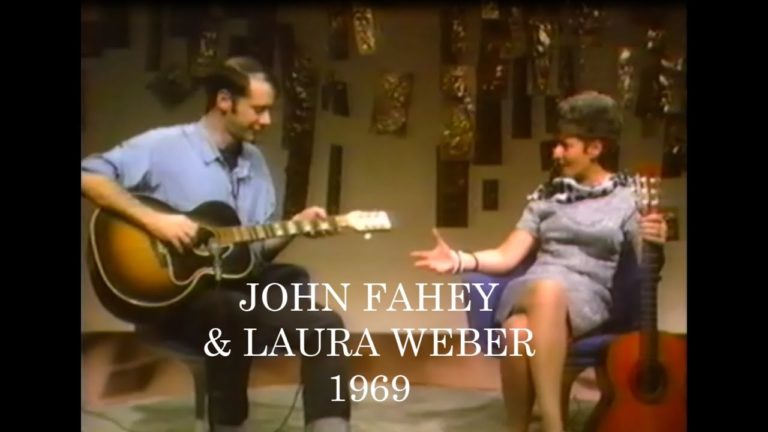
Found on a VHS tape in a Chicago record shop in the late 1990s and now uploaded in the best quality available, this 1969 appearance by John Fahey on ‘Guitar Guitar’ with host Laura Weber is the kind of footage that reminds you why archival preservation matters, a loose, genuinely transfixing conversation and performance session featuring Fahey playing “Red Pony,” “The Death of the Clayton Peacock,” and more, complete with the moment he ashes his cigarette directly into the body of his guitar and sends the host into a complete tizzy.
Video: Ace Frehley Steals the Room in This Remastered KISS Interview on The Tom Snyder Show, Halloween 1979
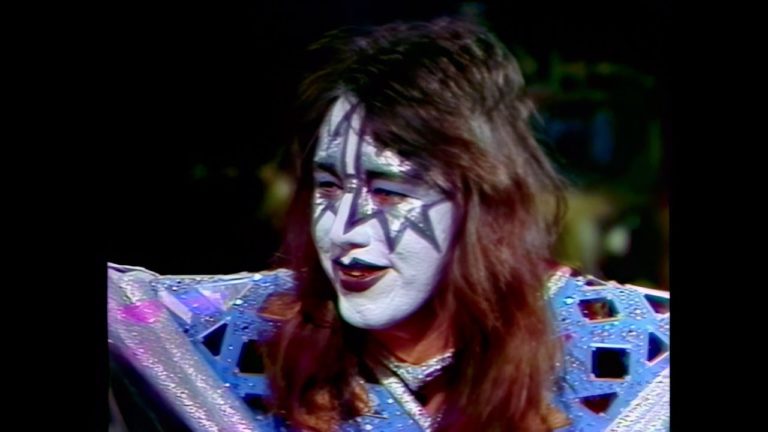
Halloween night, 1979, and KISS sat down with Tom Snyder for one of their most memorable television appearances, and as the comments make perfectly clear, it’s Ace Frehley who makes the whole thing worth watching, loose, funny, and completely himself in a way that lights up the screen every time the camera finds him. This remastered first segment captures exactly why the Spaceman was so beloved, and why this interview has been revisited by KISS fans for over four decades.
Get Verified on LinkedIn. Here’s Why It Matters More Than You Think.
There’s a small thing you can do on LinkedIn right now that takes less than five minutes, costs nothing, and will quietly change the way people perceive you before they’ve read a single word of your profile. Most people haven’t done it. You probably haven’t either. It’s identity verification, and I think about it the same way I think about showing up on time — it’s a small signal that tells people something much larger about who you are.
We’ve all spent real time on our LinkedIn profiles. We’ve rewritten the headline three times. Agonized over the summary. Gone back and forth on whether to list that contract job from 2019. And yet most of us leave one of the easiest credibility signals on the table, completely untouched, because we either didn’t notice it or assumed it was meant for someone else. It isn’t. It’s meant for you.
The verification badge — that small checkmark that appears on your profile — does something deceptively powerful. It tells every recruiter, journalist, potential client, or collaborator who lands on your page that LinkedIn itself has confirmed you are who you say you are. That’s not a small thing. In a world overrun with fake profiles, AI-generated identities, and people who’ve learned to be deeply skeptical of anyone they haven’t met in person, a verified badge cuts through all of that noise before you’ve even said hello.
Think about what your LinkedIn profile actually does in the world. It’s the first result when someone Googles your name. It’s the page a reporter checks before deciding whether to quote you. It’s what a potential business partner pulls up while you’re still on the phone with them. Every signal on that page matters, and the verification badge is one of the loudest quiet signals available to you.
Getting it is genuinely straightforward. Open the LinkedIn app, go to your profile, and look for the option to verify your identity. LinkedIn works with two methods — one through a service called CLEAR, which uses a quick face scan, and one through a standard government-issued ID. Neither takes long. Your personal information isn’t stored by LinkedIn directly; the verification is handled by third-party partners who exist specifically for this purpose. You can remove the verification at any time if you ever change your mind. It’s free.
What strikes me most about verification is what it represents beyond the checkmark itself. It’s an act of accountability. It says you’re not hiding. It says you stand behind your name, your history, your work. In industries built on relationships and trust — music, media, marketing, any field where your reputation is your currency — that kind of transparency is worth more than most people realize.
I’ve seen profiles with impressive titles and long lists of accomplishments get scrolled past in seconds. And I’ve seen simpler profiles with a verification badge earn an extra moment of attention, a second look, a message that turns into an opportunity. People are busy. They make fast decisions. Give them every reason to trust you quickly, because you rarely get a second chance to make that first impression land.
If you’re reading this and you haven’t verified your LinkedIn profile yet, close this and go do it now. Seriously. Whatever you were planning to do next can wait five minutes. This one’s easy, and easy wins are rare enough that you should take every one you can find.
Video: MTV’s Rare ‘Total Woodstock Live’ Broadcast From 1999 Is an Incredible Time Capsule of the Festival’s Chaos
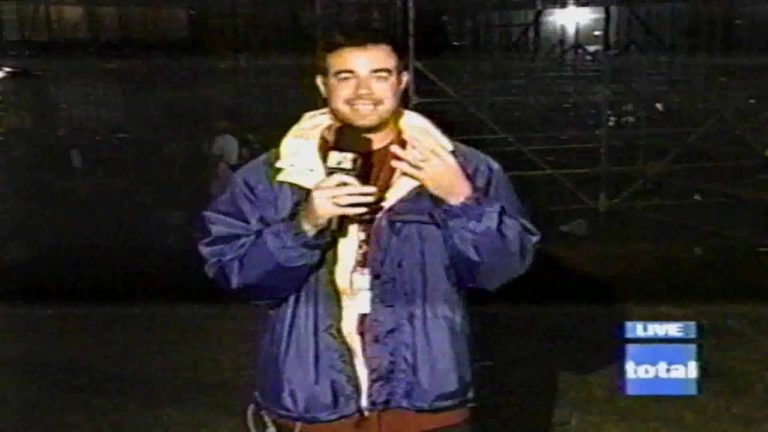
This is genuinely rare footage. The complete MTV ‘Total Woodstock Live’ broadcast from Woodstock 1999, hosted by Carson Daly and including original commercials, captures the full surreal experience of one of the most chaotic and culturally loaded festival weekends in music history, from the Limp Bizkit set that became infamous in real time to performances from Rage Against the Machine and Alanis Morissette, all filtered through the specific lens of late-90s MTV at peak cultural influence.
Video: David Letterman’s GE Headquarters Remote Collection Is a Masterclass in Fearless Corporate Satire
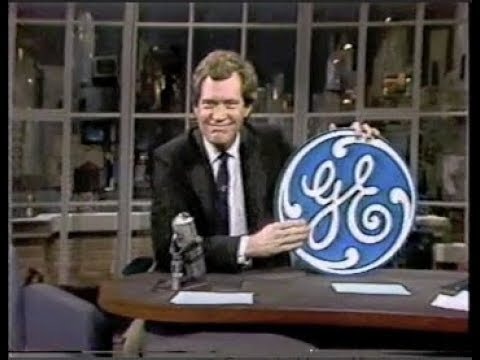
When General Electric acquired RCA and with it NBC in 1985, David Letterman did what no late night host before or since has done quite so effectively: he spent years making his new corporate overlords the butt of the joke, on their own network, to their faces. This compilation from Don Giller collects the full arc of Letterman’s GE remote segments from 1985 through his final Late Night broadcast in 1993, from his first furious reaction to the merger announcement through the legendary GE headquarters visit and the unforgettable corporate handshake sequence that remains one of the most perfectly observed comedy bits in late night history.
Video: Gong’s “I Never Glid Before” Live in 1973 Is a Gateway Drug to One of Rock’s Most Gloriously Unhinged Bands
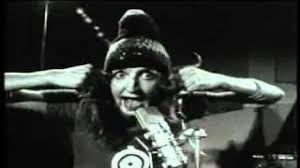
Pulled from ‘Angel’s Egg’ and captured live in 1973, Gong’s “I Never Glid Before” is exactly the kind of performance that turns casual curious viewers into lifelong devotees, a swirling, space-jazz, psychedelic free-for-all anchored by Daevid Allen’s unclassifiable energy and Pierre Moerlen’s extraordinary drumming, and with 1.7 million YouTube views the comments section alone tells the whole story: people keep stumbling onto this and immediately losing their minds in the best possible way.
Video: Evergreen High School’s Instrumental Department Takes Dennis Coffey’s “Scorpio” to Another Level
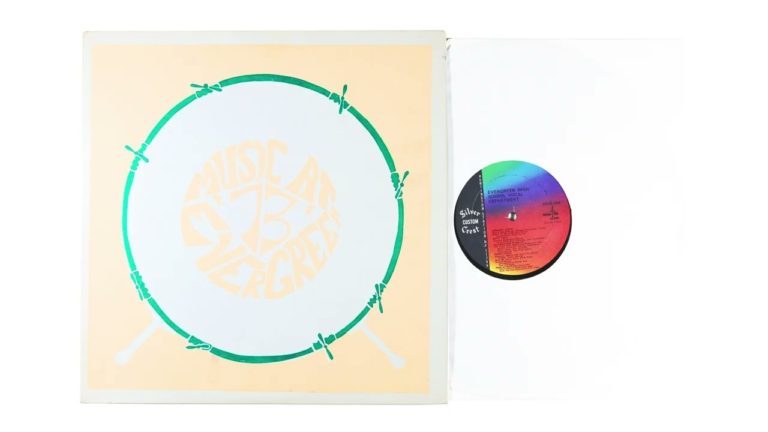
Evergreen High School’s Instrumental Department just delivered one of the more genuinely thrilling cover performances you’ll find on YouTube right now, tearing through Dennis Coffey’s 1971 funk classic “Scorpio” with raw, uninhibited energy that goes well beyond what anyone has a right to expect from a high school ensemble, complete with a wild drum solo that earns every second of its spotlight.
Interpol Announce a Massive 2026 North American Tour With Some of the Best Support Lineups of the Year
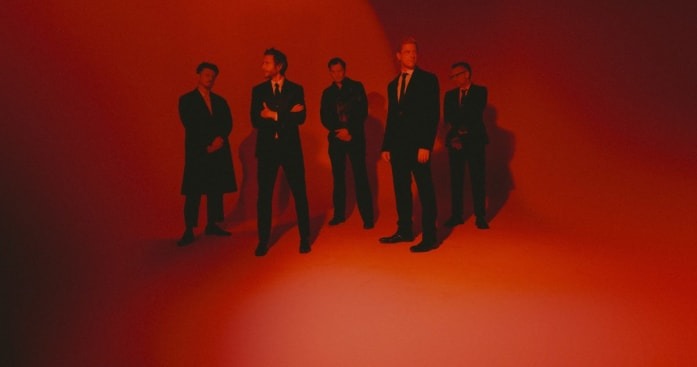
Interpol have mapped out a 23-city North American tour running July 31 through October 17, and the support lineup alone makes this one of the more compelling rock tours of the fall. Youth Lagoon, Loathe, Julie, DIIV, and French Police rotate through the bill depending on the date, covering nearly every corner of what’s interesting in indie and alternative music right now. Presales begin May 6 at 10 AM local, with general on-sale launching May 8 at 10 AM local.
The summer leg opens in Denver at Mission Ballroom and moves through Wyoming, Idaho, Utah, Oregon, Washington, California, and Nevada before a stop at CBGB Festival in Brooklyn on September 26. The fall run picks up in Vancouver and moves through Toronto, Montreal, Boston, Pittsburgh, Cleveland, Detroit, Columbus, Chicago, St. Louis, and Atlanta before closing October 17 in Nashville at The Pinnacle. The tour represents some of the band’s biggest headline shows to date, with the full world run also including dates supporting Deftones in Australia and New Zealand currently underway, European festival appearances, and a UK and European run with Bloc Party in November and December.
2026 North American Tour Dates:
July 31, Denver, CO, Mission Ballroom %
August 2, Jackson Hole, WY, Snow King Mountain %
August 3, Boise, ID, Revolution Concert House %
August 4, Salt Lake City, UT, Red Butte Garden %
August 6, Portland, OR, McMenamins Edgefield ^
August 8, Tacoma, WA, Dune Peninsula ^
August 11, San Francisco, CA, The Warfield &
August 14, Santa Barbara, CA, Santa Barbara Bowl &
August 15, San Diego, CA, The Rady Shell at Jacobs Park &
August 16, Las Vegas, NV, The Theater at Virgin Hotels Las Vegas &
September 26, Brooklyn, NY, CBGB Festival
September 29, Vancouver, BC, Rogers Arena *
October 2, Toronto, ON, The Bowl at Sobeys Stadium #
October 3, Montreal, QC, L’Olympia #
October 4, Boston, MA, Roadrunner #
October 6, Pittsburgh, PA, Stage AE #
October 7, Cleveland, OH, Agora Theatre #
October 9, Detroit, MI, Masonic Jack White Theatre #
October 10, Columbus, OH, KEMBA Live! Outdoors #
October 11, Chicago, IL, The Salt Shed Fairgrounds #
October 13, St. Louis, MO, The Factory #
October 16, Atlanta, GA, The Eastern #
October 17, Nashville, TN, The Pinnacle #~
% with Youth Lagoon / ^ with Loathe / & with Julie / # with DIIV / ~ with French Police / * with sombr
Playboy’s 1979 Roller Disco & Pajama Party TV Special Is a Full-On Disco Era Time Capsule
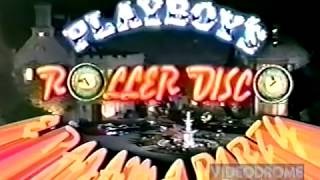
Playboy’s ‘Roller Disco & Pajama Party,’ the complete 1979 TV special, is exactly what it sounds like and then some: a gloriously over-the-top snapshot of the disco era at full fever pitch, with Hugh Hefner hosting a night of roller skating, sequins, and late-70s excess that could only have existed in that one specific moment in American cultural history.
David Allan Coe, the Outlaw’s Outlaw, Who Gave Country Music “Take This Job and Shove It,” Dead at 86
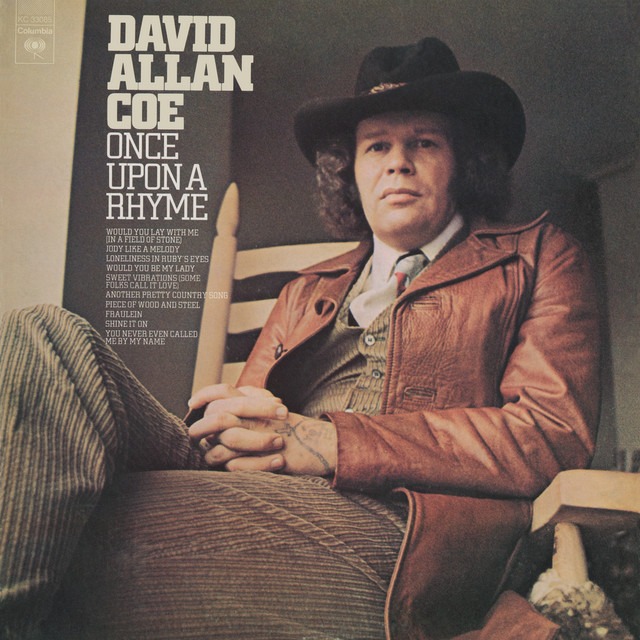
David Allan Coe died on April 29, 2026, at the age of 86, in an intensive care unit. His widow Kimberly confirmed the news to Rolling Stone. “One of the best singers, songwriters, and performers of our time and never to be forgotten,” she wrote. “My husband, my friend, my confidant and my life for many years.” No cause of death was immediately provided.
Coe was one of country music’s most contradictory and compelling figures, a man who lived most of the outlaw life that others only sang about. Born September 6, 1939, in Akron, Ohio, he spent much of his youth in reform schools and correctional facilities before arriving in Nashville in 1967, parking a hearse in front of the Ryman Auditorium and busking on the street. He caught the ear of producer Shelby Singleton and signed to Plantation Records, launching a career built entirely on his own impossible-to-categorize terms.
His songwriting legacy arrived before his performing career caught up. Tanya Tucker took his “Would You Lay With Me (In a Field of Stone)” to number one in 1973, making him one of Nashville’s most in-demand writers overnight. His own recording of “You Never Even Called Me by My Name,” co-written by Steve Goodman and an uncredited John Prine, became a jukebox perennial in 1975, a track that managed simultaneously to honor and gently mock the entire country tradition. Then came “Take This Job and Shove It,” which Johnny Paycheck took to number one in 1977 and which lodged a phrase permanently into the American vocabulary. That song was entirely Coe’s creation, and the fact that Paycheck got most of the credit fed a bitterness Coe carried for years.
His own performing peaks came in the early 1980s. “The Ride,” a ballad about a hitchhiker’s encounter with the ghost of Hank Williams, cracked the top five in 1983. “Mona Lisa Lost Her Smile” reached number two in 1984, his highest chart position as a performer. Through it all, his image, the rhinestone suits, the Lone Ranger mask, the long hair and braided beard, the Harley Davidson on stage, the hearse in the parking lot, kept him at arm’s length from the country mainstream even as his songs were everywhere. He shared stages with Willie Nelson, Waylon Jennings, and Johnny Cash and was described by Jennings in his autobiography as “the most sincere of the bunch,” while simultaneously being told to knock off the grandstanding.
His legacy carries real complications. Two independently released albums in the late 1970s and early 1980s contained material widely condemned for its use of racial slurs and misogynistic content. Coe consistently maintained the songs were intended as parody, citing his friendship with Shel Silverstein as the inspiration. The debate never fully resolved, and it shadowed his reputation for the rest of his career.
In later years, Coe recorded ‘Rebel Meets Rebel’ with Pantera’s Dimebag Darrell, Vinnie Paul, and Rex Brown, appeared in Johnny Cash’s “God’s Gonna Cut You Down” video, collaborated with Kid Rock, and kept playing over 300 shows a year well into his eighties. His son Tyler Mahan Coe created the celebrated country music podcast Cocaine & Rhinestones. Coe is survived by his wife Kimberly and his children. He was 86, and he was, as Stephen Thomas Erlewine once wrote, “none more outlaw.”