


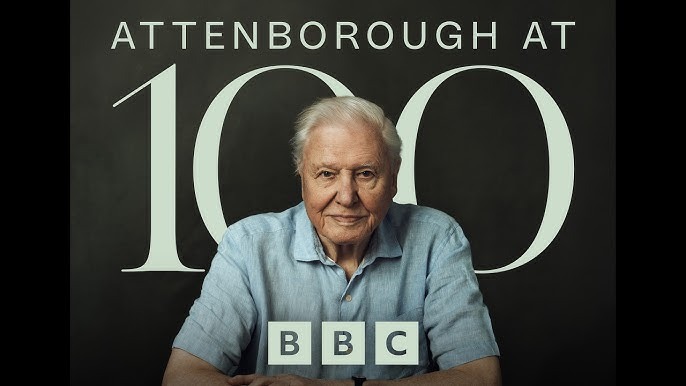
Today, May 8, 2026, Sir David Attenborough turns 100 years old. The broadcaster, naturalist, conservationist, and narrator whose semi-whispered voice has guided generations through the wonders of the natural world has spent a full century on this planet and most of it trying to make sure we treat it better. To mark the occasion, here are 100 facts about the man, the legend, and the reason millions of people suddenly care very deeply about meerkats.
- David Frederick Attenborough was born on May 8, 1926, in Isleworth, Middlesex, England.
- He grew up on the campus of University College, Leicester, where his father Frederick was principal.
- As a child, he collected fossils, stones, and natural specimens.
- Aged around 11, he supplied newts to the university zoology department at 3d each. He never revealed where he got them. It was a pond next to the department.
- His older brother Richard Attenborough became one of Britain’s most celebrated actors and directors.
- His younger brother John was an executive at Alfa Romeo.
- During World War II, his parents fostered two Jewish refugee girls from Germany through the Refugee Children’s Movement.
- In 1936, he and Richard attended a lecture by conservation advocate Grey Owl at De Montfort Hall in Leicester. It shaped David’s worldview permanently.
- He won a scholarship to Clare College, Cambridge, to study geology and zoology.
- He served two years in the Royal Navy stationed in North Wales and the Firth of Forth.
- His first job after the navy was editing children’s science textbooks. He hated it.
- He applied to the BBC for a radio job in 1950 and was rejected.
- He was initially discouraged from appearing on camera because a producer thought his teeth were too big.
- His first major project was Zoo Quest, which launched in 1954 and made him a star.
- He only became Zoo Quest’s presenter because the original host Jack Lester fell ill.
- He formed his own BBC department, the Travel and Exploration Unit, because he didn’t want to move his family to Bristol.
- He became Controller of BBC Two in March 1965.
- One of his first acts as Controller was abolishing BBC Two’s quirky kangaroo mascot.
- He commissioned Monty Python’s Flying Circus for BBC Two.
- He also commissioned The Old Grey Whistle Test, Chronicle, and Man Alive.
- He brought snooker to BBC Two specifically to show off colour television. The show, Pot Black, is credited with the sport’s boom into the 1980s.
- He commissioned Civilisation, the landmark 1969 art history series with Kenneth Clark, which became the blueprint for authored documentary television.
- He also commissioned Jacob Bronowski’s The Ascent of Man.
- He turned down Terry Wogan’s job application to BBC Two because they already had an Irish announcer.
- He was offered the position of Director-General of the BBC in 1972 and phoned his brother Richard to say he had absolutely no appetite for it.
- He left BBC management to write and present Life on Earth, which launched in 1979.
- Life on Earth took years to make and required a co-production deal with Turner Broadcasting to fund it.
- The series established many of the hallmarks of the BBC’s natural history output.
- He has presented nine documentary series as part of The Life Collection.
- The Living Planet followed in 1984, focusing on ecology and adaptation.
- The Trials of Life completed the original Life trilogy in 1990.
- Life in the Freezer (1993) was the first television series to survey the natural history of Antarctica.
- The Private Life of Plants (1995) used time-lapse photography to show plants as dynamic organisms. It won a Peabody Award.
- The Life of Birds (1998) won a second Peabody Award.
- For The Life of Mammals (2002), low-light and infrared cameras were used to reveal nocturnal behaviour.
- Life in the Undergrowth (2005) introduced audiences to the world of invertebrates using advances in macro photography.
- Life in Cold Blood (2008) completed his survey of all major groups of terrestrial animals and plants.
- He has narrated every episode of Wildlife on One, which ran for 253 episodes between 1977 and 2005.
- The 1987 Wildlife on One episode “Meerkats United” was voted the best wildlife documentary of all time by BBC viewers.
- The Blue Planet (2001) was the BBC Natural History Unit’s first comprehensive series on marine life.
- Planet Earth (2006) was the biggest nature documentary ever made for television and the first BBC wildlife series shot in high definition.
- Blue Planet II (2017) drew the highest UK viewing figure of that year: 14.1 million.
- Blue Planet II is widely credited with triggering a lasting increase in public and political attention to plastic pollution.
- Planet Earth II (2016) featured main theme music composed by Hans Zimmer.
- He is the only person to have won BAFTA Awards for programmes in black and white, colour, high-definition, 3D, and 4K resolution.
- He received the BAFTA Fellowship in 1980.
- He has won three Primetime Emmy Awards for Outstanding Narrator and one Daytime Emmy Award for Outstanding Daytime Personality.
- At 98, he became the oldest Daytime Emmy winner for Secret Lives of Orangutans.
- He has more than 32 honorary degrees from British universities, more than any other person as of 2013.
- He has been named the most trusted celebrity in the UK in a Reader’s Digest poll.
- He was knighted in 1985.
- In 2020 he received a second knighthood: Knight Grand Cross of the Order of St Michael and St George.
- He is a Member of the Order of Merit and Member of the Order of the Companions of Honour.
- He was named a Champion of the Earth by the United Nations Environment Programme in 2022.
- In 2024 he received the Stephen Hawking Medal for Science Communication from the Starmus Festival. Brian May accepted it on his behalf.
- He has been described by NPR as roaming “the globe and shared his discoveries and enthusiasms with his patented semi-whisper way of narrating.”
- He was voted the UK’s Favourite TV Presenter of All Time in a 2023 Perspectus Global poll.
- He is recognised by Guinness World Records as having the longest career as a natural historian and presenter in television history.
- He narrated Our Planet for Netflix in 2019, a series that more explicitly addressed human destruction of the environment throughout rather than only in closing segments.
- His 2020 documentary A Life on Our Planet acts as his witness statement on climate change.
- He gave a speech at the opening ceremony of COP26 in 2021.
- He has advocated for restoring planetary biodiversity, limiting population growth, switching to renewable energy, mitigating climate change, reducing meat consumption, and setting aside more areas for natural preservation.
- He was initially sceptical about human-caused climate change. A 2004 lecture finally convinced him.
- He urged people to adopt a vegetarian diet or reduce meat consumption, stating “the planet can’t support billions of meat-eaters.”
- He is a patron of Population Matters, a UK charity advocating for family planning and sustainable population.
- He helped launch ARKive in 2003, a global project to gather natural history media into a digital library.
- He supported a BirdLife International project to stop the killing of albatross by longline fishing boats.
- He backed a WWF campaign to have 220,000 square kilometres of Borneo’s rainforest designated a protected area.
- He is vice-president of Fauna and Flora International and The Conservation Volunteers.
- He is president of Butterfly Conservation.
- He appeared in 14 episodes of the music quiz show Face the Music between 1975 and 1983.
- He was one of 200 public figures who signed a letter expressing hope that Scotland would vote to remain part of the UK in the 2014 referendum.
- In 2013 he joined Brian May and Slash in opposing the British government’s badger cull by participating in a song dedicated to badgers.
- In 1998 he described himself as “a standard, boring left-wing liberal.”
- He has said “anyone who thinks that you can have infinite growth in a finite environment is either a madman or an economist.”
- He considers himself agnostic.
- He often responds to questions about faith with a story about a parasitic worm that blinds children in West Africa, asking whether a merciful God would design such a thing.
- He has stated “It never really occurred to me to believe in God.”
- He strongly opposes creationism and intelligent design.
- He joined Richard Dawkins and other scientists in signing a campaign statement calling for creationism to be banned from the school science curriculum.
- A British polar research ship was named RRS Sir David Attenborough in his honour. An internet poll had voted for the name Boaty McBoatface.
- One of the ship’s research sub-sea vehicles was named Boaty in recognition of the public vote.
- At least 20 species and genera, both living and extinct, have been named after him.
- Plants named after him include a carnivorous plant (Nepenthes attenboroughii), one of the world’s largest-pitchered, and a genus of flowering plants (Sirdavidia).
- Arthropods named after him include a butterfly, a dragonfly, a goblin spider, a Caribbean smiley-faced spider, an Indonesian flightless weevil, a Madagascan ghost shrimp, and a soil snail.
- A fossilised armoured fish discovered in Western Australia was named Materpiscis attenboroughi, believed to be the earliest organism capable of internal fertilisation.
- A miniature marsupial lion, Microleo attenboroughi, was named in his honour in 2016.
- A 430-million-year-old crustacean, Cascolus ravitis, was named after him. Cascolus is a Latin translation of the root meaning of “Attenborough.”
- To mark his 100th birthday, a genus of ichneumon wasps, Attenboroughnculus, was named after him.
- He had a pacemaker fitted in June 2013 and a double knee replacement in 2015.
- In September 2013, on the prospect of retirement, he said: “If I was earning my money by hewing coal I would be very glad indeed to stop. But I’m not. I’m swanning round the world looking at the most fabulously interesting things.”
- His wife Jane died in 1997. They had been married since 1950.
- His son Robert is a senior lecturer in bioanthropology at the Australian National University.
- His daughter Susan is a former primary school headmistress.
- He lives in South West London, near Richmond Park.
- He is a patron of the Friends of Richmond Park.
- He was named among the 100 Greatest Britons in a 2002 BBC poll.
- He appeared in a new version of Peter Blake’s Sgt. Pepper’s Lonely Hearts Club Band album cover artwork in 2012, celebrating British cultural figures.
- The Natural History Museum in London opened the Attenborough Studio as part of its Darwin Centre development in 2009.
- His broadcasting career, which began in 1951, is still active at 100. Not bad for a boy who started by selling newts.