


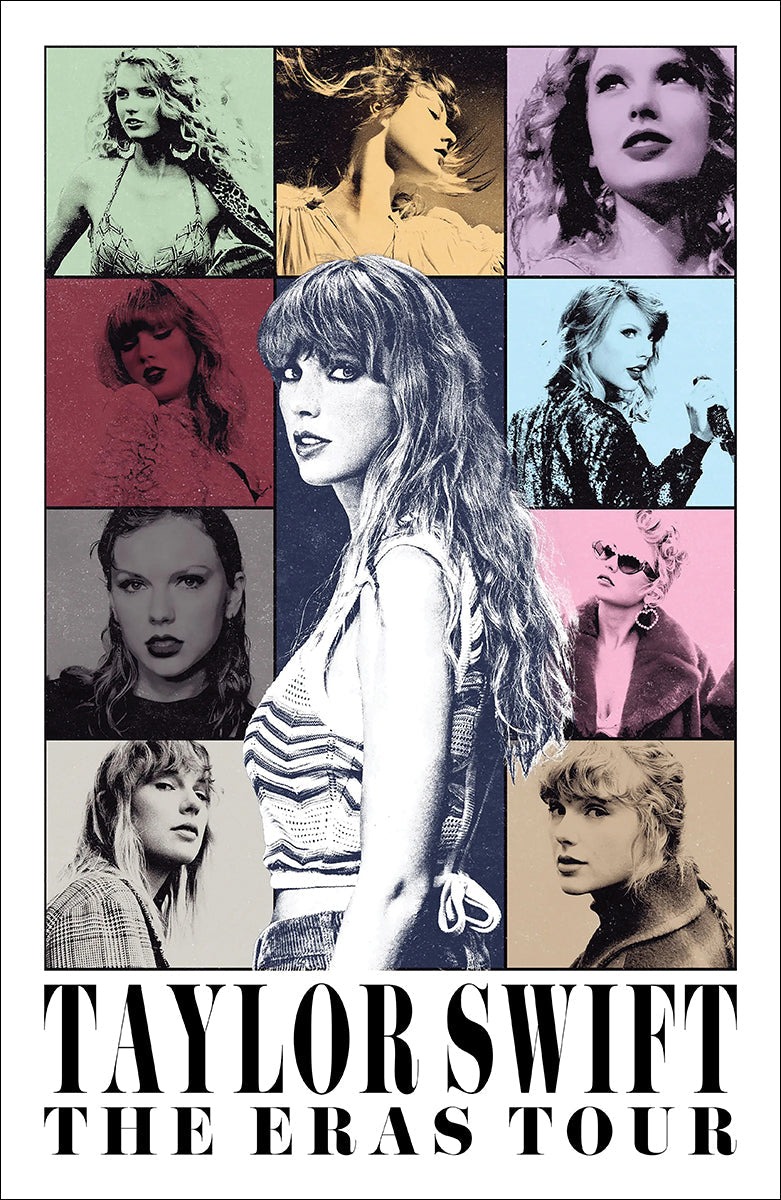
Here’s a number that should stop you in your tracks: $2.07 billion. That’s what Taylor Swift’s Eras Tour grossed by the time it wrapped in December 2024 — making it the first concert tour in history to cross the $2 billion line, and roughly double the gross of the second-biggest tour ever. But the eye-watering top number is almost the least interesting part of this story. Dig into the full list of the highest-grossing tours of all time and you’ll find a map of how the entire music industry rewired itself over the last twenty years. So let’s dig in.
First, the list everyone wants — the Top 20 of all time
Here are the twenty highest-grossing concert tours ever recorded, by actual gross:
- Taylor Swift — The Eras Tour (2023–2024) — $2,077,618,725 — 149 shows
- Coldplay — Music of the Spheres World Tour (2022–2025) — $1,524,423,018 — 223 shows
- Elton John — Farewell Yellow Brick Road (2018–2023) — $939,100,000 — 330 shows
- Ed Sheeran — +−=÷× Tour (2022–2025) — $875,700,000 — 169 shows
- Ed Sheeran — ÷ Tour (2017–2019) — $776,200,000 — 255 shows
- U2 — 360° Tour (2009–2011) — $736,421,586 — 110 shows
- Bruce Springsteen & E Street Band — 2023–2025 Tour — $729,700,000 — 129 shows
- The Weeknd — After Hours til Dawn Tour (2022–2026) — $693,269,933 — 110 shows
- Harry Styles — Love On Tour (2021–2023) — $617,325,000 — 169 shows
- Pink — Summer Carnival (2023–2024) — $584,700,000 — 97 shows
- Guns N’ Roses — Not in This Lifetime… Tour (2016–2019) — $584,200,000 — 158 shows
- Beyoncé — Renaissance World Tour (2023) — $579,879,268 — 56 shows
- Rammstein — Stadium Tour (2019–2024) — $563,000,000 — 141 shows
- The Rolling Stones — A Bigger Bang Tour (2005–2007) — $558,255,524 — 144 shows
- The Rolling Stones — No Filter Tour (2017–2021) — $546,500,000 — 58 shows
- Coldplay — A Head Full of Dreams Tour (2016–2017) — $523,033,675 — 114 shows
- Metallica — M72 World Tour (2023–2026) — $517,500,000 — 70 shows
- Roger Waters — The Wall Live (2010–2013) — $459,000,000 — 219 shows
- AC/DC — Black Ice World Tour (2008–2010) — $441,900,000 — 165 shows
- Metallica — WorldWired Tour (2016–2019) — $430,000,000 — 143 shows
Now let’s talk about what’s actually going on here.
The whole list is basically a 21st-century phenomenon
Look at the dates. Every single tour in the top 20 took place in the 2000s or later — most of them in just the last decade. That isn’t a coincidence, and it isn’t only because ticket prices went up. It reflects a structural earthquake in how musicians make money. In the 21st century, tour revenue skyrocketed as record sales collapsed and musicians began relying on live shows for their income. The album used to be the product and the tour was the advertisement. That relationship has flipped entirely. Today the recorded music is the advertisement, and the tour is the product — the thing fans will actually pay hundreds of dollars to experience in person.
The first tours to break $100 million only did so in the late 1980s — Michael Jackson’s Bad World Tour and Pink Floyd’s Momentary Lapse of Reason Tour, both running 1987 to 1989. From there it took roughly two decades to reach half a billion (the Rolling Stones’ A Bigger Bang Tour in 2007), and then a stunning acceleration: $1 billion in 2023 and $2 billion in 2024, both courtesy of Taylor Swift. The curve isn’t linear. It’s exponential.
The Eras Tour is a statistical outlier, not just a winner
It’s tempting to file Swift at the top of a normal ranked list, but the gap is so large it deserves its own category. The Eras Tour grossed about 36% more than Coldplay’s tour in second place — but the more revealing figure is the per-show average. The Eras Tour averaged roughly $13.9 million per show across 149 shows. In its 2023 calendar year alone, it averaged a barely believable $17.3 million per night.
Compare that to the workhorses of the list. Elton John’s Farewell Yellow Brick Road grossed $939 million but needed 330 shows over five years to do it — the longest schedule in the top 20 — averaging “only” $2.8 million a night. Swift made nearly the same money Elton did across his entire farewell, but did it with fewer than half the shows. That’s the difference between a tour and a cultural event that bends the economy of whole cities around it.
There are two completely different ways to build a billion-dollar tour
Once you stare at the per-show numbers, the list splits into two philosophies.
The first is scarcity and scale: a small number of enormous, premium-priced nights. Beyoncé’s Renaissance World Tour grossed $580 million from just 56 shows — an average above $10 million per night, second only to Swift. The Rolling Stones’ No Filter Tour pulled $546 million from a mere 58 shows. These are short, stadium-sized, high-ticket runs that treat each date as an event.
The second is endurance and volume: more dates, lower average, sustained over years. Elton John (330 shows), Ed Sheeran’s ÷ Tour (255 shows), and Roger Waters’ The Wall Live (219 shows) all ground out their totals over long campaigns. Sheeran is the fascinating case here — he frequently tours as essentially a one-man show with a loop pedal, keeping production costs radically lower than a stadium spectacle, which means his gross and his profit are likely much closer together than they are for an act hauling a giant stage around the world.
That distinction matters enormously, because none of these figures are profit. A tour like U2’s 360° Tour — sixth all-time at $736 million — famously carried one of the most expensive stage productions ever built. Gross revenue and money-in-pocket are very different animals, and the list can’t show you the second one.
The old guard is being quietly pushed down the chart
For eleven straight years — from 1995 to 2006 — the highest-grossing tour of all time was the Rolling Stones’ Voodoo Lounge Tour. The Stones set the all-time touring record three separate times (1990, 1995, and 2006), more than any act in history, and along with U2 they’ve topped the year-end chart eight times each. For decades, the very biggest tours were the domain of legacy rock acts: the Stones, U2, Pink Floyd, AC/DC, Springsteen, Metallica.
That world hasn’t vanished — Springsteen, Metallica, Guns N’ Roses, Rammstein, and AC/DC all still sit in the current top 20 — but look at who now occupies the very top. Swift, Coldplay, Sheeran, The Weeknd, Harry Styles, Beyoncé. The summit has shifted from heritage rock bands doing victory laps to contemporary pop and pop-adjacent superstars at their commercial peak. The decade-by-decade tables make this vivid: the 1980s and 1990s tops were Pink Floyd and the Stones; the 2020s table is led by Swift and Coldplay by a country mile.
Why the dollar figures are also a little bit of an illusion
One honest caveat that the raw ranking hides: these are nominal dollars, and inflation does real work over a 40-year span. When you adjust to 2025 dollars, some older tours leap up the table. U2’s 360° Tour, sixth on actual gross, adjusts to over $1.05 billion — vaulting it past Coldplay into what would be second place. The Stones’ A Bigger Bang adjusts from $558 million to $867 million. Even Pink Floyd’s 1987 Momentary Lapse tour, which grossed $135 million in its day, is worth around $350 million in today’s money.
The adjusted numbers tell us something the headline list obscures: the gap between eras is smaller than it looks, and a handful of legacy tours were, relative to their time, every bit as dominant as today’s giants. What’s genuinely new about Swift isn’t that she sold a lot of tickets — it’s the sheer per-night intensity of demand, which even inflation can’t explain away.
So what does all of this actually mean?
A few things, taken together.
Live performance is no longer a supplement to the music business — it is the music business at the top end. The biggest artists now earn the overwhelming majority of their income on stage rather than from streams, which pay fractions of a cent per play.
The economics reward two opposite strategies equally well: be a scarce, premium event (Beyoncé, the Stones today) or be a relentless, efficient road machine (Elton, Sheeran). What doesn’t work anymore is the middle.
And finally, the ceiling is still rising. It took from 1989 to 2007 to go from $135 million to half a billion, but only seventeen more years to quadruple that to $2 billion. There’s no obvious reason to think the Eras Tour will hold its record as long as Voodoo Lounge held its. The next number that stops us in our tracks is probably already being planned.