


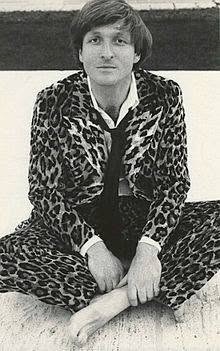
John Loring, the artist, author, and tastemaker who served as design director of Tiffany & Co. for thirty years and helped shape the look of one of America’s most storied luxury brands, has died at the age of 86. He passed away in June 2026 in Palm Beach, Florida.
Born John Robbins Loring in Chicago on November 23, 1939, he brought a rare combination of scholarship and artistry to everything he touched. He earned a Bachelor of Arts in English literature from Yale University in 1960, then spent four more years studying at the École des Beaux-Arts in Paris. From 1964 onward, his prints and paintings were exhibited across Europe and the United States, beginning a career as a working artist that ran in parallel with his life in design and publishing.
Before joining Tiffany, Loring made his name in the world of design journalism, serving as the New York bureau chief of Architectural Digest and as one of the magazine’s principal editorial contributors. He also taught as a professor of art at the graduate school of the University of California. In 1979 he joined Tiffany & Co. as design director, the role he would hold until 2009 and the one for which he is best remembered.
Over those three decades, Loring became the steward and storyteller of the Tiffany aesthetic. He chronicled the house’s history and design legacy in a remarkable shelf of books, more than two dozen in all, ranging from Tiffany’s 150 Years and Tiffany Style: 170 Years of Design to specialized volumes on the brand’s diamonds, pearls, silver, and timepieces. His writing extended well beyond the brand itself, taking in subjects from the designer Joseph Urban to his own photography, and he remained a longtime contributor to Architectural Digest.
Loring was also a serious artist and collector in his own right. His work entered the permanent collections of major institutions including the Museum of Modern Art, the Whitney Museum of American Art, the Metropolitan Museum of Art, the Art Institute of Chicago, the Museum of Fine Arts in Boston, the Yale University Art Gallery, and the Dallas Museum of Art. He served on the Acquisitions Committee of MoMA’s Department of Prints and Illustrated Books and was a dedicated collector of twentieth-century furniture and ceramics, while his passions for cooking and interior design were celebrated everywhere from The New York Times Magazine to French Vogue. In 1992, The New Yorker honored him with a feature profile.
His contributions were recognized with a long list of honors, among them a Lifetime Achievement award from the Museum of Art and Design in 2005, the Fashion Group International’s Distinction in Design award, the Edith Wharton Award for Excellence, and an honorary Doctor of Fine Arts from the Pratt Institute. The photojournalist Harry Benson, a friend, once wrote that Loring possessed one of the best eyes for photography in the world, praising the haunting elegance that lingered in his images.
John Loring leaves behind a body of work that spans galleries, museums, bookshelves, and the display windows of Fifth Avenue, a reminder that style, at its best, is a form of scholarship and devotion. Few people shaped the visual language of American luxury as quietly and lastingly as he did.